
Bangladeshi Migrant Woman Alleges Brutal Abuse and Rape in Saudi Arabia After False Job Promise
New Age Islam News Bureau
28 April 2026
· Bangladeshi Woman Alleges Days of Captivity and Repeated Rape in Saudi Arabia After Job Scam
· Shocking UNICEF Report Warns of 25,000 Female Teacher and Nurse Shortage in Afghanistan
· CAIR, CAIR-MN Win Major Court Ruling Protecting the Right of Muslim Women to Maintain Hijab in Booking Photos
· As India weighs new approach to religious law, Muslim women see opportunity
· ‘Nida Khan taught how to offer namaz, wear hijab’: Fresh allegations emerge in TCS Nashik case
· Leyla Aliyeva and Arzu Aliyeva visit Sheki Khan’s Mosque Complex
· UAE deepens food security push with supply chain deals, women-led farming drive
· Sharjah to open women-only beach park in Dibba Al Hisn
· Community project nominated for a London Sport Award.
Compiled by New Age Islam News Bureau
------
Bangladeshi Woman Alleges Days of Captivity and Repeated Rape in Saudi Arabia After Job Scam
28 APRIL 2026

A 31-year-old Bangladeshi woman, who returned to the country from Saudi Arabia recently, made allegations of being repeatedly raped and physically abused in the Gulf country after being lured there with the promise of a domestic worker job.
The woman is currently undergoing treatment at the One-Stop Crisis Centre (OCC) in Dhaka Medical College Hospital (DMCH).
Dr Monika Khondokar of DMCH’s OCC said the victim was initially admitted to the hospital’s gynaecology department on Sunday and was transferred to the OCC yesterday following her rape allegations.
“Until yesterday, she was experiencing shortness of breath, but her condition is somewhat stable now. There are injury marks on her body. We can confirm the rape allegations once we receive the forensic results,” the doctor said.
According to the victim’s BMET Emigration Clearance card obtained by this newspaper, she received immigration clearance on March 9 this year.
Narrating her ordeal in a video message provided to the OCC and police, the woman said she returned to Bangladesh on April 22.
She accused Md Badruzzaman, managing director of Soar Travels Limited in Dhaka’s Motijheel, of sending her to the KSA under the false pretext of a domestic help visa.
“I was not given any household work there. I was kept locked in a room, where five to seven men would physically torture and rape me every day,” she was heard as saying.
The victim also said her husband travelled there to rescue her and bring her back, but further details of the rescue were not available.
The victim’s husband said she landed in KSA on March 12. Although she was sent there on the promise of domestic work, she was initially forced to herd goats in the desert.
Unable to bear the extreme heat, she had informed him of her ordeal, prompting him to contact the travel agency.
About 10-12 days later, she was relocated to a house. However, instead of being assigned household chores, she was brutally tortured and raped there, she alleged.
After she informed him about the abuse, the husband approached the agency again, demanding her immediate return to Bangladesh.
“The agency initially demanded Tk 1 lakh for her return ticket. After much bargaining, they agreed to Tk 53,000. My wife finally returned on April 22,” he said, adding that they would file a case soon after consulting with police and lawyers.
Despite multiple attempts, Badruzzaman could be reached over the phone for comment.
Source: thedailystar.net
https://www.thedailystar.net/news/bangladesh/news/i-was-locked-and-raped-days-4162301
-----
Shocking UNICEF Report Warns of 25,000 Female Teacher and Nurse Shortage in Afghanistan
By Fidel Rahmati
April 28, 2026
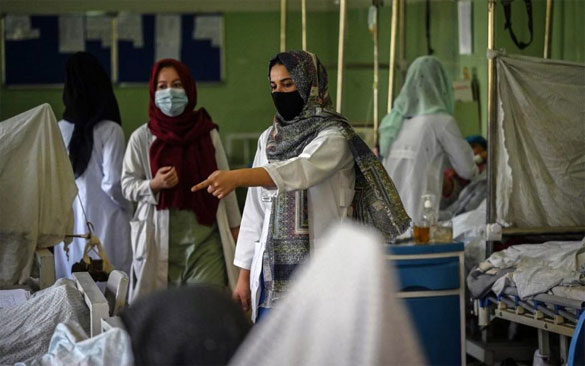
UNICEF warns Afghanistan faces a severe shortage of female teachers and health workers due to restrictions on women’s education and employment.
UNICEF has warned that Afghanistan could lose more than 25,000 female teachers and health workers by 2030 if current restrictions on women and girls remain in place.
In a new report titled “The Cost of Inaction on Girls’ Education and Women’s Employment in Afghanistan,” published Tuesday, UNICEF said limits on girls’ schooling and women’s participation in the workforce are pushing the country toward a severe shortage of skilled female professionals.
The report estimates that by 2030, around 20,000 female teachers and 5,400 female health workers could leave the education and health systems, representing roughly a quarter of the female workforce in these sectors compared to 2021 levels.
UNICEF further warned that by 2035, the number of female health workers could fall to as low as 9,600, deepening an already critical gap in essential services across the country.
The agency said more than one million girls have already been affected by restrictions on education, with that number expected to double by 2030 if policies remain unchanged.
Catherine Russell said Afghanistan “cannot afford to lose its future teachers, nurses, doctors, midwives, and social workers,” warning that continued exclusion of girls from education would have lasting consequences.
Since returning to power, the Taliban have imposed sweeping restrictions on women’s education and employment, banning girls from studying beyond grade six and limiting women’s access to most public sector jobs.
These measures have drawn widespread criticism domestically and internationally, with rights groups and governments warning of long-term social and economic damage.
UNICEF noted that the shortage of female teachers and health workers will directly affect the quality of education for girls and access to healthcare for women and children, especially in a system where gender segregation makes female staff essential.
The report also highlighted the economic impact, estimating that the continued exclusion of women from education and employment could cost Afghanistan about 5.3 billion afghanis, or $84 million annually—equivalent to roughly 0.5 percent of the country’s GDP.
Source: khaama.com
https://www.khaama.com/shocking-unicef-report-warns-of-25000-female-teacher-and-nurse-shortage-in-afghanistan/
------
CAIR, CAIR-MN Win Major Court Ruling Protecting the Right of Muslim Women to Maintain Hijab in Booking Photos
April 27, 2026
The Council on American-Islamic Relations (CAIR), the nation’s largest Muslim civil rights and advocacy organization, CAIR-Minnesota, and Golden Law today welcomed an order by Judge Jeffrey M. Bryan of the United States District Court for the District of Minnesota affirming the rights of Muslim women in prison and required the Federal Bureau of Prisons (BOP) to destroy all of our client’s hijab-less booking photographs.
[NOTE: Hijab is the head scarf worn by Muslim women.]
The order reads in part:
“RFRA prohibits the Government from imposing substantial burdens on religious exercise, absent a compelling interest pursued through the least restrictive means…A substantial burden exists when the Government forces a person to act in violation of her religious beliefs, by threatening sanctions, punishment, or denial of an important benefit as a consequence for noncompliance.”
The lawsuit challenged the BOP’s unconstitutional policy under the Religious Freedom Restoration Act (RFRA), which requires jails and prisons to accommodate the sincerely held religious beliefs of individuals who are incarcerated.
“This decision is a significant victory—not only for Mrs. Jama, who has shown remarkable courage in standing up for her rights, but for Muslim women across the country,” said CAIR Staff Attorney Aya Beydoun. “It sends a clear message that carceral institutions cannot disregard the dignity and religious practice of those in their custody without compelling justification. Our team intends to build on this momentum, using this ruling to advocate for meaningful policy changes in facilities nationwide.”
CAIR provides Know Your Rights Guides and toolkits for interactions with law enforcement.
BACKGROUNDER:
CAIR joined this case in October 2023, on behalf of Muna Jama, a Somali-American Muslim woman incarcerated in Minnesota. The Federal Bureau of Prisons repeatedly forced her to take her booking photograph without her hijab. The agency then required her to carry an ID badge displaying the violative photograph. Because of the ID requirement, male officers regularly viewed her head, ears, and neck to identify her during headcounts, at commissary, and other checkpoints throughout the facility.
CAIR’s complaint states in part:
“Other correctional facilities and government agencies have acknowledged the religious significance of the hijab and allow covered photographs without requiring a separate uncovered version. And yet, the Government has provided no evidence that BOP’s interest in security and identifying escapees is somehow unique from the same interest held by carceral facilities at every level nationwide that do not require a second uncovered photograph.”
Because of this litigation that photograph was replaced on her ID badge and other locations, and the Court has now ordered the BOP to permanently destroy all remaining copies of the unconstitutional photographs of our client.
When asked how she felt after receiving news of the Court’s decision, Mrs. Jama said: “It’s a relief. There are still some who care about the Constitution and protecting our rights. I’m really appreciative, you cannot imagine how thankful I am for the judge, that he sees the truth. I feel like I can finally breathe.”
CAIR’s mission is to protect civil rights, enhance understanding of Islam, promote justice, and empower American Muslims.
La misión de CAIR es proteger las libertades civiles, mejorar la comprensión del Islam, promover la justicia, y empoderar a los musulmanes en los Estados Unidos.
Source: cair.com
https://www.cair.com/press_releases/cair-cair-mn-win-major-court-ruling-protecting-the-right-of-muslim-women-to-maintain-hijab-in-booking-photos/
-----
As India weighs new approach to religious law, Muslim women see opportunity
April 27, 2026
Located in the bustling heart of Mumbai, the nondescript office of the Bharatiya Muslim Mahila Andolan (BMMA) is easily missed. But hundreds of Muslim women in legal distress have sought refuge here, often guided in by a staff member waving her hand out the grilled, first story window.
Some have been abandoned through an antiquated religious practice known as “triple talaq,” which instantly grants a divorce to men who say “talaq” three times. Others have been cheated out of inheritances, or denied custody of their children without grounds.
All have fallen through the cracks of India’s legal system, which allows religious communities to govern themselves in matters such as marriage and adoption, among others.
Originally, India’s system of personal laws was framed as a way to respect religious diversity. Rather than impose a single civil code, shortly after gaining independence in 1947, the country allowed Hindus, Muslims, Sikhs, Christians, and other groups to continue following their own customs.
But unlike other personal laws in India, Muslim family law remains largely uncodified. Women are particularly vulnerable as they navigate a patchwork of loose directives, interpreted differently by clerics, family members, and police officers – whose own personal biases can delay or even derail justice.
One solution, the BMMA’s leaders argue, is to formalize Muslim personal law. The group’s push for codification has placed them in the crossfire of a hot political debate over whether to replace India’s personal laws with a Uniform Civil Code.
Most Muslim groups oppose a national UCC, viewing it as a form of religious discrimination by the country’s Hindu nationalist government. Some are withholding judgment until there is a draft law. But BMMA members see value in having a clear civil code on the books.
“Earlier, [our main fight] was about triple talaq. Now, it’s polygamy,” says Noorjehan Safiya Niaz, who co-founded BMMA (whose name loosely translates to “Indian Muslim Women’s Movement”) nearly two decades ago. “Police say, ‘It’s allowed in your community,’ so what can we do?”
“If there is a law, we can hold the police accountable and ask them to act,” adds Ms. Niaz. “For over 20 years, we have been the ones raising this demand. There are people who want codification, but open, visible support has not come. ... People are afraid, and the hold of religious groups remains strong.”
Gaps in women’s rights
Without a comprehensive civil code, activists and reformers have had to take a piecemeal approach to protecting the rights of Muslim women in India.
Triple talaq, for instance, was only criminalized in 2019 – decades after neighboring Pakistan and Bangladesh banned the practice – thanks in part to a grassroots campaign and public interest litigation filed by the BMMA. That same year, the group petitioned the country’s Supreme Court to ban polygamy, a plea that is still pending. These practices are declining across India, but persist in some communities.
Tasleem Mohsin Saliq experienced both in 2021, when her husband took a second wife and abandoned her. She was five months pregnant with their third child.
“It was not even a triple divorce,” Ms. Saliq recalls. “He repeated it at least 17 or 18 times.”
The men in the family then went to the nearest mosque, where a maulana – a respected Muslim scholar – pronounced the divorce valid, despite Ms. Saliq’s pregnancy and the 2019 law. Today, she is raising her three sons alone, earning about $71 each month at a Montessori school.
“I have gone to the police station many times,” she says. “But each time, they just wrote a report and sent me home.”
Sitting in the BMMA’s two-room office, she clutches these reports in a thick binder. Next to her, Zubeda Khatoon Shaikh, a longtime member of the organization, is trying to reach Ms. Saliq’s sister-in-law on the phone.
“The advantage of a place like this, or any legal aid center, is that women know they are not alone,” says Ms. Niaz. “They can fight if they know someone is standing with them.”
Still, that fight is a lot easier when rights are cemented in law – something a UCC, they hope, could accomplish.
The push for uniformity
Ever since the country’s founding, there have been calls to unite India under a single civil code. After Prime Minister Narendra Modi and his Bharatiya Janata Party came to power in 2014, the call has grown louder – and the BMMA has gathered ideas on how to make a national code work for India’s large Muslim minority, which numbers more than 200 million.
In 2017, the group issued a 25-point proposal on codifying Muslim family law, developed over years of community consultation. “We traveled across 15 states. We sat with women, with lawyers, and with religious groups who were open to talk,” Ms. Niaz says.
They shared the proposal with the National Commission for Women and the Law Commission of India, two government bodies responsible for researching and recommending legal reforms, but haven’t been able to connect with policymakers. “There is no willingness to talk to us,” says Ms. Niaz. “This government functions on its own steam: ‘This is what we want to do, and this is what we will do.’”
Meanwhile, ruling-party lawmakers have been testing the waters for a national civil code by introducing such codes on a state level. Last year, Uttarakhand became the first state to implement a UCC, which legal activists and Muslim leaders have criticized for expanding state power over personal lives without delivering meaningful protections for women. Some measures – including a mandate to register live-in relationships – have yet to be enforced, but human rights lawyer Audrey D’Mello says it sets a troubling precedent.
“It’s just increased control of the state,” says Ms. D’Mello, the director of Majlis, a Mumbai-based legal center for women and children. What India needs, she explains, is “equality of rights, not uniformity of rights.”
Nevertheless, several BJP-ruled states are following suit. In March, Gujarat became the second state to pass a UCC, and Maharashtra’s legislative council is considering a similar change.
Demand for transparency
As the idea gains momentum in Maharashtra, opposition leaders say there has been little transparency over what a local UCC might entail.
“Whether by the state or the [central government], any proposed law must first be shared with the public,” says Arif Naseem Khan, a four-time member of the state legislature. “People should know what is being changed and why.”
Ms. D’Mello warns that changing Muslim personal laws without understanding them could actually harm women on the margins.
“If you want to bring about change, bring it from within the community, not by fighting against it,” she says.
That’s what the BMMA has been trying to do.
Alongside their push for legal reform, leaders such as Ms. Niaz and Ms. Shaikh – known in the BMMA community as Khatoon apa (or “Big sister” Khatoon) – conduct regular workshops on legal literacy and Islamic jurisprudence. They also teach women how to approach the police and file an initial report. The BMMA admits it has struggled to build wider community support for codification, but these other programs are seeing success.
While the early years were marked by resistance – including attacks on BMMA offices – Ms. Naiz says they are now fostering a new generation of women who are eager to fight for their rights.
“The girls are getting educated, that’s the main thing.”
Source: csmonitor.com
https://www.csmonitor.com/World/Asia-South-Central/2026/0427/india-religious-civil-law-muslim-women?icid=rss
-----
‘Nida Khan taught how to offer namaz, wear hijab’: Fresh allegations emerge in TCS Nashik case
Apr 28, 2026
The probe agencies have made fresh revelations in the alleged sexual exploitation and religious coercion case linked to the Tata Consultancy Services BPO in Nashik while opposing anticipatory bail plea of Nida Khan, one of the prime accused who remains untraceable.
Special public prosecutor Ajay Misar told the Nashik court during an in-camera hearing on Monday that the investigators have uncovered crucial leads in the case and argued that Khan’s custodial interrogation was necessary for further investigation.
In one of the complaints filed in the cast at Devlali police station, a woman has accused Khan of hurting her religious sentiments. She also accused one of her co-worker Danish Shaikh of sexually exploiting her on pretext of marriage and named another accused Tausif Attar, accusing him of sexual harassment.
The prosecution argued in the court that the complainant alleged that Khan allegedly changed her name to “Haniya” and promised to get her a job in Malaysia while she continued to persuade the complainant of converting her religion. It also alleged that Khan warned the complainant that if she does not convert, it would bring misfortune on her family.
According to the Special Investigation Team probing the case, Khan allegedly even gave training to the complainant on how to offer namaz and wear hijab at her house. Khan also allegedly installed Islamic applications on the complainant’s mobile phone and shared religious content with her.
The complainant also stated that she is from the Scheduled Caste community, following which, the police invoked provisions of the SC/ST (Prevention of Atrocities) Act in the case.
Court reserves order on Nida Khan’s bail hearing
The bench of additional sessions judge K G Joshi reserved its order of anticipatory bail plea of Nida Khan on Monday, giving no pre-arrest relief to her. The decision may be announced later this week on May 2.
“We appealed to the court not to grant anticipatory bail as her custodial interrogation is essential to ascertain important aspects of the case, including the money trail and possible overseas links,” Misar said after the hearing.
The controversial case pertains to sexual exploitation and religious coercion allegations against eight senior employees of Nashik’s TCS branch, one out of whom is Nida Khan.
So far, seven accused have been arrested, except Khan.
Source: hindustantimes.com
https://www.hindustantimes.com/lifestyle/health/did-you-know-stubborn-belly-fat-can-damage-your-liver-doctor-shares-5-daily-habits-that-can-take-a-toll-on-liver-health-101777303236291.html
------
Leyla Aliyeva and Arzu Aliyeva visit Sheki Khan’s Mosque Complex
28 APRIL 2026
Alish Abdulla
BAKU, Azerbaijan, April 28. As part of their visit to Sheki city, Leyla Aliyeva, Vice-President of the Heydar Aliyev Foundation, founder and head of the IDEA Public Union, and Arzu Aliyeva visited the Sheki Khan’s Mosque Complex, Trend reports.
During the visit, Vugar Mammadov, the imam of the mosque, provided Leyla Aliyeva and Arzu Aliyeva with detailed information about the Complex.
He noted that the Sheki Khan’s Mosque Complex, which dates back to the 18th century, is one of the city's crucial religious, cultural, historical, and architectural monuments. According to historical sources and inscriptions on the monument, the mosque was built by Haji Mahammadhuseyn Khan.
Vugar Mammadov emphasized that restoration efforts for the historical Sheki Khan’s Mosque Complex were carried out by the Heydar Aliyev Foundation. A museum was also established on the territory of the Complex. The museum displays exhibits from the Sheki Khanate period and material and cultural samples collected from various sources.
The museum visually demonstrates the history of the creation and formation of the Sheki Khanate, as well as its special place in the history of national statehood.
Leyla Aliyeva then was presented with a copy of the Holy Quran as a gift.
Source: trend.az
https://www.trend.az/azerbaijan/society/4179668.html
------
UAE deepens food security push with supply chain deals, women-led farming drive
April 28, 2026
Dubai: A series of agreements and initiatives unveiled in Al Ain this week is underscoring how the UAE is expanding its food security strategy beyond production, placing greater emphasis on market access, supply chain integration, and workforce participation.
At the centre is a Memorandum of Understanding between the National Agricultural Centre (NAC) and NRTC Group, a core subsidiary of Ghitha Holding and International Holding Company. Signed during the Emirates Agriculture Conference and Exhibition 2026 and witnessed by Minister of Climate Change and Environment Dr. Amna bint Abdullah Al Dahak, the partnership is designed to embed locally grown produce into mainstream retail and distribution networks.
The agreement focuses on addressing a long-standing gap between domestic production and market access. It outlines plans for dedicated retail spaces for certified local produce, alongside more coordinated procurement, logistics, and distribution systems. It also includes training programmes aimed at improving grading, packaging, and quality standards, as well as joint marketing campaigns under the “Sustainable Product” initiative to increase consumer visibility.
“This partnership represents a strategic milestone in advancing the UAE’s food security objectives,” said Sultan Salem Al Shamsi, Director of the National Agricultural Centre. “By connecting local producers with established distribution networks, we are strengthening the competitiveness, resilience, and sustainability of the national agricultural sector.”
Linking farms to markets
The emphasis on connectivity reflects a broader shift in how food security is being operationalised. The goal is no longer limited to increasing output, but to ensuring that local produce can move efficiently through the value chain and compete within established retail channels.
NRTC’s existing infrastructure plays a central role in this approach. The company has built an integrated agri-supply chain that links farmers directly with distributors, retailers, and consumers. Its Mazraati initiative has focused on increasing the visibility of local farms within this network, while recent acquisitions—including Ripe Organic, Mahsool, and Taaza—have strengthened its capabilities in sourcing, traceability, and direct farm-to-market connectivity.
“Our journey, from Mazraati to key acquisitions has been focused on building an integrated, future-ready agri-supply chain,” said Mohammed Alrifai, CEO of NRTC Group. “This MoU with NAC is a natural extension of that strategy, enabling us to further support local farmers while contributing to the UAE’s long-term food security ambitions.”
A parallel agreement signed on the sidelines of the same event reflects similar priorities at the emirate level. The Dubai Environment and Climate Change Authority partnered with Silal to strengthen sustainable food security in Dubai by improving sourcing, logistics, and distribution systems, while also addressing food loss and waste and diversifying food sources.
“Our journey, from Mazraati to key acquisitions has been focused on building an integrated, future-ready agri-supply chain,” said Mohammed Alrifai, CEO of NRTC Group. “This MoU with NAC is a natural extension of that strategy, enabling us to further support local farmers while contributing to the UAE’s long-term food security ambitions.”
A parallel agreement signed on the sidelines of the same event reflects similar priorities at the emirate level. The Dubai Environment and Climate Change Authority partnered with Silal to strengthen sustainable food security in Dubai by improving sourcing, logistics, and distribution systems, while also addressing food loss and waste and diversifying food sources.
Expanding system capacity
“Through this collaboration with DECCA, we are strengthening our ability to support local farmers across the agri-food value chain,” said Dhafer Al Qasimi, Group CEO of Silal. “By leveraging our capabilities in sourcing, logistics, and distribution, we aim to create more consistent pathways for locally grown produce to reach consumers, while contributing to a more efficient and resilient food system in the UAE.”
Beyond infrastructure and logistics, the conference also highlighted a parallel push to expand participation within the agricultural sector, particularly among Emirati women.
The “Empowering Women Farmers” initiative, launched by Her Highness Sheikha Fatima bint Mubarak, Mother of the Nation, Chairwoman of the General Women's Union, President of the Supreme Council for Motherhood and Childhood, and Supreme Chairwoman of the Family Development Foundation, and in alignment with the 'Year of Family', positions women as active drivers of agricultural innovation and economic growth rather than solely contributors to production.
Announced at the First Emirati Women Farmers Forum, the initiative introduces a practical support framework built around field-based training, direct engagement with policymakers, and access to tools that address operational challenges. It aims to transform women-led farms into scalable, market-oriented enterprises capable of competing within the broader food ecosystem.
Broadening participation
“We are witnessing sustained national efforts to position agriculture as a cornerstone of the UAE’s economy and to bolster sustainable food security,” Her Highness Sheikha Fatima bint Mubarak, Mother of the Nation, Chairwoman of the General Women's Union, President of the Supreme Council for Motherhood and Childhood, and Supreme Chairwoman of the Family Development Foundation, said.
“This also presents promising opportunities for Emirati women to engage in the agricultural sector, which has become increasingly advanced through science and technology.”
The initiative also focuses on integrating climate-smart technologies and improving branding and market positioning for Emirati produce. It includes pathways for younger generations to participate in decision-making through platforms such as the Emirates Youth Council for Agriculture, while offering marketing support to help women farmers build competitive, recognisable products.
Officials say the programme is designed to move beyond symbolic participation by equipping women with the skills and systems needed to operate within a modern, technology-driven agricultural sector.
Together, the agreements and initiatives signal a more coordinated approach to food security—one that links production, logistics, and human capital within a unified framework. The focus is increasingly on ensuring that local agriculture is not only productive, but commercially viable, scalable, and integrated into everyday consumption patterns across the UAE.
Source: gulfnews.com
https://gulfnews.com/uae/government/uae-deepens-food-security-push-with-supply-chain-deals-women-led-farming-drive-1.500521686
------
Sharjah to open women-only beach park in Dibba Al Hisn
April 27, 2026
Sharjah: Sharjah is set to inaugurate a women-only beach park in Dibba Al Hisn this week, the first in a series of dedicated coastal spaces designed to offer privacy and high-quality amenities for women across the emirate’s eastern region.
The project, overseen by the Sharjah Public Works Department, covers a total area of 6,350 square metres and is part of a directive by His Highness Sheikh Dr. Sultan bin Mohammed Al Qasimi, Supreme Council Member and Ruler of Sharjah, to establish three fully serviced ladies-only beaches, with similar developments underway in Kalba and Khorfakkan.
Ali bin Shaheen Al Suwaidi, Chairman of the department, said the initiative reaffirms Sharjah’s commitment to creating inclusive recreational environments tailored to community needs while respecting cultural considerations and enhancing quality of life.
Al Suwaidi added that the Dibba Al Hisn beach has been developed as a “model project”, featuring a fully enclosed layout to ensure complete privacy.
The site is surrounded by a three-metre-high perimeter fence and includes a 200-metre rock breakwater and protective barrier to shield the beach from external visibility and mitigate the impact of waves.
The beachfront is supported by a two-wing facility that includes a fitness centre, a creative activity hall, a café, administrative offices, a clinic, a prayer room and guard rooms, alongside a range of supporting services designed to provide an integrated environment for sports, social and leisure activities.
Additional features include a shaded children’s play area equipped with safe rubber flooring, as well as a rubberised walking track extending along the waterfront to support fitness and recreational use.
As part of marine safety measures, the project also includes lifeguard towers, designated bathing areas and service rooms, ensuring a secure and well-managed environment for visitors.
The beach is expected to begin operations by the end of the week or early next week, offering a new destination for women seeking leisure, wellness and community-focused activities in a private and fully equipped setting.
Source: gulfnews.com
https://gulfnews.com/uae/sharjah-to-open-women-only-beach-park-in-dibba-al-hisn-1.500520895
-----
Community project nominated for a London Sport Award.
27TH APRIL
A trailblazing community project which has helped Muslim women feel safe on the water has been nominated for a London Sport Award.
Oar and Explore is an all-female, majority Muslim boat club in Tower Hamlets which was set up by Poplar HARCA and East London Canal Access Network to build confidence and leadership skills as well as making the Limehouse Cut, the oldest canal in the capital, a more welcoming space.
Around 150 women have benefited from the introduction to paddle sport course since it began at the end of 2021, with 15 progressing to becoming qualified instructors.
Terri Calbraith, Poplar HARCA’s Strategic Partnerships Manager, said: “I have been doing community development for 20 years now and this is the first time that we have truly created something that has a chance of being sustainable.
“Often, as soon as the money dries up, programmes lose momentum. But I really think this can outlive us. We have given them the right sort of training, and we are committed to keeping the pontoon running, providing the boat store and basically holding their hand without it being the massive financial burden it can be.
“I am always loathe to saying things like ‘this six-week programme has changed people’s lives’. But this really has changed the lives of a group of these women.
“The group has become a community in itself – a group of 10 did a BMX course, a walking group has come about. There is a lot of love there and that has been amazing to see.”
Tower Hamlets is home to the largest population of Bangladeshi people outside Bangladesh, and Calbraith explained why the project was aimed primarily at a Muslim audience.
“They were the furthest away from anyone you would normally see on a kayak, in our opinion,” she said.
“The people who were on the water did not reflect the local community in any way, shape or form.
“We thought we were going to have to drag people kicking and screaming but we couldn’t have got it more wrong.
“The demand was unprecedented for us and it was very exciting, we knew we had hit upon something.
“It is low-cost for the community and led by the community.”
Sessions are now run from a renovated pontoon by the Teviot Estate, which is undergoing a major regeneration project, and two of the women who have benefitted from the programme will be present at the London Sport Awards ceremony at the iconic Guildhall on April 29.
Poplar HARCA are nominated in the Inclusive London Award category and Calbraith added: “The nomination is an external validation.
“We are doing something we think is really good, so it’s nice to see other people think so too.
“The initial funding for the trial of the programme came from London Sport, so it feels like we have come full circle in a way. We are honoured to be nominated.”
Source: borehamwoodtimes.co.uk
https://www.borehamwoodtimes.co.uk/news/26056450.community-project-nominated-london-sport-award/
------