
Author Azar Nafis: ‘Women in Iran Have Discovered Their Power and Decided To Use It’
New Age Islam News Bureau
27 October 2022
• Anti-Hijab Women Protesters Call on Elon Musk to
Banish Iran’s Supreme Leader from Twitter
• Woman with Gun Arrested Outside Indonesian
Presidential Palace
• Careem Delivers over 10 mln Wusool Trips for Saudi
Working Women over 1.5 Years
• Kuwait: Women Return To Parliament for the First
Time Since 2020
Compiled by New
Age Islam News Bureau
URL: https://newageislam.com/islam-women-feminism/azar-nafis-iranprotest/d/128282
--------
Author Azar Nafis: ‘Women In Iran Have Discovered
Their Power And Decided To Use It’
As told to Claire Armitstead
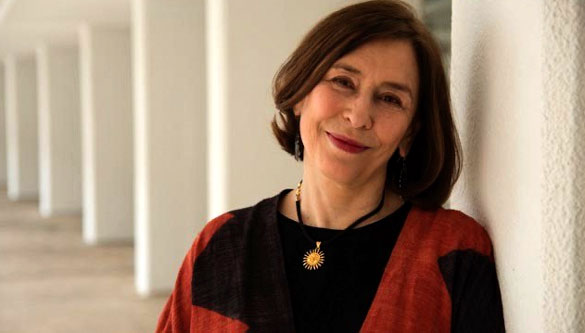
Author Azar Nafisi
(Stanley Staniski)
-----
27 Oct 2022
I first became aware that something big was happening
from my husband, who is an avid reader and follows all the news from Iran. We
had returned from one of the first US demonstrations after the death in custody
of 22-year-old Mahsa Amini, after being arrested for failing to wear her hijab
correctly, and he directed my attention to the main slogan of the protesters:
Woman, Life, Freedom. I couldn’t get it out of my mind, and kept walking in
circles around the living room of our home in Washington DC, repeating it to
myself. From then on, it became part of my life: I wake up in the morning and
go to sleep at night with this mixture of anxiety and elation.
I know there have been many false dawns, not least the
Arab spring a decade ago, but two things have happened in Iran that made us
realise this was a turning point, no matter what the outcome. One is the fact
that the Iranian people in general, but women and young people especially, have
discovered their power, and decided to use it. That means something fundamental
has changed. They know that they can walk down the streets of Tehran, not
obeying the law, so that their bodies, the way they appear in public, become a
sign of protest. It is telling the regime: “You don’t own me, you cannot impose
your image upon my identity.”
The second thing is that the regime has discovered it
has failed. The violence used by the Islamic Republic no longer comes from a
position of strength. It comes from weakness. They are so afraid, and the only
thing left to them is the gun. More than 222 people have been killed during the
recent protests, including other young women such as Nika Shakarami and Sarina
Esmailzadeh, both 16 years old. Of course, there is outrage at seeing these
young people being so indiscriminately murdered, almost in front of our eyes,
but there’s also a realisation that it is happening because the protesters are
not going to give up and because there is no other alternative left for this
regime.
I come from a political family, although my parents
were both very bad politicians because they were so independent-minded. My
father was mayor of Tehran at the time of the White Revolution in 1963, and was
thrown into jail for four years on trumped-up charges before he was exonerated.
My mother was one of the first six women to go into parliament after it became
legal to do so that year. When I was a young academic, teaching at Tehran
University, I, along with two of my colleagues, was expelled for refusing to
wear the veil. I remember the chair of the English department asking me why I
was resisting when tomorrow I would have to wear it in the local grocery store,
but the university was not a grocery store. If I wore one, I would feel ashamed
in front of my students, because what kind of a role model would I have been
for them? One thing people don’t see about Iranian women is that their fight
is, above all, about humiliation and dignity. It is easier to be physically
flogged than to be insulted by being forced to wear the veil, or being
subjected to a virginity test, as one of my students was.
I lost my job at the university in 1981 but stayed on
in Iran, though it became more and more difficult to teach or write. I ran a
small private class that I wrote about in Reading Lolita in Tehran (2003), and
nearly 20 years later some of the students are still friends. In 1997, I left
for the US. Both my husband and I had already spent time in the west. I had
been sent to England at 13, to a school in Lancaster – where I would huddle
under the duvet with a hot-water bottle and read the books that became my
portable home – and I later studied in the US. My husband went to the US to
study engineering, and we met there through the student movement in the 70s.
We only returned to Iran in 1979, just as the Shah was
toppled in the Islamic revolution. I remember arriving at the airport, seeing
all the revolutionary guards with guns searching people for alcohol, and
realising this was not my home any more. My only home was the portable one I
had built with books. Almost immediately we fell into demonstrations. On 8
March, 1979, tens of thousands of women took to the streets across Iran against
Ayatollah Khomeini’s introduction of mandatory veils, with the slogan: “Freedom
is neither western nor eastern, freedom is global.” We stayed in the Islamic
Republic for 18 years, but by the time we left, our son and daughter were 11
and 13, and we wanted them to be free, as we had been, to choose.
One of the things that impresses me about the young
demonstrators today is that, unlike my generation, they are not ideological.
They are not partisan. They are saying: we want life and freedom and a decent
living. They’re asking for unity. For Iranian women, this movement is
existential. It is saying: we can no longer tolerate this imposition upon who
we are. And that is why the regime cannot win. They can destroy political
organisations, but what are they going to do with the thousands upon thousands
who are coming onto the streets refusing to wear their veils?
Can they put all of them in jail, kill all of them?
Fortunately not. And these young women are amazing: they go into the streets
and risk their lives, throwing their veils on the fire. Some are tortured and
even killed but they still don’t give up. It gives the lie to the mythology
that the Islamic Republic has dictated what Iran’s traditions and culture are.
I have been so frustrated in the west because, when I
talk about the situation of women in Iran, somebody will inevitably say: “But
you’re westernised, and it’s their culture.” And it makes me so angry, as if
the west has a monopoly on freedom, and the DNA of Iranian women is somehow
different, so that they don’t want freedom of choice; they want to be married
at the age of nine or be stoned to death for prostitution. It is such an
insult, because this is not religion; my grandmother was an Orthodox Muslim and
she never forced her children and grandchildren to wear the veil. My mother
considered herself a Muslim and she never wore one. The regime has confiscated
religion, using it as an ideology, and this is a big theme of fundamentalist
and totalitarian mindsets the world over. I tell people that every culture has
something to be ashamed of: fascism and communism were once the culture of
Europe; slavery was once the culture of the US. And every culture has the right
to change.
Anyone who thinks the Islamic Republic represents our
tradition and culture should go and read up on history. Around the same time
that women were awakening in the west, in the 19th century, they were also
awakening in Iran. In 1848, the first woman unveiled in public: Táhirih Qurrat
al-‘Ayn, a poet and theologian of the faith that would later become the Bahá’í
religion, was put under house arrest and murdered because she was too popular.
She said: “You can kill me as soon as you like, but you cannot stop the
emancipation of women.”
Throughout the 20th century, women continued to fight
for their rights so that, at the time of the Islamic revolution, they were
active in all walks of life: as engineers, pilots, doctors, government
ministers. So these young women today do not only look to the west or other
countries for their freedom; they look to their own mothers and grandmothers
and great-grandmothers.
Iran and Ukraine remind us, in the west, that there
are places in the world where people give their lives for freedom and democracy
– things that we take for granted. But this is not only Iran’s problem: I see
totalitarian trends in the west, too, from banning books to outlawing abortion
and protest, and all sorts of other things.
Five years ago I retired from Johns Hopkins School of
Advanced International Studies after 20 years, to devote myself full-time to
writing. My mission now (in the words of James Baldwin) is to disturb the peace
and not be comfortable. I maintain my portable home by reading poetry in Farsi
and English, and dream that one day I will return to Iran.
Azar Nafisi’s latest book is Read Dangerously: The
Subversive Power of Literature in Troubled Times (Dey Street Books)
Source: The Guardian
https://www.theguardian.com/world/2022/oct/27/azar-nafisi-iran-women-protest-veil
--------
Anti-Hijab Women Protesters Call on Elon Musk to
Banish Iran’s Supreme Leader From Twitter
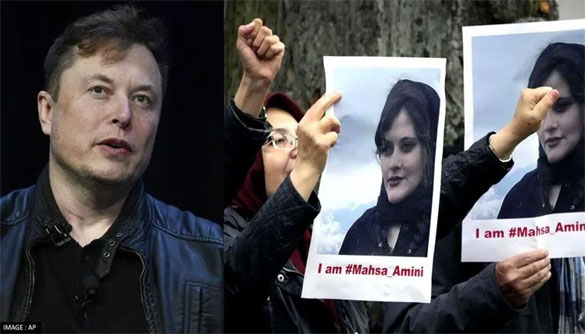
Image: AP
-----
October 27, 2022
New Delhi: Anti-hijab Iranian protesters have called
upon Billionaire Elon Musk, who is set to close Twitter deal by tomorrow, to
ban Iranian Supreme Leader Ali Khamenei from the microblogging site where he
orders killings of those who stand against him.
In a post shared on Twitter, Masih Alinejad, an
Iranian journalist and activist, said Khamenei has banned 83 million Iranians
from Twitter but he himself uses the same platform to order killings.
“Join me and call on @elonmuskto #BanKhamenei Surreal, @khamenei_irbanned 83 million
Iranians from Twitter but he himself is allowed to use the same platform to
order killings. These days teenagers are getting killed by his regime for
protesting against the murder of #MahsaAmini,” she said.
Amini, a 22-year-old Iranian of Kurdish origin, died
on 16 September, three days after her arrest in Tehran by the notorious
morality police for allegedly breaching the Islamic dress code for women.
Anger flared at her funeral last month and quickly
sparked the biggest wave of protests to rock the Islamic republic in almost
three years. Young women and schoolgirls have led the charge, burning their
hijab headscarves and confronting security forces on the street.
On Wednesday, Iranian security forces opened fire on
protesters who massed in their thousands in Amini’s hometown to mark 40 days
since her death, a human rights group said.
Despite heightened security measures, columns of
mourners had poured into Saqez in the western Kurdistan province to pay tribute
to Amini at her grave at the end of the traditional mourning period.
“Woman, life, freedom” and “Death to the dictator”,
hundreds of men and women chanted at the Aichi cemetery in Saqez.
Source: Firstpost
--------
Woman with Gun Arrested Outside Indonesian
Presidential Palace
25 Oct 2022
Authorities in Indonesia have detained a woman
carrying a gun outside the presidential palace in Jakarta at a time when
President Joko Widodo was not in his office, according to media reports.
Presidential official Ali Mochtar Ngabalin told the
Reuters news agency the woman was apprehended at approximately 7am (00:00 GMT)
on Tuesday and that she had not entered the palace compound.
The woman, who appeared to be in her twenties, was
wearing a Niqab – a veil worn by some Muslim women which covers the hair and
lower half of the face – and was carrying a Quran when she brandished the gun
near the palace, he said, adding that she was apprehended by security officers.
The Beritasatu newspaper, citing a police official,
said the woman was carrying an FN pistol and had walked directly towards the
security officers and pointed the gun at them.
A spokesperson for the Jakarta police said the woman
was now being questioned, but it was not immediately clear what her motive was
or how she had obtained the weapon.
Indonesia, which is the world’s biggest
Muslim-majority country, has previously suffered attacks carried out by armed
groups, sometimes targeting government officials and security forces.
Police shot dead a woman who had opened fire on
officers at the national police headquarters in Jakarta on March 31 last year
in an attack inspired by the ISIL (ISIS) armed group.
Indonesian authorities had already been on heightened
alert at the time after a suicide bombing at a Catholic cathedral during Palm
Sunday Mass left at least 20 people wounded three days earlier on Sulawesi
Island.
Source: Al Jazeera
--------
Careem delivers over 10 mln Wusool trips for Saudi
working women over 1.5 years
October 26, 2022
Riyadh - Careem, the region's leading multi-service
platform, delivers over 10 million Wusool trips since the start of a
partnership with the Human Resources Development Fund, Hadaf, which began in
February 2021.
Ghaith Al-Johani, General Manager for Careem Saudi
Arabia, commented: "We are delighted to partner with Hadaf to help
simplify the daily commute experience for working women in Saudi Arabia.
Public-private partnerships like this have played a key role in growing female
participation in the labor force in the Kingdom and contribute to the
achievement of the Vision 2030 objectives."
Al-Johani added, "We have over 194,000 active
Careem Captains across 29 cities around the Kingdom that are committed to
serving the program's beneficiaries. Currently, our Captains make an average of
750,000 Wusool trips per month."
The Wusool program supports more than 168,000 Saudi
working women across 13 regions around the Kingdom. Riyadh region has the
highest number of beneficiaries from the program with 79,093 employees,
followed by the Makkah region with 38,165 employees, and the Eastern Region
came third with 22,309 beneficiaries. The remaining beneficiaries are
distributed across the other ten regions.
Under the Wusool program, women can receive an 80%
discount on the cost of each commute to work. The ceiling of support is SR1,100
a month for those with a monthly wage not exceeding SR6,000, and SR800 for
workers earning between SR6,001 and SR8,000. The program support period reaches
24 months from the date of the first trip.
Working women registered in Saudi Arabia’s social
insurance system who meet the requirements can register in the Wusool program
through the link: http://wusool.sa
Source: Zawya
--------
Kuwait: Women return to parliament for the first time
since 2020
Sakina Fatima
2nd October 2022
Kuwait: The two women candidates on Friday were
elected as representatives of the Kuwaiti National Assembly. With this, women
returned to the Kuwaiti Parliament after two years.
Jenan Mohsin Ramadan Boushehri and Alia Faisal Al
Khaled were elected as part of the opposition, who won the majority of seats in
the election on Thursday.
48-year-old, writer and thinker Alia Faisal Al Khaled,
won the seats in the second constituency with 2,365 votes.
Al Khaled said in statements to local media that she
only ran for Kuwait, adding, “We will work for Kuwait … our goal is one, we
will fight with love … so that Kuwait is in a better situation.”
48-year-old, former Minister Jenan Mohsin Ramadan
Boushehri, won from the third constituency with 4,321 votes.
“Whenever there is a woman who carries the issues and
aspirations of the voters, there is no problem (for the voter) to vote for
her,” Jenan Boushehri said.
She added in a message she sent to her voters, “I will
speak with your voice, preserve your rights and protect your interests in the
next assembly.”
Women had won the right to vote and stand as a
candidate in 2005 but had failed to get elected during the previous ballot in
2020.
On Friday, September 30, Jinan took to Twitter and
thanked everyone for standing by her side, and wishing that she would be at the
best of everyone’s expectations.
Kuwait announced, on Friday, the results of the legislative
elections, in which 313 candidates competed for 50 seats representing the
elected National Assembly.
According to the election results, the opposition won
28 of the 50 parliament seats, while 20 former deputies lost their seats,
including 3 former ministers.
Two jailed candidates won
In a precedent, the first in Kuwait, the two
candidates, Marzouq Al-Khalifa and Hamid Al-Bathali, were able to win
membership in the National Assembly while they were in prison.
On Thursday, September 29, the polls in Kuwait closed
their doors, after voters went to cast their votes in the elections for the new
National Assembly, which will succeed the 2021 Assembly, which was dissolved by
an Emiri decree, in June.
A new government will be appointed after the elections
to take the oath before the elected parliament.
These elections came after the Emir of the country
dissolved the previous council due to the clash between the legislative and
executive authorities, as the opposition with an Islamic background was demanding
the removal of the heads of government and parliament from the political scene,
which is achieved in these elections.
Kuwait is the first country in the Gulf region to
establish an elected parliament, in 1963, and it has a parliament that is the
most powerful in the region, and it is capable of enacting legislation and
holding the government accountable, but the final say, in the end, is up to the
Emir.
Source: Siasat Daily
https://www.siasat.com/kuwait-women-return-to-parliament-for-the-first-time-since-2020-2425462/
--------
URL: https://newageislam.com/islam-women-feminism/azar-nafis-iranprotest/d/128282
New Age Islam, Islam Online, Islamic Website, African Muslim News, Arab World News, South Asia News, Indian Muslim News, World Muslim News, Women in Islam, Islamic Feminism, Arab Women, Women In Arab, Islamophobia in America, Muslim Women in West, Islam Women and Feminism