
Artificial Intelligence Meets Archaeology In The Hands Of Saudi Innovator, Hanin Al-Zahrani
New Age Islam News Bureau
21 october2025
· Artificial Intelligence Meets Archaeology In The Hands Of Saudi Innovator, Hanin Al-Zahrani
· Sanae Takaichi Takaichi Becomes Japan’s First Female Prime Minister
· Meet the All-Female Supercar Club Speeding Across the UAE
· Muslim Women Do Not Need Saving, Says Female Leader Of Mosque At Centre Of Charity Run Row
· Afghan Students React To The Taliban’s Recent Internet Ban
· Iranian Prosecutor Announces Intensified Hijab Enforcement
· Iranian Police Seal 15 Cafes in Latest Crackdown
Compiled by New Age Islam News Bureau
------
Artificial Intelligence Meets Archaeology In The Hands Of Saudi Innovator, Hanin Al-Zahrani
WAAD HUSSAIN
October 20, 2025

ARCHTECH logo, the Saudi startup founded by Hanin Al-Zahrani that uses artificial intelligence to translate and document ancient inscriptions. (Supplied)
-------------
ALKHOBAR: For Saudi innovator Hanin Al-Zahrani, the past is not a distant memory — it is data waiting to be decoded.
At 24, Al-Zahrani is one of the few specialists in Saudi Arabia working at the intersection of archaeology and artificial intelligence.
Through her two start-ups, ArchTech and AeroQuest, she is redefining how cultural heritage can be preserved, translated, and experienced in the digital age.
“My interest in combining archaeology and artificial intelligence began with the question: ‘What if technology could help us read the past more clearly?’” she told Arab News.
“While studying archeology, I realized that many ancient inscriptions remain undocumented or misunderstood due to their complexity or deterioration. This motivated me to explore AI as a tool to analyze patterns, recognize scripts, and uncover hidden stories.”
Her vision also extends to smart tourism, where digital tools turn passive sightseeing into immersive learning.
“I see AI as a bridge connecting heritage with modern technology, creating advanced, sustainable, and culturally immersive experiences for both researchers and the public,” she said.
ArchTech, her flagship project, is an AI-powered platform designed to translate and document ancient Saudi inscriptions.
“ArchTech leverages AI to analyze high-resolution images of ancient inscriptions, including Thamudic, Sabaean, and Nabataean scripts,” she said.
The system identifies characters, deciphers patterns, and translates content into Arabic, English, Chinese, and French, preserving historical context. It also records metadata such as location, material, and estimated date, creating a comprehensive digital archive.
The project does more than preserve history — it brings it to life for the public.
“Beyond research, ArchTech supports smart tourism by allowing visitors to interact with heritage digitally,” she explained. “Through AI, the platform safeguards historical knowledge while offering global access. This approach ensures both cultural preservation and public engagement, merging heritage conservation with digital transformation to create an innovative, educational, and immersive experience.”
Her second initiative, AeroQuest, connects travelers with Saudi culture even before they land.
“AeroQuest was created to make air travel both educational and interactive,” she said.
The app provides an in-flight map displaying tourist destinations, historical landmarks, and major cultural events across Saudi Arabia in real time.
“Travelers can explore sites from the air, learn about their history, and engage with augmented reality content,” she added.
“Using AI, the app delivers accurate multilingual translations and interactive storytelling,” she explained. “This project integrates aviation, heritage, and smart tourism, transforming flights into immersive cultural journeys.”
AeroQuest demonstrates how technology can enhance tourism by linking innovation with heritage, allowing visitors “to experience Saudi culture dynamically while supporting digital transformation and educational exploration throughout every journey.”
Both ArchTech and AeroQuest align with Saudi Vision 2030’s goals of cultural preservation, tourism diversification, and technological advancement.
“Additionally, they contribute to empowering women in technology, fostering knowledge-based development, and encouraging community engagement. Overall, my work bridges tradition with modern technology, demonstrating how innovation can support sustainability, cultural enrichment, and the strategic objectives of Vision 2030,” Al-Zahrani said.
Creating AI models for archeological data came with challenges: “The main challenge was data collection, as no comprehensive databases existed for ancient inscriptions. I had to gather information from books, manuscripts, and historical sources to train AI models accurately. The diversity of scripts, including Thamudic, Sabaean, and Nabataean, combined with natural erosion, made recognition more difficult.”
Translation accuracy was another obstacle. “Another challenge was preserving historical and cultural meaning during translation for multiple languages,” she said. “Overcoming these obstacles enabled creating interactive digital experiences that support smart tourism and digital transformation. Successfully addressing these challenges ensures AI can both safeguard heritage and engage researchers and the public in meaningful, immersive ways.”
Through ArchTech and AeroQuest, Al-Zahrani is helping reimagine how people engage with Saudi Arabia’s archaeological treasures — from inscriptions carved centuries ago to landmarks visible from 30,000 feet above ground.
Her work embodies a national shift that embraces AI not only as a tool for innovation, but as a means of preserving identity.
In doing so, she joins a new generation of Saudi women driving scientific and cultural transformation.
Source: arabnews.com
https://www.arabnews.com/node/2619551/saudi-arabia
-------
Sanae Takaichi Takaichi Becomes Japan’s First Female Prime Minister
October 21, 2025
By Richard Ogunsile
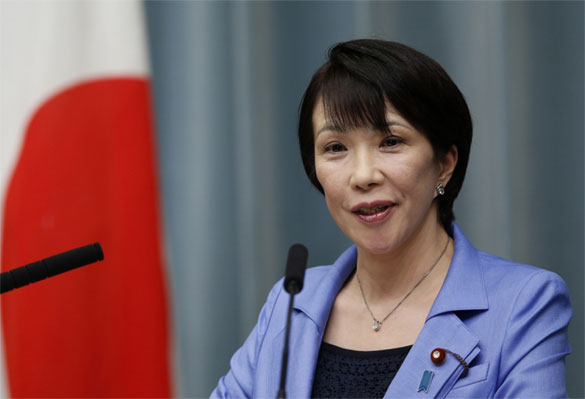
Japan has appointed Sanae Takaichi as its first female Prime Minister, ending decades of male-dominated leadership in the world’s third-largest economy.
Takaichi, 64, a staunch conservative and outspoken China critic, was confirmed on Tuesday after winning a slim majority in the lower house of parliament and securing a runoff victory in the upper chamber.
She takes office amid political turbulence, leading a minority government and faces immediate challenges including economic stagnation, population decline, and tense foreign relations ahead of US President Donald Trump’s visit next week.
Naija News reports that a former heavy metal drummer, Takaichi became head of the ruling Liberal Democratic Party (LDP) on October 4, 2025.
The LDP, which has governed Japan for most of the past seven decades, has seen declining public trust following corruption scandals and falling approval ratings.
The new Prime Minister secured power after forming a last-minute coalition with the Japan Innovation Party (JIP), a reformist right-leaning bloc.
The deal was signed late Monday after the LDP’s longtime ally, the Komeito Party, withdrew from the coalition, citing discomfort with Takaichi’s conservative views and a party funding scandal.
“We will make Japan’s economy stronger and reshape Japan as a country that can be responsible for future generations,” Takaichi pledged at the signing ceremony.
Japan’s First Woman in Power Promises ‘Nordic-Level’ Female Representation
Known for her admiration of former British Prime Minister Margaret Thatcher, Takaichi said her cabinet would feature “Nordic levels of women”, a significant step up from the two female ministers in the outgoing government.
Local media report that right-wing lawmaker Satsuki Katayama could head the Finance Ministry, while Kimi Onoda, who has dual Japanese-American heritage, may become Economic Security Minister.
Japan ranked 118th out of 148 countries in the 2025 World Economic Forum Gender Gap Report, with women making up only 15 percent of lawmakers in the lower house and minimal representation in corporate leadership.
Despite this, Takaichi remains opposed to revising Japan’s 19th-century law requiring married couples to share the same surname, and she supports maintaining male-only succession in the imperial family.
“She’s a strong-minded person, regardless of being a woman,” said 76-year-old Nara resident Toru Takahashi. “She’s not like Trump. But she’s clear about what’s right and wrong.”
Naija News reports that Takaichi has spoken openly about her experience with menopause, vowing to raise awareness of women’s health issues, a topic rarely discussed in Japan’s political sphere.
Japan’s economy faces mounting pressure, with inflation rising and public debt reaching record highs.
Takaichi’s coalition partner, the JIP, is pushing to cut the consumption tax on food to zero, abolish corporate donations, and reduce the number of lawmakers.
Meanwhile, the United States is seeking clarity on Japan’s proposed $500 billion trade and investment deal and wants Tokyo to end Russian energy imports while increasing defence spending.
Takaichi’s foreign policy stance, once sharply critical of China, has softened in recent weeks.
According to AFP, she notably skipped a visit to the Yasukuni Shrine, a controversial memorial for Japan’s war dead, to avoid straining diplomatic ties.
Still, she has consistently called for stronger security cooperation with Taiwan and warned that Japan must remain alert to “security threats from Beijing.”
It is expected that she will also need to rebuild public trust in the LDP, which suffered major electoral setbacks under former Prime Minister Shigeru Ishiba.
While many citizens welcomed Japan’s historic milestone, others remained cautious about what lies ahead.
Source: naijanews.com
https://www.naijanews.com/2025/10/21/takaichi-becomes-japans-first-female-prime-minister/
------
Meet the All-Female Supercar Club Speeding Across the UAE
Oct 21, 2025
The world of luxury cars is often seen as a man’s playground, a space where supercars are fuelled by testosterone. Now, a group of women in the UAE have taken the wheel for themselves - and they've been loudly making tracks in the supercar world. Arabian Gazelles, founded by Hanan Sobati, a supercar driver and all-around luxury enthusiast, is a an all-female club giving women supercar drivers a platform to spin their wheels in absolute style.
“When I first entered the supercar world, I noticed how male-dominated it was and how few women were visible within it,” Sobati tells SceneNowUAE. “I created Arabian Gazelles to change that, to give women not just a place but a presence."
The Arabian Gazelles go on road tours, drive-and-dine or drive-and-stay weekends, and curated rallies. The club also facilitates collaborations with luxury brands, blending the thrill of supercars with extravagant fashion, travel and lifestyle experiences. For Sobati, it's all about showing that, for women, there's no reason for luxury to be limited diamonds and designer clothing.
"I have always been drawn to the speed, design and character supercars carry," explains Sobati. "For me, it was never only about the machine but about the lifestyle, the connections, and the energy around it. For too long, supercars have been seen as a man’s territory. We are here to change that perception and to normalise women not only loving these machines but owning them, driving them, and living the lifestyle around them with confidence."
Arabian Gazelles is by no means exclusionary; they create an open space for women of all nationalities, from all over the world. Their collaborations with luxury brands, hotels and lifestyle partners enables these establishments to connect to an accomplished community with purchasing power and international reach.
The UAE is, according to Sobati, the perfect place for Arabian Gazelles to flourish. While people were curious at the beginning, many locals supported the vision for an all-female supercar group. "The UAE is a country that thrives on ambition and quickly rewards progress, and that gave us the right environment to grow."
Like their name, the Arabian Gazelles are elegant, resilient and quick on their feet. They move in a pack, and it doesn't look like they're taking their feet off their gas pedals any time soon.
Source: cairoscene.com
https://cairoscene.com/LifeStyle/Meet-the-All-Female-Supercar-Club-Speeding-Across-the-UAE
------
Muslim Women Do Not Need Saving, Says Female Leader Of Mosque At Centre Of Charity Run Row
20 October 2025
A female leader at a British mosque accused of excluding women from a charity run has said women in the community have a voice and do not “need saving” by critics who lack an understanding of Muslim values.
East London Mosque, in Tower Hamlets, found itself at the centre of a media firestorm and received dozens of hate mail messages after staging the Muslim Charity Run, open to “men, boys of all ages and girls under 12”. The communities secretary, Steve Reed, later said he was “horrified”.
The mosque said female attenders preferred to enter “women only” events, but on this occasion demand was too low to hold one.
It said the biggest issue facing Muslim women in the community was hate crime, which had intensified against the mosque since the run was reported. Emails the mosque received include diatribes such as “get with our laws or leave, you animals”, as well as messages of support.
Sufia Alam, the head of programmes for East London Mosque, also runs its Maryam Centre for women’s worship and said no one from the congregation had complained.
“As a woman, it’s ridiculous that people think we need saving – people don’t really understand our religious values,” she said.
Of the run, she said: “The format was designed for a specific community, taking into account that we wanted men and their children to participate. We did offer at the beginning to women, but I only got one or two. I can’t do a race with one or two women.
“We haven’t banned people – this is what the community wanted. We’ve got a congregation of 10,000 – they’d be up in arms if we had done something that was not proper.
“Critics think they’re sticking up for women’s rights, but they’re dismissing that we have a voice and a choice in what we do. Nobody asked us; they just assumed we were banned … but women feel comfortable in a women’s space.”
Commenting on the “large number of hate messages”, Junaid Ahmed, the mosque’s chief executive, said: “Whenever there is increased attention, we face heightened risk, so we always increase our security to ensure the safety of our staff, congregation and community.
“Muslims are doctors. Muslims are Uber drivers. Muslims are your dentists and your opticians and your bus drivers and your train drivers. We want to bring good to this society and live in a tolerant society where freedom of expression and diversity is not only tolerated, it’s celebrated – that’s the value that makes Britain a country we all love.”
Alam said she “worked every day” with women who were “worried they could not go for a walk without being attacked” because of hate crime.
“My whole career has been around women’s rights. I’ve got three girls and they know what they want,” she added. “As a mosque, we’ve got women on the board, we have women’s steering groups and forums and I’m in the middle of setting up a women’s youth group. It’s not about men telling us what to do. I wouldn’t be in East London Mosque for 12 years if that was the game.
“I’ve worked for 30 years to get women out of their houses into education, employment, into sports, and this weaponised narrative scares people back into their homes. I’ll be the first to put my hand up: I don’t really necessarily want to run with men.”
Alam said women at the mosque had previously enjoyed badminton, swimming, lifeguard training and FA football coaching sessions as part of its commitment to promoting wellbeing and tackling health inequalities.
Shaista Gohir, the cross-bench peer and head of the Muslim Women’s Network, said: “The disproportionate attention given to this charity run reflects the levels of hatred towards Muslims in Britain and has nothing to do with genuine concern for Muslim women’s equality – an issue I deeply care about – leaving me in a difficult position on whether to comment without fuelling further hatred.
“Muslim organisations should reflect on whether they are truly welcoming and supportive of Muslim women, just as we expect wider society to be inclusive of Muslims. In this case, it’s not possible to make a blanket statement about women not wanting to take part based on assumptions, even expectations.”
It is understood the Equality and Human Rights Commission began looking into the matter after a report by the Mail on Sunday, but the mosque’s management team, who said they were opening a women’s health and wellbeing hub in November, said they were confident no laws had been broken, but would be “reviewing” the format of next year’s run.
Source: yahoo.com
https://uk.news.yahoo.com/muslim-women-not-saving-says-150016361.html
------
Afghan students react to the Taliban’s recent internet ban
October 20, 2025
The Taliban’s state capture of Afghanistan in 2021 has been catastrophic for the Afghan people. Women and girls have been relentlessly targeted and oppressed. Alongside an unrelenting assault on freedom of movement, employment, information, and expression for most female Afghans, in-person education has been undermined and outright banned for a majority of students.
For over four years now, secondary and tertiary study have been prohibited for most adolescent girls and young women in Afghanistan. While girls can still attend primary school, the Taliban have made swift work of dismantling secular curriculum and existing education infrastructure in favor of a widespread system of religious madrassas.
But amid the Taliban’s attempt to disrupt critical thinking and quality education access for communities across Afghanistan, innovative programs and online learning platforms endured as a lifeline of resilience and resistance.
Now this too has come under attack as the Taliban viciously cut fiber-optic and mobile internet services for provinces across the country.
Though service, for the time being, has recently been restored in various capacities, the Taliban’s actions over the last two weeks yet again demonstrate their brutalization of personal freedoms and the fragility of information access for most Afghans.
The Bush Institute recently spoke with Afghan students courageously continuing their studies via LEARN Afghan to share their perspective and why the internet shutdown matters for Afghans and the global community at large:
Ghotay, a LEARN Afghan student
The internet ban in Afghanistan is catastrophic for women, girls, and other persecuted communities because it strips them of one of the few remaining lifelines to education, employment, and freedom of expression. For many Afghan women and girls, whose physical mobility and access to public spaces have already been severely restricted, the internet has been the only means to continue their studies, connect with global resources, and sustain hope for a better future. Online platforms provide access to academic courses, language learning, and professional development, enabling women to nurture skills that are otherwise denied to them under current policies.
Beyond education, the internet is also vital for economic survival. Many women and marginalized individuals rely on remote work opportunities, online businesses, and digital banking to support their families. The ban effectively cuts off their ability to earn an income, increasing poverty and dependence in a society where they already face systemic discrimination.
Equally alarming is the silencing of voices. The internet has been a space where women, ethnic and religious minorities, and human rights defenders could share their experiences with the outside world. By blocking this access, authorities further isolate these groups, erasing their presence and making abuses less visible to the international community.
In essence, the internet ban is not just a restriction of technology but a deliberate attempt to erase opportunities, silence dissent, and deepen oppression. For Afghan women, girls, and other persecuted communities, it represents the loss of one of the last tools for dignity, empowerment, and global connection.
Roqia, a LEARN Afghan student
Today, technology and social media are really important. If we don’t have internet, then how can we continue our education? We are already banned from schools. We didn’t give up, and we started school online, but what should we do when they ban the internet?
What is the point of living when we can’t do anything for our future and ourselves? When the Taliban took over our country, they told us not to go to school. Then they told us to not go outside our homes. Now they banned internet. Maybe after a while they will tell us to not even breath. If internet is banned in Afghanistan, then we totally lost our way to our dreams. Internet can connect us to people around the world so all can hear our voices. Here is what will happen if internet is banned:
First, education will be taken away from girls, as most of us study online due to bans on attending school and university.
Second, work opportunities will be taken away from girls and women, as most of us in Afghanistan work online, which is the only way we can work.
Third, freedom of expression will be taken away. Although the Taliban previously banned girls from attending schools and don’t want us to exist in public, we continue to share our voices through the internet on social media to raise awareness and advocate for rights globally.
Fourth, our connection to the world will be taken away. Internet is a lifeline to the outside world, offering mental support, community, and hope.
Lastly, the safety and privacy many of us seek through help on the internet will be taken away.
In conclusion, removing internet access intensifies isolation, increases poverty, and silences those who are already marginalized, making an already dire situation worse.
Saliha, a LEARN Afghan student
The internet ban in Afghanistan has had a devastating impact on Afghan women, girls, and other persecuted communities. In a world that is increasingly connected, access to the internet is not a luxury, it is a necessity.
For Afghan women and girls, the internet served as a gateway to education, work opportunities, and global awareness. When schools and universities were closed to girls, many continued their education online. Now, with internet restrictions and censorship, even that last lifeline has been taken away.
Women entrepreneurs who relied on social media and online platforms to run small businesses are now struggling to survive. Beyond education and economy, the internet was also a space for expression, hope, and connection. Many women used it to share their stories, raise their voices, and connect with the world. For marginalized groups –such as ethnic minorities and human rights activists –the internet was a rare tool to document abuses and seek support. The ban effectively silences them, pushing them into deeper isolation.
This digital blackout widens the gender gap and deepens inequality in a country already facing numerous crises. Cutting off the internet doesn’t just block access to websites, it cuts people off from the world, from opportunity, and from basic rights.
In short, the internet ban is not just about technology, it is about freedom and survival. For Afghan women and other oppressed groups, this is more than inconvenient — it is catastrophic.
Saliha, a LEARN Afghan student
The internet ban in Afghanistan is not just about losing access to websites or social media. For many women and girls, it feels like losing the only light left in a very dark tunnel. When schools and universities were closed for us, the internet became our classrooms, our teacher, and sometimes our only friend. Online courses and digital lessons gave us a way to keep learning and to keep our dreams alive. Without it, those dreams begin to fade, and many of us are left with nothing but silence.
The internet is also a workplace. Thousands of Afghan women depend on it for their jobs teaching, small businesses, or remote work with organizations outside the country. Cutting this connection means cutting their income, their sense of dignity, and the little independence they had. For many it’s like being locked in a room with no window.
Families, too, are affected. When education and work disappear, many parents believe that marriage is the only option for their daughters. But early or forced marriage is not a solution; it is another kind of prison. It usually brings depression, hopelessness, and sometimes even suicide.
I have lived this struggle myself. I was kept away from education for four years, and I felt my future collapse in front of me. At times, I wondered why I should keep living at all. But online education gave me a chance to return to study, to teach, and to feel alive again. If that chance is taken away, I fear many others will never find a way back.
For Afghan women, banning the internet does not only stop connection, it stops life itself.
Source: bushcenter.org
https://www.bushcenter.org/publications/afghan-students-react-to-the-talibans-recent-internet-ban
------
Iranian Prosecutor Announces Intensified Hijab Enforcement
OCTOBER 20, 2025
A prosecutor in central Iran announced that authorities will intensify enforcement of mandatory hijab laws.
Mohammad Hatamikia, the prosecutor for Ardestan in Isfahan province, told a meeting of the city’s “chastity and hijab working group” that under the law, any individual who clashes with those enforcing Islamic codes cannot receive reduced sentences “under any circumstances.”
The announcement comes as reports emerge of increased pressure on women in public spaces, universities, and government offices across Iran.
Hatamikia said no individual or legal entity has the right to prevent enforcement of the “Propagation of Virtue and the Prevention of Vice,” using the Islamic term for morality enforcement.
“For example, if a woman appears as a client in an office and the office manager prevents the Propagation of Virtue, he will face temporary suspension of up to two years,” Hatamikia said.
The prosecutor announced plans for expanded “special and field patrols” in cooperation with the Basij militia and FARAJA, Iran’s law enforcement command.
Hatamikia cited Article 638 of the Islamic Penal Code, saying: “If a case related to lack of hijab is sent to the judicial system, we will be obligated to take legal action and punish individuals.”
Regarding women riding motorcycles, he said no legal statute currently exists for enforcement action, but added that if the issue relates to a driver’s license, “the vehicle will be impounded for two months.”
The prosecutor emphasized what he called “sensitivity regarding lack of hijab in government offices.”
“If someone with an unconventional appearance refers to an office, they should not easily receive services and necessary warnings must be given,” Hatamikia said.
Source: iranwire.com
https://iranwire.com/en/women/145674-iranian-prosecutor-announces-intensified-hijab-enforcement/
------
Iranian Police Seal 15 Cafes in Latest Crackdown
OCTOBER 21, 2025
Iranian police sealed 15 cafes in Qods, a city near Tehran, citing "norm-breaking actions" in the latest wave of closures targeting cafes and restaurants across the country.
Nezam Mousavi, police commander for Qods, said the closures were part of a "social security enhancement" plan aimed at commercial establishments operating in residential areas.
Police inspected 38 commercial units and permanently sealed 15 that lacked legal operating permits and where "norm-breaking actions" had been verified, Mousavi said.
The closures add to a growing list of cafe and restaurant shutdowns reported across Iran in recent weeks as authorities intensify enforcement of social restrictions.
Last week, the police commander in Borujerd announced the sealing of 11 commercial units under what officials called a "social discipline enhancement" plan.
Baroon Cafe in Tehran was sealed after police accused it of "serving and storing alcoholic beverages."
Another cafe in Sanandaj was also closed for alleged "failure to observe mandatory hijab."
Mizan news agency, which is affiliated with Iran's judiciary, also reported that authorities sealed a commercial unit in Tehran's Grand Bazaar for hosting a women's fashion show.
Source: iranwire.com
https://iranwire.com/en/news/145702-iranian-police-seal-15-cafes-in-latest-crackdown/
------