
Anita Chidiebube-Dike, First Beauty Queen of Nigeria's Albinism Community
New Age Islam News Bureau
15 September2025
· Anita Chidiebube-Dike, First Beauty Queen of Nigeria's Albinism Community
· Five Women Photographers Honoured At Jeddah Exhibition
· Mahsa Amini’s Death Reshaped Society: Iranian Women Artists, Writers And Political Figures
· Women's Political Rights: Elect Women MPs Through Direct Polls In Bangladesh
· Human Cost Of Sending Afghan Women 'Home'
· UNHCR Shuts Afghan Aid Centres Over Women Staff Restrictions
· Iran Shuts Down Tehran Cafe Over Alcohol Use And Dancing
Compiled by New Age Islam News Bureau
URL: https://newageislam.com/islam-women-feminism/beauty-queen-nigeria-albinism-community/d/136847
-----
Anita Chidiebube-Dike, First Beauty Queen of Nigeria's Albinism Community
Sep 14, 2025
A contestant checks her makeup in a mirror as she prepares to perform in the "Mr. & Miss Albinism East Africa" contest, Nairobi, Kenya, Nov. 30, 2018
-
Copyright © africanews
Ben Curtis/Copyright 2018 The AP. All rights reserved.
------------
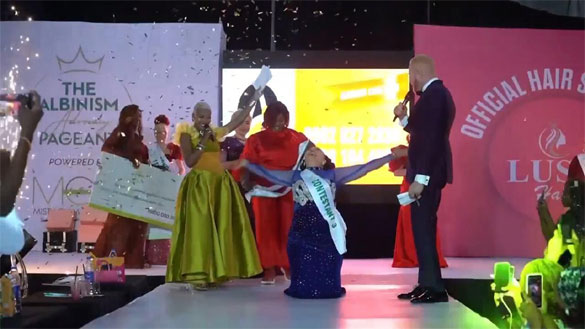
Nigeria’s pageant industry has long celebrated conventional ideals of beauty. But here at the Albinism Advocacy Pageant in Lagos, the message is diversity and the goal to break the stigma surrounding albinism.
Albinism is a genetic condition that affects the skin, hair, and eyes and is highly misunderstood across Nigeria.
Cultural myths and superstitions fuel prejudice, with some people excluded from schools, jobs, and social gatherings and even subjected to violence.
The pageant’s newly crowned queen, Anita Chidiebube-Dike, says she will use her role to push for greater public understanding of albinism.
"My first priority is to create an engaging content that will bring the strength and show the strength and positive impact of persons with albinism in our society.”
Advocacy for albinism is long overdue, says Tolani Ojuri, Chairperson of the Albinism Association of Nigeria:
"Persons with albinism have various challenges. I mean, from the sun to the low vision, and lots of persons with albinism don't even know how to go about this. And even to the general society, the myth, the bullying, the stereotyping, and all that.”
Pageant organisers say the hope events like Saturday’s pageant can help change the conversation:
"When people think of pageantry, they think of people who look a certain way," says organiser Mistura Abisola Owolabi. "But for us, we are flipping the script and using pageantry to showcase the talent of people with albinism and also advocate for them”
The World Health Organization estimates that the number of people with albinism varies from one in 5,000 to one in 15,000 people in sub-Saharan Africa.
In Nigeria, about 2 million people have albinism and the government has vowed to help combat the the discrimination they face. But change can be slow in coming.
The crowning of an albinism advocacy queen may just signal a shift toward broader representation.
Source: africanews.com
https://www.africanews.com/2025/09/14/nigerias-albinism-community-gets-its-first-beauty-queen-at-advocacy-pageant-in-lagos/
------
Five Women Photographers Honoured At Jeddah Exhibition
September 14, 2025
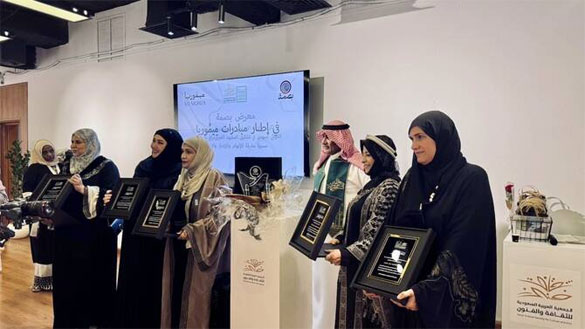
Saudi Arabia’s top female photographers took center stage in Jeddah this week at an exhibition to showcase how their work has helped shape the Kingdom’s artistic landscape. (Supplied)
------------
JEDDAH: Saudi Arabia’s top female photographers took centre stage in Jeddah this week at an exhibition to showcase how their work has helped shape the Kingdom’s artistic landscape.
Organized by the Saudi Arabian Society for Culture and Arts, the show celebrated Amal Alameer, Hanaa Turkistani, Suzan Eskander, Susan Baaghil and Najla Angawi, whose work over the past two decades has documented the nation’s heritage, culture and daily life, the Saudi Press Agency reported.
Held at the society’s headquarters in Jeddah, the exhibition included an array of pieces capturing everything from the holy sites of Makkah to stunning landscapes and ancient traditions.
Each of the photographers was presented with flowers and a commemorative plaque in recognition of their contributions to the Kingdom’s cultural and visual archive.
The exhibition space was designed to showcase their distinct artistic styles and reflect the diversity of their experiences and creative journeys.
Their work also tells the story of a society in transformation, balancing modern development with deep cultural roots.
Photography enthusiasts, students and community members attended the evening, where they had the opportunity to engage with the artists directly.
Listening to their stories and achievements offered new insight into how Saudi women continue to enrich the arts, preserve heritage and inspire new generations through the power of photography.
Source: arabnews.com
https://www.arabnews.com/node/2615277/saudi-arabia
--------
Mahsa Amini’s Death Reshaped Society: Iranian Women Artists, Writers And Political Figures
15 September, 2025
Iranian women artists, writers and political figures marked the third anniversary of the death in custody of Mahsa Amini, whose case ignited nationwide protests under the slogan Woman, Life, Freedom, saying the movement she inspired remains alive and has reshaped society.
Amini, 22, died on September 16, 2022, after being detained by Iran’s morality police for allegedly violating mandatory hijab rules. Her death sparked months of unrest in which at least 551 protesters, including 68 children, were killed, according to rights groups, and thousands detained.
Sedigheh Vasmaghi, a scholar and writer, said in a video message that Amini’s death was “a spark that triggered a historic movement.” She added: “This movement shifted women from the margins to the center of society and showed that women are no longer sidelined.”
She argued that the protests went beyond hijab rules. “The most important achievement was that women demonstrated their power and changed the thinking of society. Today many men defend women’s rights and believe gender should not be a basis for discrimination,” she said.
Zahra Rahnavard, a Green Movement leader under house arrest, said in a statement that “Iranian women, despite their abilities, are among the most suppressed in the world” due to discriminatory laws and policies.
She described Amini’s death as “a whip across the conscience of the nation” and said the uprising “has given the nation hope for a future free of oppression, backwardness and discrimination.”
Actress Pantea Bahram, banned from working in Iran, reposted a message from Amini’s father and wrote on Instagram: “Your name is a reminder of the beginning of a new era … built with courage, fear, defiance, anger, blood and at times madness. Salute to the girls.”
Another actress barred from work, Katayoun Riahi, criticized the marginalization of dissident artists, writing: “The rule of the game is clear: you are either with us or against us. Elimination is achieved either through defamation or oblivion.” She said younger generations “will not accept these rules” and called for hope in “a brighter future.”
Narges Mohammadi, Nobel Peace Prize laureate and jailed activist, said in an interview that “the movement is alive and ongoing, and its vitality is visible in society’s fabric.”
She said women’s voluntary defiance of hijab rules has weakened state control: “The Islamic Republic no longer has the same power even to hold official events.”
Source: iranintl.com
https://www.iranintl.com/en/202509147707
--------
Women's Political Rights: Elect Women MPs Through Direct Polls In Bangladesh
Sep 15, 2025
The Forum for Women's Political Rights has called for sweeping electoral reforms to ensure women's rightful place in parliament.
At a press conference yesterday at the Dhaka Reporters' Unity, the forum presented a written statement demanding that the 100 reserved seats for women be filled through direct elections starting from the upcoming polls.
The statement was presented on behalf of the forum by Sushmita Roy, Professor Samina Luthfa, Taslima Akhtar Lima, and Sadaf Saaz Siddiqui. Mahrukh Mohiuddin and Dr Farah Kabir were also present.
The forum urged that political parties be legally required to nominate a minimum of 33 percent women candidates, with the target gradually raised to 50 percent through amendments to the Representation of the People Order.
"Without women's rightful share, parliament cannot truly be a representative institution of the people," the statement read.
It insisted that simply increasing the number of reserved seats without direct elections would not give women genuine political power, warning that indirect nominations keep women MPs accountable to party leaders rather than the electorate.
The statement also highlighted the urgent need for financial support for female candidates.
"Election costs have become one of the biggest barriers for women's participation. If the state provides funds equal to the Election Commission's campaign expenditure limit, capable women will not be forced to step back due to financial hardship."
Formally launched on August 31 this year, the Forum for Women's Political Rights pledged to work for the implementation of women's constitutional rights, secure greater representation for women in parliament, and push for reforms to eliminate structural inequalities in political participation.
Urging strong measures to prevent both physical and online violence against female candidates, the forum further said, "The Election Commission has a constitutional duty to create a safe environment for women at every stage of the electoral process."
Criticising the exclusion of women from the National Consensus Commission, the forum said, "Not including a single woman in the commission is not only discriminatory, but it makes the decision-making process one-sided and undemocratic."
In its closing appeal, the forum urged the consensus commission, political parties, and the government to treat women's representation not merely as a political obligation but as a matter of democratic necessity and social justice. "We want a parliament where men and women raise their voices equally, and democracy becomes truly inclusive."
The forum's position was endorsed by several women's and civil society groups, including Outraged Women's Society, Campaign for Popular Education, Durbar Network Foundation, Citizen Coalition, Women's Initiative Centre, Narigrantha Prabartana, Women's Solidarity, Naripokkho, Nareer Daake Rajneeti, Feminist Alliance of Bangladesh, Bangladesh Nari Mukti Kendra, and Voice for Reform.
Source: thedailystar.net
https://www.thedailystar.net/news/bangladesh/rights/news/elect-women-mps-through-direct-polls-3985581
------
Human Cost Of Sending Afghan Women 'Home'
By Rajeev Parashar, Parul Gupta
Sept 15, 2025
On January 5, 2022, we highlighted in a leading news platform the impending crisis confronting Afghan women under Taliban rule. As Afghan women faced a curtailment of their rights to education, employment and basic freedoms, we called attention to the role of global initiatives in safeguarding their fundamental rights. In the face of increasing repression, many Afghan women sought refuge in neighbouring countries such as Iran, where access to education and opportunities offered a lifeline. These cross-border movements became a testament to their resilience and the critical importance of international support in defending women’s rights under authoritarian regimes.
As Afghanistan enters the fifth year under Taliban rule, its women are caught in a worsening crisis, due to a geopolitical pincer closing in.
On one side, Pakistan is forcing over a million Afghans out of its borders. On the other, Iran is doing the same, with nearly half a million facing imminent expulsion. It is not difficult to imagine that forcing women back into the confines of their ‘homes’ would mark the death knell to their opportunities and fundamental rights, even as the vision of a modern and inclusive Afghanistan fades into seeming impossibility. This human rights issue draped in geopolitical attire deserves immediate attention from the global community. To this effect, we put forth a set of measures aimed at mitigating the severity of the unfolding situation, with India spearheading these efforts.
First, India should build upon a practical and culturally sensitive engagement with the Taliban. The message should be straightforward: real progress on women’s education will help open doors to recognition and partnership. It is crucial to recognise that Taliban is not a monolith: It enforces draconian rules at home even as some of its leaders quietly send their own daughters abroad for school. At a time when Taliban longs for legitimacy and foreign aid, an uncomfortable but necessary deliberation with its leaders is unavoidable. The conversation should centre on a bold but culturally grounded proposal: a nationwide network of all-women schools and universities built for and run by women. This isn’t a foreign idea. It's rooted in the region’s own traditions. India has experience with a number of all-women institutes which appeal to conservative families. Some of these institutes such as Lady Shri Ram College and Miranda House are nationally acclaimed. The establishment of such institutes constitutes a measu
Further, New Delhi should employ its diplomatic heft to advocate for a pause in the deportations from Iran. A humanitarian appeal framed around regional stability, shared cultural ties, and practical support may find traction in Tehran, especially if it is linked with offers of assistance or collaboration. Forging stronger bilateral ties would be in the interest of Iran, given its own economic challenges and domestic unrest.
Finally, India must show leadership through action. While we acknowledge India’s limited consular presence in Pakistan, India can surely offer support to those facing expulsion from Iran. A targeted program of humanitarian visas and scholarships for the most vulnerable Afghan women would be a meaningful gesture. It would reflect India's values, while signalling to the region that India is committed to the cause of protecting women’s rights.
Political boundaries cannot be an excuse to ignore human rights anymore. Women’s education should not remain a peripheral concern. It is the foundation for peace, stability, and development. It is high time we wake up to the human face behind the unfolding geopolitical unrest.
Source: hindustantimes.com
https://www.hindustantimes.com/ht-insight/international-affairs/human-cost-of-sending-afghan-women-home-101757914420535.html
------
UNHCR shuts Afghan aid centers over women staff restrictions
Sep 14, 2025
The UN Refugee Agency (UNHCR) has closed several of its aid centres in Afghanistan, including those supporting Afghans returning from Pakistan and Iran, after the head of the UN Assistance Mission in Afghanistan (UNAMA) urged the Taliban authorities to address the issue of restrictions on female staff, Tolo News reported.
Arafat Jamal, UNHCR’s chief in Afghanistan, underlined that women’s participation is essential for their operations.
“On the 9th of September, we took the decision to close our encashment centers. We didn’t take this lightly and we knew that it would have consequences for many returnees. These centers are essential to distribute the initial cash that people receive, to register people biometrically, and to provide protection, screening, and interviews,” he said.
Women’s rights advocates have raised concerns that the clampdown on female participation will further damage Afghanistan’s fragile economy and worsen the humanitarian crisis.
Tafsir Siahposh, a women’s rights activist, told Tolo News: “We hope attention will be paid and women will be allowed to continue working as daughters of this nation, alongside their brothers, for the country that needs them. Women must be allowed to work.”
Responding to the criticism, the Ministry of Economy of the Islamic Emirate rejected conditional assistance and criticised UN-affiliated organisations for linking aid to female employment.
Abdul Latif Nazari, deputy minister of economy, said: “The Ministry of Economy calls on all aid agencies, including UN-related organisations, to continue their assistance to the people of Afghanistan, especially our returning refugees, without attaching any conditions.”
Earlier, Roza Otunbayeva, the UN Secretary-General’s Special Representative in Afghanistan, had also condemned the ban on female UN staff. She stressed that while efforts are underway to mobilize international support, restrictions on women’s employment are “unacceptable and must be resolved,” according to Tolo News.
Her remarks come at a time when the UNHCR has also warned that Pakistan’s mass deportations of Afghan nationals risk worsening Afghanistan’s humanitarian crisis without urgent global support.
Speaking in Geneva on September 12, UNHCR’s representative for Afghanistan, Arafat Jamal, urged Islamabad to halt expulsions of vulnerable Afghans. He stressed that many asylum seekers require protection and said the agency was ready to work with Pakistani authorities to identify and safeguard high-risk groups.
According to UN figures, nearly 100,000 Afghans crossed back from Pakistan in the first week of September alone. The sudden influx is straining Afghanistan’s already fragile economy, with weak healthcare, scarce food supplies and limited shelter unable to absorb such numbers.
International aid agencies have raised an alarm, warning that the return of large groups of refugees could push Afghanistan into deeper instability.
Jamal said the UNHCR has updated its regional appeal and is seeking USD 258.6 million to meet urgent needs. He cautioned that without fresh funding, the agency may not be able to continue life-saving assistance for Afghan families.
The crisis has been compounded by the Taliban’s ban on women working in UN offices, forcing the UNHCR to suspend cash assistance for returnees. Jamal clarified that the suspension was an “operational necessity” as services cannot run without female staff.
The UN estimates that more than 2.6 million Afghan migrants have been deported from neighbouring countries since the beginning of 2025. The figure reflects the immense scale of forced displacement and the pressure on Pakistan to balance domestic concerns with international obligations.
Jamal warned that without coordinated regional and global action, both Pakistan and Afghanistan risk sliding into deeper humanitarian turmoil, Khamaa Press reported.
Source: thenewsmill.com
https://thenewsmill.com/2025/09/unhcr-shuts-afghan-aid-centers-over-women-staff-restrictions/
-------
Iran shuts down Tehran cafe over alcohol use and dancing
15 September, 2025
Iranian authorities have shut down a cafe-restaurant in northern Tehran for allegedly serving alcohol and permitting dancing, state media reported, the latest in a string of closures targeting businesses accused of violating public morality rules.
Fars News, affiliated with the Revolutionary Guards, said Café Kariz in the Nahjul-Balagha Park had become “a venue for serving alcoholic drinks, nudity, violation of trade regulations and dancing.”
It said the establishment was sealed by the Public Security Police, urging authorities to “criminalize the serving of alcohol and mixed-gender parties in commercial venues” and to act without leniency against violators or officials suspected of collusion.
Possession and consumption of alcohol are illegal in Iran, carrying punishments ranging from fines and lashings to prison sentences. Despite the ban, underground networks and discreet venues continue to supply alcohol, often at high cost and under strict secrecy, according to both state and independent reports.
Fars said police inspections would continue to target what it called norm-breaking establishments.
In recent weeks, authorities have shuttered several cafés and restaurants across Iran, citing reasons ranging from live music and mixed-gender gatherings to customers failing to observe compulsory hijab.
According to the reformist daily Ham-Mihan, official and unofficial reports indicate that over the past two months around 20 cafés, garden restaurants, and wedding halls in Tehran, Dezful, Hamedan, Kashan, and Maragh in Isfahan province have been closed for what officials described as violations related to women’s dress and mandatory hijab.
In Qom, authorities last week permanently closed a café for operating without a license and hosting live music, while in July the provincial Revolutionary Guards announced the closure of three other cafés over “multiple violations including hijab infractions.”
In Dezful, three popular cafés were sealed in early September for what police described as breaches of hijab regulations.
Source: iranintl.com
https://www.iranintl.com/en/202509145700
----
URL: https://newageislam.com/islam-women-feminism/beauty-queen-nigeria-albinism-community/d/136847