
Amnesty International: New Taliban Penal Code Intensifies Repression of Women in Afghanistan
New Age Islam News Bureau
17 March 2026
· Amnesty International: New Taliban Penal Code Intensifies Repression of Women in Afghanistan
· Empowering Security: Syria Inaugurates the Women’ s Police Institute
· Irish woman who fled ‘very wealthy’ husband in UAE over alleged abuse granted safety order
· Hijab Day tabling and try-on event fosters community, dialogue and smiles
· Female Doctor Killed by Unknown Attacker in Kunduz
· Malaysia’s first Indian woman Federal Court judge Nallini Pathmanathan looks back on a long career
· KADEM hosts global dialogue on Muslim women, civil society in New York
· Documentary Filmmaker Mojgan Ilanlou Arrested Along with Husband and daughte
Compiled by New Age Islam News Bureau
-----
Amnesty International: New Taliban Penal Code Intensifies Repression of Women in Afghanistan
17 Mar 2026
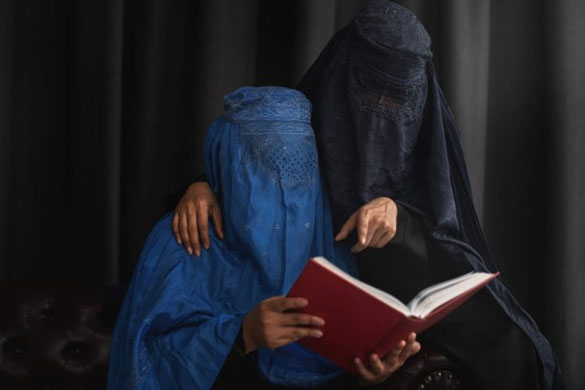
The South Asia regional office of Amnesty International has announced that the rights of women and girls in Afghanistan have been consistently restricted by the Taliban, and that the approval of a new penal regulation will intensify this repression.
The organization said on Monday, March 16, 2026, on its X page that the new regulation will further limit the access of women and girls in Afghanistan to justice, equality, and independence.
Amnesty International has emphasized that the Taliban must immediately repeal this strict regulation.
This comes as, over the past more than four years, following the Taliban’s return to power, women and girls in Afghanistan have been deprived of their most basic rights.
They have been denied the right to work and education, are not allowed to travel without a mahram, and numerous restrictions have affected their daily lives and significantly reduced their access to social and economic opportunities.
According to published reports, these systematic repressions have placed women and girls in Afghanistan at risk of widespread discrimination and deprivation.
Source: 8am.media
https://8am.media/eng/amnesty-international-new-taliban-penal-code-intensifies-repression-of-women-in-afghanistan/
------
Empowering Security: Syria Inaugurates the Women’ s Police Institute
March 17, 2026
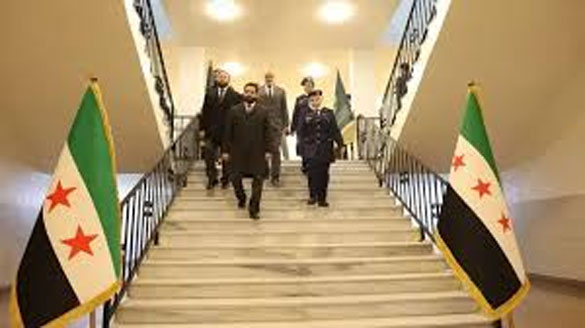
Syria has taken a significant step toward modernizing its security sector with the official inauguration of the Women’s PoliceInstitutein Al-Tall, in the Damascus countryside. The new institution reflects a strategic shift toward professionalizing law enforcementand expanding therole of Syrian women in frontline policing. A Strategic Vision for Modern PolicingMinister of Interior Anas Khattab led theinauguration ceremony, describing theinstituteas a specialized center dedicated to training and qualifying female police personnel. He noted that thefacility is the product of nearly a year of intensive preparation, during which a multidisciplinary team worked to establish a modern educationalenvironment capable of meeting contemporary security needs. According to Minister Khattab, theinitiativestems from the ministry’s conviction that women areindispensable partners in maintaining public safety. Heemphasized that the government has prioritized expanding women’s participation in security roles sincethe post-libera ion period, ensuring that training programs respect both the professional demands of policing and thesocial considerations uniqueto thesector—all while dhering to international standards. Specialized Training and Community Engagement Theinstitute’s curriculum is designed to balancetechnical policetraining with thesocial dimensions of community security. Courses includelegal studies, tactical field exercises,and specialized modules on family protection, child welfare,and the prevention of community-based violence. Brigadier Huda Mahmoud Sarjawi, theinstitute’s director, described the projectas a national responseto evolving public safety challenges. “This platform prepares female officers to navigate complex professional realities,” shesaid, “and reflects the deep national trust placed in Syrian women to safeguard society and reinforcestability.” Public interest has been remarkable: morethan 15,000 applications weresubmitted for the first intake. Theinstitute currently accommodates 200 trainees per cycle, with a four-month intensive program set to begin soon. The curriculum covers foundational policing, military discipline,and field operations. A specialized officer-training track, developed in coordination with the Police College,aims to cultivatea new generation of female leadership within the ministry. Integration and Professional Renewal A notablefeature of theinstitute’s mission is theintegration of female officers who previously defected from theformer regime’s security apparatus. Minister Khattab welcomed their return, describing their inclusion as a qualitativeaddition to the ministry’s expertiseand a reaffirmation ofa national path that prioritizes serviceto the homeland. Among these figures is Colonel Yusra Dhiyab Al-Qata’na, widely known as Al-Anoud, who now heads theinstitute’s Training and Rehabilitation Department. With a background in military and political science, Al-Qata’na defected in 2012 and spent years working in humanitarian logistics, supporting the wounded and displaced. Her experiences, shesays, shaped her understanding of theresilienceand potential of Syrian women. “The hardships Syrian women endured during the war revealed their capacity to assume vital roles in this new phase,” she noted. Her current mission is to ensurethat recruits are not only trained but genuinely prepared for theresponsibilities of public service
Source: syrianobserver.com
https://syrianobserver.com/syrian-actors/empowering-security-syria-inaugurates-the-womens-police-institute.html
------
Irish woman who fled ‘very wealthy’ husband in UAE over alleged abuse granted safety order
March 17, 2026
A woman who fled her “very wealthy” husband in the United Arab Emirates, alleging she endured severe abuse, including “brutally” striking her caesarean section wound, has been granted a safety order in Dublin.
Dublin District Family Court heard on Monday the Irish woman married her UAE-based husband in recent years, where she lived for a period before leaving with their child after alleged physical abuse and “coercive control”.
A safety order hearing held on Monday was not attended by the husband in person or via video-link, though his counsel, Donagh McGowan, said all accusations, which are “somewhat historic in nature”, are fully contested by him.
McGowan sought an adjournment of the hearing as child abduction proceedings are before the High Court, alleging the woman “wrongfully” took the child to Ireland.
He told Judge Mark O’Connell that the father of the child is seeking their return to the UAE.
O’Connell opted to proceed with the safety order hearing, during which the woman alleged she endured “severe physical abuse and coercive control” since they married.
She claimed the abuse began in the UAE, though some incidents occurred in Ireland around the time of the birth of their child.
“As soon as we arrived in Ireland, he began to physically abuse me,” she told the judge.
“I had just had a C-section,” she said. “He brutally hit my C-section wound.”
She further alleged that her husband “locked” her in a room on one occasion, where she was confined “without a phone”.
During the course of their marriage, she claimed he gave her bruises “that nobody could see”.
“He burned me with a cigar on multiple occasions and told me that he would ensure nobody would believe me,” she said.
Asked where they were when her husband allegedly burned her, she replied that this happened abroad in a European country, though she maintained he has “savagely hit me in Ireland”.
Following the birth of her child, she told the court a public health nurse “witnessed his coercive control around me” while visiting them. The nurse subsequently referred concerns to Tusla, she said, adding that the matter is “ongoing”.
Noting the “power and wealth of his family”, she said she has received text messages from her husband, allegedly saying if she does not “behave”, she will “see”.
“I really do need protection, judge, he has promised me and threatened me that he will kill me,” she said.
Asked what her husband does for a living, she replied that he is a business owner, though added that his father is a “multimillionaire”.
Reiterating that child abduction proceedings are before the High Court, McGowan raised concern that the granting of a safety order “without evidence being tested and without all evidence being heard” might be taken as a “finding of fact”.
However, O’Connell said the woman’s protection could be safeguarded “without prejudice” to his client.
The judge noted McGowan’s client was correctly served notice of the safety order proceedings, but “isn’t here to answer the allegations”.
“I’m not sympathetic to you in relation to that point. He has decided not to be here, he knows what’s going on, and he has instructed you,” he said.
O’Connell granted a full safety order for a three-year period prohibiting communication with the exception of court-ordered access, which is facilitated online several days each week.
The woman’s solicitor, Sandra McAleer, told the judge the man is a “millionaire, possibly billionaire”, but is paying “zero maintenance for his wife and child”.
An application for maintenance was adjourned by O’Connell to a later date due to a lack of proof that papers were successfully received by the husband.
Join The Irish Times on WhatsApp and stay up to date
Sign up for push alerts to get the best breaking news, analysis and comment delivered directly to your phone
Listen to In The News podcast daily for a deep dive on the stories that matter
Source: irishtimes.com
https://www.irishtimes.com/crime-law/courts/2026/03/17/irish-woman-who-fled-very-wealthy-husband-in-uae-over-alleged-abuse-granted-safety-order/
-------
Hijab Day tabling and try-on event fosters community, dialogue and smiles
MARCH 16, 2026
The MSA hosted its annual Hijab Day tabling event as part of Islam Awareness Week, a week dedicated to fostering understanding of Islam and promoting dialogue and connection on campus. The tabling gave attendees the chance to try on the hijab, learn about its Islamic significance and ask questions, with it falling in the same month as World Hijab Day. It was held in the Busch Student Center’s north lobby on Tuesday, Feb. 17.
Tons of vibrant printed hijabs sat on the Muslim Students’ Association table, ranging from floral patterns to animal prints. Fatima Amjed, a sophomore neuroscience major, spotted one that caught her eye.
“Can I try on the leopard?” Amjed asked, pointing to the printed hijab.
As Layali Mutan, a sophomore nursing major helping run the MSA table, began wrapping the hijab for Amjed, other Muslim and non-Muslim students stopped to watch and try one on, too.
The word “hijab” means veil in Arabic, but many know it as the practice of Muslim women covering their hair and body. The tabling created a space for attendees to learn more about the religious, social and personal significance of the hijab for women who observe it, as well as the diversity in how it is observed.
Mutan, the MSA secretary and one of the event planners, brought an array of hijabs from her own collection for attendees to try on. The table also featured educational pamphlets and decorated “Hijab Cam” frames for attendees to take pictures with.
Mutan said putting together and leading the event was important because the hijab is often surrounded by misconceptions.
“[The hijab] isn’t a bad thing,” Mutan said. “Hijab is something beautiful, and it has such a beautiful meaning behind it. Not only is the hijab something you wear, but it’s something you can also feel beautiful in.”
Mutan also said that events like these are important for bringing people together and sharing different perspectives on SLU’s campus.
“I hope people gain a different outlook on hijab,” Mutan said. “[It is] not that it’s something that’s going to hold you back, you’re not going to be looked at in a negative light. It’s something so beautiful and sacred, and I just hope this inspires people to want to learn more about the hijab and try on new styles, and meet new people.”
The tabling took place the day before Ramadan this year, the 9th month in the lunar calendar in Islam and one of the holiest months of the year for Muslims. As a time of deep spiritual significance, the tabling helped attendees like Amjed feel like they could commit to furthering their goals during and after Ramadan.
“I really liked how [the hijab] looked, and it just made me feel so happy, like I had some type of glow,” Amjed said. “My biggest fear is always, ‘Oh, what are people going to think?’ but trying it on, it just felt natural…I didn’t really have that fear anymore.”
In a photo recap of the event posted on the MSA’s Instagram, Muslim and non-Muslim women who stopped by the tabling could be seen trying on hijabs and smiling with the photo-op frames.
“Thank you for taking part in such a beautiful event. Our table was filled with inter-religious dialogue, sisterhood and love for a purpose greater than ourselves,” the MSA said in their caption on the post. “We thank you all for your immense support while we exhibited such an intimate, powerful and beautiful portrayal of Islam.”
Source: unewsonline.com
https://unewsonline.com/2026/03/hijab-day-tabling-and-try-on-event-fosters-community-dialogue-and-smiles/
------
Female Doctor Killed by Unknown Attacker in Kunduz
By Fidel Rahmati
March 16, 2026
A female doctor was killed by an unidentified attacker while returning home from work in Kunduz Province, according to local officials.
Adolat Hamidi, a midwife from Kulob in Tajikistan who had provided maternity and healthcare services to women in Imam Sahib district of Kunduz for years, was killed by unidentified individuals on Saturday. Her body was transferred to Tajikistan on Sunday, March 15.
Ghulamuddin Khaksar said the doctor was attacked with a knife by an unknown individual while traveling home, leading to her death.
Khaksar added that security authorities have launched an investigation into the incident and are working to identify and arrest the suspect responsible for the killing.
The attack occurred as the doctor was returning from her workplace, highlighting growing concerns about the safety of women working in the health sector in northern Afghanistan.
Female healthcare workers, including doctors and nurses, have repeatedly faced threats and violent attacks in different parts of Afghanistan while traveling to work or serving in medical facilities.
Local authorities and rights groups have repeatedly stressed the need for stronger protection measures to ensure that women working in the health sector can perform their duties safely.
Afghanistan continues to face a severe shortage of female medical professionals, particularly in rural areas where cultural restrictions make access to male doctors difficult for many women.
According to the World Health Organization, Afghanistan has one of the highest maternal mortality rates in Asia, with dozens of mothers and infants dying daily from preventable pregnancy-related causes.
Meanwhile, improving security and protecting healthcare workers will be essential to maintaining basic health services and supporting vulnerable communities across the country.
Source: khaama.com
https://www.khaama.com/female-doctor-killed-by-unknown-attacker-in-kunduz/
------
Malaysia’s first Indian woman Federal Court judge Nallini Pathmanathan looks back on a long career
By Ida Lim
17 Mar 2026
KUALA LUMPUR, March 17 — Tan Sri Nallini Pathmanathan, the first Malaysian Indian woman to be a judge in the Federal Court here, retired recently and in an interview with Malay Mail talks about how she came to a career in law and other highlights in her 19 years serving in the judiciary.
From a family of doctors, to being a lawyer and judge
Born in Ipoh, Perak, Nallini had always wanted to be a doctor as she comes from a family – her grandfather, father, uncles, aunts, and younger brother – of doctors. Her mother was a teacher.
She had a degree in Physiology from the University of London but did not want to pursue a career in academia.
“So I then switched to law at the suggestion of my late father, and I was then much happier after I started in the law,” she said.
After being called to the Bar in the UK in 1984, Nallini returned to Malaysia in 1985 and was called to the Malaysian Bar in February 1986.
She was in the same law firm, Skrine, for 21 years where she handled family, employment, medico-legal and commercial cases.
In 2007, then chief justice Tun Richard Malanjum invited Nallini to join the judiciary.
“And that is where the first Indian female judge actually stems from, because at that time there were no Indian women in the superior judiciary, that was one of the reasons I was invited. I was of course extremely surprised to have been asked and extremely happy as well.
“Essentially, for lawyers, being a judge is often the culmination of one’s career. And it was a wonderful opportunity.”
Nallini explained she could afford to join the judiciary despite the large cut in income, as she was well-supported by her husband – who happens to be a doctor!
Malaysian first, but also grateful to inspire youths of all races
Asked for her thoughts on being the first Malaysian woman of Indian ethnicity to be a judge at the High Court, Court of Appeal and also the Federal Court, Nallini noted she thinks of herself as “Malaysian first.”.
“It is a fact, people find it very easy to describe in that way. However, I’m Malaysian and my concern has always been about serving the Malaysian public as a whole.
“When you are a judge – I think, as was said by Tun Suffian, basically it doesn’t matter whether the person appearing before you is yellow, white, black or green – you look at the case and race never comes into it.
“I think that is something I certainly have no trouble dealing with. My work speaks for itself as a Malaysian judge,” she said.
She was alluding to former Lord President Tun Mohamed Suffian Hashim’s 1982 Braddel Memorial Lecture, where the former head of Malaysia’s judiciary had said judges in a multiracial and multireligious society such as Malaysia cannot help being from a particular race or religion.
Among other things, Suffian had said that judges however seek to not be too identified with any particular race or religion, so that no one could confidently identify a judge’s race or religion if the judge’s name was deleted from a judgment.
Nallini added she is grateful to have been a source of inspiration for Malaysian youths to work harder and have aspirations.
“It is a source of great pride for the Indian community and I find that very fulfilling, and I find it’s good to inspire young people in Malaysia,” she said.
Favourite memories as a judge
For Nallini, the highlight of being a judge is the sense of fulfilment from a job well done – writing a judgment that is “coherent and cogent” after hearing a long trial.
“It’s an extremely happy feeling because you feel you have fulfilled something and done your best to achieve that object, so when everything comes together – and for me, with judgments, it should be such that when you look at it from all angles, it should all fit together – I find that part of it the most satisfying.”
Nallini agreed that writing a good judgment is akin to solving a mathematical puzzle, but said there is also the added element of being fair and equitable to all those involved in a court case as it involves human beings.
Another of her best memories of being a judge was the supportive working environment in the judiciary, where people are courteous, kind and inclusive.
“And then of course, the sense of camaraderie within the judiciary in terms of my relationship with other judges, with judicial officers and the staff – that has been extremely beneficial, pleasant. It’s a wonderful working atmosphere,” she said.
“You are free to just do what is right. That’s a tremendous privilege, not many people have that opportunity.”
Challenges as a judge
Nallini made it clear that she did not face any challenges in relation to the working environment, the courts or the public.
“The challenge perhaps is actually the workload, it’s voluminous and you have to write good judgments within a reasonable time. So I think that was the primary challenge, making sure that you hand down reasoned judgments within a reasonable time, given the volume of the case load,” she said.
This means that much of a judge’s life is dedicated towards the work of reading on and considering the court cases before them, including on weekends, she said.
While the number of court cases she handled at the Federal Court was fewer compared to her High Court days, Nallini said Federal Court cases can be and often were more complex, especially in Constitutional cases.
But more importantly, decisions at the Federal Court which is the highest court in Malaysia are final and could potentially impact the lives of many people, she said.
“In the Federal Court you have more time, but then you have to ensure you have done even more research and considered issues very carefully, because you are going to affect the decisions of other courts, and you are basically writing the law for the land, so it’s a serious burden that cannot be discharged lightly.”
What’s next after retirement
Nallini retired on February 22 as she turned 66 years and six months old, having served the maximum possible tenure for judges in Malaysia with a six-month extension after hitting the retirement age of 66.
“I’m grateful for having served till the end of my possible tenure under the Constitution. It’s been a privilege to serve the nation, and I will now move on to the next phase of my life.”
As for her plans after retirement, Nallini said she may do something either related to the law or writing – two skills which she had spent her life honing.
“Those are things I’ve done for over 40 years, so I think it’s become a habit. It’s very difficult to just switch off overnight.”
Having worked virtually without a break since she became a lawyer (with just a two-day gap before she became a judge) until her retirement, she has not decided about her next step as she had not had much time to think about it yet.
Hopes for Malaysia’s judiciary
Nallini shared her hopes for judges in Malaysia to continue to protect the independence of the judiciary.
“For me, the independence of the judiciary is a fundamental aspect, and I think Malaysia’s profile in terms of the independence of its judiciary has grown in the last couple of decades or so.
“And my wish for the country is, that will continue to be the case, that the judiciary both institutionally and individually will continue to uphold its independence and the rule of law. That will benefit the people of Malaysia in terms of our growth as a nation, both economically and in terms of our stature globally,” she said.
Source: malaymail.com
https://www.malaymail.com/news/malaysia/2026/03/17/malaysias-first-indian-woman-federal-court-judge-nallini-pathmanathan-looks-back-on-a-long-career/212523
-----
KADEM hosts global dialogue on Muslim women, civil society in New York
BY DAILY SABAH WITH AA
MAR 16, 2026
The Women and Democracy Association (KADEM) hosted a consultative iftar in New York on Monday, bringing together diplomats, academics, and civil society leaders during the United Nations Commission on the Status of Women meetings.
The closed-session event, titled "Faith, Justice and Moral Leadership: Reimagining Muslim Civil Society," was held at the Turkish House (Türkevi) and focused on the role of Muslim civil society in addressing global crises, ethical leadership, and women’s impact on social transformation.
Opening the program, KADEM Board Member Dr. Zeynep Temizer Atalar emphasized that civil society should go beyond crisis response, shaping social norms, fostering public responsibility, and acting as a moral bridge between communities and governments.
She added that Muslim civil society organizations can contribute to global justice debates while promoting principled governance and societal solidarity.
The event featured remarks from Ambassador Hameed Ajibaiye Opeloyeru, Permanent Observer of the Organization of Islamic Cooperation to the UN, and Pakistan’s Permanent Representative to the U.N., Ambassador Asim Iftikhar Ahmad. Discussions highlighted the importance of international collaboration and faith-based organizations in solving global challenges.
During an open consultative session moderated by KADEM Board Member Dr. Zeynep Feyza Eker Ayhan, participants from multiple countries discussed strengthening networks among Muslim civil society organizations, promoting ethical leadership, and increasing women’s leadership roles.
Participants highlighted the devastating humanitarian impact of the crisis in Gaza on women and children and called for stronger global solidarity in response to such crises. The session emphasized that true justice requires collective action and that women play a central role as transformative leaders in civil society, education, diplomacy, and public policy.
Speakers also highlighted historical and structural perspectives on Muslim civil society. Basira Rahim, President of Shahada Inc., noted the contributions of African American Muslims and indigenous communities to the foundations of Muslim civil society in the United States.
Nadira Gandhi, director of Cornerstone, underscored the invisible burdens women carry in conflict and crisis while serving as central figures in community recovery.
Other participants stressed the importance of improved communication between Muslim communities, acknowledging historical inequities, and creating tangible solidarity networks. Christy Rocco, vice president of Business Development at The Above Group, called attention to the underrepresentation of Muslim women in corporate leadership and emphasized the need for stronger professional networks.
Source: dailysabah.com
https://www.dailysabah.com/turkiye/kadem-hosts-global-dialogue-on-muslim-women-civil-society-in-new-york/news
------
Documentary Filmmaker Mojgan Ilanlou Arrested Along with Husband and daughter
MARCH 16, 2026
Mojgan Ilanlou, a documentary filmmaker and civil activist, has been detained. According to published reports, plainclothes agents arrived at her home on the morning of Sunday, March 15, and arrested her without presenting a judicial warrant.
Plainclothes agents are often affiliated with the IRGC Intelligence Organization or the Ministry of Intelligence. They operate outside the regular police structure and are widely known for operating with little accountability and using extrajudicial methods. In the current environment of war and internal repression, such agents are increasingly used to “disappear” well-known cultural figures who may have influence over public opinion.
BBC Persian reported that a physical confrontation occurred between Ilanlou and the security forces, and that the plainclothes agents used violence during the arrest.
At the same time, Mohammad Pirhadi, a cinema producer, and Leila Pirhadi, the husband and daughter of Mojgan Ilanlou, were also arrested.
Mojgan Ilanlou is a prominent public figure who had previously been imprisoned for supporting the “Woman, Life, Freedom” movement. Her husband, Mohammad Pirhadi, is a well-known film producer who has worked on major Iranian productions. The arrest of an entire family, including their child, reflects a pattern of “collective punishment” used by the authorities to ensure that individuals with a public platform remain silent during the ongoing military conflict.
As of the time of publication, no information has been released about which agency carried out the arrests or where the detainees are currently being held, and their situation remains unclear.
Source: iranwire.com
https://iranwire.com/en/news/150492-documentary-filmmaker-mojgan-ilanlou-arrested-along-with-husband-and-daughter/
------