
17 Year Old Girl Zahra Shakari Murdered in ‘Honour Killing’, in Iran
New Age Islam News Bureau
25 July 2025
· 17 Year Old Girl Zahra Shakari Murdered in ‘Honour Killing’, in Iran
· Hijab Rights Advocacy Initiative Condemns Attacks On Muslim Women In VeilIn Lagos And Ibadan
· Safa Soliman: a Symbol of Power and Potential for African Women’s Judo
· Girls in Afghanistan Turn to Religious Schools After Ban on Education Beyond 6th Grade: AP
· Women And Girls Of African Descent: Visibility Is Dignity And Power
· Retired Army Man Who Made Derogatory Remarks Against Judiciary Over Hijab Verdict Gets Bail
Compiled by New Age Islam News Bureau
URL: https://newageislam.com/islam-women-feminism/honour-killing-murdered-iran-girl/d/136296
-----
17-Year-Old Girl , Zahra Shakari,Murdered in ‘Honour Killing’ in Iran
July 24, 2025
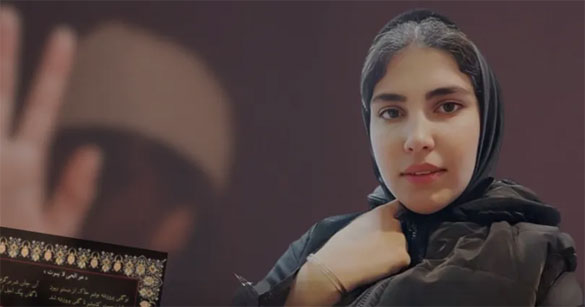
Zahra Shakari was murdered on Sunday in the village of Khabar by her sister’s husband and other relatives, who claimed they were “preserving family honor”
-----------
A 17-year-old girl was killed by her brother-in-law and other family members in what authorities are describing as an “honour killing” in Iran’s Kerman Province.
Zahra Shakari was murdered on Sunday in the village of Khabar by her sister’s husband and other relatives, who claimed they were “preserving family honor,” according to the Hengaw Organization for Human Rights.
The family staged the scene to make it appear that Shakari had died by suicide, after she entered a relationship with someone outside the family, Hengaw reported.
Shakari’s body showed signs of violence, including bruises on her back, head injuries, and bleeding from her ears.
The location where her body was found hanging was too high for someone of her height to reach unassisted.
According to Hengaw, the family blocked the transfer of her body to a forensic medical center for autopsy and used local influence to obstruct the investigation.
Shakari had previously told the person she was in a relationship with that her sister and brother-in-law had threatened her.
Iranian authorities do not publish reliable statistics on femicide, though such cases occasionally appear in local media.
According to Etemad newspaper, 78 women were murdered by family members between March and September of last year.
In 2023, Shargh newspaper reported that at least 165 women were killed by male relatives between 2021 and 2023, with 27 of those murders occurring in the first three months of 2023 alone - many classified as “honor killings.”
These figures reflect only reported cases - the actual numbers are believed to be significantly higher.
Source: iranwire.com
https://iranwire.com/en/women/143479-17-year-old-girl-murdered-in-honor-killing-in-iran/
-----
Hijab Rights Advocacy Initiative Condemns Attacks On Muslim Women In VeilIn Lagos And Ibadan
July 25, 2025
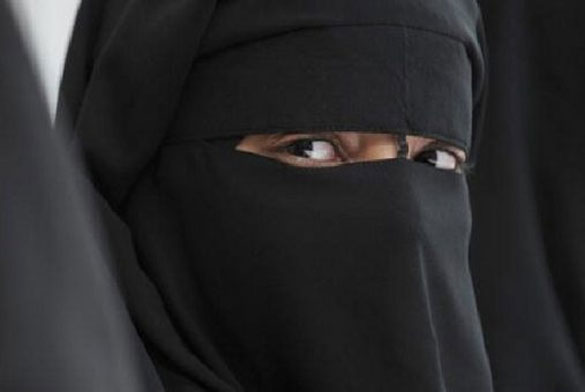
The Hijab Rights Advocacy Initiative (HRAI) has strongly condemned the recent attacks on two niqabi-wearing Muslim women in Lagos and Ibadan.
The group said the assaults stripped the women of their dignity, faith, and freedom.
In Ibadan, an expectant Muslim woman wearing the hijab-niqab was verbally abused, physically assaulted, and beaten up in a public place. Eyewitnesses confirm that she was not only attacked but also stripped of her face veil in the presence of a crowd; a cruel act of humiliation and religious discrimination.
Similarly, in Ijora, Lagos, a 40-year-old niqabi woman and asthmatic patient, was accosted on May 17 by a man identified as a Naval officer. He ordered her to remove her veil to “prove” she was a woman. Despite her attempt to comply respectfully by offering to unveil for another woman, she was violently attacked by the officer, a woman called in from a nearby beer parlour and several others. She was stripped of her niqab and hijab in the scuffle and left badly beaten until a Good Samaritan intervened. The matter was reported to the Ijora Police Station, and while one of the suspects has been charged to court and remanded at Kirikiri Prison, the naval officer is currently at large, having been released on bail to a senior official.
The female co-perpetrator was arraigned before the magistrate court, and the matter adjourned.
RAI Executive Director HajiaMutiatOrolu-Balogun said: “Assaulting hijabi and niqabi women simply for observing their religious dress code is an affront to human dignity, religious liberty, and constitutional rights.
These are not isolated incidents; they are part of a growing pattern of intolerance that must be stopped before it sparks wider unrest. We call on security agencies and relevant authorities to ensure that all perpetrators are held accountable and that justice is neither delayed nor denied.”
HRAI Secretary ShereefatEnessi said: “These hijabi AND niqabi women did not provoke violence; they were simply walking in modesty and faith. To allow their assailants to go unpunished would be to sanction a culture of impunity and discrimination. Nigeria cannot afford the consequences of turning a blind eye to such injustice.
“We demand justice. We demand safety. And we demand respect for every woman’s right to choose her religious identity without fear.”
Source: thenationonlineng.net
https://thenationonlineng.net/hrai-condemns-attacks-on-muslim-women-in-veil/
-----
Safa Soliman: a Symbol of Power and Potential for African Women’s Judo
24. Jul 2025
Egypt’s Safa Soliman is beginning to make a name for herself in the world of judo. The 18 year old won the African Cadet Championships in 2022 before taking the junior title in Cameroon last year.
The continental medals weren’t Safa’s final target though and in October 2024 she won an historic medal, a bronze at the Dushanbe World Junior Championships.
The teenager spoke then about what the medal meant, “I’m very happy to have won this medal. it’s been a long time since an African athlete did this. It’s a great result for Egypt."
"I made a lot of investment and worked hard. Training is needed very often but it’s a pity there are so few women where I am. It takes a lot of effort, personal choices and work. I’m happy that I have this junior world medal and it will certainly have a positive impact on women and girls in Egypt and Africa."
"I thank all the coaches who contributed and also president of our federation, and my judo club for their support. We do very technical training with coaches Atef, Hiroshi and Aboumedan.”
That was in October and in July 2025, she continued to collect results, winning her second junior African title, this time in Luanda, Angola. Present at the event was none other than 6-time senior world champion Clarisse Agbegnenou (FRA), leading masterclasses, speaking with African judoka and inspiring the young athletes present.
The buzz around Clarisse’s presence was clear evidence of the power of inspiration and now Safa Soliman is in the privileged position of being both inspired and inspiring at the same time, an example of the power of sport in so many ways. She is one to watch as the future approaches, a strong symbol of the power and potential of the new generation of African women in judo.
Source: .ijf.org
https://www.ijf.org/news/show/safa-soliman-a-symbol-of-power-and-potential-for-african-women-s-judo
-----
Girls in Afghanistan Turn to Religious Schools After Ban on Education Beyond 6th Grade: AP
July 25, 2025
By Fidel Rahmati
Girls in Afghanistan turn to religious madrasas for learning after being banned from formal education beyond sixth grade, according to the Associated Press.
Three years after the Taliban banned secondary and higher education for girls in Afghanistan, many teenage girls are now turning to religious schools (madrasas) as their only available educational refuge. According to a report by the Associated Press, these institutions have opened their doors to girls left with no access to formal education.
One such girl is 13-year-old Nahida, who works in a cemetery in Kabul after finishing her primary school. Her dream of becoming a doctor now feels unreachable. “I would prefer to go to school, but I can’t—so I’ll go to a religious school,” she told AP with deep frustration. She plans to enroll in a madrasa next school year.
Since returning to power in 2021, the Taliban have become the only government in the world to officially ban girls from attending secondary schools and universities. In the absence of formal education options, religious schools have become the only structured learning spaces for thousands of Afghan girls. Some girls, like 25-year-old Faiza, hope that demonstrating religious commitment might one day allow them to resume formal studies.
Zahedur Rahman Sahabi, director of the Tasneem Nusrat Islamic Sciences Center in Kabul, said his institution now educates around 400 students, 90% of whom are women and girls aged three to sixty. He notes a sharp increase in enrollment since schools closed, with students studying Quran, Islamic jurisprudence, Hadith, and Arabic. Though religious schools were popular before, he says, they’ve now become the primary educational lifeline.
While there is no exact data on the number of girls now studying in madrasas, Taliban education official Karamatullah Akhundzada announced last year that over one million new students had enrolled in religious schools in a single year, bringing the total number to more than three million.
Despite internal debates within the Taliban—like former deputy foreign minister Sher Abbas Stanekzai’s public claim that there is “no justification” for banning girls from school—the policy remains unchanged. UNICEF chief Catherine Russell warned that if the ban continues through 2030, over 4 million girls will be permanently denied education beyond the primary level.
While some religious scholars argue that religious and modern sciences must coexist, the overwhelming reliance on religious schools reflects the deep crisis facing Afghan girls’ education. For many, madrasas are a last hope—not a choice.
If the current restrictions persist, experts warn of devastating long-term consequences for Afghanistan’s economy, healthcare, and development. Without urgent international and internal action, an entire generation of Afghan girls may be left behind.
Source: khaama.com
https://www.khaama.com/girls-in-afghanistan-turn-to-religious-schools-after-ban-on-education-beyond-6th-grade-ap/
--
Women and girls of African Descent: visibility is dignity and power
24 July 2025
“Women and girls of African descent are not merely victims of an unequal system; we are also leaders, thinkers, writers, mothers, artists, students, lawyers, fisherwomen, guardians of ancestral knowledge — and anything else we choose to be,” said Franciele Silva, a Brazilian law student at the Federal University of Bahia.
The International Day of Women and Girls of African Descent, observed for the first time this 25 July, is a call to move beyond statements toward bold, transformative action, including investment in education, dismantling stereotypes, and ensuring leadership representation.
“This day serves as a way to make our struggles, our existence, and our contributions visible — things that are so often erased or silenced,” Silva said.
For Hanadi Saad Al Farhan, a humanitarian and community development professional based in Basrah, Iraq and former UN fellow of African descent, this day reminds the world that women and girls of African descent matter.
“Visibility is dignity. It is a call for recognition, not only of the historical injustices we have faced but also of the ongoing struggles with systemic racism, exclusion, and erasure,” Saad Al Farhan said. “It is also a day to uplift our resilience, culture, and contributions that are often overlooked.”
In Iraq, Saad Al Farhan explained, people of African descent are largely invisible in public discourse. International days such as this create space for them to speak their truth and assert their place in society.
Justina Obaoye-Ajala, an international human rights lawyer and senior fellow for Indigenous and minority rights and people of African descent, echoed this perspective.
“For far too long, the struggles, strengths, and triumphs of women and girls of African descent have been erased or sidelined in history, policy making and even mainstream feminist movements,” Obaoye-Ajala said.
“On this day, UN Human Rights not only honours their contributions to society but also recognizes the persistent structural inequalities that continue to marginalize them,” said Marie Joseph Ayissi, a Human Rights Officer at UN Human Rights and Secretary of the Working Group of Experts on People of African Descent (WGEPAD).
Lived experiences
Silva, Saad Al Farhan and ObaoyeAjala, have fought for the right to shape their futures.
“My experience has been one of both pride and struggle,” Saad Al Farhan said. “I am proud of my identity and my community, but it hasn’t been easy. Afro-Iraqi women face deep-rooted stereotypes, and often we are expected to stay silent or invisible.”
Saad Al Fahran said that even in professional contexts, women of African descent feel like they must work twice as hard to earn the same respect.
“One of the biggest challenges is that the discrimination is so normalized, many don’t even see it as a problem. This is why documentation, awareness, and solidarity are so important,” she added.
Silva, who was born in the Quilombo Rio dos Macacos, an Afro-Brazilian community, said that her experience has been marked by both resistance and hope. A quilombo is a traditional Afro-Brazilian community originally founded by enslaved Africans who escaped bondage and formed self-governed settlements. Today, many quilombos continue to uphold their ancestral lands, culture, and collective identity while advocating for land rights and social justice. Silva said that growing up in a quilombo taught her the value of community, ancestry and the fight for human rights.
“At the same time, I face the daily effects of structural racism: invisibility, institutional violence, the denial of basic rights, and the constant effort to prove our legitimacy in spaces that were never designed with us in mind,” Silva said.
In China, Obaoye-Ajala became the first African lawyer to appear in Chinese courts. However, her work didn’t come without resistance.
“I encountered structural and institutional pushbacks. These challenges were not merely professional; they were deeply personal,” Obaoye-Ajala said. “They revealed how race, gender, and migration status intersect in ways that amplify marginalisation, especially in systems not designed to accommodate differences.”
Whether in a quilombo in Brazil, a community in Iraq, or a courtroom in China, their experiences point to the global nature of overlapping forms of discrimination.
“Overlapping discrimination also known as intersectional discrimination, refers to the compounded and interlocking systems of oppression faced by women and girls of African descent,” Obaoye-Ajala said.
UN Human Rights notes that while women and girls of African descent have been at the forefront of movements for justice and equality, their contributions are often overlooked, even as they continue to face deep disparities in healthcare, education, employment, and the criminal justice system.
Justina Obaoye-Ajala, international human rights lawyer and former senior fellow of the UN Indigenous and African Descent Fellowship Programmes, Nigeria
Saad Al Farhan explained that in Iraq, an Afro-Iraqi woman may face job discrimination due to her skin colour and social stigma for speaking out or pursuing leadership.
From awareness to action
aad Al Farhan stressed the need for intersectional policies that address race and gender together, calling for representation, safe spaces, and investment in education, employment, and cultural awareness. Obaoye-Ajala added that systemic change is essential, including legal reforms, data collection, support for Black feminist movements, and centring lived expertise. Silva agreed, emphasizing that Black women’s experiences must drive and shape the change.
UN Human Rights considers it essential that anti-discrimination laws are adopted and enforced, and that gender-based approaches are fully integrated into all relevant programmes, using disaggregated data to ensure policies reflect the lived realities of those most affected.
The Office supports this work by partnering with civil society, conducting research, and providing guidance to states. Through its Fellowship Programme for People of African Descent, the Office has trained over 160 change-makers from 50 countries, 72% of whom are women, to advocate for equality at national and international levels
I deeply appreciate the work of UN Human Rights in amplifying the voices of those who are often unheard,” said Saad Al Farhan. “Their focus on human rights, anti-racism, and gender equality gives legitimacy to struggles like ours. When international organizations like UN Human Rights recognize our communities and stories, it sends a powerful message that our rights matter.”
For Obaoye-Ajala, the work of the Office embodies a powerful combination of visionary leadership and practical action.
“My experience with UN Human Rights has been both inspiring and affirming, and I am honoured to have contributed to its important mission,” she said.
Silva said that the Office builds bridges between marginalised communities and international mechanisms for protection and redress.
“The fight for equity must be rooted in active listening and the recognition of our power,” Silva said.
Source: .ohchr.org
https://www.ohchr.org/en/stories/2025/07/women-and-girls-african-descent-visibility-dignity-and-power
------
Retired Army Man Who Made Derogatory Remarks Against Judiciary Over Hijab Verdict Gets Bail
By : Salil Tiwari
July 24, 2025
The Madras High Court has granted bail to a retired Army man arrested for allegedly making derogatory remarks against the judiciary during a 2022 protest over the hijab verdict.
Palai Rafi, 60, was arrested on June 20 in connection with a public meeting held in Tirunelveli on March 20, 2022, where participants protested a court ruling prohibiting hijab in educational institutions. According to the FIR, Rafi, one of the speakers, criticised the judgment and allegedly made offensive comments about the judges and political leaders who supported it.
He was booked under Indian Penal Code Sections 153A (promoting enmity), 504 (intentional insult), and 505 (statements conducing to public mischief), among others.
Justice P Vadamalai, granting bail on July 18, observed that the co-accused in the case had been granted anticipatory bail and no objection was raised by the police at that time. Court noted that the petitioner is a senior citizen and that there had been no incidents reported following the speech.
Source: news18.com
https://www.news18.com/india/retired-army-man-who-made-derogatory-remarks-against-judiciary-over-hijab-verdict-gets-bail-ws-l-9460985.html
-----
URL: https://newageislam.com/islam-women-feminism/honour-killing-murdered-iran-girl/d/136296