
Why Images Of Iranian Women Lighting Cigarettes With Khamenei's Photo Are Going Viral
New Age Islam News Bureau
09 January 2026
· Why Images Of Iranian Women Lighting Cigarettes With Khamenei's Photo Are Going Viral
· ‘I’m Not Afraid’: 'Bloodied' Elderly Woman’s Defiance Goes Viral in Iran Protests
· ‘Visible Success Creates Belief’ – The Rise of Saudi Women Inside Dakar Rally Saudi Arabia
· Equality Versus Equity: Muslim Women in India Require Equity
· Spain Pledges Continued Support for Afghan Women
· 100 Muslim women entrepreneurs to boost local economy with Ramadan trade fair in Kwara
· Women’s rallies in al-Haymah al-Dakhiliyah mark Rajab Friday, support Ummah causes
Compiled by New Age Islam News Bureau
-----
Why Images Of Iranian Women Lighting Cigarettes With Khamenei's Photo Are Going Viral
Jan 09, 2026
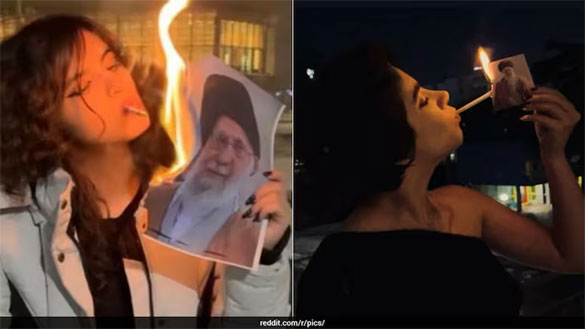
Iranian women ignite a new protest trend by burning images of Ayatollah Khamenei.
---------
A striking new protest trend involving Iranian women is rapidly spreading across the global internet, drawing attention to rising unrest inside Iran. Viral videos show women lighting cigarettes by burning photographs of Supreme Leader Ayatollah Ali Khamenei, an act widely seen as an open challenge to the country's political and religious authority.
The trend has gained momentum on social media platforms such as X, Instagram, Reddit and Telegram, with clips being shared and reposted thousands of times worldwide. Observers say the practice has become a powerful symbol of defiance and is increasingly difficult for authorities to contain, even as Iran tightens controls on dissent.
Burning the image of the Supreme Leader is considered a serious offence under Iranian law. By combining this act with smoking, an activity long restricted or discouraged for women, the protesters appear to be deliberately rejecting both state power and strict social rules, including mandatory hijab enforcement and limitations on women's personal freedoms.
The viral trend comes at a time when Iran is facing mounting economic pressure. Soaring inflation, a sharply weakening currency and rising food prices have fuelled public anger and renewed protests in cities across the country. Demonstrators have also been reported burning images of senior leaders and damaging statues linked to the ruling establishment.
This form of protest builds on the movement that followed the 2022 death of Mahsa Amini in police custody. While large street demonstrations have been forcefully suppressed, resistance has increasingly shifted to symbolic acts that can spread instantly online.
Despite warnings from authorities, the growing circulation of these videos suggests the trend has become a global digital phenomenon, keeping Iranian women's resistance in the international spotlight.
Source: ndtv.com
https://www.ndtv.com/world-news/why-iranian-women-lighting-cigarettes-with-khameneis-photo-going-viral-10564751
-------
‘I’m Not Afraid’: 'Bloodied' Elderly Woman’s Defiance Goes Viral In Iran Protests: WATCH
By: Ayesha Fatima
09 Jan 2026
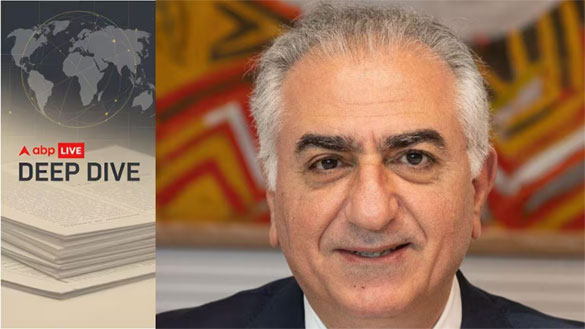
Iran is experiencing widespread protests, called by former Shah's son Reza Pahlavi, fueled by economic woes and discontent with the clerical leadership.
---------------
A video showing an elderly woman openly defying Iran’s Islamic leadership has gone viral on social media, striking a powerful chord as protests spread across the country. The clip has come to symbolise the nationwide unrest driven by economic hardship and deepening public anger against the government.
In the footage, the woman, who appears to have blood or a similar red liquid on her mouth, is seen marching through the streets of Tehran while chanting anti-government slogans.
“I’m not afraid. I’ve been dead for 47 years,” she shouts, her words resonating widely online. It remains unclear whether the substance on her face is blood or paint used as a form of protest.
I’m not afraid. I’ve been dead for 47 years this is the voice of a woman in Iran who is fed up with the Islamic republic.
47 years ago, the Islamic Republic took our rights and turned a nation into hostages.
Today people have nothing left to lose, they rise.
A Haunting Reference To Iran’s Past
The woman’s remark appears to reference the 47 years since Iran’s 1979 Islamic Revolution, which overthrew the pro-Western Shah Mohammad Reza Pahlavi and replaced the monarchy with a Shiite Islamic theocracy. The revolution ushered in clerical rule under Ayatollah Ruhollah Khomeini, whose legacy continues to shape Iran’s political system.
Iran is currently led by Supreme Leader Ayatollah Ali Khamenei, a central figure in the Islamic Republic’s power structure. Public dissent against the clerical establishment was once ruthlessly crushed, with even expressions of sympathy for the former monarchy carrying the risk of severe punishment.
Internet Blackout And Escalating Crackdown
As protests intensified, Iran’s government cut off internet access and international telephone calls, a move that coincided with nighttime demonstrations called by exiled crown prince Reza Pahlavi. From rooftops and streets, protesters shouted slogans and poured into public spaces, defying mounting security pressure.
The mobilisation marked the first major test of whether Pahlavi, whose father fled Iran shortly before the 1979 revolution, could influence public sentiment from exile. Demonstrations have included chants backing the former shah, a striking shift that underscores how far anger over Iran’s economic crisis has spread.
Protests continued on Thursday in cities and rural towns, with more markets and bazaars shutting in solidarity. According to the US-based Human Rights Activists News Agency, violence linked to the unrest has left at least 42 people dead, while more than 2,270 others have been detained.
A Haunting Reference To Iran’s Past
The woman’s remark appears to reference the 47 years since Iran’s 1979 Islamic Revolution, which overthrew the pro-Western Shah Mohammad Reza Pahlavi and replaced the monarchy with a Shiite Islamic theocracy. The revolution ushered in clerical rule under Ayatollah Ruhollah Khomeini, whose legacy continues to shape Iran’s political system.
Iran is currently led by Supreme Leader Ayatollah Ali Khamenei, a central figure in the Islamic Republic’s power structure. Public dissent against the clerical establishment was once ruthlessly crushed, with even expressions of sympathy for the former monarchy carrying the risk of severe punishment.
Internet Blackout And Escalating Crackdown
As protests intensified, Iran’s government cut off internet access and international telephone calls, a move that coincided with nighttime demonstrations called by exiled crown prince Reza Pahlavi. From rooftops and streets, protesters shouted slogans and poured into public spaces, defying mounting security pressure.
The mobilisation marked the first major test of whether Pahlavi, whose father fled Iran shortly before the 1979 revolution, could influence public sentiment from exile. Demonstrations have included chants backing the former shah, a striking shift that underscores how far anger over Iran’s economic crisis has spread.
Protests continued on Thursday in cities and rural towns, with more markets and bazaars shutting in solidarity. According to the US-based Human Rights Activists News Agency, violence linked to the unrest has left at least 42 people dead, while more than 2,270 others have been detained.
Source: abplive.com
https://news.abplive.com/news/world/iran-protests-who-is-reza-pahlavi-crown-prince-son-of-shah-whose-war-cru-sparked-anti-khamenei-protests-1820905
-------
‘VISIBLE SUCCESS CREATES BELIEF’ – THE RISE OF SAUDI WOMEN INSIDE DAKAR RALLY SAUDI ARABIA
January 9, 2026
Amid the scale, noise, and intensity of the world’s toughest endurance rally, a quieter transformation has been taking place. From behind the wheel to off-track operations, Saudi women are becoming increasingly established within the Dakar Rally. This presence is a result of a natural progression shaped by access, talent, and earned credibility.
Now in its seventh edition in the Kingdom of Saudi Arabia, the Dakar Rally continues to elevate its role as a motorsport competition. As a result, participation and opportunities are increasingly being built locally, enabling Saudi women to be fully integrated within a world-class sporting environment.
In the competitive field, that progression is embodied by Dania Akeel. The 37-year-old from Jeddah is one of the most experienced Saudi competitors in rally raid, with her credentials defined by her results in the category. A stage winner in the T3 Challenger Class at Dakar 12 months ago, Akeel went on to win the Abu Dhabi round of the FIA World Rally-Raid Championship, finishing third overall in the series last year.
Yet her relationship with Dakar has never been framed around representation. For Akeel, her home event is a personal and professional challenge, one that demands constant judgement, adaptability, and skill.
“It’s such a wonderful adventure,” she says. “In the Dakar Rally, you see the consequences of your decision-making instantly. It’s not an easy thing to do, but we are all here by choice, so we put ourselves through this experience for different reasons. I love to drive, but in these conditions, you learn a lot about yourself — it’s addictive.”
Saudi Arabia’s varied and memorable landscapes, from the Red Sea coast to the desert, amplify the challenge, forcing competitors to continually adapt, whether they are on rocky terrain or sand, and for Akeel, racing on home soil, there is an additional responsibility.
“The Dakar Rally is really tough, but it’s about how quickly you can adapt to change,” she adds. “It’s always evolving and pushing you to different places. Are you resisting it or working with it? And when I’m outside of the car, I feel a sense of responsibility as people are following my progress and that obviously has an impact.”
Although she is keen to avoid credit, Akeel’s visibility as a credible competitor acts as an inspiration for younger drivers coming through the motorsport ranks. That is emphasised by the inclusion of a development pathway for aspiring racers. Now in its second year, the Saudi Next Gen programme is designed to identify and develop future Dakar talent.
Running in the 2026 competition is Reem Al Aboud, a 25-year-old from Jeddah with her 23-year-old co-driver Shrooq Alamri from Riyadh. After beginning her motorsport journey in karting in 2018, Al Aboud made history as the first Saudi woman to drive a Formula E car. She has since transitioned into GT racing with Jameel Motorsport.
“Dania Akeel is an inspiration to all Saudi women wanting to join motorsports because she achieved so much in such a short amount of time,” says Al Aboud. “She proved that it’s possible to achieve what you want to dream of.”
The Saudi Next Gen programme focuses on more than just driving; it exposes participants to navigation, mechanical understanding, and endurance — the full spectrum of top-class rally-raid demands. And her visibility is helping to generate momentum.
“It’s an absolute honour. To have this opportunity to represent Saudi Arabia in such an amazing global competition is a goal I’ve been chasing since I first started racing,” she says. “And I’ve had a lot of young Saudis asking how they can get involved, where to go, how to get a racing licence.”
Alongside her, ShrooqAlamri represents another entry point into the motorsport ecosystem. Beyond competing, she has worked as a marshal at the Jeddah Corniche Circuit for both the Saudi Arabian Grand Prix and the FIA Formula E round, reflecting the widening range of roles now accessible within motorsport.
The rise of Saudi women at Dakar is not confined to the stages. Behind the scenes, women are increasingly embedded within the event’s operational and leadership structures.
The Dakar Rally, held under the supervision of the Ministry of Sport and organised by the Saudi Automobile and Motorcycle Federation, is promoted by the Saudi Motorsport Company. Its Director of Guest Management & Protocol, Maiss Dabbour, has seen that shift accelerate.
“There has been a clear and positive increase in women working for SMC,” she explains. “Across different departments and at varying levels of responsibility, contributing not only to operations, but also to leadership, strategy, and decision-making. The barriers to entry have significantly reduced. There are clearer pathways, stronger institutional support, and more opportunities across the motorsport industry.”
Taken together — across elite competition, development programmes, and executive roles — the presence of Saudi women at Dakar reflects a system that has matured. Inclusion has come not through symbolism, but through training, trust, and sustained opportunity.
“Visible success creates belief,” Dabbour says. “When the next generation sees women like Dania Akeel succeeding at the highest level, it shifts the mindset from ‘is this possible?’ to ‘where do I fit?’”
As host of the Dakar Rally for the seventh time, Saudi Arabia has accelerated that integration, enabling women to participate fully in motorsport’s ecosystem — not at the margins, but within its structure. At Dakar, progress is earned kilometre by kilometre. The rise of Saudi women within the world’s toughest rally follows the same rhythm: practical, professional, and now firmly established.
When Dania Akeel is asked what her message is, she says: “I want women to do what they want. To feel that they can make educated choices, to inform themselves, and have the right qualities to pursue their targets. My message is to do what comes naturally. Do it well, excel at it, work hard, and focus. Life is short, so we should all contribute what we have — everyone has something to give.”
The Dakar Rally Saudi Arabia 2026 is taking place from January 3 to 17, spanning 14 race days and featuring a Prologue and 13 competitive stages. The seventh edition hosted in the Kingdom brings together 787 competitors representing 49 nationalities, competing across 421 vehicles in multiple categories. The field includes 72 Ultimate cars, 45 trucks, 115 motorbikes, 7 Stock vehicles, 37 Challengers, 41 Side-by-Side vehicles, 75 Classic cars, 22 Classic trucks, and six Mission 1000 motorbikes, in addition to one truck, underlining the rally’s international reach and competitive diversity.
Moreover, the new 2026 route promises a challenge worthy of the Dakar name. Each region presents its own rhythm and demands, rewarding those who can adapt and stay focused across two intense weeks. As the rally unfolds, the diversity of the terrain and the scale of competition reflect the enduring spirit of Dakar and the growing role of Saudi Arabia as a defining stage for the world’s toughest rally.
Source: hotelandcatering.com
https://hotelandcatering.com/news/visible-success-creates-belief-the-rise-of-saudi-women-inside-dakar-rally-saudi-arabia
--------
Equality Versus Equity: Muslim Women in India Require Equity
January 9, 2026
INDIA’s Constitution establishes equality as a fundamental principle of the republic. It guarantees that women, irrespective of their religious affiliations, have the right to access education, employment, and civic participation. Educational institutions are designed to be accessible to all citizens, while employment laws are intended to foster a non-discriminatory environment. A thorough analysis of the experiences of Muslim women clearly exposes a significant divide between constitutional promises and the stark realities they face. This divide highlights systemic barriers and sociocultural obstacles that hinder the practical realisation of their rights, revealing an intricate web of structural inequities that persist in practice.
Even after 78 years after independence, Muslim women still rank among the most educationally and economically marginalised groups in the country. Their enrolment in higher education is significantly lower than the national average, and their labour force participation is among the lowest across all social groups. Despite progress in many areas, their presence in leadership roles—whether in academia, governance, or public institutions—remains surprisingly scarce.
While equality is vital, it’s clear that it alone doesn’t resolve ongoing disparities. This highlights the need to examine how equality operates in practice critically. Emphasising equity over mere formal equality is essential for shaping effective policies, institutions, and meaningful social reform.
Equality means treating everyone uniformly, ensuring that no one is discriminated against based on gender, religion, or other identity characteristics. In constitutional terms, equality guarantees that laws, institutions, and opportunities are formally accessible to all.
Equity acknowledges that individuals and communities do not start from the same place. Factors such as historical disadvantage, economic hardship, gender norms, spatial segregation, and social stigma create unequal access to opportunities. Therefore, equity requires tailored support mechanisms to ensure that outcomes are fair, rather than just focusing on uniform procedures.
Subtle Difference
A thoughtful example highlights the difference between equality and equity. While equality opens university admission portals to everyone, equity considers essential aspects such as safe travel to campus, access to financial support, caregiving responsibilities, digital navigation, and studying in inclusive spaces. By acknowledging these factors, we can transform equality from a mere symbol into a meaningful, impactful reality for all students.
A young girl, a determined first-generation learner from a modest Muslim family in a semi-urban area, has proudly gained admission to a government degree college through her hard work and merit! Although the college is over 20 kilometres away, she faces challenges due to irregular and unsafe public transport. Although hostel facilities are limited and beyond her budget, her resilience shines through. She is also navigating the wait for her scholarship, which is typically not available until after classes begin. Despite these obstacles, her invaluable contributions at home are crucial to her family’s economic stability. Within a single semester, she discontinued her studies. Her withdrawal from the programme was not indicative of a deficiency in academic ability or a lack of motivation. Instead, it stemmed from structural barriers that equality-oriented systems overlook. While such narratives are frequently dismissed as anecdotal, when considered alongside national data, they reveal systemic design failures within institutions.
Empirical evidence consistently corroborates these lived experiences. According to the 2011 Census, the literacy rate among Muslim women was approximately 51.9%, which is significantly lower than the national average for females. Recent educational surveys also indicate that Muslim women continue to be under-represented in higher education compared to their population share.
Persistent Educational Gap
The All India Survey on Higher Education (AISHE) reveals that Muslim enrolment in higher education remains disproportionately low, hovering between four to five per cent, despite Muslims constituting over 14 per cent of India’s population. Furthermore, dropout rates significantly increase after secondary schooling, particularly among girls from economically disadvantaged backgrounds and residentially segregated areas. While India has achieved near parity in overall educational enrolment, college admission rates for Muslim women aged 18 to 23 remain low, at 4.9 per cent, compared with the national average of 10.7 per cent. Additionally, literacy rate among Muslim women continues to fall short of the national female average, highlighting a persistent educational gap.
The labour force participation rate among Muslim women is approximately 12 per cent, significantly lower than the national average for females.
Many employed Muslim women work in the informal sector, often in low-wage or precarious environments. The connections between education and formal employment opportunities are frequently inadequate.
Skill development and entrepreneurship programmes often overlook the specific challenges faced by Muslim women, such as a lack of collateral, restricted mobility, safety concerns, and exclusion from professional networks. Promoting equity in employment necessitates childcare support, flexible work arrangements, culturally sensitive workplaces, targeted skill training linked to real job opportunities, and protection against discrimination, all the while upholding professional standards.
Patterns of exclusion continue to exist even in the presence of policies that are designed to be gender-neutral and religion-neutral. This observation indicates that exclusion may stem not only from individual choices or cultural preferences but also from structural constraints within policy and institutional frameworks.
The marginalisation of Muslim women in education cannot be fully grasped without delving into the rich tapestry of historical context. Throughout history, Islamic intellectual traditions have celebrated the pursuit of knowledge as a noble endeavour for both men and women. Visionary reformers such as Sir Syed Ahmad Khan and Altaf Hussain Hali passionately advocated for women’s education, drawing a compelling connection between women’s enlightenment and the advancement of their communities. They fervently argued that a society’s progress remains stunted if it continues to deny women access to the transformative power of learning. In their view, the key to a thriving society lay in the empowerment and education of its women.
Advancing Women’s Rights
Women leaders such as Sultan Jahan Begum were instrumental in championing female education, driving institutional reform, and encouraging intellectual participation. The establishment of several women’s colleges in the early 20th century stands as a powerful testament to their unwavering efforts and commitment to advancing women’s rights.
In the post-independence era, development narratives tended to describe Muslims primarily as a cultural and religious minority, which sometimes obscured their experiences as a socio-economic group facing multiple challenges. While it is commendable that constitutional protections have been established to safeguard their spiritual and cultural rights, it is equally important to acknowledge that economic and educational marginalisation have not always received the policy attention they deserve.
The disparities identified by the Sachar Committee have sharply highlighted the deprivation experienced by the Muslim community in areas such as education, employment, housing, and public services. The findings reveal that, in many instances, the living conditions of this group are inferior even to those of historically marginalised social categories.
Public policy in India is frequently premised on neutrality. Scholarships are ostensibly accessible to all eligible students. Colleges implement uniform admission criteria, and employment initiatives are designed without explicit consideration of gender-specific or minority-related constraints. However, neutrality in an unequal society does not produce fairness.
The reliance on digital-only scholarship systems disproportionately affects families that lack stable internet access. Inflexible attendance requirements may disadvantage women who bear caregiving responsibilities. Additionally, campuses that are deficient in female faculty, hostels, or mechanisms for grievance redressal subtly encourage students to disengage. Furthermore, stringent dress codes and social discrimination may erode the sense of belonging within the institution. The impact of these design features on Muslim women is not attributable to religious or cultural factors; rather, it stems from a lack of institutional awareness.
Structural reform necessitates a concomitant shift in normative frameworks. The prevailing public discourse surrounding Muslim women frequently relies on oversimplified narratives, positioning them either as passive victims or as emblematic representations of cultural divergence. These reductive framings obscure the nuances of agency and perpetuate societal stigmas.
We have a promising opportunity to transform societal attitudes. By recognising Muslim women as empowered citizens and valuable contributors to our communities, we can foster positive change. Families, educators, the media, and policymakers need to come together in open dialogue, viewing women’s education and employment as collective investments that benefit us all. Highlighting Muslim women in their roles as students, professionals, educators, entrepreneurs, and leaders, rather than solely viewing them through the lens of social challenges, is vital to driving positive transformation. This shift in perspective not only empowers these women but also enriches society by showcasing their contributions and capabilities.
Community-based organisations occupy a critical intermediary space between policy and lived reality. They help women navigate admissions, scholarships, skills training programs, and employment opportunities. They provide counselling, mentorship, and legal support. They create safe spaces for learning where institutional trust may be weak.
Empirical Reality
It is crucial to note that community organisations play a vital role in documenting instances of exclusion and providing evidence to support advocacy efforts, ensuring that policy reforms are rooted in empirical reality rather than theoretical concepts. These organisations do not seek to replace the state; instead, they complement and enhance public systems by making them more accessible to those who are most vulnerable to exclusion. Equity is not ideological; it is practical. An equity-oriented approach to education and employment comprises several critical components, including establishing higher education institutions and skill development centres in proximity to marginalised communities, providing safe and affordable transportation services and adequate accommodation for women, and implementing timely, automated scholarship disbursement processes. Additionally, it involves giving childcare support alongside flexible work arrangements, strengthening enforcement of anti-discrimination laws, and creating mentorship and leadership opportunities explicitly designed for minority women. These measures do not compromise merit or standards; instead, they facilitate an environment in which genuine merit can emerge and thrive.
The exclusion of Muslim women from education and formal employment is a significant issue with implications for national development. Educated women can enhance economic growth, public health, and democratic stability. The underutilisation of a substantial portion of the population represents a loss of human capital that may affect a nation’s development potential.
Dr B R Ambedkar stated that the advancement of women can be used to assess the progress of a community. This observation continues to hold significance in contemporary discussions on societal development.
India is rich in constitutional ideals! The challenge lies in bridging the gap between formal equality and genuine justice. Achieving equity where outcomes are unequal isn’t merely generous—it’s a necessary step for progress.
Muslim women are advocating for systems that recognise and address their realities rather than seeking special privileges. Equality expresses our shared goals, while equity measures the real effects of our efforts. A just society recognises that not everyone begins from the same starting point; instead, it strives to ensure that no one is left behind in the pursuit of opportunity and fairness.
Source: clarionindia.net
https://clarionindia.net/equality-versus-equity-muslim-women-in-india-require-equity/
-------
Spain Pledges Continued Support for Afghan Women
Jan 09, 2026
KABUL, AFGHANISTAN – Spain has unveiled a room at its Ministry of Foreign Affairs dedicated to “Women and Girls of Afghanistan,” as part of efforts to recognize the struggle of Afghan women under Taliban rule.
The inauguration was attended by a number of women’s rights activities, including Fawzia Koofi, a former member of the Afghan parliament.
Spanish Foreign Minister Jose Manuel Albares said the commemorative plaque honors Afghan women and girls who continue to fight for their rights and freedoms. He added that Spain’s foreign policy will continue to support Afghan women and ensure they have a voice in international affairs.
Afghan women and girls face severe restrictions under Taliban rule, including limitations on education and employment. Over the past four years, despite global criticism of the Taliban’s policies, the group has intensified measures curbing the rights of women.
Source: kabulnow.com
https://kabulnow.com/2026/01/spain-pledges-continued-support-for-afghan-women/
-------
100 Muslim women entrepreneurs to boost local economy with Ramadan trade fair in Kwara
January 9, 2026
OVER 100 Muslim women entrepreneurs in Kwara State are set to organise a trade fair aimed at empowering women-led businesses, strengthening local enterprise and contributing to economic development in the state.
Speaking with journalists in Ilorin on Tuesday on the sidelines of the forthcoming Muslimah Entrepreneurs Trade Fair, the convener of the group, Fatimah Saliu, said the Muslim women entrepreneurs are committed to changing the business narrative among women engaged in halal (lawful) businesses.
Saliu noted that women contribute significantly to household income, food security, manufacturing, services and creative industries across the state.
She, however, lamented that many of the businesses remain informal, unseen and unsupported.
“This trade fair is not just about buying and selling. It is a purpose-driven platform created to address a real gap we see every day: women running viable businesses but lacking visibility, structured markets and access to opportunities that allow them to scale sustainably.
“At this trade fair, over 30,000 participants and attendees will experience a well-organised marketplace that brings together businesses from diverse sectors, food and beverages, fashion, beauty, agro-processing, services, creative industries and more.
“It will also serve as a space for networking, brand exposure, partnership building and community engagement,” she said.
Hajia Saliu, who is also the founder of Baytu Tejmeel/BaytuBillions, said that although the initiative is Muslimah-led and values-driven, the trade fair is open to all vendors and members of the general public.
She disclosed that the fair would take place ahead of the forthcoming Ramadan season and is expected to cater for pre-Ramadan, Ramadan and Eid-el-Fitr shopping, scheduled to hold between January and February 2026.
“Our guiding principles are ethical business practices, quality products, professionalism and inclusivity.
“We are intentional about structure, order and impact. Our goal is not a one-off event, but the foundation of a recurring economic platform that supports small and medium enterprises, creates employment and encourages local production,” she said.
She called on policymakers, institutions and private stakeholders to partner with the women entrepreneurs in amplifying the vision, while commending the state government for its support so far.
“To the people of Kwara State, this trade fair is an invitation to support local businesses, to invest in women-led enterprises and to participate in building an economy that is inclusive and sustainable.
“We are confident that this initiative will deliver measurable impact, from increased sales and brand visibility for vendors to stronger business networks and economic activity within our state,” she added.
Source: tribuneonlineng.com
https://tribuneonlineng.com/100-muslim-women-entrepreneurs-to-boost-local-economy-with-ramadan-trade-fair-in-kwara/
------
Women’s rallies in al-Haymah al-Dakhiliyah mark Rajab Friday, support Ummah causes
08 Jan 2026
The Women’s Development Office in al-Haymah al-Dakhiliyah district of Sana’a governorate organized on Thursday women’s rallies and speeches to mark the anniversary of Rajab Friday, express solidarity with Gaza and Somalia, and condemn repeated insults to the Holy Quran.
The events, held at schools and villages across the district, emphasized strengthening faith identity, rejecting what participants described as cultural targeting, and reaffirming support for Palestinian causes.
Participants chanted slogans backing Gaza and denouncing Quran desecration, while a closing statement reaffirmed continued mobilization and support for what it termed the “promised victory and holy jihad.”
Source: saba.ye
https://www.saba.ye/en/news3623352.htm