
Why I Converted To Islam After Marriage – Nigerian Actress Debbie Shokoya
New Age Islam News Bureau
14 September 2025
• Why I Converted To Islam After Marriage – Nigerian Actress Debbie Shokoya
• Women Stage Sindoor Protest In Mumbai Against India-Pakistan Asia Cup Match
• Narges Mohammadi, Nobel Laureate: Creative Defiance Keeps ‘Woman, Life, Freedom’ Alive
• Women-Only Vessel Joins Gaza Flotilla As Global Activists Rally Behind Palestinian Women
• Arab Women Redefining Cinema And TV: Panellists Call For Funding, Genre Diversity, Equal Creative Power
• 'I'm Ready To Be Arrested': How Women In Iran Fight 'State-Sanctioned Sexual Violence'
Compiled by New Age Islam News Bureau
URL: https://newageislam.com/islam-women-feminism/islam-marriage-nigerian-actress-debbie-shokoya/d/136831
-----
Why I Converted To Islam After Marriage – Nigerian Actress Debbie Shokoya
September 13, 2025
by YewandeFasan
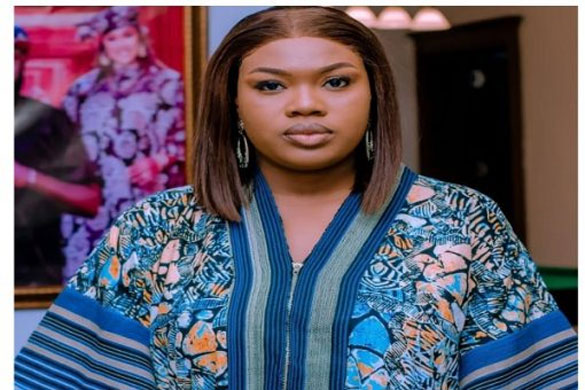
Actress and producer Debbie Shokoya has shared her personal journey of embracing Islam after marriage, despite being born into a Christian family.
Shokoya said that her decision was centred on her individual relationship with God, stressing the importance of love, humanity, and compassion in all interactions.
She also highlighted that she doesn’t discriminate between religions, and her approach to worship is based on personal comfort and connection with God.
She wrote on her Instagram page: “Christianity By Birth Muslim By Marriage Over Here… God Is Love! Humanity Always. I Have Never Being A Discriminator Of Any Of The Religion… God Is Love Always! Humanity Comes First When You Think Of Religion. I Speak To My God The Way I Am Comfortable With, My Relationship With God Is What Matters The Most And How I Treat My Fellow Human…..
“It’s Not A War, It’s Not A Competition. Neither Is It A Debate… Preach Love And Act In Love First. No Matter The Religion, No Matter The Color, No Matter The Tribe!!!Love Comes First Because God Is Love.”
Source: Thenationonlineng.Net
Please click the following URL to read the full text of the original story:
https://thenationonlineng.net/why-i-converted-to-islam-after-marriage-debbie-shokoya/
-----
Women Stage Sindoor Protest In Mumbai Against India-Pakistan Asia Cup Match
September 14, 2025
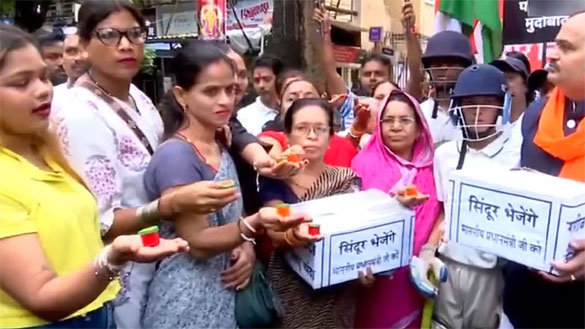
Video: Women Workers Of Shiv Sena (UBT) Stage Sindoor Protest In Mumbai Against India-Pakistan Asia Cup Match | ANI
------------
Mumbai: Women workers of Shiv Sena (UBT) on Sunday staged a protest in Mumbai with 'Sindoor', opposing India's participation in the match against Pakistan in the Asia Cup, scheduled for today.
Shiv Sena UBT had announced to hold a demonstration against the India-Pakistan Asia Cup 2025 cricket match scheduled to be held in Dubai.
On Saturday, party chief Uddhav Thackeray had said that Shiv Sena (UBT) women workers will come out on the streets in Maharashtra and send sindoor from every house to PM Modi.
Thackeray opposed India's participation in the match against Pakistan, alleging that the government was mixing politics and business with patriotism.
Uddhav Thackeray said, "Our Prime Minister said blood and water cannot flow together, then how can blood and cricket flow together. How can war and cricket be at the same time?. They have done business in patriotism. The business of patriotism is only for money. They are going to play the match tomorrow also because they want all the money they will get from that match."
Owaisi questioned the decision to play cricket matches with the rival country and sought clarity from the government on the monetary gains compared to the loss of human lives.
"My question to the Chief Minister of Assam, the Chief Minister of Uttar Pradesh, and all of them is that you don't have the power to refuse to play a cricket match against Pakistan, which asked for the religion of our 26 citizens in Pahalgam and shot them," Owaisi said.
The AIMIM chief questioned the BJP whether the money earned through the match is more valuable than the lives of 26 citizens who were killed in the Pahalgam terrorist attack.
The Indian national cricket team will take on Pakistan today for the first time in an international cricket match after the Pahalgam terror attack and Operation Sindoor.
Ahead of the clash, there had been a widespread demand from the opposition to boycott the match. However, the Centre had issued no objection from the Indian team to playing against Pakistan in any multi-nation tournament.
Source: www.freepressjournal.in
-----
Narges Mohammadi, Nobel Laureate:Creative Defiance Keeps ‘Woman, Life, Freedom’ Alive
13-09-2025
Iranian people have kept the Woman, Life, Freedom movement alive through creative acts three years after its eruption, shaping society in ways that continue to unfold, Nobel Peace Prize laureate Narges Mohammadi told Iran International on Saturday.
“The movement is alive and ongoing, and its vitality is visible in society’s very fabric,” Mohammadi said in an interview marking the third anniversary of Iran’s 2022 protests that started with the death in morality police custody of Mahsa “Jina” Amini.
Mohammadi said Iranian women have gained new power to shape their own lives, driving deep changes in society—some visible in daily life, others yet to be recognized or fully understood.
“People do not need to constantly be in the streets and protests,” she said. “Society uses creative and very effective actions and reactions that demonstrate the movement’s vitality.”
“The Islamic Republic no longer has the same power even to hold official events,” she said. “The visible presence of women without hijab has often wrested the scene away from the organizers.”
Mahsa Amini’s death on 16 September 2022 sparked the protests that grew into a nationwide call for rights under the slogan Woman, Life, Freedom.
Mohammadi, repeatedly jailed for her activism, has spent more than a decade behind bars and faced sentences totaling over 36 years and 154 lashes.
Awarded the Nobel Peace Prize in 2023, she remains under medical leave from prison and continues to advocate for women’s rights and democracy.
Source: Www.Iranintl.Com
https://www.iranintl.com/en/202509137929
-----
Women-only vessel joins Gaza flotilla as global activists rally behind Palestinian women
Adel Elthabti
13.09.2025
A boat crewed entirely by women has joined the Gaza-bound Global Sumud Flotilla, with participants saying their voyage is meant as a tribute to the strength of Palestinian women living under Israel’s blockade.
Fifteen activists from Europe, Latin America and Asia boarded the vessel in the Tunisian port of Bizerte on Saturday, preparing to link up with dozens of other ships making the journey.
“Palestinian women symbolize courage and determination in the face of devastation,” said Malika, a nurse from France. “We chose to dedicate one boat solely to women as a gesture of solidarity and respect.”
She said the group, which had never met before this initiative, quickly bonded over a common purpose. “We come from different countries – France, Chile, Portugal, Spain and others – but Gaza has united us,” she added.
Organizers stressed that the flotilla’s mission is to break the blockade and establish a humanitarian corridor into the enclave. “Governments have failed to protect civilians, so we are stepping forward,” Malika said.
Khaled Boujemaa, a member of the steering committee, told Anadolu that foreign vessels left Bizerte on Saturday to rendezvous with North African boats departing from SidiBou Said near Tunis.
The flotilla now counts nearly 50 ships assembled in Tunisian ports, including 23 from North Africa. The departure had been postponed twice earlier in the week due to bad weather and technical issues, which forced three vessels to withdraw. Boujemaa said those hurdles had been resolved and the flotilla was “now ready to set sail for Gaza as expected.”
The initiative began in late August with boats leaving Barcelona and later Genoa, Italy, before converging in Tunisia. Organizers say it is the largest effort of its kind, aiming to confront Israel’s naval blockade and deliver life-saving aid to Gaza, where famine conditions have taken hold under Israel’s months-long closure of all crossings.
The UN-backed Integrated Food Security Phase Classification (IPC) confirmed on Aug. 22 that famine had taken hold in northern Gaza and warned it could spread as Israel’s blockade continues.
The Israeli army has continued a brutal offensive on the Gaza Strip, killing at least 64,700 Palestinians since October 2023. The military campaign has devastated the enclave, which is facing famine.
Last November, the International Criminal Court issued arrest warrants for Israeli Prime Minister Benjamin Netanyahu and his former Defense Minister Yoav Gallant for war crimes and crimes against humanity in Gaza. Israel also faces a genocide case at the International Court of Justice for its war on the enclave.
Source: www.aa.com.tr
-----
Arab Women Redefining Cinema And TV: Panellists Call For Funding, Genre Diversity, Equal Creative Power
Shyama Krishna Kumar
September 14, 2025
ABU DHABI: The International Congress of Arabic and Creative Industries began at Abu Dhabi’s Etihad Arena on Sunday, exploring issues around the Arabic language and its place in culture and media.
“Her Narrative: Women Reimagining Arab Creativity” was a panel discussion that featured three trailblazing voices from the region — actor and producer HendSabry, filmmaker TimaShomali, and Cinema Akil founder ButheinaKazim — who spoke on the evolving role of women in Arab cinema and television.
Sabry opened by noting that Arab women still face “the same challenges as before, but with more pressure,” especially when seeking financing or leadership roles. Yet she acknowledged clear progress, adding: “In the last 10 to 15 years, we’ve reached a decent place.”
She emphasized that women must continue to push for control of their narratives, whether as writers, producers, or directors, and urged more investment in female-driven projects.
Shomali highlighted the gains she sees behind the camera, pointing to the rise of women directors and the global success of her own Netflix hit “AlRawabi School for Girls.”
She also bemoaned the persistent need to “prove ourselves at every stage” and the subtle resistance experienced when women make authoritative creative decisions. Shomali said she deliberately hired mostly female department heads on her production, finding the collaboration “smooth and barrier-free,” and she championed opportunities for women in technical fields such as cinematography and sound design.
Kazim offered a historical lens, tracing women’s influence back to early Arab cinema pioneers like Egyptian actor and producer Aziza Amir and Lebanese Egyptian actor and producer AssiaDagher. She challenged the narrative of female exclusion, noting that women make up nearly half the Arab film workforce. For Kazim, independent cinema is a vital incubator for women’s stories and deserves sustained funding and festival support.
The panelists questioned and explored industry myths: that female-led films do not sell, and that television’s popularity among women is accidental. They cited examples like Nadine Labaki’s “Caramel” and the international reach of “AlRawabi School for Girls” to reject the claims. All three agreed that capital remains the central hurdle and that financiers still back men more readily, limiting women’s creative freedom.
Looking forward, Sabry called for more genre diversity, from science fiction to thrillers; Shomali urged a structured, collaborative Arab industry; and Kazim pressed for robust funding policies.
Kazim said: “If I must pick just one thing (as a future goal): more funding opportunities for women’s works at every level — commercial and independent. And perhaps we should be biased toward the alternative-independent sector. People think it’s a niche with a small audience and little importance but I believe the deepest lessons we are discussing come from independent cinema.
“So, revive and support festivals and funding opportunities for alternative cinema here in the UAE and across the region in a healthy way so that they complement one another.”
Source: www.arabnews.com
https://www.arabnews.com/node/2615250/lifestyle
-----
'I'm ready to be arrested': How women in Iran fight 'state-sanctioned sexual violence'
14 September 2025
Every morning, Reyhaneh stands in front of her wardrobe, choosing an outfit for the day — an ordinary moment for many, but for her, the start of a "daily battle".
As she prepares for the day, she is also preparing for "the resistance", bracing for potential blowback — from her "neighbour, the shopkeeper, the regime, the morality police", who all enforce Iran's mandatory hijab rules.
She then leaves the house without a headscarf, a main part of the country's strict dress code, which also requires women to wear loose clothing and keep their arms and legs covered and men to wear long trousers.
[The headscarf] is just an excuse for many other restrictions … It is not just the two or three metres of cloth you put on your head," Reyhaneh tells SBS News.
"This has now become the best outward symbol of expressing our opposition [to the situation in Iran], which is why I still prefer to go out without the hijab."
She first decided to flout hijab rules three years ago, when her headscarf slipped off as she was walking home, and she chose not to pull it back on.
The moment came at the peak of the "Woman, Life, Freedom" movement — a series of protests in Iran sparked by the death in custody of 22-year-old Mahsa Jina Amini in September 2022.
Amini, who was from Iran's Kurdish minority, was arrested by Iran's Guidance Patrol — colloquially known as the 'morality police' — for allegedly not observing the country's mandatory hijab laws.
Graphic art of a rear view of a woman with long dark hair and the words: It seemed like this girl's death, because of the hijab, became for us and excuse to wake up and take a bigger step forward.
"She was not a person that everyone knew … But this girl, who was little-known, had such a huge impact on the whole of society that it was really hard to imagine," Reyhaneh says.
From Amini's birthplace in Iran's Kurdistan province to the Kasra Hospital in Tehran where she died, thousands took to the streets chanting "Zan, Zendegi, Azadi" — meaning "Woman, Life, Freedom" — and demanding regime change.
Shahrzad Orang, an Iranian woman currently living in Australia, was one of the protesters who gathered in front of Kasra Hospital, "finding their freedom in the street".
The movement spread widely across Iran, with hundreds of thousands marching in almost 80 cities and demonstrating in various ways, including burning headscarves.
Rear view of a woman holding up her right hand and extended two fingers forward. There is a burning tyre in front of her on the street
"I was in the middle of the street and I could see women who [were] wearing hijab. So I went to ask them … and they accepted, they gave their headscarves," Orang says.
The protests were met with force by the Iranian regime, with Supreme Leader Ali Khamenei describing the Woman, Life, Freedom movement as a "hybrid war".
The Human Rights Activists News Agency reported in April 2023 that state security forces killed at least 537 people during the protests, while more than 19,000 were arrested.
Regime officials have denied these figures, claiming 202 people were killed during the uprising "by the rioters" or after attacking police bases and personnel.
[The security forces] had many things like batons, guns, and they shot at us when we were in the middle of the streets. It was an unfair war.
Later on, she was arrested by the Islamic Revolutionary Guard Corps, a branch of the Iranian armed forces, and held for about 36 hours.
"They told me that 'you are gonna die. You are not going to leave. And it's not that much longer for you to be healthy, and we are gonna kill you'.''
Graphic art of a picture of a woman with words written above her that read: They told me that you are gonna die. You are not going to leave.
After the arrest and threats, Orang fled to Australia in February 2023, just one week before she received a travel ban and a court ruling.
"I just felt that maybe it's better to leave Iran because I had many threats every day … I had to change my location every day," she says.
While the street protests have subsided, women in Iran are still resisting in various ways, including by 'dejabbing' (removing the hijab).
In 2023, a survey by Iran Open Data (IOD), an independent organisation that makes Iranian government data transparent and accessible, revealed that 86 per cent of women had appeared in public without the mandatory hijab.
ShadiRouhshahbaz, an Iranian Australian activist and researcher, says the resistance movement "has changed drastically" in the past three years.
"I'm seeing women going towards basic acts of civil disobedience … engaging a lot through social media, doing social media campaigns on a variety of issues that focus on reclaiming their rights.
"But also across the whole system, with regard to financial empowerment, [for example] running women-led businesses and using whatever they can through their financial independence to create businesses and activities that generate income."
While on a fellowship at the University of San Diego, ShadiRouhshahbaz interviewed young Iranian women about their ideal day in Iran, and visualised this as an illustration. Credit: Supplied
There have also been reports and social media videos showing Iranian women dancing and singing in the streets, defying the country's public singing rules for women.
Last year, Iranian singer Parastoo Ahmadi was arrested after she held an 'imaginary concert' and performed without a headscarf for an online audience. The Iranian judiciary announced the arrest, saying Ahmadi had not adhered to "legal and religious norms".
"An ordinary life is something that Iranian women, and I'm sure many of the women around the world, are aspiring to have," Rouhshahbaz says.
This includes its deployment of surveillance measures and the roll-out of a state-backed mobile app encouraging citizens to report women for breaching hijab laws.
Dara Conduit, a lecturer in political science at the University of Melbourne, says: "The regime is trying to find ways to control the hijab."
"It's a really challenging thing for the regime to control, because you can see when they control it the way they did with Mahsa Amini, it led to protests."
In 2023, the Iranian Fars News Agency released a video claiming police are using 'smart cameras', or artificial intelligence-powered cameras, which can identify those who are not wearing hijab through facial recognition technology.
"That would be a really powerful tool because it would mean that the regime can actually police this without getting into confrontations with young women on the street," Conduit says.
In March this year, findings from the United Nations' Independent International Fact-Finding Mission on the Islamic Republic of Iran also showed that the regime had "resorted to aerial drone surveillance to monitor hijab compliance in public spaces" in Tehran and southern Iran. It also noted that facial recognition software had been reportedly installed at the entrance of a university in Tehran to monitor female students.
Across Iran, police have introduced a mobile app that enables officers and other vetted individuals to flag women for not complying with hijab rules on public transport, in private vehicles and on social media.
But Iranian women are also using digital tools to fight back — for example, reporting harassment via the women-led online collective 'Harasswatch'.
According to its editor in chief, Ghoncheh Ghavami, the platform was founded in 2018, "to focus on sexual harassment in public spaces, a pervasive, often trivialised form of violence that had been overlooked as a serious issue", and to "engage and mobilise people across different social classes, genders, and backgrounds".
Ghavami tells SBS News: "We recognised it [harassment] instead as a fundamental form of oppression and identified it as a critical area that until then had not been addressed in a systematic way by any feminist, collective or organisation.
"We defined our mission as challenging the normalisation of sexual harassment, breaking the culture of shame and silence around it."
A few months after the platform was established, the group expanded its activities by distributing educational leaflets about "street harassment", inspired by the work of anti-harassment graphic artists during the 2011 Egyptian revolution.
"We always had to emphasise that sexual harassment is about power and a sense of entitlement, not sexual desire … and it has nothing to do with what they [women] wear," she says.
Mandating hijab, along with the propaganda and punishment surrounding it, has contributed to the normalisation of sexual violence in Iran.
Harasswatch also faced allegations from regime officials during the Woman, Life, Freedom movement, with the Iranian Judiciary's news outlet claiming the platform had "managed to create the grounds of a major riot in Iran through networking".
One of the Harasswatch posters with a drawing of morality police, stating "when a woman experiences harassment, we must not remain bystanders". Credit: Harasswatch
Every day, I received various reports from prisons, detention centres, street protests, state-sanctioned sexual violence against protesting women, the daily struggle of women against mandatory hijab, and more," she says.
"Feminist activists were repeatedly arrested in different parts of the country, and information about them was published on Harasswatch."
This fear still exists, not from ordinary people, but from the government's response … [we believe] going out without the hijab day after day, can add a page to our [judicial] case.
Even still, women like Reyhaneh continue their daily battle, dreaming of a future where their demands for equality and regime change are met.
"Even if the regime falls, I think I'll keep one or two of them as a symbol of the era we had to endure; as a souvenir of the era we endured because of this scarf."
Source: Www.Sbs.Com.Au
-----
URL: https://newageislam.com/islam-women-feminism/islam-marriage-nigerian-actress-debbie-shokoya/d/136831