
At Age Seven, I Had To Cover My Hair: Maryam Mazrooei, An Iranian War Photographer
New Age Islam News Bureau
15 November 2022
• Elaha Dilawarzai, A Former Taliban Hostage, Is The
Symbol Of Violence Against Afghan Women
• Dr Amina Abubakar Sani Bello, Wife Of Niger Governor
Decries Relegation Of Women In Leadership Positions
• Afghanistan: Rights Group Calls For Release Of
Jailed Women Rights Defenders
• UAE Panel Event Highlights Role Of Women In Middle
East Peace-Building
• Women Must Be Taken Along In Development Process:
Pakistan President
Compiled by New Age Islam News Bureau
URL:
--------
At Age Seven, I Had To Cover My Hair: Maryam Mazrooei,
An Iranian War Photographer
Maryam Mazrooei
14 Nov 2022
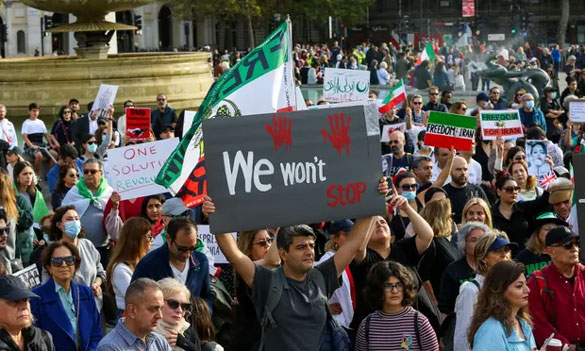 Protestors in London following the death of Mahsa
Amini, 29 October 2022. Photograph: Anadolu Agency/Getty Images
Protestors in London following the death of Mahsa
Amini, 29 October 2022. Photograph: Anadolu Agency/Getty Images
-----------
I held my first photo exhibition in late 2017, a few
months after returning from Mosul, Iraq, where I had documented the operation
to liberate the city from Islamic State. From the first moments of the event, I
felt gloomy as my family cast concerned looks at me while the press took
pictures of my hair freely protruding from my scarf and clothes – a deliberate
rebellion on my part against Iran’s conservative traditions and beliefs.
I suddenly experienced a flashback to all the ways in
which I had been oppressed as a woman during my life. When I turned six, they
pulled me out of my games with the boys in the neighbourhood. When I turned
seven, they covered my head with the ugliest scarf in the world, which looked
like a burlap sack, and sent me to school where, even though it was staffed
solely by women, no one was allowed to remove the scarf.
Knowing my stubbornness, my mother tried to keep a
scarf on my head by choosing a sky-blue one decorated with flowers and ribbons,
something different from the black scarfs of others. I, however, found some
release by ripping the scarf from under my chin, allowing me to breathe more
freely. Although I had the best marks at school, my disobedience towards the
restrictive rules meant that I was never encouraged academically. Every day, I
wished I had been born a boy.
When I turned nine, I was close to the age of puberty
and it was time to observe religious obligations. I was taught that if a man
saw my body, it was me who would be burned in hell, where I would be hung by
each strand of hair that had been visible. After weeks fearing being hung in
hell, with my childish logic I found a solution in rebellion, reasoning that
being hung from a bunch of hair would be less painful than from a strand. I
ripped my scarf some more.
The more I matured and the more feminine I appeared,
the heavier the burden of sins became. I started to hunch under this burden, to
avoid the sin of seducing men with my growing breasts.
The final straw came when I was 14 and the authorities
of the top-rated school that I was attending made me wear a chador, a big black
cloth that covered my whole body except for my face. It led to a long
depression, one that lasted 10 years. With the help of a therapist, I finally
found the most important cause was the chador, that big black shroud.
I decided to wear a loose hijab and prepared myself
for the price I would have to pay. I would lose the financial and emotional
support of my wealthy community, which only passively respected women’s rights.
I was aware of the consequences in a country where the hijab is legally
obligatory and on every corner the morality police hunt women who don’t
properly hide their female bodies, and arrest them using a snare pole. I would
have no chance of being hired officially and permanently. Even so, I decided to
drop out of studying physics and restart my career as a freelance journalist
and photographer.
That night at my exhibition, I was again reminded of
the wounds that I had thought were healed, wounds shared by women in
neighbouring countries whose photographs I had taken. The deep wounds of the
Yazidi and Iraqi women whose bodies became a battlefield and who were forced to
become sex slaves, the women of Afghanistan who ran away to avoid being sold by
their brothers and fathers to sex trafficking agents.
My struggle against the norms of the Islamic republic
meant that my passport was confiscated for years and I became a prisoner in my
country and society – and in my female body. That was until I felt freedom,
marching in Tehran with other women, taking off our scarves and waving them
while chanting: “We will kill those who killed our sister!” MahsaAmini dying in
custody after being arrested by the morality police was our threshold. We stood
shoulder to shoulder, wound to wound, remembering every experience of being
humiliated by an Islamic patriarchal system. I still can’t believe that I
witnessed this historic moment: we have come a long way from the first time a
woman was stoned to death for taking off her burqa.
There have been feminist movements in Iran before,
particularly in the 2000s, but opposition to the hijab among even middle-class
parents was rare, as my own experience showed. The demands of female activists
were always to change legal discrimination and end domestic violence, “honour”
killings and child marriage.
This new generation of educated daughters know that
they have to establish ownership of their bodies in order to gain other rights.
They are fighting in the streets with the support of their mainly young
parents, chanting just three words: women, life, freedom. My deepest hope is
that this generation will liberate themselves in a way that mine tried hard to
in many ways – and could not.
Maryam Mazrooei is a war photographer and journalist
Source:TheGuardian
https://www.theguardian.com/commentisfree/2022/nov/14/cover-hair-women-iran-freedom-mahsa-amini
--------
Elaha Dilawarzai, A Former Taliban Hostage, Is The
Symbol Of Violence Against Afghan Women
By Marjan Sadat
Nov. 14, 2022
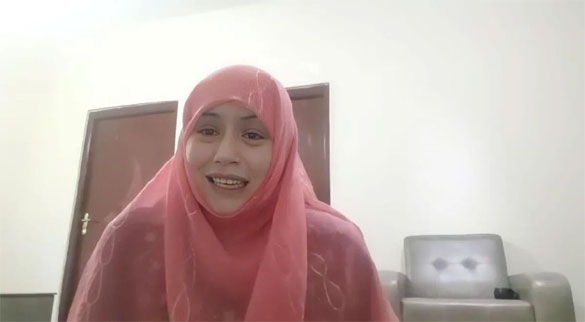 A woman whose story of being raped, brutalized and
forced to marry a former Taliban official gained international attention is
accusing the world of rolling out the “red carpet” for the group now controlling
Afghanistan even as its crimes against women continue.
A woman whose story of being raped, brutalized and
forced to marry a former Taliban official gained international attention is
accusing the world of rolling out the “red carpet” for the group now controlling
Afghanistan even as its crimes against women continue.
The experiences of ElahaDilawarzai, 24, first emerged
a couple of months ago in an emotional video posted online.
In an exclusive interview with the Star this week,
Dilawarzai — who says she has since escaped her captivity — spoke about her
ordeal and the ongoing hardships faced by women under Taliban rule.
Six months after the group returned to power in
Afghanistan, Dilawarzai, who was a university medical student, said she was out
shopping in the KhairKhana area in the north of Kabul, when she encountered a
checkpoint and a Taliban fighter took her cellphone for inspection.
Because her father is a retired military general and
she was also interested in the security forces of the previous government of
Afghanistan, the Taliban fighter saw some pictures of these forces on her
mobile phone. She was taken to the prison of the police department under the
control of the Taliban on a charge of co-operating with the anti-Taliban
resistance forces.
She said that after some time, she was transferred
from the local police department to the prison of the Taliban’s Ministry of
Interior Affairs where, according to her, many women, including some girls who
had been arrested while protesting, were imprisoned.
“The prison story is very painful. One night, I was
tortured brutally to such an extent that I passed out,” she said to Star in
Persian.
Source:TheStar
Dilawarzai said that after a few days, Saeed Khosty
came to the prison.
--------
Dr Amina Abubakar Sani Bello, Wife Of Niger Governor
Decries Relegation Of Women In Leadership Positions
Nov 14, 2022
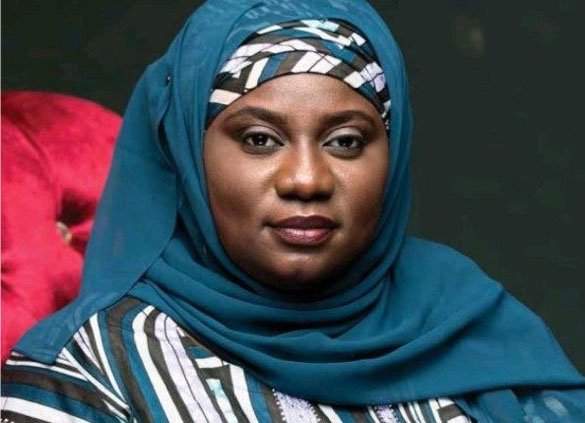 Wife of Niger State Governor in North Central Nigeria,
Dr Amina Abubakar Sani Bello, has decried the continuous relegation of women in
leadership positions in the Country.
Wife of Niger State Governor in North Central Nigeria,
Dr Amina Abubakar Sani Bello, has decried the continuous relegation of women in
leadership positions in the Country.
Dr Amina stated this during a Seminar on Women in
Judicial and Executive Leadership organized by the Islamic Trust Fund in Minna,
the state capital.
Dr Amina who said the aim of the programme is to know
what the Quran and the Saying of Prophet on the role of women in leadership is,
urged Scholars in Islam to constantly draw the attention of Muslims to create
enabling environment for women to contribute their quotas to societal
development.
Guest Speakers at the event, Professor Usman Shuaib of
the Bayero University Kano State, Dr Ibrahim Umar of University of Maiduguri in
Borno State and Justice M A Hambali, a Former Grand Khadi in Kwara State, all
stressed on the need for Muslim Women to participate in executive leadership
and judiciary positions in Nigeria.
The clerics who declared that women are entitled to
hold any executive leadership position in the society as far as they have the
competence, integrity and capacity to lead the people said “Women have the
Islamic legal rights to occupy any position and any Muslim Woman can vie for
the highest positions”.
Similarly, the Director General of Islamic Education
Trust, Abubakar ArizikaRimau and Director Da’wah Institute of Nigeria, Nurudeen
Sheikh Lemu, explained that men and women are allies, saying Muslim women can
join politics if their intentions are pure and genuine for the development of
the society.
Source:VON
https://von.gov.ng/wife-of-niger-governor-decries-relegation-of-women-in-leadership-positions/
--------
Afghanistan: Rights group calls for release of jailed
women rights defenders
15 November, 2022
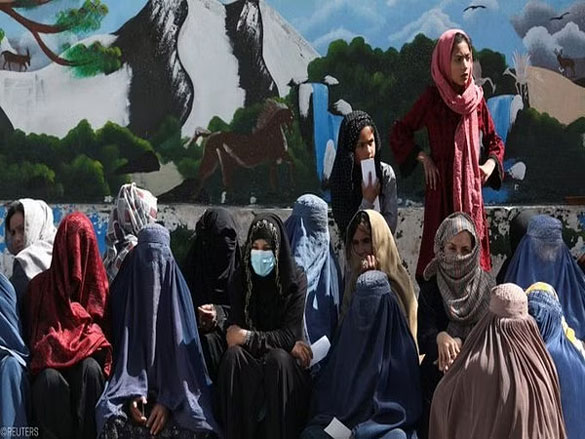 Representative Image
----------
Kabul [Afghanistan], November 15 (ANI): London-based
rights group Amnesty International has condemned the recent arrests of at least
three prominent women human rights defenders by the Taliban.
On November 4, the Taliban detained women human rights
defenders ZarifaYaqoobi and her colleagues during a press conference announcing
the formation of the “Afghan Women Movement for Equality” in the capital city
of Kabul.
Reportedly, dozens of Taliban members stormed the
venue to disrupt the event and deleted photos and videos from cellphones of all
event participants.
“The recent wave of arrests of women human rights
defenders in Afghanistan is yet another attempt to quell all forms of peaceful
protests and any dissent against the Taliban’s oppressive policies that violate
human rights, particularly of women and girls,” said Samira Hamidi, Amnesty
International’s South Asia Campaigner, in a statement.
Such arrests will no doubt increase the environment of
fear and reprisal in a continuing system of repression that goes unchecked, she
said.
“As the de-facto authorities, the Taliban must comply
with international human rights law and standards, and immediately and
unconditionally release these women human rights defenders and their colleagues
who have been arrested solely for peacefully exercising their rights to freedom
of expression, association, and peaceful assembly,” Hamidi added.
Furthermore, she said the Taliban must be held
accountable for their human rights abuses and violations as they continue to
act with impunity. “The international community must condemn these acts, both
publicly and in their private interactions with the Taliban and send a clear
message that their current policies towards women and girls are not
acceptable.”
Even the UN High Commissioner for Human Rights issued
a statement on the arrests urging the de facto authorities to respect the
rights to freedom of expression and peaceful assembly without fear of arrest or
intimidation.
This condemnation arrest of rights defenders comes as
a number of rights groups have called the Taliban to reverse its recent
decision to stop women from visiting public parks in Kabul.
“Afghanistan: The Taliban banning women from public
parks in Kabul according to media reports is yet another blow to women’s rights
in the country. Any such decision by the Taliban must be reversed immediately
as women’s rights under the Taliban have been systematically under attack,”
Amnesty said in a statement posted on Twitter.
Since the return of the Taliban to Kabul in August
2021, the Taliban’s systematic attacks on the rights of women and girls and the
use of violence, including torture and enforced disappearances, have created a
culture of fear in Afghan society. (ANI)
Source:ThePrint
--------
UAE panel event highlights role of women in Middle
East peace-building
By JUSTIN COHEN IN THE UNITED ARAB EMIRATES
November 14, 2022
The role of women in building interfaith bridges and
ending conflict was highlighted during the first all-female panel to be held at
the Abu Dhabi Forum for Peace.
Among the speakers were Board of Deputies’ interfaith
consultant Liz Harris-Sawczenko and Akeela Ahmed, an entrepreneur and founder
of She Speaks We Hear, a podcast which seeks to highlight and celebrate the
achievements of Muslim women.
The high-level panel also featured Dr RaheemaAbdaleem,
who has worked as senior lawyer within
the US Department for Justice, and AsmaaKuftaro, a member of the women’s
advisory panel to the UN envoy for peace-building in Syria.
Harris-Sawczenko, who serves as an advisor to the
Forum’s UK branch, took part in the people-to-people track of the Oslo Accords
while living in Israel. She said: “There are thousands of women working
together to end the conflict who don’t get recognition. They are facing immense
challenges now.”
In the Israel-Palestine arena, she highlighted the
work of The Women in Black and the Bereaved Families Forum, a group bringing
together Israelis and Palestinians who have lost family members in the
conflict.
RobiDamelin, who of the most prominent figures in the
group, was named in 2015 by the New York Times on a list of women who have made
the most impact in the world. “These women have very little resource or
institutional support but they have made a huge impact,” she insisted. “Rather
than seeing obstacles they circumvent them.”
The first Jewish director of the Council of Christians
and Jews, Harris-Sawcenko also highlighted the Jewish-Muslim women’s group
NisaNashim and Yachad, founded by Hannah Weisfeld, as examples of female-led
initiatives in the UK.
Recalling conversations she facilitated in Britain
following the upsurge in tensions in Jerusalem last year, she said the first
meeting had been “extremely painful and difficult”.
But after hearing from one Jewish participant about
how their child had faced antisemitism at the time, she said, the atmosphere
changed “In my experience women search for their common humanity. There is
strength in the ability to share their vulnerability.”
Ahmed told the mainly male audience that women’s
efforts in building cohesion were often undertaken quietly – meaning there was
less opportunity for others to be inspired and follow suit. She called for more
discussion about the immense contribution of Muslim women to society, medicine
and other fields.
In the wake of the Westminster Bridge attack in 2017
and amid a rise in anti-Muslim hate, she organised for a group of women to
stand at site holding hands for five minutes as an expression of their disgust
and solidarity as British women
She told the Forum: “It was very brave for those women
who knew wearing the hijab we could be targeted. That image went viral and
received global coverage. That act changed the narrative in terms of how
Muslims are seen in reacting to terror.”
She suggested that it was a collaborative approach
that men sometimes didn’t take that made women effective peacemakers.
Also on the panel were Rev Dr Mae Cannon, executive
director of Churches for Middle East Peace, and Dr Fatima Dahmani of the Sheikh
Mohamed bin Zayed University in UAE.
Source:JewishNews
https://www.jewishnews.co.uk/uae-women-panel-peacebuilding/
--------
Women Must Be Taken Along In Development Process:
Pakistan President
November 15, 2022
President Dr.ArifAlvi said on Monday that women should
remain in the mainstream national development process and economic cycle of the
country to double the development pace.
He cited that Hazrat Khadija (RA) was a business
woman; therefore it was not justified to confine the educated women to their
homes to look after the family matters only.
Addressing the Minhaj University Lahore (MUL)
Convocation 2022 here, he said that Quaid-i-Azam Muhammad Jinnah had also
advocated for taking women along in the national development process.
The society must benefit from their skills and
knowledge, however, it was government’s responsibility to provide women with
harassment-free environment at their workplace.
He said that 50 percent of the women students after
acquiring MBBS degree did not go for practice in the field or most of them went
abroad to serve there, which was unfortunate and in a way, wastage of the
resources spent on them during their studies at respective educational
institutions.
Dr ArifAlvi advised the graduating student that they
should not isolate themselves from the society in their practical life and
their motto should not be earning livelihood only, and they must use
theirknowledge and skills for well-being of the society and uplift the poor
strata.
At global level, the IT industry was running short of
manpower and the international community was looking towards Pakistan having
youth bulge to cater to the needs of this vital sector, he said and added that
Pakistan must take substantial advantage of this great opportunity.
Dr ArifAlvi said that human relationships were built
on the basis of communication, asserting that people must take extra care of
sharing information through social or any other media and avoid sharing
unconfirmed information and out of context communication as it was unethical
and against the teachings of Islam.
In the past, he added, the education was considered
necessary to earn a livelihood, which created a state of euphoria but deprived
the society of spiritual qualities.
The Muslim had over the past 600 years been resistant
regarding gaining of knowledge which was unfortunate; he said and asserted that
Allah Almighty had opened the passage to knowledge and Muslim being the
inherent of ‘the knowledge’ should have continued with this inheritance to
achieve successes in this world and the hereafter.
Source:PakObserve
https://pakobserver.net/women-must-be-taken-along-in-development-process-alvi/
--------
URL: https://newageislam.com/islam-women-feminism/age-seven-maryam-mazrooei-iranian/d/128404
New Age Islam, Islam Online, Islamic Website, African Muslim News, Arab World News, South Asia News, Indian Muslim News, World Muslim News, Women in Islam, Islamic Feminism, Arab Women, Women In Arab, Islamophobia in America, Muslim Women in West, Islam Women and Feminism