
Bibi Amtus Salam: The Unsung Hero of India's Partition

By Afroz Khan, New Age Islam
19 July 2025.
Bibi Amtus Salam, a Gandhian social worker, fostered peace during India's partition with a hunger strike in Noakhali and devoted her life to refugee rehabilitation, leaving a legacy of unity and compassion.
Main Points:
1. Bibi Amtus Salam was a fearless social worker and devoted follower of Mahatma Gandhi.
2. She worked tirelessly to establish peace during the violent partition of India in 1947.
3. Her 25-day hunger strike in Noakhali restored communal harmony after a temple incident.
4. She founded the Kasturba Seva Mandir and aided refugee rehabilitation in Rajpura.
5. Her life showcased the impact of one person's dedication to peace and unity.
-----
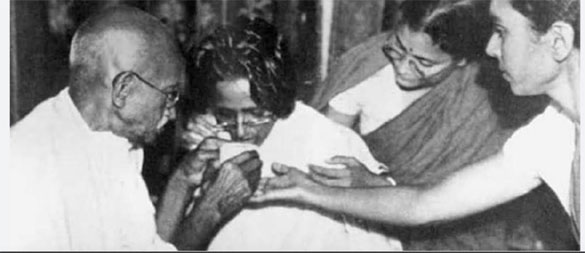
Image Courtesy: royalpatiala.in
-----
India's independence was like the first ray of hope for a bright future, but the partition brought with it a lot of bloodshed and violence, which was a really dark time for the country. A lot of people came together to try and heal the wounds of partition. Their efforts did make a difference. One such person was Bibi Amtus Salam, who worked really hard to bring peace during those terrible times.
In the fight for India's freedom, not just men, but women also showed immense bravery. They left their cozy homes and comforts to walk the tough path of resistance. They broke all social norms and showed amazing strength, wisdom, and determination. Their legacy is something we should always remember with a lot of respect.
One of these inspiring women was Bibi Amtus Salam. She was a brave social worker and a devoted follower of Mahatma Gandhi. She wasn’t just a historical figure; she was a living embodiment of peace and unity. All her life, she stood for communal harmony, the Ganga-Jamuni tehzeeb, and Gandhian principles. Even in the toughest times, she chose love over hate and dialogue over conflict. Her life shows how one person’s dedication can help heal a nation.
Bibi Amtus Salam was born in 1907 in Patiala into a traditional family. Her father, Abdul Majeed, was a bit old-school but a good man. Because of this, Amtus Salam didn’t get many chances to study. She was kept behind the purdah and wasn’t allowed to go to school, but when she turned eighteen, she decided to break free from that.
Bibi Amtus Salam was deeply inspired by Gandhiji’s ideas. She joined many movements with him and was a close associate. She strongly believed in Hindu-Muslim unity and worked hard to achieve it. She was so close to Gandhi that in 1934, he wrote to Sardar Patel saying, “Salam may look frail, but her heart is pure gold, and her body is as strong as brass.”
During 1947-48, she worked tirelessly to help thousands of women who were displaced. She was helped by Lajjawati Hooja in this work. She was very active in Jalandhar and was connected with KMV College. Both of them worked in Bahawalpur under Rameshwari Nehru, who was related to Jawaharlal Nehru. She was a member of the Congress and the All India Women’s Congress. Amtus Salam was so dedicated to social service that she even went to Pakistan several times to help evacuate refugees.
She set up the Kasturba Seva Mandir and Khadi institutions and based herself in Rajpura. There, she worked to rehabilitate Hindu migrants from Bahawalpur. She was deeply involved when the Government of India started building a township in Rajpura for refugee resettlement, working alongside the Hindustani Talimi Sangh.
As per Navbharat Times, once in Noakhali, Bibi Amtus Salam was going through a village when she heard that some Muslim men had stolen the sword from a Durga idol in the local temple. This made the Hindu community very upset. Without wasting any time, she started a hunger strike right there in the village. She fasted for twenty-five days to get the sword back.
Mahatma Gandhi was really touched by her bravery and sense of justice. He said, “From now on, I’ll handle my duties myself.” The Muslim men felt ashamed and finally returned the sword, placing it in front of her. Gandhi himself came and ended her fast.
Even though stealing the sword might seem like a small thing compared to the big communal violence, it became a powerful moment to build trust between communities. With her silent but strong protest, Bibi Amtus Salam gained the trust of both Hindus and Muslims. The effect was so strong that even the riots stopped.
This story shows us how important it is to respect every community’s beliefs. It also reminds us that building peace and trust in a diverse country like India takes a lot of effort, sacrifice, and sincerity.
She set up the Kasturba Seva Mandir and made Rajpura her home, where she worked to resettle Hindu migrants from Bahawalpur. When the government started building a township in Rajpura for refugees, she was part of that effort, working with the Hindustani Talimi Sangh to educate the children in the refugee camps. In the 1980s, she was a permanent invitee on the All India Committee on Jail Reforms. She passed away in September 1985.
Bibi Amtus Salam’s life is a shining example of courage, compassion, and commitment to peace. Her contributions during some of India’s toughest times will always be remembered.
References
https://royalpatiala.in/patialvies-remember-mahatma-gandhis-connection-with-patiala-puri/
https://www.tribuneindia.com/news/patiala/mahatmas-adopted-daughter-from-patiala-who-risked-her-life-to-stop-riots-422004/
https://navbharattimes.indiatimes.com/astro/spirituality/motivational-stories/interesting-and-amazing-story-mahatma-gandhi-and-bibi-amtus-salam/articleshow/91033767.cms
https://www.allindiansmatter.in/heroism-and-compassion-amid-the-horrors-of-partition-part-2/
https://www.mkgandhi.org/ebks/last-phase-vol-9-part2.pdf
-----
Afroz Khan is a teacher by profession. She primarily writes about women and Islam. She holds a Bachelor's degree in Education.
URL: https://www.newageislam.com/islam-women-feminism/bibi-amtus-salam-unsung-partition/d/136223
New Age Islam, Islam Online, Islamic Website, African Muslim News, Arab World News, South Asia News, Indian Muslim News, World Muslim News, Women in Islam, Islamic Feminism, Arab Women, Women In Arab, Islamophobia in America, Muslim Women in West, Islam Women and Feminism