
Justice Musarrat Hilali To Become First Female Chief Justice Of Peshawar High Court
New Age Islam News Bureau
30 March 2023
• In Austria, Women Wearing Headscarves Face Anti-Muslim Racism
• Berlin To Allow Muslim Teachers To Wear Headscarves
• Salma Al-Shehab: Saudi Woman Jailed Over Tweets
Launches Hunger Strikes
• Divorced Afghan Women Fear Being Forced Back To
Abusive Ex-Husbands
• Lama Taleb, A Saudi Graphic Designer In Jeddah: Women
In Saudi Arabia Get Creative With Ramadan Food Packaging And Flavours
• 4,314 Indian Women Set To Perform Haj Without
'Mehram' This Year
Compiled by New Age Islam News Bureau
--------
Justice Musarrat HilaliTo Become First Female Chief
Justice Of Peshawar High Court
Haseeb Bhatti
March 29, 2023
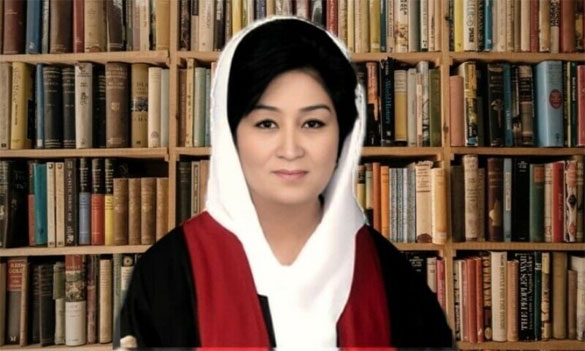 A photo of Justice Musarrat Hilali. — APP
---------
President Dr Arif Alvi on Wednesday appointed Justice
Musarrat Hilali as the first female chief justice of the Peshawar High Court
(PHC), according to a notification from the Ministry of Law and Justice.
The notification, a copy of which is available with
Dawn.com, said she was promoted to the position since she was the most senior
PHC judge and will assume office from April 1 “till the appointment of a
regular chief justice by the Judicial Commission of Pakistan”.
She will be the second female to become the chief
justice of a high court after Justice Tahira Safdar, the chief justice of the
Balochistan High Court from September 2018 to October 2019.
Born in Peshawar on August 8, 1961, Hilali received
her law degree from Khyber Law College of the University of Peshawar and
enrolled as an advocate of district courts in 1983, as an advocate of the high
court in 1988 and as an advocate of the Supreme Court of Pakistan in 2006.
She was the first female elected office-bearer on the
post of secretary at the bar from 1988-1989, twice the vice president at the
bar from 1992 to 1994, the general secretary from 1997 to 1998 and the first
female twice elected as an executive member of the Supreme Court Bar
Association from 2007-2008 and 2008-2009.
Hilali was also the first female additional advocate
general of Khyber Pakhtunkhwa from November 2001 to March 2004 and was later
appointed as the first female chairperson of the KP Environmental Protection
Tribunal.
She also served as the first female Ombudsman for the
Protection against Harassment of Women at Workplace.
Hilali was elevated to the bench as an additional
judge on March 26, 2013, and confirmed as a permanent PHC judge on March 13,
2014.
Source: Dawn
--------
In Austria, Women Wearing Headscarves Face Anti-Muslim
Racism
Rabia Ali
29.03.2023
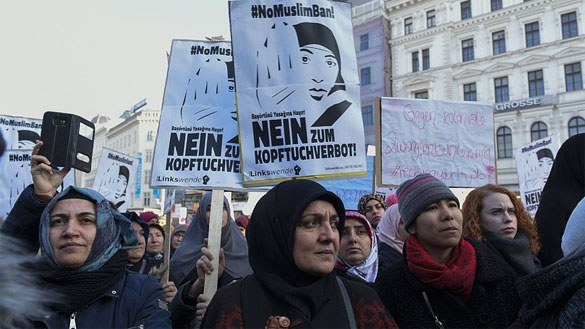 Muslim women wearing the headscarf in Austria face
more anti-Muslim hate and discrimination than men, according to a local
activist working against Islamophobia.
Muslim women wearing the headscarf in Austria face
more anti-Muslim hate and discrimination than men, according to a local
activist working against Islamophobia.
“The most victims we have are women who wear the
hijab. … Because of the hijab, because of the visibility of the hijab, a lot of
women face more anti-Muslim racism,” Munira Mohamud, an activist working at an
Austrian NGO, Dokustelle, told Anadolu.
According to the organization which documents
anti-Muslim hate crimes and racism, over 1,000 Islamophobic incidents were
reported last year in the country, with women being the majority of victims as
compared to men.
The details of the organization’s findings of 2022 are
to be released in May, while the 2021 statistics showed that women, with 69.2%,
were also subjected to Islamophobia more than men.
Mohamud, a Muslim woman wearing headscarf and living
in Vienna, said she also encountered Islamophobia last year, when she was
outdoors. A man came up to her, and told her to take off her hijab.
“What is this on your head? Take it away,” the man
said, before using a derogatory word in German for it, she said.
Mohamud added that while using public transport she
has experienced no direct attacks but often feels some stares from commuters.
“So, people are constantly looking at you like something is wrong with you or
like you are doing something wrong.”
According to Austria's Federal Statistical Office,
there are currently 645,600 Muslims in Austria.
Countries in Europe influencing one another
According to Mohamud, anti-Muslim sentiments are
increasing everywhere, and that countries in Europe are influencing each other.
“It's not only an Austrian problem but it's a European problem as a whole.”
She underlined that politicians in Austria have spoken
of considering France’s approach towards Muslims, seeing it as an
"inspiration" on how to deal with the minority community in the
country.
In Austria, the biggest player of Islamophobia is the
government, and instead of tackling local issues such as corruption, it tries
to divert attention by talking on issues related to Muslims or even blaming
them, she said, adding that this type of narratives not only exists in Austria
but also in Europe as a whole.
Condemning Islamophobia
The official said she thinks that one of the reasons
for increase in Islamophobia is because there is no condemnation from the
government, and that it is just the civil rights society that is condemning it.
Also, she said there is often no consequence for those
who engage in hate crimes, which leads it to a surge in such crimes. To deal
with this, she said the government should recognize Islamophobia and bring in
laws that protect the community.
"I feel like that is the first and important step
on combating Islamophobia on anti-Muslim racism in Austria because a lot of
people don't recognize Islamophobia, and the government also doesn't recognize
Islamophobia. ... We can push the government to make new laws that protect the
Muslim community in Austria.”
'Islamophobic incidents continued in 2022'
According to Mohamud, last year was a continuation of
2021 in terms of Islamophobic events. She recalled incidents of hate graffiti
sprayed on a mosque, and another mosque vandalized and attacked.
She said the presence of the "Islam Map," a
digital map introduced by a state-funded organization showing locations of all
Muslim institutions and mosques in Austria, has led to an increase on attacks
on Muslims. Although the map was met with a lot of criticism from Mohamud's
organization and other bodies, the government failed to take it down.
Mohamud also recalled other incidents where a boy was
not allowed to pray in his school, and teachers or staff intimidating children
about wearing hijab or practicing the religion.
Source: Anadolu Agency
--------
Berlin to allow Muslim teachers to wear headscarves
AyhanŞimşek
29.03.2023
 BERLIN
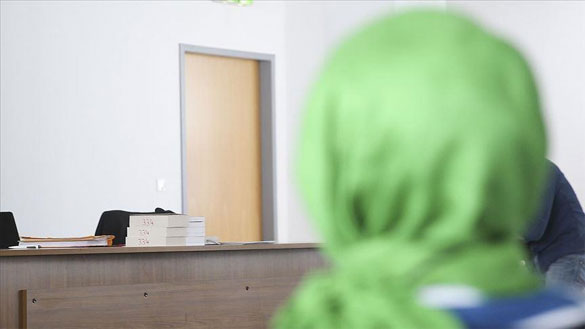
The German state of Berlin will allow Muslim teachers to wear headscarves, authorities confirmed on Wednesday.
Headscarves and wearing of religious symbols by teachers will be allowed in general and can only be restricted in individual cases if it poses a danger to school peace, Berlin’s education department said, in an official letter sent to school directors.
Under Berlin’s neutrality act, which prevents civil servants from wearing religious clothing and symbols, teachers in the city were banned from wearing headscarves since 2005.
But several court rulings in recent years underlined
that a blanket ban on headscarves constitutes discrimination, and violates
religious freedom guaranteed by the constitution.
The Senate Department for Education, Youth and Family told school directors that they should comply with the recent court rulings.
Source: Anadolu Agency
https://www.aa.com.tr/en/europe/berlin-to-allow-muslim-teachers-to-wear-headscarves/2858437
--------
Salma al-Shehab: Saudi woman jailed over tweets
launches hunger strikes
By Dania Akkad
29 March 2023
A Saudi Arabian woman sentenced to 27 years in jail
and a 27-year travel ban over her tweets has been on hunger strike for nearly a
week along with seven other women, the UK-based Alqst rights group said on
Tuesday.
Salma al-Shehab, a mother of two, and the other women
whose identities have not been publicly disclosed, are said to be protesting
their unjust imprisonment and calling for their immediate release.
The dental hygienist, who is studying a PhD at Leeds
University in the UK, made headlines last August when Saudi Arabia's
Specialised Criminal Court (SCC) sentenced her to 34 years, and a 34-year
travel ban, after she retweeted posts in support of women's right to drive, and
calling for the release of activists including Loujain al-Hathloul.
Last month, after the Saudi Supreme Court ordered a
retrial, the SCC reduced her sentence to 27 years in prison.
Shehab's initial sentence was the longest given in Saudi
Arabia to a woman human rights defender at the time, and drew attention because
she was not well-known and had few followers.
But it was only the first of a wave of lengthy
sentences handed down by the same court to Saudis with similarly non-existent profiles
over their posts in the following months.
A week after Shehab's shock sentence, the same court
gave Nourah al-Qahtani a 45-year sentence for "breaking the social fabric
of the kingdom" and "violating the public order" over tweets
from two anonymous accounts.
Qahtani is reportedly a mother of five with health
issues, but very little else has been disclosed publicly about her.
In October, Saad Almadi, a 72-year-old retiree with
dual Saudi-American citizenship, was sentenced to 16 years in jail, and a 16-year
travel ban over his tweets, including ones referring to slain journalist Jamal
Khashoggi, and criticising corruption inside the kingdom.
Almadi was released earlier this month, but remains in
the kingdom on a travel ban, his son has said.
The SCC originally sentenced Shehab to six years in
prison for using the internet to cause public unrest, but increased her
sentence to 34 years and a 34-year travel ban after a public prosecutor
reportedly asked the court to consider other alleged crimes.
Source: MiddleEastEye
https://www.middleeasteye.net/news/saudi-arabia-salma-shehab-jail-tweets-launches-hunger-strike
--------
Divorced Afghan women fear being forced back to
abusive ex-husbands
March 30, 2023
Abused for years by her ex-husband who broke all of
her teeth, Marwa has retreated into hiding with her eight children after being
told her divorce had been revoked.
Marwa was one of a small number of women who, under
the previous US-backed government, were granted a legal separation in
Afghanistan, where domestic abuse is widespread.
When Taliban forces swept into power in August 2021,
her husband claimed he had been forced into the divorce and persuaded local
commanders to order her back into the marriage.
"My daughters and I cried a lot that day,"
Marwa, 40, whose name has been changed for her own protection, told AFP.
"I said to myself, 'Oh God, the devil has
returned.'"
The Taliban government adheres to an austere
interpretation of Islam and has imposed severe restrictions on women's lives
that the United Nations called "gender-based apartheid".
Lawyers told AFP that several women, in the immediate
months after the Taliban seized power, have reported being dragged back into
abusive marriages after being told by local commanders that their divorces had
been annulled.
The Taliban authorities say this is not an official
government policy. AFP's investigation revealed that isolated cases like these
happened during the aftermath of the country's takeover.
For months Marwa endured a new round of beatings,
locked away in the house, with her hands broken and fingers cracked.
"There were days when I was unconscious, and my
daughters would feed me," she said.
"He used to pull my hair so hard that I became
partly bald. He beat me so much that all my teeth are broken."
Gathering the strength to leave, she fled hundreds of
kilometres (miles) to a relative's house with her six daughters and two sons,
who have all assumed fictitious names.
"My children say, 'Mother, it's okay if we are
starving. At least we have got rid of the abuse,'" said Marwa, sitting on
the cracked floor of her bare home, clasping a string of prayer beads.
"Nobody knows us here, not even our neighbours,"
she said, fearing her husband would discover her.
- 'Islam permits divorce' -
The United Nations mission in Afghanistan says that
violence against women in Afghanistan is widespread.
"Globally, 1 in 3 women have experience physical
or sexual violence, mostly by an intimate partner," the mission said in a
statement in November 2021.
"Afghanistan has one of the highest rate of
violence against women globally, with nine out of 10 women experiencing at
least one form of intimate partner violence in their lifetime."
Divorce, however, is often more taboo than the abuse
itself and the culture remains unforgiving to women who part with their
husbands.
Under the previous US-backed government, divorce rates
were steadily rising in some cities, where the small gains in women's rights
were largely limited to education and employment.
Women once blamed their fate for whatever happened to
them, said Nazifa, a lawyer who successfully handled around 100 divorce cases
for abused women, but who is no longer permitted to work in Taliban-ruled
Afghanistan.
As awareness grew, women realised that separating from
abusive husbands was possible.
"When there is no harmony left in a husband and
wife relationship, even Islam permits a divorce," explained Nazifa, who
only wanted to give her first name.
Under the ousted regime, special family courts with
women judges and lawyers were established to hear such cases, but the Taliban
authorities have made their new justice system an all-male affair.
Nazifa told AFP that five of her former clients have
reported being in the same situation as Marwa.
Another lawyer, who did not want to be identified,
told AFP she recently witnessed a court case where a woman was fighting against
being forcefully reunited with her ex-husband.
She added that divorces under the Taliban government
are being granted when a husband was a classified drug addict or has left the
country.
"But in cases of domestic violence or when a
husband does not agree to a divorce, then the court is not granting them,"
she said.
The Taliban authorities insist divorce is allowed
according to sharia.
A nationwide network of shelters and services that
once supported women has almost entirely collapsed, while the Ministry of
Women's Affairs and the Human Rights Commission have been shut.
- 'Knock on the door' -
Sana was 15 when she married her cousin, 10 years
older than her.
"He would beat me if our baby cried or the food
was not good," she said as she prepared tea on a gas stove at a home where
she has been living in secret.
"He used to say that a woman does not have the
right to talk."
With the help of a free legal service project she won
a divorce from her husband in court -- but her relief was shattered when local
officials came knocking.
Threatened with losing custody of her four daughters,
she returned to her ex-husband who by then had also married another woman.
She escaped after he announced the engagement of her
daughters.
"My daughters said, 'Mother, we will commit
suicide,'" Sana said.
She was able to gather some money and escape with her
children, and with the help of a relative found a one-room house, furnished
only with a gas stove and some cushions for sleeping.
"Whenever there's a knock on the door, I fear
that he's found me and come to take the kids away."
- Ordeal for children -
A Taliban official told AFP the authorities would look
into such cases where previously divorced women had been forced to return to
their ex-husbands.
"If we receive such complaints, we will
investigate them according to sharia," said Inayatullah, spokesman for the
Taliban supreme court, who like many Afghans goes by one name.
When asked whether the Taliban regime would
acknowledge divorces granted under the previous government, he said: "This
is an important and complex issue."
"The Dar al-Ifta is looking into it. When it
arrives at a uniform decision, then we will see," he said, referring to a
court-affiliated institution that issues rulings on sharia.
For Marwa and her daughters, who survive by sewing
clothes, the trauma has left deep psychological wounds.
"I'm afraid I won't be able to get them
married," said Marwa, looking at her daughters.
"They tell me, 'Mother, watching how bad your
life has been, we hate the word husband.'"
Source:Zawya
--------
Lama Taleb, A Saudi Graphic Designer In Jeddah: Women
In Saudi Arabia Get Creative With Ramadan Food Packaging And Flavours
Mariam Nihal
Mar 30, 2023
Sharing food with friends, neighbours and those in
need is a custom passed down for generations during Ramadan.
This year, the younger generation of Saudis are adding
an artistic twist to the packaging of Ramadan gifts, bringing a smile to the
faces of many.
“It does not matter what your financial status is, we
cook, order or create personalised Ramadan packages to gift to our friends,
relatives and neighbours,” says Lama Taleb, a Saudi graphic designer in Jeddah.
“We also make grocery boxes and give away toys in less
advantaged neighbourhoods.
“This Ramadan I got products from Musa & Palm in
Jeddah. I love their packaging, adding prayer beads and Ramadan colouring books
for kids, as a Ramadan gift for my friends.”
Musa & Palm sell luxury dates stuffed with unusual
flavours such as figs and goat's cheese. Founder Suha Mousa says their
offerings tell the story of her Saudi ancestors and highlight the kingdom's
heritage.
“Gourmet food is a form of art, and it’s time that the
world experiences what Saudi Arabia has to offer in terms of culinary
innovation,” said Suha tells The National.
“This Ramadan we are combining finest dates with
unique fillings encased in wonderful, limited edition gift boxes that depict
the flora of Saudi Arabia.”
Saudi women also get together to collaborate on
packaging and branding for exclusive products.
KaakAlfarah, the brainchild of Taif resident Afaf Al
Mutiry, sells authentic Arabic sweets in decorated boxes branded by Zahar Al
Sayed, a creative consultant at Seven in Jeddah.
It all started when Afaf's friends in Madinah, where
she grew up, encouraged her to sell the sweets she used to make at home, where they
became popular, she tells The National.
“Back in 2010-2011 I used to make cupcakes,” she says.
“There were very few Saudi women in the workplace and
it was hard to find work. I felt it wasn't suitable for me to work and have
fun, so I stopped.”
Asaf reflects on how society has changed since Vision
2030 opened doors for women, empowering them in different fields and positions.
Many women now own their own businesses, small or large.
She reached out to Zahar to help her rebrand and
market the products with a “fun and trendy” approach.
“Her sweet products and my branding went viral. We
collaborated during Covid-19, when she reached out to me,” says Zahar. “It was
so much fun.”
“She was already famous in Taif, but after the
rebranding, it got famous with people in Riyadh and Jeddah and grew from
there.”
Zahar hopes the collaboration will mean mamoul — date
stuffed biscuits — are loved by more people and become trendy.
This year, KaakAlfarah is also selling in Dubai and
Kuwait.
Foreign residents are also part of yearly Ramadan
fairs and exhibitions across the country, showcasing their creative ideas.
Dema, a Turkish national in Jeddah, sells luxury
confectionery and unique desserts with Mediterranean flavours.
Her latest Ramadan gifts are available at Ana Special
Mall in Jeddah “and people can order through her Instagram page”, she tells The
National.
During Ramadan, many locals take to the streets to
sell home-made drinks and food.
The iftar items are sold before sunset on the streets
or at a local market. They include traditional favourites such as sobia (a
sweet drink made of barley or rice), luqaimat (sweet fried dough balls),
sambousa, Saudi coffee and qatayef (pancakes with a sweet filling).
“My mother always buys sobia from a lady in Ramadan,
every year. She sells around a corner sometimes and mostly from home when it
gets too hot,” says Ahmad Hawandji, a Saudi shopper in Jeddah.
“I love trying new things on the street whether its
luqaimat or coffee.”
Source:TheNationalNews
--------
4,314 Indian women set to perform Haj without 'Mehram'
this year
29 Mar 2023
As many as 4,314 Indian women are set to perform Haj
without 'Mehram (male companion)' this year, the largest since the reform in
2018, which did away with the compulsion of a male companion with women on the
pilgrimage, officials said.
In a first, India's Minority Affairs Ministry has also
made comprehensive arrangements for the health of the Haj pilgrims, with health
desks at airports and medical screening by government doctors.
With a view to ensure quality health support to
pilgrims, the ministry is collaborating with India's Ministry of Health &
Family Welfare for comprehensive health arrangements for pilgrims planning to
visit Mecca.
Each year, Saudi Arabia hosts around 2.5- 3 million
pilgrims from across the globe to visit Mecca — and India sends the third
largest contingent of pilgrims in the world.
Such large number of pilgrims also poses unique public
health challenges, and the medical requirements of the pilgrims in Makkah,
Madina and Jeddah must be well-cared for, a statement issued by the ministry
said. For this year, a quota of 175,025 pilgrims has been allotted to India.
The first flight for the pilgrimage from India will depart on May 21.
With a view to ensure comprehensive and quality
services to the pilgrims, Minority Affairs Minister Smriti Irani and Health
Minister Mansukh Mandaviya have undertaken a series of meetings accompanied by
officials from both ministries.
In the last three months, more than 10 meetings have
been organised on the subject between both the ministries and a detailed plan
of action has been finalised, the statement said.
The Health Ministry, accordingly, has issued
directions to all states on March 21, wherein they have been advised to provide
for medical screenings and fitness certificates for applicant pilgrims and a
detailed format for such screenings has been sent to the states.
With a view to aid the applicants, this year the
medical screening and fitness certificate by an applicant can be issued by any
government allopathic medical doctor in the States or union territories. This
will ease the process of getting the medical screening certificates across the
country.
Further, it has been directed that states and district
health authorities will also set up camps for the selected pilgrims wherein the
pre-departure detailed medical examination and vaccination will also be
provided, the statement said.
A health card for all the pilgrims will also be issued
in these camps which will examine the selected pilgrims for their present
health status, the existing diseases/co-morbidities, if any. It is planned that
the health status will be made available to the medical teams in Saudi Arabia
through digital means for timely health service delivery in case of any
emergency.
The Ministry of Health will procure and provide the
required number of Quadrivalent Meningococcal Meningitis Vaccine (QMMV) and the
Seasonal Influenza Vaccines (SIV) to the pilgrims.
Health desks will also be set up at all departing
airports for coordinating health needs of the pilgrims during the departure,
the statement said.
With a view to plan the requirement of health
infrastructure in Saudi Arabia, India's health ministry is also sending a team
of senior clinicians to the Kingdom during the first week of April 2023, to
plan for the requirement of temporary hospitals, dispensaries, pharmacies and
camps as needed in Makkah, Madina, Jeddah, Arafat and at the core ritual site
of Mina.
The pilgrims will be screened for a wide range of
medical issues in order to tackle any emergency effectively and quickly, which
may arise during the pilgrimage.
Source: Khaleej Times
--------
New Age Islam, Islam Online, Islamic Website, African Muslim News, Arab World News, South Asia News, Indian Muslim News, World Muslim News, Women in Islam, Islamic Feminism, Arab Women, Women In Arab, Islamophobia in America, Muslim Women in West, Islam Women and Feminism