
Why Are Many Muslim Countries Under shackles of Western colonialism?
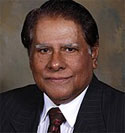
By M. Basheer Ahmed M.D., New Age Islam
13 March 2026
Manufacturing Guilt and Innocence: Manipulation by Global Powers
Throughout modern history, some of the most influential leaders have wielded power in ways that distort reality, making the innocent appear guilty and the guilty appear innocent. Leaders such as Benjamin Netanyahu, George W. Bush, Tony Blair, Donald Rumsfeld, and Colin Powell promoted false narratives about Iraq prior to the 2003 invasion, leading to the devastation of that nation. Western media played a critical role in amplifying undeniable truths and justifying an illegal war. Today, similar narratives are emerging as President Donald Trump and Prime Minister Netanyahu raise alarms about Iran, laying the groundwork for potential confrontation without meaningful international consensus or authorization from the United Nations or the U.S. Congress. Complicating matters further, several Arab governments support these geopolitical strategies, often under leaders whose own security depends on foreign military bases and external protection.
Neglecting Resistance: A Moral and Political Challenge
Within Muslim societies, discussions about moral decline and weakening faith are common. Yet there has been far less emphasis on inspiring Muslims to resist domination, imperialism, and exploitation. Instead of confronting forces that undermine sovereignty and dignity, many leaders have prioritized self-preservation, missing opportunities to challenge external pressures and assert independent policies. The Fragmentation of the Middle East
The collapse of the Ottoman Caliphate reshaped the political landscape of the Middle East. In its aftermath, the region was divided into numerous states, many governed by Western-backed monarchies or authoritarian regimes. This fragmentation weakened collective political strength and undermined the possibility of meaningful unity among Muslim nations.
The Failure of Leadership and Western Determination
Many Muslim leaders have underestimated the determination of global powers to prevent the emergence of a strong and unified Muslim political bloc reminiscent of the Ottoman era. As a result, attempts to rebuild political unity or collective influence on the world stage have repeatedly faced obstacles—both external and internal.
Palestine: A Tool for Perpetual Conflict
Western powers played a pivotal role in the creation of Palestine, intentionally fostering an environment of continual warfare by providing massive military support and nuclear capabilities to Israel. Even when multiple Muslim nations attempted to liberate Palestine, their efforts were defeated by a small yet powerful Israel, steadfastly supported by the United States.
Countries that attempt to assert independent policies—such as Iraq, Libya, Syria, Yemen, or Iran—are frequently labeled destabilizing or dangerous and often face sanctions, isolation, or military pressure.
Suppressing Independence and Fostering Division
Western powers have systematically targeted and destroyed Muslim countries that displayed independence or sought to build military strength, including Iraq, Libya, and smaller nations such as Palestine, Somalia, Lebanon, Syria, and Yemen. Now, Iran faces similar threats of destruction. Additionally, Western powers fuel sectarian violence within the Muslim world, ensuring internal conflict persists. These powers also do little to promote higher education in science and technology among Muslims, in stark contrast to the illustrious "Golden Period" of Muslim civilization, when Muslim scholars pioneered advancements in mathematics, medicine, astronomy, and philosophy while much of Europe remained intellectually stagnant.
Responsibility and the Path to Renewal
Many Muslim scholars attribute the decline of Muslim civilization to Western interference. However, the responsibility also lies with the negligence, egotism, and selfishness of Muslim leaders and religious authorities who have discouraged scientific education and supported autocratic rule.
Rather than confronting these structural problems, many communities retreat into ritualistic expressions of faith while waiting for divine intervention. Yet the Qur'an clearly teaches that transformation begins with human effort. Only through unity, the rejection of sectarianism, and the revival of scientific and intellectual pursuit can Muslims reclaim dignity and influence in the modern world, as Western nations did during the Renaissance
Ironically, some scholars who criticize Western societies choose to live in them, enjoying their freedoms and institutions rather than returning home to help reform their own societies.
A Period of Humiliation and Leadership Crisis
Many observers believe the Muslim world is currently experiencing one of the most difficult and humiliating periods in its modern history. Political fragmentation, weak leadership, and dependency on external powers have contributed to widespread frustration.
Having spent sixty years in the United States, the author notes that he had never witnessed such widespread humiliation of Muslims and Islam.
Rediscovering Purpose and Breaking Colonial Mindsets
Every generation must rediscover its purpose.
Since the fall of the Ottoman Empire, colonial influence has shaped the political and intellectual direction of many Muslim societies, often distancing them from the rich intellectual and spiritual legacy of the Islamic Golden Age
In some communities, religion has been reduced to ritual alone, while engagement with social justice, education, and civic responsibility has weakened. The misconception that God alone determines worldly outcomes has encouraged passivity, allowed injustice and decline to persist unchallenged.
Meanwhile, enormous natural resources in many Muslim countries are often spent on luxury rather than invested in world-class educational institutions. As a result, Muslim students frequently travel abroad to study, contributing their talents to Western societies—while a thousand years ago the world’s scholars traveled to centers of learning such as Baghdad and Córdoba.
Breaking the Cycle: The Need for Action
Fear and political pressure have led many communities to believe that silence ensures safety. But the past century has shown that passivity rarely brings security or respect.
Prayer and faith remain essential pillars of Muslim life—but faith must also inspire action. Avoiding conversations about injustice or refraining from civic engagement does not protect communities; it leaves them vulnerable.
True dignity requires informed citizens, courageous leaders, and active participation in shaping the future.
Conclusion: A Call for Unity, Education, and Courage
The path forward will not be easy, nor will it be quick. But history offers a powerful lesson: dignity is never simply granted—it is earned through unity, knowledge, and perseverance.
The Islamic Golden Age did not emerge through passivity. It was built by scholars who pursued knowledge fearlessly, leaders who valued learning, and societies that invested in education, science, and justice. That same spirit can be revived today.
Muslim societies must reject sectarian divisions and rediscover the principles that once made their civilization a beacon of knowledge and progress: unity over division, education over ignorance, and activism over silence.
The greatest obstacle is not external opposition alone—it is the silence and resignation that sometimes prevail within our own communities.
If Muslims invest in education, encourage intellectual curiosity, promote ethical leadership, and speak courageously for justice, the future can be very different from the present.
As the Qur'an reminds us:
"Indeed, Allah does not change the condition of a people until they change what is within themselves."
(Qur'an 13:11)
The time has come not only to pray for change—but to become the generation that creates the change.
…
M. Basheer Ahmed, M.D., is a physician, humanitarian, and advocate for interfaith understanding and global peace. He is the former professor of psychiatry at UT Southwestern Medical School, Dallas, TX. He has written extensively on Muslim unity, interfaith dialogue, and Middle East policy.
New Age Islam, Islam Online, Islamic Website, African Muslim News, Arab World News, South Asia News, Indian Muslim News, World Muslim News, Women in Islam, Islamic Feminism, Arab Women, Women In Arab, Islamophobia in America, Muslim Women in West, Islam Women and Feminism