
Ramzan Vs Ramadan: The Poetry of Language and Faith

By Moin Qazi, New Age Islam
19 March 2026
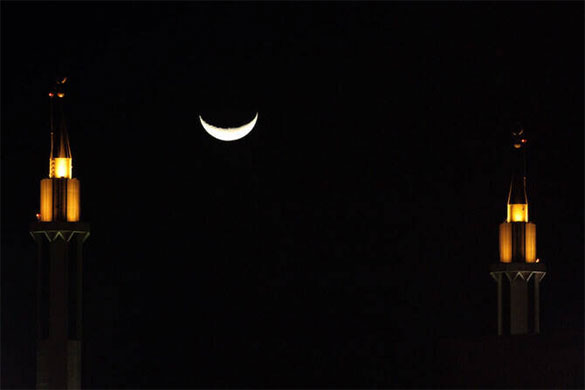
Every year, as the crescent moon graces the sky, a quiet question resurfaces: is it Ramzan or Ramadan? What seems at first like a trivial debate over letters is, in truth, a reflection of history, migration, and cultural identity. The distinction is not merely orthographic—it is a living testament to how language carries devotion across time, space, and communities.
The term originates in Arabic: Ramadan, derived from ramad, meaning “scorching heat,” a poetic symbol of spiritual intensity and purification. As Islam spread across continents, its sacred language traveled alongside it. In South Asia, Arabic words were filtered through Persian and Urdu, giving rise to “Ramzan.” The “z” sound, absent in Arabic, aligns with the natural phonetic rhythm of Urdu. Ramzan is not a corruption; it is a graceful adaptation—a word reshaped by centuries of speech, memory, and devotion.
Language is history in motion. Persian-speaking courts and literary traditions left enduring imprints on South Asian culture, transforming Arabic expressions to harmonize with local tongues. Ramzan is a linguistic testament to these interactions, just as “rasgulla” becomes “roshogolla” in Bengali—small shifts that preserve meaning while embracing local melody. Every syllable of Ramzan carries echoes of time, geography, and collective memory.
Yet the debate often sparks fervor, particularly on social media, where one spelling is sometimes deemed more authentic than the other. This tension reveals a universal truth: language is inseparable from belonging. Writing “Ramzan” acknowledges South Asian heritage; writing “Ramadan” aligns with the global Arabic tradition. Both are correct, both sacred, both deeply resonant. The choice is an act of historical and cultural recognition, not a measure of devotion.
Words adapt naturally as they travel. Sounds shift, rhythms adjust, and meanings settle into new forms. Over generations, these adaptations feel original, organic, inevitable. Ramzan today is not just a borrowed word—it is a living expression of faith, carrying the cadence of Urdu poetry, the rhythm of evening prayers, and the intimacy of family iftars.
This subtle divergence underscores a larger truth: diversity of expression does not dilute meaning; it enriches it. Ramzan and Ramadan are two faces of the same sacred observance. Their coexistence celebrates human adaptability, showing that devotion transcends letters, spanning local and global contexts with equal reverence.
Recognizing both forms cultivates empathy. In a connected world, we encounter multiple versions of the same truth. Understanding Ramzan alongside Ramadan teaches patience, nuance, and respect. Difference is not division; it is perspective. Language is not a barrier—it is a bridge, linking centuries, cultures, and communities.
Ultimately, the debate is not about spelling but identity. Words carry lineage, memory, and belonging. Whether one writes Ramzan or Ramadan, the essence remains unchanged: reflection, self-discipline, spiritual renewal, and connection to a heritage that stretches across continents. Each syllable tells a story, each utterance honors a lineage.
In embracing both forms, we honor more than language; we honor the journey of human expression itself. Ramzan and Ramadan—two words, one heart, countless stories woven in speech and tradition. The conversation is not about right or wrong; it is about recognition, understanding, and reverence. In naming the sacred month, we witness the poetry of language, the endurance of culture, and the timeless resonance of faith.
…
Moin Qazi is an Indian author and development leader who advanced dignity-centred, community-led change. A pioneer of microfinance and grassroots institutions, he fused ethics with social innovation. With deep interdisciplinary scholarship, he bridged policy, justice, and lived realities. His legacy affirms ethical leadership and people’s agency as drivers of India’s progress….
URL: https://newageislam.com/islam-spiritualism/ramzan-vs-ramadan-poetry-language--faith/d/139329
New Age Islam, Islam Online, Islamic Website, African Muslim News, Arab World News, South Asia News, Indian Muslim News, World Muslim News, Women in Islam, Islamic Feminism, Arab Women, Women In Arab, Islamophobia in America, Muslim Women in West, Islam Women and Feminism