
The Problem with Trump’s Interfaith Breakfast and Hisham Ilahi Zaheer’s Participation
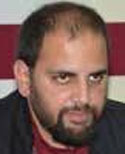
By Mushtaq Ul Haq Ahmad Sikander, New Age Islam
04 May 2026
Critique of Zaheer's Trump Breakfast Participation
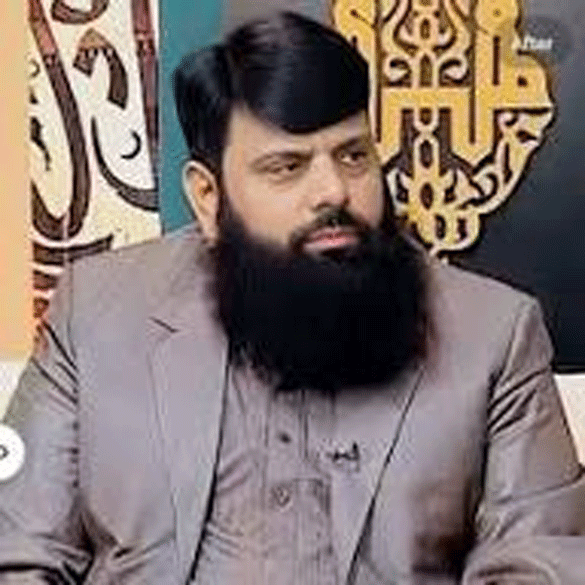
Allama Hisham Ilahi Zaheer's attendance at Donald Trump's White House interfaith breakfast amid the Gaza crisis exposes his moral turpitude
Main Points
· Zaheer's presence symbolizes alignment with U.S. power enabling Gaza's humanitarian catastrophe, sanitizing imperial violence.
· The event is a staged spectacle projecting Trump's piety, where scholars lend legitimacy without confronting injustice.
· Defenses invoking Prophet Muhammad or Moses/Pharaoh analogies misrepresent prophetic missions of confrontation, not accommodation.
· "Someone else would go" excuse rationalizes complicity; true duty demands refusal to avoid becoming power's ornament.
· Ahli Hadith hypocrisy in selective interfaith: rigid internally, performative externally for Gulf-U.S. patronage.
…
The participation of Allama Hisham Ilahi Zaheer in Donald Trump’s so-called “interfaith breakfast” hosted by the White House is not merely a personal choice; it is a political and moral act that deserves serious criticism. At a time when Gaza has been reduced to rubble, and when the United States continues to be widely seen as the chief enabler of an ongoing humanitarian catastrophe, any Muslim scholar’s presence at such a gathering cannot be treated as a neutral or harmless gesture. It is an act of symbolic alignment with power, and that alignment must be scrutinized, not excused.
What makes this episode especially troubling is that Trump’s interfaith breakfast is not an innocent gathering of religious equals. It is a state‑sponsored religious spectacle, carefully stage‑managed by the White House to project an image of piety, unity, and moral respectability. The lighting, the seating, the carefully curated list of guests, and the choreographed speeches are all designed to produce a particular effect: that the President of the United States is not only a political leader but also a spiritual patron of faith communities. When a Muslim scholar enters this carefully constructed image world, he is not simply having a meal, he is lending his presence to the sanitization of power.
This is why the criticism Zaheer faced was neither trivial nor sectarian. It arose from a simple, powerful intuition: how can a man who claims to speak in the name of Islam, in the name of the oppressed, in the name of the small children being killed in Gaza, sit at the same table as the president of the country that provides the weapons, the political cover, and the public rhetoric that makes such killing possible? To many observers, his eagerness to display the invitation card on social media looked less like humility and more like a badge of honour for proximity to imperial power. That is not a sign of religious dignity; it is a sign of moral confusion.
The moral asymmetry of the breakfast
The deepest problem with this participation is the moral asymmetry it creates. The breakfast is framed in the language of “interfaith,” “peace,” and “dialogue,” yet it is held in the context of an ongoing war that has taken tens of thousands of lives, including those of children, in Gaza. The very use of the word “interfaith” in this setting is therefore deeply ironic. Interfaith should mean that people of different faiths come together to recognize their shared moral responsibility, to confront injustice, to speak uncomfortable truths. But a breakfast hosted by the White House, attended by influential figures, and photographed for public consumption often means the opposite: it becomes a ritual in which injustice is smoothed over, differences are cosmetic, and the moral hierarchy between power and the powerless is quietly preserved.
When a Muslim scholar takes part in such a spectacle, he does not merely attend a meal. He becomes part of a choreography that allows the powerful to appear pious while the violence continues. In that context, silence is not neutrality; it is complicity. By not using the occasion to condemn the ongoing genocide, or by not making it clear that he presumes to sit at the table only as a critic, not as an approver, he effectively allows the regime to claim that “even Muslim scholars” are comfortable in their presence. That is not dialogue, that is public relations.
The misuse of prophetic precedent
Zaheer’s widely reported defences are as flimsy as they are dangerous. He claims that even the Prophet Muhammad (peace be upon him) accepted an invitation from Jews, and that once a Jewish woman served him poisoned food. He also invokes the Qur’anic story of Moses and Aaron, in which God commands them to go to Pharaoh and speak gently, and he suggests that this was his own purpose as well. Such analogies are not only misleading; they are a form of theological trivialization.
The story of Moses and Aaron does not teach that religious figures should be comfortable at the table of tyrants. It teaches that they must be sent to confront tyrants, to warn them, to invite them to recognize God, to fear His punishment, and to correct their injustice. The Qur’an repeatedly describes Pharaoh as a transgressor, a tyrant, and a corrupter of the earth. Moses and Aaron do not go to Pharaoh to share a meal, to exchange pleasantries, or to be photographed as chosen guests of power. They go as bearers of divine message, as agents of truth, as critics of a corrupt order. Their presence is not a mark of honour; it is a sign of divine command.
When a modern scholar claims to imitate Moses and Aaron by attending a White House breakfast, he confuses the nature of the mission. The prophets were not acting on their own initiative, they were sent by God. They did not pick their audiences based on popularity, access, or social media visibility. They delivered the message whether kings listened or not. A non‑prophet scholar cannot claim prophetic mandate to justify his own desire for proximity to power. The Qur’an reserves revelation and divine command for prophets; it does not turn every scholar into a Moses who can justify his political choices by saying, “God once told Moses to go to Pharaoh.”
No mandate for “softening” tyranny
The Qur’an’s instruction to Moses and Aaron to speak gently is not a general permission to be polite to all rulers under all circumstances. It is a specific instruction in a specific context: speak gently, so that perhaps Pharaoh may be reminded or may fear. The purpose is not to please him, to flatter him, or to make him feel good about himself. The purpose is to enable the transmission of truth in the most effective way possible. Gentle speech does not mean removing the moral sting from the message; it means choosing the mode, not the content, of criticism.
Modern apologists for attending such events often talk as if repression could be softened by a few quiet words over breakfast. They seem to imagine that if only we are gentle, respectful, and well‑dressed, the powerful might change their minds. But history shows otherwise. Tyrants do not change their policies because someone spoke to them politely. They change their policies when countervailing power appears, when pressure mounts, when their own interests are threatened. The ethical task of the scholar is not to exhaust himself in the hope that a softly spoken sentence might nudge a dictator, but to stand with the people, to amplify their voices, to refuse to be used as a symbolic ornament in the regime’s theatre.
The irrelevance of “someone else would have gone”
Another justification Zaheer has reportedly offered is that if he had not accepted the invitation, “someone else” from the Ahli Hadith sect would have represented them. This argument is both morally lazy and politically dangerous. It reduces religious responsibility to a question of tribal representation: “We must be there, otherwise we will lose our seat at the table.” But the moral question is not about who represents which sect, it is about whether attending such an event is right in the first place.
If an act is wrong, it does not become right because another person might do it. If a scholar knows that a gathering is used to legitimize oppression, then he should refuse to be part of it, even if no one else from his circle does so. The idea that “if I don’t go, someone worse will” is a classic rationalization of the collaborator. It places the scholar in the role of an expert in compromise, not of a guardian of principle. It also betrays a deep insecurity: the fear that the group’s worth depends on its visibility in the palaces of power, not on its integrity in the streets of the oppressed.
The irony of “interfaith” for Ahli Hadith
There is also a profound hypocrisy in Ahli Hadith scholars invoking the language of “interfaith.” Interfaith, in any meaningful sense, requires at least a minimal recognition of the religious other as a legitimate moral subject. It requires an acknowledgment that other communities, even if one disagrees with their beliefs, possess dignity, conscience, and a right to be heard. But the internal logic of Ahli Hadith has often been the opposite, it has policed Muslim identity, drawn sharp boundaries, and excluded other Muslims from the circle of acceptable belief.
In such a context, the idea that Ahli Hadith scholars are suddenly champions of “interfaith” becomes a bad joke. How can one genuinely participate in interfaith when one’s own tradition treats tens of millions of Muslims as outside the pale of orthodoxy? How can one sit at the table of “dialogue” while continuing to demonize and marginalize other Muslims at home? Interfaith becomes a performance of external respect and internal rejection, a way to look tolerant to the West while remaining sectarian to one’s own brothers and sisters.
This contradiction is not just a theoretical problem; it is a moral one. It shows that “interfaith” is being used selectively, as a tool of presentation to the powerful, not as a genuine commitment to equality and mutual respect. When a movement that is internally rigid, exclusionary, and doctrinally harsh suddenly speaks in the language of openness, one must ask: who is this openness really for? It often serves the powerful, not the vulnerable.
Soft power and the dance of patronage
Beyond the theological and moral issues, there is a political economy to such events. The Ahli Hadith movement has long been tied to Gulf‑backed religious networks, especially to Saudi religious policy and soft‑power strategies. These networks have not normally challenged US imperialism or Western hegemony; they have often aligned with it, seeing Washington as a useful strategic partner in the broader regional order. In that context, participation in a Trump‑hosted breakfast is not an accident; it is a predictable extension of a political‑religious ecosystem that normalizes Western power when it suits certain interests.
When a scholar is invited to a high‑profile event hosted by the United States, he is not just being honoured as an individual. He is being co‑opted into a system in which his religious authority is translated into symbolic capital for the state. The state gains the impression that “even Muslim scholars” are willing to sit at its table, and the scholar gains visibility, access, and perhaps funding. This is soft power at work: religious authority is absorbed into the machinery of empire, not as a rival, but as a supportive ornament.
Many critics therefore hear in Zaheer’s breakfast a deeper note: the defence of funding, the defence of patronage, the defence of a comfortable relationship with the powers that keep the Ahli Hadith establishment stable. That is why his defence is not just about scripture; it is also about interest. When one’s livelihood, institutional backing, and political security depend on remaining useful to certain patrons, the line between religious duty and political convenience becomes dangerously thin.
Why meetings with power no longer work
Even if one grants the general idea that religious figures should sometimes speak to rulers, the modern context makes this old argument far weaker. In the past, rulers often lived in relative isolation, surrounded by courtiers and sycophants. A prophet or scholar bringing a message of moral correction might be one of the few people who could speak truth to power in a direct, face‑to‑face way. But today, the world is awash with information. Tyrants are under constant surveillance, and the suffering of the oppressed is broadcast in real time.
The rulers of this age are not ignorant of Gaza. They are not missing information. They are missing moral courage. The problem is not that someone has not whispered a gentle word in the President’s ear; the problem is that the interests of capital, empire, and security are stronger than the interests of justice. In such a context, the idea that a scholar’s moral duty is to have a private breakfast with a tyrant is not only naïve, it is performative. It looks like a ritual designed to give the scholar the impression of courage, and the ruler the impression of propriety, while nothing changes for the victims.
That is why public letters, public sermons, and open condemnations are often more honest and more effective than ceremonial meetings. When a scholar writes a clear, uncompromising letter exposing injustice, or when he issues a public fatwa condemning oppression, he does not flatter the powerful, and he does not confuse his audience. The people hear: here is someone who has not been bought. The rulers hear: here is someone who will not be used as a fig leaf. That is a stronger moral posture than a photo‑op at a breakfast.
The difference between witness and ornament
The key distinction is between witness and ornament. A true religious witness does not exist to make tyranny look better, he exists to make it uglier. He does not sit at the table to soften, to smooth over, or to enable. He stands at the margins to remind power that it is accountable, that it is watched, that it will be judged. The prophets were not invited to the palaces of the powerful; they were sent to confront them. Their presence was not a sign of social acceptance; it was a sign of divine judgment.
When a modern scholar chooses to enter the inner court of power, he must be extraordinarily careful about what he is doing. If he goes without conditions, without public clarity, without visible condemnation of injustice, he risks becoming an ornament: a decorative religious figure who helps the powerful present themselves as tolerant, inclusive, and God‑fearing. In that case, his presence does not weaken oppression, it helps normalize it.
This is why the criticism of Zaheer should not be dismissed as “trolling” or envy. Mockery and anger often arise when people sense that a moral line has been crossed. The line here is simple: do not allow religious authority to be used as a moral alibi for those who are committing injustice. A scholar should not be proud of being invited, he should be ashamed of being used.
A higher standard for religious scholars
The standard for religious scholars must be higher than the standard for politicians, businessmen, or even ordinary citizens. A politician may calculate, a businessman may network, an activist may protest, but a scholar is expected to guard the moral imagination of the community. He is supposed to be the one who reminds people that some things are not negotiable, that some alliances are not acceptable, that some tables are not to be shared.
If a scholar enters the company of power, he should do so only when he can speak with unmistakable clarity, when he can name the sins, when he can refuse to be part of the pageantry. He should not sit at the table as a neutral guest; he should sit at it as a critic, or not at all. In this case, Zaheer’s behaviour and defences suggest that he saw the breakfast as an honour, not as a moral test. That is the core of the problem.
The real task: refusal, not participation
The real religious duty in times of gross injustice is not to find a seat at the oppressor’s table but to refuse it. It is to say: your power is built on the blood of the innocent, and I will not be part of your moral theatre. That refusal is not weakness; it is strength. It is the strength of those who know that their honour does not depend on proximity to power but on solidarity with the weak.
In the Qur’anic story of Moses and Aaron, the prophets do not seek to be honoured guests of Pharaoh. They seek to free a people from bondage. Their courage is not in being polite; it is in being true. Modern scholars, especially those who invoke that story, must ask themselves: what is my real task? Is it to be photographed with presidents, or to stand with the orphans of Gaza? Is it to be invited to breakfasts, or to be the voice that cannot be bought?
The interfaith breakfast called by Donald Trump is not an opportunity for moral breakthrough; it is a stage on which the powerful perform piety while the world watches. For a Muslim scholar to participate in that performance without clear, unambiguous resistance to injustice is a betrayal of the very tradition he claims to represent. The Qur’an does not teach us to seek the tables of tyrants; it teaches us to challenge them, to expose them, and, when possible, to confront them with the full weight of divine truth. Anything less is not interfaith; it is complicity.
…
M. H. A. Sikander is Writer-Activist based in Srinagar, Kashmir.
New Age Islam, Islam Online, Islamic Website, African Muslim News, Arab World News, South Asia News, Indian Muslim News, World Muslim News, Women in Islam, Islamic Feminism, Arab Women, Women In Arab, Islamophobia in America, Muslim Women in West, Islam Women and Feminism