
Ruhullah, the House of Saud, and the Battle Over Islamic Memory
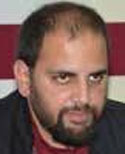
By Mushtaq Ul Haq Ahmad Sikander, New Age Islam
29 April 2026
Ruhullah’s criticism of Saudi Arabia opens a wider debate on the history of the Hijaz, the fall of Ottoman authority, and the rise of dynastic rule in modern Muslim politics.
Main Points:
· Ruhullah’s remarks are framed as more than a political comment; they are presented as a challenge to who controls the memory and authority of Islam’s holiest geography.
· It argues that the Kingdom of Saudi Arabia emerged through conquest, the collapse of Ottoman power, and the consolidation of the House of Saud, not as a neutral state formation.
· It highlights the 1932 naming of the kingdom as “Saudi Arabia” as symbolically important, because it tied sacred Hijaz to the ruling family’s identity.
· It traces the role of Ibn Saud, the Wahhabi alliance, and the conquest of the Hijaz in creating Saudi political and religious dominance.
· It concludes that the controversy is really about historical memory, religious legitimacy, and whether sacred Islamic spaces can be governed under dynastic sovereignty without protest.
….
Agha Syed Ruhullah Mehdi’s criticism of Saudi Arabia has resonated far beyond the immediate arena of parliamentary rhetoric because it touches a deep and unresolved question in modern Muslim politics: who owns the memory of the Hijaz, and who has the authority to speak in the name of Islam’s holiest geography? His remarks are provocative because they connect present-day Saudi power to a long history of conquest, dynastic consolidation, and the destruction of the political order that once linked the holy cities to the wider Ottoman world.
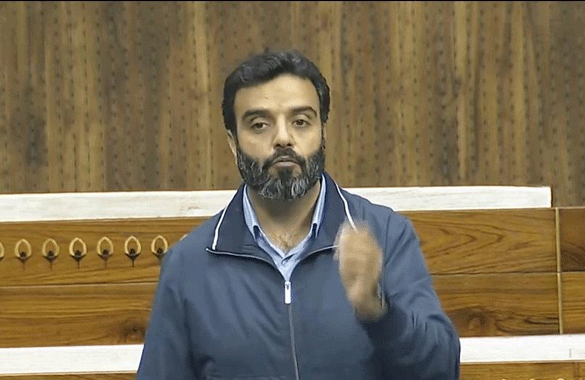
In a Seminar in Delhi he criticized the rulers of Saudi Arabia for renaming Hijaz after their family name as Saudi. His choice of words against the family of Saud can be criticized but not the facts. However, the Saudi sponsored Jamiat e Ahle Hadith, Kashmir, led by its President Dr Abdul Latif Al Kindi, to justify their salaries and funding, praised the name change. The madkhali wahabis justify every action of Saudi rulers and even twist Islam to support their unislamic actions. When the common people insisted on facts, then another minion of Ahle Hadith camp some Dr Abdul Hamid, stated that Al Kindi is the voice of two million Salafies of J&K. The real fact of name change was lost in the cacophony of voices.
The sharpest way to understand the controversy is not through slogans but through history. The modern Kingdom of Saudi Arabia did not arise as a neutral administrative arrangement; it emerged from military campaigns, the collapse of Ottoman power, the defeat of regional rivals, and a state-building project that placed the House of Saud at the center of the peninsula’s political and symbolic order. That is why criticism of the kingdom often carries a charge that exceeds conventional geopolitics. For many Muslims, the question is not only how the Saudi state was built, but what was lost when it was built.
Ruhullah’s intervention belongs to that larger anxiety. To his admirers, he is voicing a suppressed anger over the transformation of the Hijaz into a state structure named after a ruling family. To his critics, he is deploying inflammatory language against a sovereign country and reopening sectarian and ideological wounds in an already polarized Muslim world. Both reactions draw their force from the same fact: the name “Saudi Arabia” is not just a label on a map, but the outcome of one of the most consequential political reorganizations in modern Islamic history.
The name and the wound
The history of the Kingdom of Saudi Arabia “begins properly” on September 23, 1932, when the dual kingdom of the Hejaz and Najd was unified by royal decree under the name of the Kingdom of Saudi Arabia. The same source adds that the new name underscored the central role of the royal family in the kingdom’s creation and was also meant to reduce the possibility of Hejazi separatism.
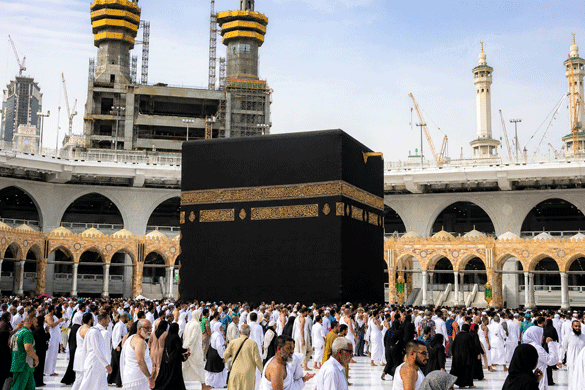
That point matters enormously in understanding why the issue remains emotionally charged. The Hejaz is not an ordinary territory. It contains Mecca and Medina, the two holiest cities in Islam, and for centuries it occupied a place in Muslim consciousness that was larger than dynastic rule or regional identity. When that land became part of a state explicitly named after the dynasty that conquered and unified it, the symbolism was impossible to miss.
For supporters of the Saudi state, the name reflects a successful unification of a fragmented peninsula into a viable political order. For critics, it marks the conversion of sacred geography into dynastic sovereignty, a moment when military success and religious legitimacy fused into a modern monarchy that would speak not only for a territory, but increasingly for a global Islamic orthodoxy shaped by the Saudi state and its allied clerical tradition.
This is the historical nerve that figures such as Ruhullah press upon. The objection is not simply to nomenclature. It is to the idea that the heartland of Islam was absorbed into a political system whose very title foregrounded the family that captured it. Once that naming is understood as an act of power, the debate stops looking semantic and starts looking civilizational.
Before the kingdom
The Saudi state of 1932 was not the first Saudi polity. Earlier Saudi formations had already appeared in central Arabia, beginning with the First Saudi State in the eighteenth century and later the Second Saudi State, both linked to the alliance between the House of Saud and the reformist Wahhabi movement. That alliance gave the Saudi project more than military coherence; it gave it a religious language that transformed political expansion into a moral mission.
The history of Saudi Arabia specifically identifies the Wahhabi movement as central to Saudi state formation and to the kingdom’s later religious and political dominance on the Arabian Peninsula. This religious-political compact helped distinguish the Saudi project from rival Arab polities. It also helps explain why disputes over Saudi rule have so often been framed not simply as battles over territory, but as battles over the proper guardianship of Islam itself.
The Ottomans, although often loosely connected to local Arabian realities, still represented the overarching imperial framework within which the holy cities were situated for centuries. Ottoman sovereignty over the Hijaz tied Mecca and Medina to a caliphal order that, whatever its limitations, was understood across much of the Muslim world as part of a larger political and symbolic unity. The eventual collapse of that order created the vacuum into which new powers advanced.
Lawrence, revolt, and imperial design
No figure better symbolizes this moment than T.E. Lawrence, the British officer later romanticized as “Lawrence of Arabia.” During the First World War, Lawrence served as a liaison in the Arab Revolt against Ottoman rule, working with Arab leaders while helping to advance Britain’s strategic aim of weakening the Ottoman Empire from within.
Lawrence’s legend has often obscured the real structure of power behind him. He was not a lone adventurer remaking the Middle East by force of personality. He was part of a British imperial machine that used wartime promises, intelligence work, and alliances with local elites to undermine Ottoman control. The revolt itself was encouraged by British calculations as much as by Arab aspirations.
This is why Lawrence remains so important in Muslim political memory. He represents not only foreign intrigue, but the politics of inducement: the use of anti-Ottoman sentiment, Arab aspirations, and elite negotiation to break a long-standing imperial order. In some tellings, he is the embodiment of Western deception in the Arab East. In more careful history, he is a significant agent within a broader British strategy whose promises to Arab actors were never matched by a sincere willingness to allow a fully sovereign and unified post-Ottoman Arab order.
But Lawrence did not create Saudi Arabia. His theatre of action was bound above all to the Arab Revolt led by the Hashemite Sharif Hussein and his sons, not to the later consolidation of power by Ibn Saud. The importance of Lawrence lies elsewhere: in helping destroy the old imperial framework and thereby opening the political space in which regional contenders, including the House of Saud, could rise to dominance.
The Ottoman collapse and the charge of betrayal
The accusation that Arab rulers “betrayed the caliphate” has long occupied Muslim political discourse. It is a phrase loaded with mourning, because it turns a complex geopolitical collapse into a moral parable: Muslim rulers, in alliance with imperial powers, helped bring down a Muslim imperial order and thereby weakened the ummah as a whole. The story is emotionally compelling precisely because it compresses imperial strategy, wartime revolt, and dynastic ambition into a single image of loss.
Historically, the Arab Revolt was led by Sharif Hussein of Mecca against Ottoman rule during World War I, with British encouragement and support. The House of Saud was not the primary engine of that revolt. Yet the later Saudi conquest of the Hijaz meant that the dynasty benefited enormously from the post-Ottoman disintegration of the region’s older political structure.
This distinction is essential. The House of Saud did not overthrow the Ottoman caliphate in the way popular polemics sometimes suggest. The Ottoman Empire was defeated in a world war, undermined internally, and carved apart by multiple forces, including European military power, wartime diplomacy, Arab revolt, and local rivalries. What the House of Saud did do was exploit the collapse of Ottoman-linked authority and then defeat the Hashemite rulers of the Hijaz, folding the holy cities into a new dynastic state.
That is where the language of betrayal acquires its force. From the perspective of critics, the Saudi dynasty did not merely inherit a post-Ottoman order; it consolidated that order in a form that turned the former caliphal sanctuary into the possession of a ruling house. To believers in a pan-Islamic political ideal, that can look like a double loss: first the fall of a caliphal framework, then the rise of a monarchy named after its conquering family.
There is another reason the charge continues to echo. The Ottomans, for all their historical contradictions, still carried the title and aura of the caliphate in the Muslim imagination. Their eclipse was not merely territorial. It raised a question that remains unsettled today: after the caliphate, who would speak for Muslim unity, and on what basis? The Saudi answer was not a universal caliphate, but a territorial monarchy with custodianship over the holy places and a powerful religious establishment at home.
Ibn Saud and the conquest of the Hijaz
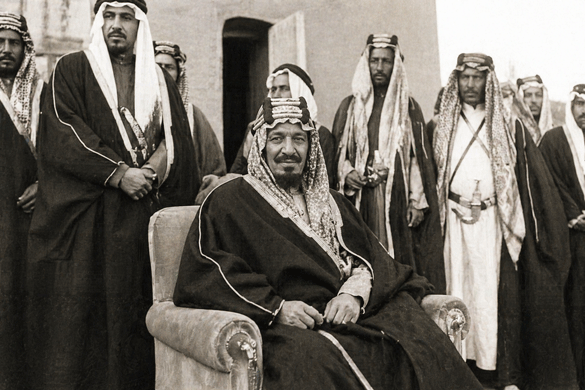
The central architect of the modern Saudi state was Abdulaziz ibn Saud. His achievement was not rhetorical but strategic: he combined tribal alliance, military expansion, religious legitimacy, and political calculation to out manoeuvre rivals across the peninsula. By the 1920s he had become the dominant power in Arabia.
The conquest of the Hijaz was decisive. Once Ibn Saud took the region, he acquired not only territory but unparalleled symbolic capital, because control over Mecca and Medina conferred prestige that no inland Arabian ruler could previously claim at such scale. With that victory, the centre of gravity in Arabia shifted permanently.
When the kingdom was proclaimed in 1932, the fusion was complete: Najd’s political-military core and the Hijaz’s sacred prestige were joined under one crown. The naming, then, was not an incidental flourish. It was itself part of the state-building project. For many Muslims outside Saudi Arabia, that project would later raise enduring questions. If the holy cities belonged to all Muslims spiritually, what did it mean for them to be administered within a dynastic monarchy whose domestic religious order claimed strong authority over Islamic practice and public morality? The tension between universal sacred significance and exclusive state sovereignty has never fully disappeared.
Religion, authority, and the global Saudi imprint
The Saudi state’s influence has extended far beyond its borders because political power and religious patronage have reinforced one another. Saudi history emphasizes the foundational alliance with the Wahhabi movement and the kingdom’s regulation of public life through a rigorous interpretation of Islamic law. That combination helped the Saudi system project not only state power, but also a transnational religious grammar.
As oil wealth transformed the kingdom after World War II, Saudi Arabia acquired the means to spread educational, clerical, and institutional influence across the Muslim world. Its prestige rested on more than money. It also rested on the fact that it governed the pilgrimage routes and the holy cities, making criticism of the kingdom politically fraught and symbolically explosive.
This is one reason debates over Saudi Arabia often become debates over Islam itself. To oppose the Saudi state too crudely can sound, to some audiences, like disrespect toward the custodianship of Mecca and Medina. Yet to many critics, silence about the political character of that state amounts to surrendering Islam’s most sacred spaces to dynastic and strategic interests.
That is the deeper register in which Ruhullah’s criticism lands. It is not only about one kingdom. It is about whether sacred history can be subordinated to a state narrative without protest, and whether modern Muslim political discourse has become too dependent on official guardianship, oil-funded influence, and geopolitical caution to speak honestly about how power was established in the Hijaz.
The politics of naming and de-Islamization claims
The charge that Saudi Arabia has “de-Islamized” the Hijaz is a serious and highly contested accusation, and responsible journalism must distinguish between documented historical change and polemical overstatement. What can be said firmly is that the Saudi state has long pursued a model of religious regulation that places the holy cities within the institutional logic of a modern centralized monarchy. That has included the assertion of state authority over public religious life and the management of sacred space through the priorities of governance, legitimacy, and order.
Critics argue that this process has narrowed the diversity of historical Islamic expression in the Hijaz and subordinated inherited plural traditions to official doctrine and state power. Supporters argue that the Saudi state has maintained stability, safeguarded pilgrimage, and administered the holy places at an enormous logistical scale. The point is not that one side has no argument. It is that the disagreement is ultimately about who gets to define authenticity in a sacred landscape that belongs emotionally to the whole Muslim world.
In that sense, the politics of naming remains inseparable from the politics of authority. Once the state is named after the ruling family, every subsequent act of religious administration can be read in two ways: as legitimate governance or as dynastic control over sacred inheritance. This ambiguity explains why the kingdom’s defenders and detractors often seem to be arguing about different realities, even when they are looking at the same institutions.
Why Ruhullah’s remarks matter
Ruhullah’s intervention matters because it has forced into public speech a set of questions that are usually discussed either in private or in coded language. Was the making of Saudi Arabia simply modern state formation, or did it also represent the closure of a broader Islamic political imagination once attached, however imperfectly, to the Ottoman caliphate and the pre-Saudi Hijaz? Did the collapse of Ottoman order liberate Arabia, or did it expose the region to a new arrangement in which imperial strategy and dynastic consolidation replaced a wider sense of Muslim political unity?
These questions do not admit easy answers, and any serious article must avoid reducing them to abuse. Yet it would be equally dishonest to pretend that the formation of Saudi Arabia was an uncomplicated story of national unification. The state emerged from conquest, anti-Ottoman struggle in the broader region, postwar fragmentation, and the defeat of rivals, and its chosen name announced the family at the centre of that victory.
That is why the rhetoric around the House of Saud remains so volatile. The kingdom is not merely another monarchy. It governs the holiest places in Islam while carrying the dynastic signature of the family that built it. To its critics, that is the original contradiction. To its defenders, that is simply the historical form in which order triumphed over fragmentation.
History after the slogan
There is a temptation, especially in emotionally charged Muslim political debate, to turn the Ottoman collapse and the Saudi rise into a morality tale with clear heroes and villains. Such stories can be powerful, but they often flatten history into indignation. The Ottoman Empire was not a timeless ideal; it was a late imperial state marked by its own coercions, inequalities, and failures. Likewise, the rise of the House of Saud was not a magic event imposed from nowhere. It depended on real military strength, local alliances, religious mobilization, and a geopolitical moment that favored ambitious regional actors.
Still, the moral language has not disappeared because the emotional truth beneath it remains potent. Large parts of the Muslim world continue to experience the end of Ottoman sovereignty, the manipulation of the Arab Revolt, and the dynastic control of the Hijaz as elements of a single historical dispossession. Whether that feeling is framed as betrayal, tragedy, or reordering, it is one of the great unresolved memories of modern Islam.
Ruhullah’s remarks, stripped of the heat of parliamentary performance, are best understood as an eruption of that unresolved memory. His criticism draws energy from the belief that Muslim sacred history was subordinated first to imperial strategy and then to dynastic statecraft. The most serious version of his argument is not that one family merely changed a place-name, but that an entire political grammar of the Muslim world shifted when the Hijaz was conquered, incorporated, and renamed within a monarchical order centered on that family.
That is why the debate will not end with one speech, one rebuttal, or one controversy. It belongs to a longer conflict over who narrates the past of the Muslim world, who defines its political losses, and who is permitted to challenge the legitimacy of the arrangements that replaced the old order. In that argument, Saudi Arabia is not simply a state. It is a symbol, a settlement, and a wound that history has not yet closed.
…
M. H. A. Sikander is Writer-Activist based in Srinagar, Kashmir.
URL: https://newageislam.com/islam-politics/ruhullah-house-of-saud-battle-over-islamic-memory/d/139838
New Age Islam, Islam Online, Islamic Website, African Muslim News, Arab World News, South Asia News, Indian Muslim News, World Muslim News, Women in Islam, Islamic Feminism, Arab Women, Women In Arab, Islamophobia in America, Muslim Women in West, Islam Women and Feminism