
Questions That Can Get You Killed in Kashmir: The Irony of Islamic Rhetoric
By Mushtaq Ul Haq Ahmad Sikander, New Age Islam
13 February 2026
Kashmir's Moral Decay: Questions as Deadly Risks
Main Points:
· Moral decay in Muslim societies replaces God-consciousness with greed and self-interest.
· Religious trusts evolve from noble causes into family empires controlled by opportunists.
· Experience reveals aid embezzlement by a failed lawyer during 2014 floods.
· Questioning corruption invites violence, as in Advocate Babar Qadri's murder.
· Fear silences Kashmiris amid blurred lines between militants, mafia, and state allies.
When societies decay, they don’t always collapse with a bang; sometimes, they corrode quietly from within. The Muslim world — once an intellectual and moral lighthouse — today stands at a crossroads of self-inflicted decline. The decay isn’t only political or economic; it is moral, spiritual, and institutional. Nowhere is this collapse more visible than in places like Kashmir, where the noble vocabulary of faith, justice, and service has been hijacked by opportunists — the pious pretenders and clever manipulators who wear the cloak of religiosity to enrich themselves.
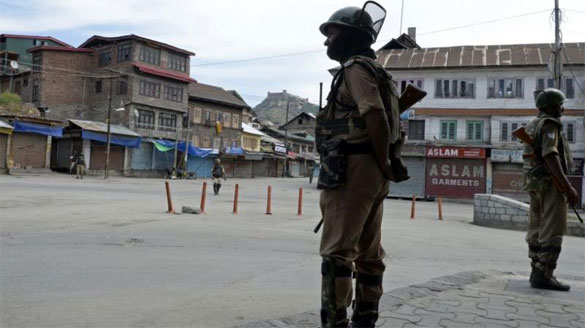
What began as reform gradually turned into rot. And questions — simple, honest questions — about accountability and truth have become acts of rebellion so dangerous that they can cost one’s life.
The Moral Decay Beneath the Divine Vocabulary
Across the Muslim world, we have witnessed a degeneration of moral and spiritual values. Where once taqwa (God-consciousness) shaped public life, today greed and self-interest define it. The poor remain poor, and the pious impostors grow rich in the name of the poor.
The disease lies not merely in worldly temptations but also in the loss of fear of God. The rich and powerful engineer shortcuts to prosperity — legal or illegal, halal or haram, moral or immoral — no longer matters. The language of faith has become a business model; dawah is monetized, charity is privatized, and “trusts” have mutated into family enterprises.
Every avenue of righteous service has been converted into a personal fiefdom — where the throne of the Almighty is invoked only to legitimize selfish power. Sincerity has been replaced by theater; spirituality by spectacle; integrity by slogans.
How Noble Causes Turn into Private Empires
It begins innocently enough. A group forms an Islamic trust, declaring noble missions: to educate the poor, aid orphans, or raise religious awareness. They attract support — moral, intellectual, and financial. For a moment, hope breathes again. People believe that the idealism of Islam can still produce social reform. But soon, the group mutates. The original zeal and sincerity give way to hierarchy. Power revolves around one family. Trustees gradually become mere signatories, present only to fulfill legal formalities. The real control lies elsewhere — in one man’s hands, his household, and later his descendants. Where once a collective dream existed, now a family enterprise stands. The mosque becomes an office; the pulpit, a press-conference desk.
The Story of a Failed Lawyer and a Broken Trust
I speak not merely in abstraction. I was, for more than a decade, a volunteer in one such “Islamic trust.” It began when an academic mentor urged me to join a fledgling organization led by a lawyer — a failed one, both professionally and ethically.
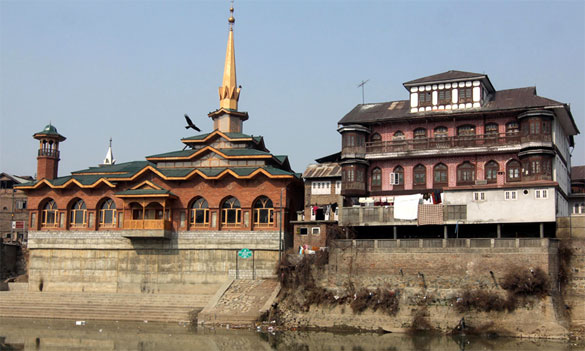
This man, married into a family of NGO owners and social workers, decided to own his piece of the moral market. He opened his own trust — a shop thinly covered in religious wrapping. As an idealistic college student, I poured time, intellect, and heart into this venture. For years, I worked without pay, mobilizing youth, connecting donors, helping the trust survive through its early years. During the devastating 2014 floods in Kashmir, I helped channel millions in foreign aid to this organization — aid meant for rebuilding lives, for the destitute, for the homeless.
But soon the numbers stopped adding up. The donor agency sought transparency — a simple audit, a basic moral duty. And then the mask slipped. The audit never came. The “failed lawyer” had siphoned off a large portion of the donations to buy a flat in New Delhi.
When I discovered this, my conscience screamed. I wanted to expose him. But the world of deceit is guarded by unseen daggers. Friends cautioned me: he could fabricate charges, trap me legally, even get me imprisoned. Some whispered that people who raise uncomfortable questions disappear quietly. In that moment, idealism died a quiet death in me. I resigned, disillusioned yet grateful to be alive. For in Kashmir, truth-telling can be a form of suicide.
When the Guardians Become the Gravediggers
The tragedy is broader than one man or one trust. Across Kashmir, Islamic institutions — educational, charitable, missionary have fallen prey to similar fates.
I recall another circle, founded by sincere professionals seeking to combine faith, education, and service. Yet as soon as the venture became successful, one man — an engineer by training seized control. His greed eclipsed every collective aspiration. He turned a social movement into a bloodline business. Those who had stood shoulder to shoulder with him were expelled one by one. Trustees were threatened, silenced, or bought.
When I asked some of the displaced trustees why they didn’t challenge him legally, their answer chilled me: “He has access to guns.” In a place where power and violence blur, where the boundary between militants, mafia, and manipulators is invisible, they chose silence over martyrdom. “Better to stay quiet than become a headline read with suspicion,” they said. Because in Kashmir, when someone dies at the wrong hands, rumors paint the victim darker than the murderer. Death itself becomes a defamation. The fear of “unknown gunmen” has colonized the conscience of Kashmir. Every honest person carries an invisible notice — “Speak carefully, for your grave may be listening.”
When Questions Become Crimes
If you need a living example of how dangerous dissent is, remember Advocate Babar Qadri. A sharp mind, an articulate voice, a believer in dialogue. His only sin was asking the wrong questions — questions about transparency in power structures, about the conduct of the Bar Association, about the silence of those who claim to represent justice. One evening, masked men entered his home and silenced him forever.
His killers walked calmly into the darkness. His questions still echo in it.
In Kashmir, asking questions about the misuse of religion or money, the exploitation by Moulvis and “leaders,” or the hidden alliances between religious entrepreneurs and state machinery — is equivalent to inviting death.
Take the case of a prominent religious figure — Ghulam Rasool Hami. His family enterprises swirl with whispers of fraud and manipulation. Yet who dares investigate? Only those under political protection, like Sandeep Mawa, can speak openly. Anyone else risks a jail cell — or a coffin. Because in every conflict zone, the state keeps loyal “assets” — people whose function is to maintain influence among the populace. These assets are untouchable. They manipulate faith to pacify protest, distribute aid selectively, and control narratives. And the state, in turn, shields them.
This unholy marriage between political power and religious opportunism has made accountability impossible. The masses remain silent, not because they approve, but because they wish to live.
The Anatomy of Fear
There’s a proverb in our land: “When two elephants fight, it’s the grass that gets crushed.” The ordinary Kashmiri — the teacher, the student, the shopkeeper, the volunteer — is the grass. Between the weight of the gun and the shadow of corruption, between the state and its surrogates, between militants and mafias, the common man learns only one lesson: survival.
We have reached a stage where silence is no longer cowardice — it’s self-preservation. Truth has no reward, only risk. The powerful fabricate charges with ease; the weak find themselves behind bars or beneath soil. To question is to betray. To expose is to invite revenge. And to resign from moral complicity is to live with perpetual suspicion.
Between Faith and Fear
It is ironic that in the land of saints, where Sufis once taught humility and truth, faith has now become a camouflage for kleptocracy. Everyone talks of Shura, consultation, and Caliphate; of justice in Islam; of freedom of expression in Khilafat. But when someone dares to actually apply these ideals — to demand audit, transparency, or explanation — that person is branded as “a troublemaker,” “a foreign agent,” or worse, “an infidel.”
Our tragedy lies in this hypocrisy: we quote verses about justice while burying those who live by them. We brag about Haqq but celebrate Makkari. We speak of Akhirat while enslaving the world. We demand democracy for ourselves but despise accountability for our idols. Thus, the disintegration isn’t only institutional; it is doctrinal. We no longer believe what we preach.
The Irony of Islamic Rhetoric
Nowhere does irony wound more sharply than in the language of faith itself. The very words that once emancipated humanity — adl (justice), amanah (trust), shura (consultation), ikhlaas (sincerity) — have been hollowed out and repainted as tools of control. Across Kashmir and much of the Muslim world, these sacred ideals are now rehearsed in speeches, embossed on trust letterheads, and woven into the rhetoric of Friday sermons, all while their spirit lies buried under layers of greed and fear.
We proclaim our attachment to the Caliphate, yet we cannot run a charity without corruption. We quote the Qur’an about accountability, yet we recoil from a simple audit. We invoke the Prophet’s humility, while competing for power, position, and photo opportunities. This duplicity insults both faith and reason. Islam was never meant to be a slogan for social climbing; it was meant to be a moral discipline. But in our hands, religion has become both a refuge for cowards and a weapon for swindlers.
The irony deepens when these exploiters portray themselves as victims — claiming to “defend Islam” even as they defile it through deceit and intimidation. They preach patience to the poor while their own children study abroad on misused relief funds. They demand accountability from the world but offer none to their own followers. When confronted, they wrap themselves in the sanctity of religion, declaring any questioner an enemy of faith. Thus, Islam — the religion of questioning, of reason, of moral interrogation — is used to silence the very act of inquiry it once commanded.
And that is the heart of the tragedy: the murder of conscience in the name of piety.
In our sermons, Islam reigns supreme; in our systems, it lies imprisoned. We boast of divine justice but live by human cunning. We fear no God but all men. Our words are sacred — our deeds profane.
Until we learn to reclaim the moral integrity of our faith — until truth becomes safer than silence — Kashmir, and indeed the Muslim world, will continue to produce martyrs of honesty and monuments of hypocrisy. For now, in our valleys, questions themselves have become crimes; and those who ask them, casualties of their own courage.
…
M.H.A.Sikander is Writer-Activist based in Srinagar, Kashmir.
URL: https://newageislam.com/islam-politics/questions-can-get-you-killed-kashmir-islamic-rehetoric/d/138846
New Age Islam, Islam Online, Islamic Website, African Muslim News, Arab World News, South Asia News, Indian Muslim News, World Muslim News, Women in Islam, Islamic Feminism, Arab Women, Women In Arab, Islamophobia in America, Muslim Women in West, Islam Women and Feminism