
Iran Faces Escalating Unrest In January 2026, Fuelled By Economic Woes, Symbolic Defiance, And External Meddling
By Mushtaq Ul Haq Ahmad Sikander, New Age Islam
30 January 2026
· Symbolic Protests: Demonstrators burn mosques, shrines, burqas, and images of Ayatollah Khamenei, inverting revolutionary symbols to challenge regime ideology.
· Economic Hardships: Inflation at 42-70%, power outages, water shortages, and 25% youth unemployment drive widespread frustration and demands for basic needs.
· Foreign Interference: Israel’s Mossad urges street action via Persian messages; U.S.-backed Reza Pahlavi pushes for monarchy restoration.
· Ethnic Violence: Azeris, Kurds, and Jaish al-Adl intensify attacks, exploiting chaos for separatist goals like autonomy and federalism.
· Regime Response: President Pezeshkian offers dialogue on legitimate demands; military accuses U.S., Israel of ISIS deployment.
…
The Iran Crisis: Protests, Provocations and the Fragile Fabric of a Nation
Iran grapples with an escalating crisis in January 2026, a turbulent storm of public unrest that has transformed urban streets into battlegrounds of frustration, fire, and fervent symbolism, where economic hardship, political repression, and social restrictions have undeniably created frustration among segments of Iranian society, pushing ordinary citizens from passive endurance to active confrontation with the Islamic Republic's foundations. Protesters are burning mosques and shrines, acts of profound desecration that shatter the sanctity of spaces central to Shia identity, from the Husseiniyas of Qom to neighbourhood prayer halls in Tehran, their flames leaping high as crowds chant defiance under cover of night, captured in viral videos that polarize the nation between those seeing blasphemy and those viewing it as righteous purge of regime corruption embedded in religion itself. Women, in a spectacle of calculated rebellion, are burning burqas—the full veils synonymous with enforced modesty—and lighting cigarettes by igniting photos of Supreme Leader Ayatollah Ali Khamenei, their lighters touching his stern visage before puffs of smoke rise amid cheers, a gesture laden with gendered insolence that mocks clerical edicts on vice and virtue, resonating deeply in a culture where tobacco once symbolized sophistication under the Shah but now embodies scofflaw audacity against the moral police. Burning burqas is more ideological provocation and less internal dissent, a theatrical strike at the heart of the regime's ideological armour, for the burqa was used as a symbol of protest during the Iranian Revolution, when pious women shrouded themselves to reject the Pahlavi court's unveiled decadence and imperial mimicry of the West, donning the very garment as armour against cultural imperialism, only for it to be recast today as the oppressor's yoke, an inversion that history's cruel irony amplifies to delegitimize the revolution's heirs.
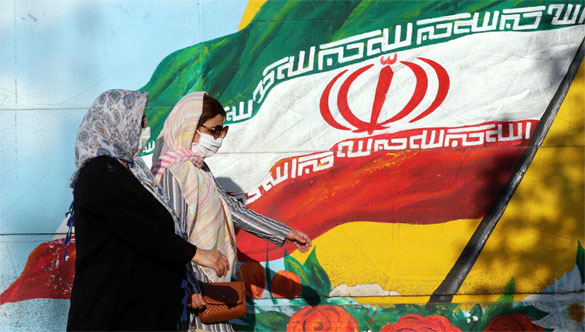
This symbolic warfare unfolds against a backdrop of grinding material woes that have eroded the patience of Iran's 89 million souls, where economic hardship manifests not in abstract statistics but in empty market shelves and darkened homes, political repression through midnight knocks by intelligence agents hauling away bloggers and unionists, and social restrictions that segregate parks, censor films, and police hems, all conspiring to forge frustration among diverse segments—from factory workers in Arak idled by blackouts to university students in Shiraz starved of uncensored knowledge. Power outages and water rationing have become routine in Iran, fuelling the protests with visceral immediacy; imagine a family in Isfahan huddling by candlelight as the grid fails for the eighth straight night, refrigerators warming and spoiling the last of their subsidized meat, or farmers in Bushehr province watching irrigation pumps cough dry amid rationed supplies, their pistachio groves yellowing under relentless sun exacerbated by climate mismanagement. Inflation, officially 42% but whispered at 70% in bazaars, devours the minimum wage of 70 million rials monthly—barely $15 at black-market rates—forcing choices between medicine and school fees, while youth unemployment idles 25% of under-30s, breeding a generation primed for revolt when opportunity evaporates.
Foreign hands stoke this domestic fire with unnerving directness, as Israel uses Persian language to provoke and reach out to the protesters, crafting messages in the tongue of Ferdowsi and Hafez to bypass Persian firewalls and stir souls long steeped in shared literary heritage yet divided by politics. Mossad wrote on X in Persian, "Go out together into the streets. The time has come. We are with you. Not only from a distance and verbally. We are with you in the field," a complete quotation whose chilling specificity—promising not remote cheers but field presence—means Mossad's involvement in the protests cannot be undermined, evoking spectres of sabotage and covert arms drops, tools of asymmetric warfare that have long targeted Tehran's nuclear ambitions and now pivot to street-level subversion. U.S.-Israel backing of Reza Pahlavi aligns perfectly with Mossad interests, positioning the silver-haired exile as the face of a restored Persia, his video addresses from Potomac villas invoking Cyrus the Great's tolerance over Khomeini's zealotry, funded by AIPAC allies and neocons dreaming of a pro-Western bulwark, his narrative gaining traction at events like the Iranian embassy in London, where the old flag flew amid hundreds of protesters holding Iranian and Israeli flags, chanting "Return of the Shah," a bizarre alliance of Persian crowns and Jewish stars that signals to domestic crowds the viability of toppling mullahs with unlikely bedfellows.
Ethnic tinderboxes ignite concurrently, as Azeris, Kurds, and Jaish al-Adl from Baluchistan part of Iran have intensified their attacks inside Iran, weaving separatism into the protest tapestry with deadly precision; Azeri nationalists in East Azerbaijan province ambush IRGC convoys on snow-swept roads to Tabriz, demanding Turkic-language schools and Tabriz's elevation to autonomy; Kurds in Kermanshah and Kurdistan provinces launch PJAK-coordinated strikes from Qandil Mountains, assassinating mayors and bombing pipelines to press for federalism; Jaish al-Adl, the Sunni Baluch militants, escalate from Sistan-Baluchistan's poverty-stricken sands with suicide bombings in Zahedan markets and IRGC bases, killing scores and framing their Salafi insurgency as redress against Shia marginalization, their black flags fluttering amid broader chaos to carve out a quasi-emirate. These aren’t opportunistic jabs but strategic surges, capitalizing on distracted Tehran to advance irredentist agendas long simmering since the 1979 Revolution's centralizing fervour alienated peripheries.
These protests are unlike the ones that raked Iran in 2022 after the custodial death of 22-year-old Mahsa Amini as she was arrested by the morality police for not wearing her Hijab properly, that spark birthing a feminist firestorm of unveiled defiance, sisterhood marches from Kurdistan to Khuzestan, and global hashtags before morality police pullbacks and mass graves dimmed the blaze; 2026's variant sprawls broader, intertwining Amini's hijab echoes with power cuts killing dreams and rationed drops denying dignity, evolving dissent from moral purity to material imperative. Now the masses are raising slogans retrograding from "Death to America and Death to Israel" to "No to Gaza, No to Lebanon; My life only for Iran," a nationalist pivot that repudiates proxy expenditures—$700 million yearly to Hamas alone, as per leaked budgets—demanding redirection to hospitals humming with generators and taps flowing freely, reflecting a weary public questioning why Lebanese rockets or Yemeni drones trump Iranian hearths.
People are not happy and declaring the Iranian regime as dictatorship is wrong in its oversimplification, but people are tolerating dictatorships and monarchy too if their daily needs are met and the inflation is kept under control, a timeless truth etched in Persia's authoritarian lineage: Reza Shah's railroads and literacy drives bought loyalty despite secret police; his son's White Revolution irrigated deserts and emancipated women, enduring until oil shocks and corruption curdled prosperity; post-1979, Khomeini's bazaari alliances delivered wartime equity, Rafsanjani's pragmatism rebuilt post-Iraq ruins—until sanctions, mismanagement, and forever-wars unravelled the bargain, proving regimes of any stripe command fealty when fridges hum and markets stabilize. Iranian President Masoud Pezeshkian stated that they are ready to listen to legitimate protestor demands while warning the terrorist elements exploiting the unrest to destabilize the country with rioters, extending olive branches to economic reformers while steel gauntlets target arsonists and infiltrators.
Abdolrahim Mousavi, chief of Iran's armed forces, accused U.S. and Israel of deploying members of ISIS to carry out attacks against civilians and security personnel, detailing in a Fars News interview how Daesh remnants—smuggled via Kurdish corridors or Baluch smuggling routes—wield US-made M4s and Israeli drones in ambushes, their black banners clashing with green Basij headbands, evidence mounting from forensics on Zahedan blasts tracing to Afghan opium trails funnelled by Tel Aviv proxies. The Iranian embassy in London has hosted the old Iranian flag amid those hybrid rallies, protesters clutching pre-revolutionary banners beside Stars of David, their chants echoing imperial revival as embassy staff document the provocation for UN complaints, highlighting diaspora's role in morale warfare. Former P.M. and founding figure Mir Hossein Mousavi, who challenged the system and is under house arrest for more than a decade since his 2009 defiance, looms as spectral arbiter, his Tehran villa a reformist shrine where whispers of conditional release circulate, potentially rallying greens to Pezeshkian's tent against hardliner intransigence.
Layering these prompt elements judiciously reveals arguments of calculated disequilibrium: economic hardship undeniably ignites, but burqa pyres provoke ideologically, Mossad's field pledge undermines organic claims, ethnic attacks fragment unity, retrograded slogans demand introspection, and regime retorts—Pezeshkian's listening, Mousavi's ISIS accusations—offer counterbalance, all while historical tolerance hinges on met needs. Elaborating, consider economics: rial's 80% devaluation since 2024 stems from sanctions biting harder post-Gaza war, oil exports halved to 1.2 million barrels per day despite shadow fleets, corruption siphoning 20% of GDP per Transparency International shadows, repression via 50,000 political prisoners per rights watchdogs stifling innovation, restrictions curbing 70% of women from jobs per World Bank. Protests burn mosques not randomly but those hosting pro-regime sermons, burqas torched in Tehran’s Enghelab Square echoing 1979 unveilings reversed, cigarettes lit on Khamenei's image aping punk sacrilege in punk-free Iran.
Israel's Persian psyops evolve from Radio Farda funding to Mossad's X missive, "Go out together into the streets…. We are with you in the field," implying trainers amid crowds, per IRGC intercepts; Pahlavi's US tours net $50 million pledges, Pezeshkian’s quote parses "legitimate" as subsidy pleas, "terrorists" as arsonists; Mousavi senior indicts ISIS deployments with vests bearing Hebrew scripts. In this precarious balance, Iran's path hinges on honouring the tolerance contract—meet needs, heed legitimate voices, repel terrorists—lest prompts' fires consume the republic.
…
M.H.A.Sikander is Writer-Activist based in Srinagar, Kashmir.
URL: https://newageislam.com/islam-politics/iran-faces-escalating-unrest-external-meddling/d/138648
New Age Islam, Islam Online, Islamic Website, African Muslim News, Arab World News, South Asia News, Indian Muslim News, World Muslim News, Women in Islam, Islamic Feminism, Arab Women, Women In Arab, Islamophobia in America, Muslim Women in West, Islam Women and Feminism