
Iran's Crisis Of Faith And Politics: Between Sanctified Power And Popular Protest
By Mushtaq Ul Haq Ahmad Sikander, New Age Islam
5 February 2026
Iran’s entangled crisis of theology and politics, where sanctified clerical power collides with popular demands for justice, dignity, and a reformed understanding of faith and authority in contemporary Iran.
Main Points:
· Iran faces a simultaneous economic, political, moral, and theological crisis as a theocratic state loses legitimacy amid inflation, repression, and popular protests for a livable life.
· The blind devotion (Andhbhakti) of Non Iranian Shias and how sanctified obedience—whether Shia or Sunni—kills critical reasoning and shields oppressive regimes from scrutiny.
· It traces Shia theological developments (Imamate, Hidden Imam, Wilayat-e-Faqih) and argues that Khomeini’s ijtihad transformed quietism into clerical absolutism, now embodied in Khamenei’s unchecked authority.
· The protests are framed as a reclaiming of Shia ethics—invoking Karbala, enjoining good and forbidding evil—turning the same sacred narrative against an unjust state.
· The Iranian diaspora’s moral responsibility and that Iran’s ordeal is a universal struggle where justice-centered faith will ultimately outlive sanctified falsehood.
…
Iran today stands at a crossroads where economic despair intersects with ideological rigidity. The Iranian state, born from a revolutionary zeal rooted in theology, now faces an unprecedented crisis of legitimacy among its people. Inflation has eroded the daily life of the average Iranian, while the government’s suppression of dissent reveals an unsettling fragility beneath its defiant slogans. The masses, demanding nothing more radical than economic stability and dignity, find themselves besieged by those who claim divine endorsement.
The Iranian crisis is not merely economic or political—it is also a profound moral and theological crisis. In the intertwining of state authority with religious absolutism lies both the strength and weakness of the Islamic Republic. The argument is simple yet profound: when power is sanctified, dissent becomes heresy. Yet, within Iran and its global diaspora, the yearning for reform persists, calling into question both the infallibility of leadership and the silence of blind devotion.
The Cry of the Iranian Masses
The Iranian populace, weary of spiralling inflation and market instability, stands disillusioned. Basic commodities—from food to medicine—have become luxuries for many. In such conditions, philosophical or doctrinal debates fade before the urgency of survival. What binds the Iranian street is not ideology but an instinctive human plea for a liveable life.
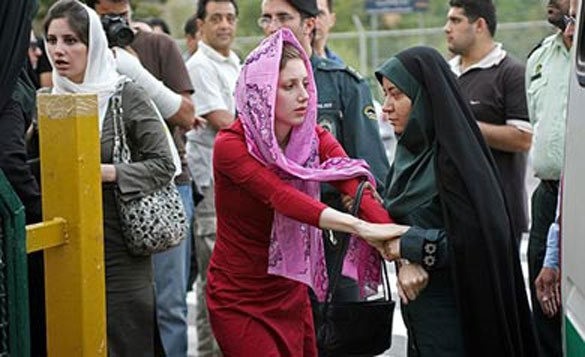
Every government, regardless of creed, bears the basic responsibility of ensuring a dignified existence for its citizens. The demand for bread, shelter, and safety is not subversive; it is elemental. When the state fails in this baseline duty, the social contract fractures, and legitimacy wanes. Today, thousands of Iranians—students, women, workers, and intellectuals—have taken to streets and cyberspace to voice their plight. Their protests, however, have been met not with dialogue but with bullets, prisons, and disappearances.
The mass incarceration and killing of Iranian protesters highlight a deep rupture between the people and the leadership. The regime, in its insistence on purity of doctrine, stands increasingly alienated from the daily realities of its own citizens. Iranians, both at home and in the diaspora, are not merely protesting economic hardship—they are questioning the theological scaffolding that legitimizes their oppression.
The Blind Devotion and the Andhbhakt Phenomenon
In every religious or ideological order, there exists a class of Andhbhakts—blind imitators who mistake loyalty for faith. In contemporary Iran, such mimicry manifests in segments of the Shia populace that have replaced critical reflection with sanctified obedience. They view the regime as beyond reproach, not because its governance is exemplary, but because they believe questioning its authority equals questioning divine will.
This phenomenon is not unique to Iran. Across the Muslim world—whether among Sunni Madhkhalis who defend the Saudi monarchy under the pretext of obedience to rulers, or among Shia hardliners who sanctify their clergy—critical reasoning often falls victim to emotional fidelity. This reduction of faith into unthinking imitation impoverishes both religion and society.
An illustrative episode emerged during a discussion following my appearance on a news channel analysing Iran’s internal crisis. A colleague, a devout Shia, was visibly disturbed by my critique of the Iranian regime, despite my acknowledgment of its achievements in science, defence, and medicine. His indignation revealed the fragility of blind faith—a faith that cannot coexist with critique. Debates of this kind, though intellectually stimulating, rarely yield transformation; they collapse into mutual incomprehension because one party anchors itself not in reason but in sanctity.
Between Rafidiyat and Nasibiyat: The Balance
The discussion with my colleague naturally drifted toward theological ground—a perennial fault line between Sunni and Shia thought. I clarified that as a Sunni who holds deep reverence for the Ahl al-Bayt and for Caliph Ali (A.S.) alongside the other revered Caliphs, I reject both extremes: neither Rafidiyat, which vilifies the companions of the Prophet (S.A.W.), nor Nasibiyat, which excuses the tyrannies of Umayyad rulers like Mu‘awiya and Yazid.
History, when stripped of sectarian gloss, reveals a nuanced reality. Imam Ali (A.S.), despite political differences, maintained bonds of respect with the preceding caliphs. The historical record notes no rebellion against Abu Bakr, Umar, or Uthman (R.A.); indeed, his sons Hasan and Husayn served as protectors of Caliph Uthman during the tumult preceding his martyrdom. Such facts caution us against simplistic narratives of enmity that later sectarian polemics have capitalized upon.
For Sunnis, divine protection from error (‘ismah) resides solely with Prophet Muhammad (S.A.W.). Among Shias, however, the concept extends beyond the Prophet—to a lineage of Imams endowed with spiritual infallibility. This divergence, though theological, shapes politics to this day, for it defines authority: whether it must be accountable to reason and the people, or whether it stands beyond their critique.
The Shia Spectrum and the Doctrine of the Hidden Imam
Within Shia Islam, diversity abounds. The Zaydis uphold five divinely guided Imams; the Ismailis seven, splitting into Khojas and Bohras, each with distinct leadership structures. My late mentor, Dr. Asghar Ali Engineer, was among the Bohra reformers who challenged the authoritarian hold of the Syedna and suffered for it—a reminder that religious monopolies resist reform as fiercely as political tyrannies do.
The largest Shia denomination, the Ithna Ashariyyah, recognizes twelve Imams, the last of whom—is believed to be in ghaib (occultation), destined to reappear and establish perfect justice. This eschatological hope, while spiritually enriching for believers, has also served to defer agency. If history awaits a hidden saviour, human struggle becomes secondary. Khomeini’s bold reconfiguration of this belief—proclaiming that jurists may govern as deputies of the Hidden Imam—was thus revolutionary in both theology and politics.
In doing so, Khomeini broke with centuries of Shia quiet, transforming expectation into activism. Under his Wilayat-e-Faqih doctrine, divine authority was not absent but delegated—a living legitimacy flowing through clerical leadership. This ijtihad galvanized the Shia masses but simultaneously entrenched the clergy as a semi-divine class. What began as empowerment metamorphosed into theocratic absolutism.
Revolution and Its Hijacking
Before Khomeini’s ascendancy, Iran’s revolutionary fervour was multi-dimensional. Intellectuals like Ali Shariati had ignited the imagination of youth by synthesizing Islam with socialism and existential humanism. His was a call for self-liberation and social justice, not clerical dominance. Yet, history shows that revolutions rarely honour their founders’ plural visions. Once the monarchy fell, Khomeini and his close circle commandeered the revolution’s trajectory, marginalizing secular and leftist allies. The result was not an inclusive Islamic awakening, but the consolidation of clerical power and the sacralization of politics.
Khomeini declared himself Na'ib-e-Imam—the Deputy of the Hidden Imam—an audacious theological innovation that turned speculative belief into political orthodoxy. Other Shia scholars, perhaps out of fear or opportunism, except for few refrained from challenging this ijtihad. Thus began a new political theology in which defiance of the Supreme Leader could be construed as defiance of the divine.
This theocratic construction infused the Iranian state with both messianic purpose and authoritarian rigidity. It inherited the revolutionary language of resistance but replaced its emancipatory spirit with sanctified obedience. From exporting revolution abroad to controlling discourse at home, Iran’s ruling clergy mastered the art of theological politics—governing through the grammar of salvation.
The Crisis of Authority in Khameini’s Era
Ayatollah Ali Khamenei, Khomeini’s successor, inherited not merely a state but a myth of divine deputation. Over the decades, that myth has sustained the functionality of the regime, enabling it to endure sanctions, wars, and global isolation. Yet, this same myth now constrains reform, for questioning the Rahbar (Leader) becomes tantamount to questioning the Hidden Imam himself.
This theocratic infallibility isolates leadership from moral correction. In times of economic hardship, when citizens cry for justice, the government dismisses dissent as Western conspiracy, as though economic pain could be an imperial invention. Meanwhile, corruption, patronage networks, and elite privileges multiply. The theological armour meant to protect the revolution from decay now protects the decay itself.
In many ways, today’s Iran resembles a paradox of sanctity and suffering. A nation that boasts magnificent scientific achievements and cultural resilience simultaneously stifles the very intellect that fuels such progress. Those who question authority are jailed; those who mourn for slain protesters are branded enemies of God. The clerical claim to divine legitimacy has mutated into a tool for silencing God’s most sincere worshippers—the seekers of truth.
The Digital Battleground and the Age of Artificial Confidence
In our age of artificial intelligence, arguments no longer unfold between books and minds alone. The democratization of information has paradoxically reinforced ignorance; every uninformed interlocutor now wields tools like ChatGPT as shields against scholarship. Rather than deepening understanding, AI has, for some, become a convenient echo chamber—confirming biases, inflating self-confidence, and eroding humility before truth.
During a debate with my aforementioned colleague, I experienced this ironic transformation of dialogue: my academic observations were met not with counter-arguments from history or theology, but with AI-generated rebuttals deemed authoritative merely because they appeared on-screen. This new digital Andhbhakti—a technological mimicry of blind imitation—mirrors the same mentality that sanctifies political leaders. It seeks affirmation, not enlightenment.
Technology, when unmediated by intellectual discipline, amplifies arrogance. It convinces the user that knowledge is a matter of prompt, not effort. In religious discourse, this can be disastrous; it replaces reflective interpretation (ijtihad) with algorithmic superficiality. Humanity risks losing not only its teachers but also its learners—the very condition of growth.
Reform and the Spirit of Truth
Reform, in any tradition, demands courage—the courage to question what generations have sanctified. The Iranian diaspora, scattered across continents, embodies this courage. Artists, scholars, journalists, and exiles persist in reminding the world that love for Iran is not measured by silence before its rulers but by fidelity to its people. Their struggle is neither anti-Islamic nor anti-revolutionary; it is anti-tyrannical in the truest prophetic sense.
In Islamic history, truth and falsehood have often contended with uneven outcomes. Falsehood, adorned with worldly success, may triumph temporarily; truth, disarmed and humbled, often bleeds quietly. Yet, as the Qur’anic principle holds, “Truth comes, and falsehood vanishes; indeed falsehood by its nature is bound to perish.” The moral of Iran’s present turmoil lies precisely here: political sanctity cannot withstand historical conscience forever.
Perhaps it is time to revisit the earlier question—what does it mean to be a deputy of the Hidden Imam? If the deputy perpetuates injustice, has he not betrayed the very mission of the Imam he claims to represent? Infallibility cannot coexist with oppression. The Iranian people, with their protests and prayers, are asserting a forgotten theological truth: divine authority manifests through justice, not through unchecked power.
The Theological Roots of Resistance
Iranian resistance, even when secular in appearance, often draws strength from within Islam’s moral architecture. The slogans on Tehran’s streets may call for bread and freedom, but beneath them lies a scriptural echo: “Command good and forbid evil.” The current movement, thus, represents not apostasy but a form of reformation—an attempt to reconcile faith with liberty.
In Shia tradition, martyrdom carries moral prestige. From Karbala to Evin Prison, that symbolism has endured. By invoking Husayn’s stand against tyranny, protesters invert the regime’s own sacred narrative. When the state kills in the name of Husayn, and the people die invoking Husayn’s courage, the moral universe implodes—it can no longer reconcile rhetoric with reality.
This philosophical inversion is the essence of the crisis. The same spiritual wellspring that once legitimized revolution has now become the source of revolt. Shia ethics, long misused to protect clerical supremacy, are being reclaimed to challenge it. In that sense, Iran’s protests are not the betrayal of Shia Islam—they are its purification.
The Prophetic Method and the Limits of Polemic
In every confrontation between competing certainties, one must remember that we are not prophets. The prophetic mission ended with Muhammad (S.A.W.); our task is not revelation but reasoning. Hence, I often abstain from theological quarrels with fanatics of any persuasion—be they Shia absolutists or Sunni literalists. Such arguments yield only bitterness. The Prophetic method in confronting error was patience, persuasion, and prayer—not polemical warfare.
However, intellectual silence must not mean moral indifference. Where injustice masquerades as piety, truth-telling itself becomes a form of worship. One may avoid futile debates but must not avoid uncomfortable truths. The distinction between humility and cowardice lies precisely here.
Iran at the Threshold of Change
Every revolution faces its twilight. The Islamic Republic, born from the hope of moral governance, now risks implosion under the weight of sanctified hypocrisy. Its achievements cannot be dismissed—it has built scientific institutions, sustained cultural pride, and resisted foreign domination. Yet, the very structure that once promised independence has bred disenchantment. The same clergy who defied the Shah’s tyranny have become indistinguishable from the monarchs they overthrew.
Iranians no longer demand utopia; they demand normalcy. They yearn for a life in which bread prices remain stable, speech is free, and prisons are not filled with poets. This is not heresy—it is humanity. The state’s refusal to heed these voices reveals how theological absolutism mutates into political deafness. The Deputy of the Hidden Imam, as Ayatollah Khamenei styles himself, has insulated himself so utterly from criticism that he can neither see nor feel the nation’s pulse.
When authority forgets its human base, divine metaphors cannot save it. History records many such epochs where sacred regimes perished by the hands of their own worshippers. Iran’s rulers would do well to recall that truth requires neither titles nor turbans—it requires justice.
The Diaspora’s Moral Debt
The Iranian diaspora bears a moral responsibility to sustain the struggle for reform with intellectual and cultural vitality. Exile, while painful, allows freedom of voice. The diaspora can articulate what those inside Iran cannot: that the revolution’s original promise—dignity, social justice, and independence—has been betrayed by the elites claiming to embody it.
From academics to artists, the diaspora’s role is not to romanticize Iran’s past but to envision its rebirth. They must resist both Western cynicism and clerical propaganda, speaking instead from a position of deep belonging. Theirs is not an external interference but an internal lament across distance. Through their writings, activism, and memory, they preserve the idea of Iran as a moral rather than merely political entity.
Truth, Falsehood, and the Immortal Struggle
History rarely delivers immediate vindication to truth. Falsehood often triumphs in institutions, but truth lingers in conscience. Iran’s present ordeal mirrors this paradox. The streets fill with the courage of youth who may never see their dreams realized, yet whose defiance will shape the moral genealogy of tomorrow. The bullets that strike them write verses of history that no censorship can erase.
The grandeur of Iran lies not in its clerical robes or military brigades but in its poets, mystics, and thinkers who have, for centuries, kept the flame of truth alive. Whether it is Rumi’s ecstasy, Hafez’s wit, or Shariati’s anguish, the Persian spirit has always outlasted its rulers. That spirit now rises again—not as rebellion for rebellion’s sake, but as conscience reclaiming its language.
Conclusion: The Triumph of Conscience
Ultimately, the Iranian crisis transcends the boundaries of politics and ascends into the moral realm. When rulers claim divinity and citizens claim hunger, the question is no longer about governance but about truth. The battle between sanctified power and human dignity cannot endure indefinitely. For now, falsehood appears victorious—armed, organized, and sanctified. But the deeper current flows with the people whose very suffering testifies to their truth.
Iran’s tragedy, like that of all nations entangled in theology and tyranny, is also its opportunity: to rediscover faith not as obedience but as liberation. When the sanctified structures crumble, what will remain is the moral word whispered through centuries of Persian poetry and Islamic ethics—that justice is the essence of religion, and without justice, even faith turns false.
In that sense, the Iranian struggle is universal. It speaks not only to Muslims or Shias or Iranians but to all who live between fear and faith. And as history has shown, while falsehood often triumphs temporarily, truth—though buried under blood and slogans—does not die. It resurrects, quietly but immortally.
…
M.H.A.Sikander is Writer-Activist based in Srinagar, Kashmir.
URL: https://newageislam.com/islam-politics/iran-crisis-faith-politics-protest/d/138733
New Age Islam, Islam Online, Islamic Website, African Muslim News, Arab World News, South Asia News, Indian Muslim News, World Muslim News, Women in Islam, Islamic Feminism, Arab Women, Women In Arab, Islamophobia in America, Muslim Women in West, Islam Women and Feminism