
The Role of Education in Promoting Tolerance and Global Harmony
By Dr. Zafar Darik Qasmi, New Age Islam
15 December 2025
Abstract:
Education is very important for tolerance and world peace. History shows that peace and progress grow where education is strong. Education is not only about books and exams. It also teaches people how to think clearly, respect others, and understand different views.
An educated society is more patient and open-minded. Educated people solve problems through discussion instead of fighting. Education also supports justice and equality, which are necessary for lasting peace. It helps reduce poverty, ignorance, and unemployment, which are often the main reasons behind violence and unrest.
However, education must be positive and fair. If lessons are biased or wrong, they can spread hatred and extremism. True education teaches kindness, humanity, and the common values shared by all religions.
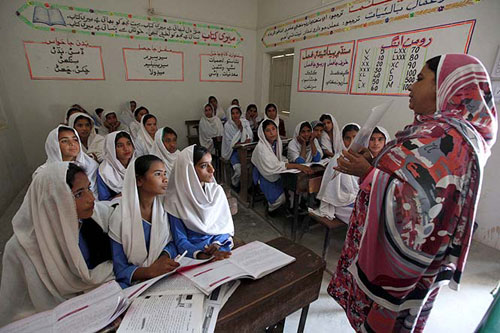
By improving curricula, training teachers, working together internationally, and using technology in a good way, education can become a strong force for peace. In the end, education and world peace are closely connected. Education creates responsible people and helps build a peaceful and harmonious world.
Main Points:
· Education builds awareness, tolerance, and understanding, which are essential foundations for lasting global peace.
· Educated societies resolve conflicts through dialogue, justice, and mutual respect rather than violence.
· Proper education reduces poverty, ignorance, and unemployment, which are major causes of conflict.
· Biased education promotes extremism, while value-based education strengthens humanity, compassion, and harmony.
· Curriculum reform, trained teachers, and global cooperation make education an effective tool for peace.
—-
Human history clearly shows that education is the foundation on which peace, progress, and civilisation are built. Where education spreads, ignorance, injustice, and violence gradually disappear. Education is not limited to books and degrees; it develops awareness, tolerance, mutual respect, and understanding. In today’s world, global peace is one of the greatest challenges, and education plays a central role in meeting this challenge.
Education gives people the ability to think critically, understand others, and make wise decisions. An uneducated person often views life through narrow perspectives and may fall into prejudice or misunderstanding. In contrast, an educated person develops broad-mindedness and openness. These qualities are essential for establishing world peace. When people gain awareness, they begin to live by principles of justice, equality, and brotherhood.
One major cause of conflict in the world is the lack of tolerance. Education teaches people that differences of opinion should not lead to hatred but should be resolved through dialogue and reason. Educated societies find peaceful ways to live together despite differences. That is why educational institutions are often called ambassadors of peace, as they shape the younger generation with values of cooperation, patience, and respect.
The goal of education is not only personal development but also social and global harmony. Today, the world has become a “global village” where people of different religions, cultures, and languages interact closely. If education is not guided in the right direction, it can produce hatred, extremism, and intolerance. Proper education helps individuals realise that they are part of a global human community, and this awareness strengthens world peace.
Peace cannot exist without justice. Education teaches fairness and equality. When individuals and societies follow the principles of justice, oppression and exploitation decrease. Without justice, peace remains only a dream. Education helps people understand that respecting the rights of others is the true foundation of lasting peace.
As education contributes to social development, problems such as poverty, unemployment, and ignorance are reduced. These problems are often the root causes of conflict and violence. An educated and prosperous society is more capable of maintaining peaceful relations. That is why experts say that education is the best investment for peace.
However, not all educational systems promote peace. Some forms of education encourage hatred, bias, and extremism through distorted curricula. Such education divides societies instead of uniting them. Therefore, education should aim not only at employment or economic gain but also at teaching humanity, compassion, and peace.
All major religions teach peace, love, and brotherhood. When education highlights these shared values, religious differences can turn into harmony. Teaching students that every religion respect human dignity can greatly reduce extremism and religious hatred.
Practical Steps for Education and World Peace
For sustainable peace and human welfare, the promotion of education is essential. Education shapes personality, character, and behaviour. If educational systems are built on values of peace, tolerance, human dignity, and global brotherhood, they can effectively counter extremism, ignorance, and violence.
First, educational curricula must be reformed. Textbooks should include content that promotes love, tolerance, equality, and interfaith harmony. Subjects such as history, social studies, ethics, and religious education should focus on positive thinking and universal human values. International principles of peace, human rights, and global cooperation should also be included.
Second, teacher training is crucial. Teachers play a key role in shaping students’ moral and intellectual development. If teachers believe in peace, justice, and tolerance, they can pass these values on through their teaching and behaviour. Special training programmes in peace education should be introduced for teachers.
Third, international educational cooperation should be encouraged. Exchange programmes, joint research projects, and global academic conferences help promote mutual understanding. Such interactions allow students and teachers to appreciate different cultures and build stronger global relationships.
Fourth, media and technology should be used positively. In the digital age, online platforms, documentaries, and social media campaigns can spread messages of peace and equality. Educational institutions should teach digital ethics so that technology is used for positive purposes rather than hate or propaganda.
Finally, practical activities and character-building programmes are essential. Debates, peace campaigns, community service, and joint projects involving students from different backgrounds help learners practise peace in real life, not just in theory.
In conclusion, education and world peace are closely connected. Education develops wisdom and responsible decision-making, while peace provides an environment in which knowledge can grow. If nations use education as a tool for peace, humanity can move towards a more peaceful, prosperous, and respectful world.
…
Dr. Zafar Darik Qasmi is an author and a New Age Islam Regular Columnist.
URL: https://www.newageislam.com/islam-pluralism/education-tolerance-global-harmony/d/138007
New Age Islam, Islam Online, Islamic Website, African Muslim News, Arab World News, South Asia News, Indian Muslim News, World Muslim News, Women in Islam, Islamic Feminism, Arab Women, Women In Arab, Islamophobia in America, Muslim Women in West, Islam Women and Feminism