
Economic Rights of Women in Islam (Part Nine)

By Dr. Zafar Darik Qasmi, New Age Islam
14 March 2026
Abstract:
The article explains that Islam gives women clear and strong economic rights. It protects their honour and also ensures their financial security. Islam grants women important rights such as mahr, inheritance, and ownership of property. Women can receive shares from the wealth of parents, husbands, and relatives, and they are free to use their property as they wish. The Qur'an clearly states that both men and women have fixed shares in inheritance. Before Islam, daughters were often denied inheritance, but Islam ended this injustice and made it a clear obligation. Unfortunately, in many Muslim societies today, women are still deprived of their inheritance rights. Islam also allows women to work and earn if necessary, provided moral guidelines are observed. Therefore, Islam supports women’s economic participation while maintaining balance between family responsibilities and social life.
Main Points:
· Islam grants women economic rights including mahr, inheritance, and independent ownership of property and wealth.
· The Qur'an clearly states that both men and women have fixed shares in family inheritance.
· Before Islam, daughters were denied inheritance, but Islam established their rightful share in family property.
· Islam allows women to work and earn livelihood while observing moral, social, and religious guidelines.
· Many Muslim societies ignore women’s inheritance rights today, which contradicts the true teachings of Islam.
—
Islam not only protects the honour and dignity of women but also provides them with strong economic rights. There are two important aspects of women’s economic rights in Islam. The first aspect is the rights that Islam has clearly given to women, such as the right to mahr (dowry), inheritance, and ownership of property. These are basic rights that are generally recognised by everyone.
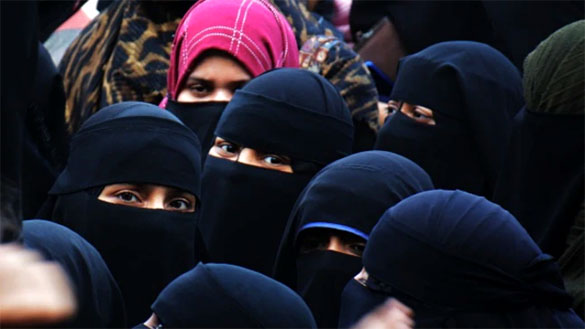
The second aspect is that women, like men, may also work and earn a living so that they can become economically stable. The Islamic view on this matter is clear. Women can participate in economic activities and employment, but certain moral and social conditions should be observed. Therefore, after explaining the first aspect of women’s economic rights, the second aspect also needs to be discussed.
Islam has given clear financial rights to women and has fixed specific shares for them. The system of inheritance strengthens the economic position of women. Women receive shares from the wealth of their parents, their husbands, and other relatives. Islam has also defined their rights as mothers, sisters, and daughters. Another important point is that whatever wealth or property a woman owns, she has full authority to use and spend it as she wishes. No one has the right to control it.
Islam strengthened the economic position of women by clearly defining their right to inheritance. The Qur'an states:
لِّلرِّجَالِ نَصِيْبٌ مِّمَّا تَـرَكَ الْوَالِـدَانِ وَالْاَقْرَبُوْنَۖ وَلِلنِّسَآءِ نَصِيْبٌ مِّمَّا تَـرَكَ الْوَالِـدَانِ وَالْاَقْرَبُوْنَ مِمَّا قَلَّ مِنْهُ اَوْ كَثُرَ ۚ نَصِيْبًا مَّفْرُوْضًا۔ النساء: 7)
“For men there is a share of what parents and relatives leave, and for women there is a share of what parents and relatives leave, whether it be little or much – a fixed share.”
Another verse of the Qur'an explains the details of inheritance and confirms that women also have a defined share in family property (Surah Al-Nisa 4:11).
According to Muhammad Tahir-ul-Qadri, an important point in this verse is that the unit of distribution is based on the share of the daughter. In other words, the whole system of inheritance is organised around her share. In the pre-Islamic age, daughters were not given any inheritance. Islam changed this unjust practice and made it a clear and firm command that daughters must receive their rightful share.
Therefore, it would not be an exaggeration to say that Islam ensured women’s economic rights so that they could also play an important role in the development and stability of society. These economic rights are fundamental and cannot be ignored.
Unfortunately, in many Muslim societies today, women are deprived of their inheritance. Many families do not give daughters and sisters their rightful share. This is very unfortunate. Such behaviour cannot be called Islamic because Islam clearly commands that daughters and sisters must also be included in inheritance just as sons are.
Because of this situation, women themselves must become aware of their rights. They should understand that asking for their lawful share from their parents is not a sin or a wrong act, even though society sometimes presents it in that way.
Another aspect of women’s economic rights is the question of employment. Some people wrongly claim that Islam does not allow women to work and therefore accuse Islam of being narrow-minded. It is true that some people with limited understanding oppose women’s employment, but this view does not represent the true teaching of Islam.
At the same time, some so-called liberal views also go to the other extreme by promoting the idea that women should completely abandon their family responsibilities for the sake of employment. Both views are excessive.
The balanced position is that Islam does not completely forbid women from working. Women may work and take part in economic activities while observing moral and religious guidelines. Today many Muslim women are already working in different professions.
In this context, the Qur'an says:
وَلَا تَتَمَنَّوْا مَا فَضَّلَ اللّـٰهُ بِهٖ بَعْضَكُمْ عَلٰى بَعْضٍ ۚ لِّلرِّجَالِ نَصِيْبٌ مِّمَّا اكْتَسَبُوْا ۖ وَلِلنِّسَآءِ نَصِيْبٌ مِّمَّا اكْتَسَبْنَ ۚ وَاسْاَلُوا اللّـٰهَ مِنْ فَضْلِـهٖ ۗ اِنَّ اللّـٰهَ كَانَ بِكُلِّ شَىْءٍ عَلِيْمًا۔ ( النساء: 32)
“Do not wish for that by which Allah has made some of you excel others. For men is a share of what they earn, and for women is a share of what they earn. And ask Allah of His bounty. Surely Allah has full knowledge of all things.”
The main point is that if a woman truly needs to earn a livelihood, she may take up employment. However, Islam discourages employment that is pursued only for unnecessary display or without any real need.
In today’s changing world, society must reconsider its attitudes so that no one gets the opportunity to criticise the Islamic system unjustly. If the economic rights given to women by Islam are properly implemented, it will help create a more balanced and peaceful society and protect it from many social problems.
Therefore, the claim that Islam does not support the economic rights of women is incorrect and based on misunderstanding. Those who hold such views should study the teachings of Islam with fairness and sincerity.
—
Dr. Zafar Darik Qasmi is an Islamic scholar, author, and a regular columnist of New Age Islam.
URL: https://newageislam.com/islam-human-rights/economic-rights-women-islam-part-nine/d/139252
New Age Islam, Islam Online, Islamic Website, African Muslim News, Arab World News, South Asia News, Indian Muslim News, World Muslim News, Women in Islam, Islamic Feminism, Arab Women, Women In Arab, Islamophobia in America, Muslim Women in West, Islam Women and Feminism