
Women's Rights in Islam (Part Six)

By Dr. Zafar Darik Qasmi, New Age Islam
Abstract:
This article explains the rights and status of women in Islam and answers some common criticisms made by modern writers. Some critics say that Islam limits women’s freedom and does not give them equal rights. However, the article explains that these views often come from misunderstanding, bias, or hostility towards Islam rather than a proper study of Islamic teachings. In reality, Islam provides a balanced system that protects the dignity, honour, and basic rights of women. These rights include personal, family, marital, economic, legal, and political rights.
The article also looks at the condition of women before Islam, especially in pre-Islamic Arab society. Historical records show that women were often treated badly and had very little respect or protection. Many harmful forms of marriage existed where women’s consent and dignity were ignored. After the coming of Islam through Prophet Muhammad (peace be upon him), these unfair practices were ended. Islam introduced a clear and moral system of marriage and recognised women as respected members of society with rights and responsibilities.
Main Points:
· Islam protects women’s dignity, honour and rights through a balanced moral, social and family system.
· Critics often misunderstand Islam and ignore historical evidence about women’s improved status after Islam.
· Pre-Islamic Arab society treated women poorly and allowed many harmful and unjust forms of marriage.
· Islam abolished unfair marriage practices and introduced a respectful and lawful system based on responsibility.
· Islamic teachings recognise women’s personal, family, economic, legal and political rights in society.
—-
It is often claimed that Islam presents an incomplete or weak concept of women’s rights and freedom. Some critics say that Islam has not given women the same type of freedom that the West talks about. Because of this idea, some writers have even written books claiming that Islam does not support women’s freedom. However, many of these writings were prepared with a particular purpose and bias. In such works, one can often see hostility towards Islam and religious prejudice rather than an honest presentation of facts.
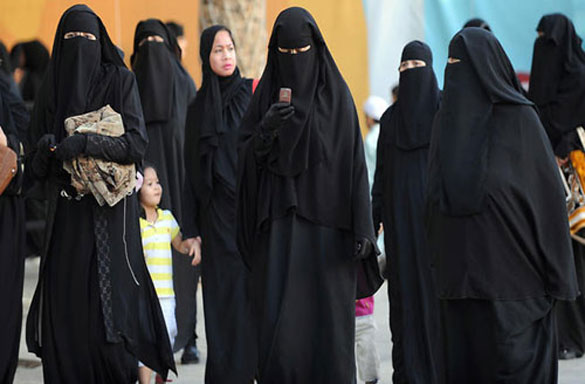
In reality, Islam not only protects the rights of women but also presents a balanced system that includes their dignity, honour and freedom. Unfortunately, many societies that speak loudly about women’s freedom have actually turned women into objects of the marketplace and damaged the concepts of modesty and respect. They present this openness and immodesty as freedom. It is true that Islam does not support uncontrolled or irresponsible freedom for women. However, Islam gives women all their important and basic rights. These include personal rights, family rights, marital rights, rights after divorce, economic rights, legal rights and even political rights.
It is also true that the honour, dignity and status given to women by Islam have rarely been matched by any other civilisation or religion in history. This is not merely a claim; there is strong historical evidence for it. Many Western thinkers, writers and scholars have also acknowledged the respectful position that Islam gave to women.
To understand this clearly, it is helpful to look at the condition of women before Islam, especially in the Arab society of the pre-Islamic period, commonly known as the Age of Ignorance (Jahiliyyah). Historical studies show that the social position of women at that time was extremely poor. Women were often treated with harsh and uncivilised behaviour, and their dignity and personal identity were not respected. Many writers have admitted this reality, and historical records also confirm the oppressed condition of women in that society.
For example, scholars such as Maulana Syed Abul A‘la Maududi in his book Purdah, Edward Hartpole Lecky Tareekh- i- Akhlaq- i- Eurup, Dr Khalid Alvi Islam ka Mu‘ashrati Nizam, Syed Ameer Ali Spirit of Islam, and Dr Muhammad Tahir-ul-Qadri Islam mein Insani Huqooq have discussed women’s rights and the condition of women in different societies. Therefore, before presenting the honourable position given to women by Islam, it is useful to briefly examine the condition of women in earlier cultures and societies. This helps us understand how much Islam improved the status of women compared with other systems.
The Status of Women in the Age of Ignorance
Those who criticise Islam often forget how miserable the condition of women was in the pre-Islamic period. Their dignity and honour were not protected, and there was little concern for their modesty or personal rights.
Dr Muhammad Tahir-ul-Qadri, in his book Islam main Insani Huqooq, quoting the famous scholar Ibn Hajar al-Asqalani from his work Fath al-Bari Sharh Sahih al-Bukhari, writes that there were nine different forms of marriage practised in the Arab society of that time. When we study these forms, it becomes clear how weak and insecure the position of women was before Islam.
Some of these forms are briefly described below.
Zawaj al-Bu‘ulah:
This was a common form of marriage in which a man could keep one or many women as his wives. The word “bu‘ulah” referred to a man having several women under his control. In this system, women were treated almost like property.
Zawaj al-Badal:
This was a form of exchange marriage. Two men would exchange their wives with each other. The women were usually not even informed, and their consent, dowry or formal proposal was not required. The arrangement could be decided in a short meeting if one man liked the other’s wife.
Nikah Mut‘ah:
This was a temporary marriage without a formal sermon, ceremony or witnesses. A man and a woman would agree to live together for a fixed period with an agreed payment. When the time ended, the relationship ended automatically without divorce. Any child born from such a union was attributed only to the mother.
Nikah al-Khidn:
This was similar to a secret companionship. A man would keep a woman in his house without a formal marriage, dowry or ceremony. They lived together until they mutually decided to separate. If a child was born, it was attributed to the mother.
Nikah al-Daghina:
After wars, the victorious tribe could capture women from the defeated group. These women were treated as property. The victor could sell them, keep them, give them away as gifts, or have relations with them without any formal marriage or consent.
Nikah Shighar:
In this arrangement, a man would marry his daughter or sister to another man on the condition that the other man would marry his daughter or sister to him. In this type of marriage, no dowry was required. Islam later prohibited this practice.
Nikah al-Istibda‘:
In this practice, a man would send his wife to live with another man considered strong or noble so that she might bear a child from him. After becoming pregnant, she would return to her husband.
Nikah al-Rahat:
This was a collective relationship where several men, sometimes up to ten, would have relations with one woman. If she gave birth to a child, she would choose one of those men and declare him the father, and he could not refuse.
Nikah al-Baghaya:
This was similar to prostitution. In this case, more than ten men could be involved, and the man himself would claim the child rather than the woman assigning it.
(See: Ibn Hajar al-Asqalani, Fath al-Bari Sharh Sahih al-Bukhari, Kitab Al Nikah, Vol. 9, pp. 182–185; Islam Main Insani Huqooq, pp. 356–357.)
From these historical examples, it is not difficult to understand how insecure and degraded the position of women was in the Arab society before Islam. Their dignity, modesty and purity were openly violated.
However, after the Prophethood of Prophet Muhammad (peace be upon him), Islam transformed this situation. Islam recognised the human dignity of women and granted them respect, honour and legal rights. The unfair and degrading practices mentioned above were prohibited, and Islam introduced a clear and respectable system of marriage in which both men and women were given rights as well as responsibilities.
—
Dr. Zafar Darik Qasmi is an Islamic scholar, author and a regular columnist for New Age Islam.
URL: https://newageislam.com/islam-human-rights/women-right-in-islam-part-six/d/139211
New Age Islam, Islam Online, Islamic Website, African Muslim News, Arab World News, South Asia News, Indian Muslim News, World Muslim News, Women in Islam, Islamic Feminism, Arab Women, Women In Arab, Islamophobia in America, Muslim Women in West, Islam Women and Feminism