
Indian Feminism and Shaheen Bagh: Articulation of Muslim Feminism as A Resistance To Both Patriarchy And Hindu Majoritarianism

By
Aishani Khurana
December
21, 2022
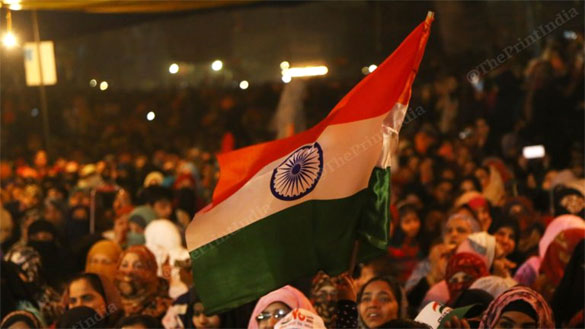
The Hyper-Visible Use Of Indian Flags And The
Centrality Of The Indian Preamble, Especially The Phrase “We The People Of India”
Reinforced The Idea That The Protest Was Not Only About “Muslim” Oppression But
Vocalised The Attack On The Constitutional Values Of The Country
------
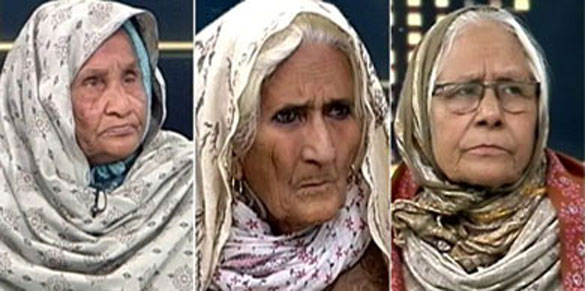
File Photo: Dadis of Shaheen Bagh
----
To remember
Shaheen Bagh today is to remember a political moment of invaluable feminist
import that marked a historical shift in the trajectory of Indian feminism. The
hypervisible presence of ordinary Muslim women at various protest sites
articulated a new language to re-conceptualise the negotiations between gender,
religion, and the nation-state.
Reflecting
on the anti-CAA protests three years later, the Shaheen Bagh protests (December
2019-March 2020) stand out as an inflection point for Indian feminism on two
fundamental grounds.
Firstly,
the Muslim women of Shaheen Bagh reconciled the dichotomous identities of
religion, feminism, and secularism. By advocating for their rights as citizens,
the Muslim women primed their identities as members of the nation-state and
established that Indian feminism could respond to issues beyond gender. In
priming their identities as citizens, they transcended the discursive
predicament of Indian feminism that had been preoccupied with proving Islam as
secular and non-patriarchal.
Although
the Hindu feminists in the 1960 and 1970s indigenised feminism by assimilating
Hindu religious scriptures as expressions of Indian feminism, Muslim feminists
had to extricate themselves from any forms of religiosity to qualify as
feminists. The centring of Muslim women’s experiences in the mainstream
feminist discourse has qualitatively changed the relationship of Indian
feminism with religion wherein Indian feminists either reclaimed religious
tenets or disengaged with religion altogether.
File Photos
-----
However, at
numerous Shaheen Baghs that emerged across the country, the political expression
of religion through one’s clothing and carrying out daily prayers at protests
sites not only articulated the political agency of Muslim women but also
disrupted the secular-liberal sensibility that sees religion in public sphere
as antithetical to the idea of a “modern-nation state”. By the strategic
priming of their identity as Indian citizens to advocate for constitutional
rights while not dismissing the registers of religion and gender, Muslim women
re-articulated the meaning of secularism. At Shaheen Bagh, Muslim women did not
have to transcend religion to acquire membership into a secular-feminist
discourse. Instead, by carrying out their religiosity publicly, Muslim women
untethered themselves from the political burden of re-interpreting the tenets
of Islam as a non-patriarchal, secularist religion.
The Shaheen
Bagh protests ruptured the binary of religion and feminism which has been a
historical particularity for Indian feminism. Simultaneously, it elevated the
stance of Indian feminism to advocate for a collective emancipation of social
groups marginalised not only on account of gendered oppression, but also by the
state. The hyper-visible use of Indian flags and the centrality of the Indian
preamble, especially the phrase “We the People of India” reinforced the idea
that the protest was not only about “Muslim” oppression but vocalised the
attack on the constitutional values of the country.
Articulating
their marginalisation and exclusion through a language of “an attack on the
constitutional rights”, the protesting Muslim women valorised their identities
as Indian citizens as a mode of resistance and thereby, adopted an
intersectional approach to underscore the multiple matrices of power, where the
nation-state is one of the registers of oppression besides gender, religion,
class, and caste.
Secondly,
as the face of a leaderless movement, Muslim women chartered out a space for
themselves and transcended the politics of the two groups that have
historically represented their interests: Non-Muslim feminists and Muslim men.
The Shah Bano controversy is an important case in point that explicates how the
interests of Muslim women have been represented either by a patriarchal vantage
point or through a non-Muslim feminist discourse.
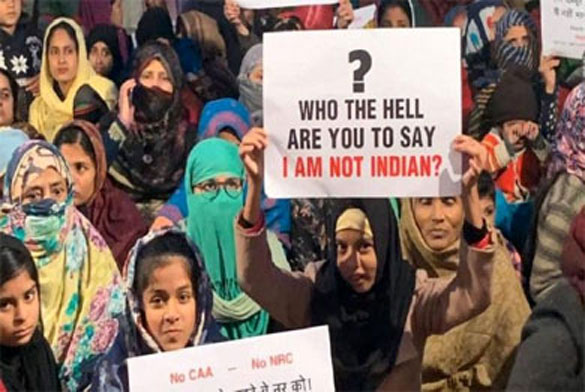
File Photos
-----
However, in
Shaheen Bagh, Muslim women occupied the centre-stage, both in the spatial
optics of protest sites and in the political discourse to advocate for their
rights as citizens. These protests emphatically articulated Muslim feminism as
a resistance to both patriarchy and Hindu majoritarianism. From Shah Bano to
Shaheen Bagh, Indian feminism has seen a tremendous shift in the centring of
experiences of Muslim women within the mainstream feminist discourse wherein
Muslim women represent themselves and are not represented by either Hindu women
or Muslim men.
The Shaheen
Bagh protests centred the experiences of Muslim women and the multiple axes of
their political and social subordination which had been marginalised in the
mainstream feminist discourse — a space historically dominated by mostly
upper-caste Hindu women. Shaheen Bagh registers a new moment for Indian
feminism that points to the reconciliation of religious identity, gender
concerns and rights of being an equal citizen in the interest of Muslim women —
something that both the Indian women’s movement and the Muslim Personal Law
Board failed to address during the Shah Bano case.
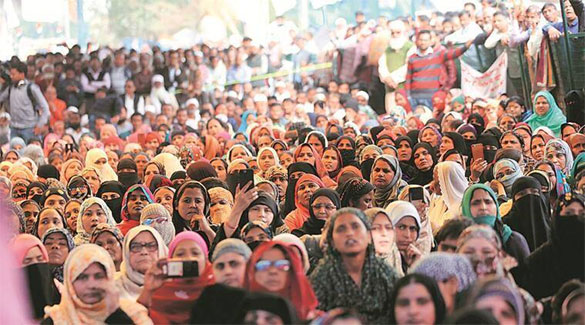
Photo: Indian Express
-----
Instead,
this leaderless movement with Muslim women at its vanguards, upheld and
celebrated the foundational tenets of feminism — building a collective that
questions oppression, forging solidarities across social positionings and
fostering a community that is inclusive and just.
-----
Aishani
Khurana is pursuing a PhD in the department of Anthropology at the University
of Illinois at Chicago
New Age Islam, Islam Online, Islamic Website, African Muslim News, Arab World News, South Asia News, Indian Muslim News, World Muslim News, Women in
Islam, Islamic
Feminism, Arab Women, Women In Arab, Islamophobia
in America, Muslim Women
in West, Islam Women
and Feminism