
Interfaith Relations in Lebanon: Ancient, Tragic, Diverse, But Hopeful
By Victor Edwin SJ, New Age Islam
16 May 2016
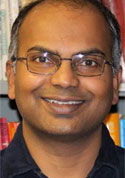
Prof. Edward J. Alam is Professor at Notre Dame University-Louaizé (NDU), Lebanon, in the Faculty of Humanities, where he has taught philosophy, cultural studies, and theology since 1996. He was General Secretary of the Council for Research in Values and Philosophy from 2009-2012, (www.crvp.org) and now is Director of the Council in Lebanon and the Near East. He is a founding member of the International Institute of Ethics and Contemporary Issues, housed at the Ukrainian Catholic University, in Lviv, Ukraine and has published widely in the fields of philosophy, theology, religion/science, and metaphysics/mysticism. He spoke to Victor Edwin SJ, director Vidyajyoti Institute of Islamic Studies, (Vidyajyoti College of Theology) Delhi on Interfaith Relations in Lebanon. Here are the excerpts…
Edwin: Many layers of ruins of subsequent civilizations lie beneath Beirut. How significant are they in the present context of plurality of expressions of faith in Lebanon? Interestingly, one major archaeological site down town Beirut touches the backyard of the Rafiq Hariri Mosque, St George's Maronite Cathedral, St George's Greek Orthodox Cathedral and two ancient Lebanese mosques. Tell us out the significance of these ruins and their blending with the places of worship to Lebanon?
Prof. Edward: Well, the place speaks for itself: ancient, tragic, diverse, but hopeful. By ‘hopeful’, I do not mean to be optimistic because these ruins speak to us about power politics, about war, about violence, about tragedy. And yet, one can sense something else beneath the surface when looking out upon these Phoenician, Persian, Greek, Roman, Byzantine, Islamic, Crusader, Ottoman, and finally modern ruins. . .all in the same place. . a place that connects, as you have mentioned in your question, significant mosques (Shiite and Sunni) and churches (Catholic and Orthodox). What is this ‘something else’? It is hard to describe, but it has something to do with hope, not just hope for a better future, but hope for the past. I don’t mean nostalgia! I mean a genuine hope and faith in the past because alongside of all this violent tragedy, there was genuine coexistence in this place for centuries: Jews, Christians, and Muslims, not merely tolerating one another, but welcoming one another. It still lives on today. It is present in the place you ask about!
Edwin: Tell us about the idea of "Peace Park" in the ruins? What is the concept for this idea?
It is called ‘The Garden of Forgiveness’. The original vision came from Alexandra Asseily, a woman who has lived in Lebanon since the 1960’s. Originally of Jewish descent, from Ukraine, she married a Lebanese man and settled in Lebanon where she raised her family. When the 1975 war began and things fell apart, she speculated on what had gone wrong in ‘her’ Lebanon which she loved so much. This led her on a long and mystical journey, ending in a meaningful career as a psychotherapist. The insane war, as you know lasted for 15 years, from 1975-1990. One day, after the war, while walking around the ruins in Beirut she had a vision for the garden of forgiveness and saw all the various Churches and Mosques ‘touching tenderly’ the same space. . .but touching from the back, not from the front. She envisioned a garden in that space where all those crushed by the tragedy of the war could come together for healing simply by walking through the garden (weaving in and out of the ancient, medieval, and modern ruins) with artefacts and symbols and music and flowers that speak about forgiveness.
The space naturally lends itself to healing and reconciliation, as it allows all the sacred spaces to ‘go back’ into the wounds, without falling back into the violence. . .a chance to forgive. Today, the project is on hold. The real estate is precious and too many greedy people have their eyes on this site, which is quite huge right in the middle of Beirut. There are ancient ruins there, so the Ministry claims to be protecting some of it, but only God knows what will happen. We have events in this space from time to time; trying to keep the vision alive, but, again, it will take a small miracle for the garden to see the light of day.
Edwin: The feast of Annunciation (March 25) is an important day in the civil as well as the religious calendar of both Christians and Muslims in Lebanon. How is this day made meaningful for both Christians and Muslims?
Actually, March 25th is the celebration of the Feast of the Annunciation to Mary in the Latin Calendar. Eastern Christians (including Maronites) celebrate this feast during the season of Announcement before Christmas. But Maronites, who are the majority of Christians in Lebanon, also observe the March 25th feast. Over 5 years ago, the Lebanese government declared March 25th to be a legal holiday, commemorating a religious event held sacred by both Muslims and Christians. Since then, most of the religious leaders of all Christian and Muslims groups in Lebanon have been getting together on this day to venerate the Virgin Mary and to celebrate together the feast of the Annunciation of the Angel Gabriel to Mary. I think this is unprecedented in history and it speaks powerfully to the world about the deep and mystical connection between Christians and Muslims as Children of Abraham.
Edwin: Though the major focus of your academic work is on epistemology and history of philosophy, yet, one of the overarching themes of your research and writing is on the theme of "reconciliation" centred on the biblical figure of "Joseph". Kindly tell us how Joseph is an important biblical figure for initiating reconciliation between wounded groups. How can this figure be meaningfully reflected in the area of Jewish-Christian-Muslim relations?
This is an excellent question, but one that cannot be easily answered. I have written in depth about this and would refer you to the paper I gave at an international conference in Qom, Iran, in 2009, on Peace and Human Rights. In short, I draw upon the work of Rene Girard to show that in Islam, as well as in Judaism and Christianity, there is a mechanism for ending the mimetic cycle of violence. I argue this based on the fact that the story of Joseph, which Girard gives great importance to in this regard, is also narrated in the Quran. I cannot go into all the details whereby the story of Joseph is compared by Girard to Sophocles’ Oedipus Rex. But what I can say here is that the stories are almost identical except when it comes to the decisive point: ending the cycle of violence against the innocent. In the Greek tragedy, the cycle is continued, but in the biblical stories (and the Quran) the mimetic cycle is broken. I would be happy to send you the paper. Girard does not take Islam into account here, although the biblical story of Joseph that he depends so heavily upon is also in the Quran.
Edwin: You hold the Chair of Benedict XVI on Christian Muslim Relations in your university. What are challenges you find in the area of Christian Muslim relations? What are the bridges that exist between them?
As an entity within the Faculty of Humanities at NDU, the Benedict XVI Chair aims to safeguard and deepen NDU’s stated identity, mission, and vision. This challenge is related to the challenges found in the area of promoting Christian/Muslim relations primarily because of the way university education is perceived and approached in Lebanon, which is probably not that different from some of the major trends sweeping through the entire globe at present. I am speaking about the tendency to reduce university education to technical training where the aim is to prepare students to enter into the global market economy. To resist this challenge, the Chair organizes local and international seminars, conferences and symposia, lecture series, theology workshops, reading groups, and media roundtables, for students and faculty, which focus on genuine liberal education—education that frees the mind and gives peace to the soul. By promoting a constructive dialogue between tradition and modernity and encouraging an intelligent preservation of the cultural heritage of one’s own tradition, we hope to deepen and promote a mystical understanding of what it means to be human. The proceedings of these events are published in journals, books, and online publications. NDU’s Benedict XVI Endowed Chair of Religious, Cultural, and Philosophical Studies focuses on a number of themes, and not only Christian/Muslim relations, but the latter is of unique importance since Christianity and Islam have historically shared an approach to education which can truly be called “liberal”.
One of the benefits of cultivating Christian/Muslim relations is that we are working on recovering Lebanon’s historic vocation of peaceful conviviality. Lebanon was the last country that Pope Benedict XVI visited, signing the final magisterial document of his pontificate as Holy Father. During his visit, Benedict XVI stressed, as did John Paul II before him, that Lebanon was “more than a country” and indeed a message of peaceful coexistence to the world. This is a major benefit, but of course there are many others, especially considering that NDU is a Catholic university, which means that it is born from the “heart of the Church”, and therefore called to cultivate dialogues between the university and the community, whether it be Muslim or Christian, and bring them together in common events that are beneficial to both the students and the participating external community.
The challenges faced in implementing such an initiative in the region are internal and external. Some of the internal challenges are the negative approaches to “otherness” held by some communities in the region where the main campus of the university is located. There are historical reasons for this suspicion of the other, but many times founded on ignorance and not fact. Internally, there is sometimes an inward looking, parochial, provincial, and sometimes, self-righteous attitude that makes dialogue difficult. Externally, the seemingly random and politically motivated acts of “religious” violence create an atmosphere of fear and despair, discouraging many from believing in dialogue.
To overcome all these challenges, the Benedict XVI Chair cooperates with select diverse academic, religious, and cultural institutions in Lebanon and around the world; above all, with the Council for Research in Values and Philosophy (CRVP), in view of its exemplary experience since 1980 in promoting research into the way philosophy emerges from cultures and for documenting in an impressive 300+ volume book series on how cultures are deeply rooted in religious experience. Additionally, a high-profile advisory council comprised of local and international experts of diverse religious backgrounds give guidance and support to help overcome some of these challenges.
Edwin: It is said that Pope Emeritus Benedict XVI held a view that intercultural dialogue is possible with Muslims whereas he hinted at the difficulty of deep theological dialogue with them since Muslim scholars do not interpret their scriptures. What is your theological response to an important theological opinion like that of Pope Emeritus Benedict XVI?
There is so much inaccuracy surrounding Pope Emeritus Benedict XVI’s view of Islam, due in large part to the gross misinterpretation of his Regensburg address. I have published a piece titled “Benedict XVI and Islam” wherein I try to show how what you give expression to here and many other misinterpretations of his thought, stem from the bad press he got after that Regensburg address. It is true that Benedict sometimes seemed to lament the lack of deep hermeneutical work on the part of Muslims in the modern world when it comes to the Quran, but he also recognized that significant work had gone on in this regard in the long history of Islam, and also took a personal interest in contemporary Shiite work in this area, especially in the realm of eschatology.
Edwin: You hinted at the possibility of deep theological discussions with Shiite scholars in the area of 'redemptive suffering'. Would you elaborate on that for us?
Yes. As I am sure you know, the tragedy at Karbala and the deaths of Ali, Hassan, and Hussein embody and exemplify for many Shiites throughout the world this notion of ‘redemptive suffering’ primarily because of the belief in their innocence. Additionally, the fact that they were the ‘underdogs’ so to speak, intensifies the atoning quality of their deaths. Clearly, this idea resonates with Christians who believe in the innocence of Christ, who was also rejected and put to death for crimes that he did not commit. Of course, there is the Shiite belief that Christ was spared from the shameful death of being crucified and was transported to safety by divine favour; this is one area where Christians and Shiite Muslims have a lot to talk about. Incidentally, in the paper I referred to before (on Girard), I end it with a poem that may be very interesting for Indian readers, as it is expresses very powerfully this idea of the redemptive suffering of Ali, Hassan, and Hussein in the context of a group of Indian, Shiite poets, mostly women, who were followers of Gandhi. In fact, this paper also looks at Gandhi’s reading of the Gita as a source for overcoming violence, and as a support for ahimsa; this is quite remarkable I think given the seemingly positive role for violence in that text.
Edwin: The German Chancellor, Angela Merkel, has shown leadership in the present 'immigration crisis' in Europe. Germany will be receiving close to a million immigrants, mostly Muslims, from West Asia. Many other Western European nations also will be receiving and settling many thousands of immigrants. Leaving out economic and legal aspects of this migration, what is the key theological significance for the populations of the host nations that have Christian roots? And what is the significance for Muslims who enter into a Europe that is committed to human rights and religious freedom?
Again, another huge question and a very good and important one with so many ramifications! Merkel has shown leadership in this regard and also in her refusal to add fuel to the dangerous fire burning in Syria by supplying it with yet more weapons. The question of how the flow of refugees and immigrants will impact Europe is extremely complex because there are so many areas to consider: social, political, economic, cultural, etc., No one really knows or can accurately predict what will happen; there are too many unknown variables, the greatest of which are those of human hearts and wills and desires. I can tell you what I hope will happen. I hope that Christians in Europe will be drawn back to the essence of their Abrahamic faith via their interaction with those Muslims whom have maintained their connection to Abraham’s faith. I hope that a mutual Christian/Muslim renewal of faith will come about as a result of this latest ‘immigration crises. Regarding your last point, allow me to say that with the exception of Saudi Arabia, all majority Muslim countries immediately embraced, and even defended, the UN Declaration of Human Rights in 1948. This is something to which we should pay closer attention, I believe. Pakistan’s critique of the Saudi position is still well worth looking at, in fact, and shows, in my judgment, that there is nothing in the Declaration that contradicts the essence of Islam. In fact, there is much that is commensurate. That is why that in addition to Pakistan, we also find Iran, Syria, Egypt, Turkey, and other nations with Muslim majorities voting in favour of the UN declaration. Syria and Egypt especially were strong supporters. Now in terms of how this relates to your question, there is so much to be said, but, again, because there are so many ways to proceed and so much to be said, I think I will stop here, with your permission?
Edwin: You have many academic contacts in India. You have read papers on the thought of Dr Ambedkar, the architect of our Indian Constitutions from a Lebanese perspective. Tell us how Dr Ambedkar could be a source of inspiration for Lebanese and why?
Yes, I feel deeply blessed by all of the wonderful people I know in India and by of all the rich experiences I have had over the last 15 years in this Cosmos of a country called India. For a decade and a half now I have been breathing in the air of India, and with each visit I discover something brand new. Reading the works of Dr. B. R. Ambedkar, and then meeting people who have written dissertations on him, has enriched my understanding of modern India. Like so many other people I get interested in, however, I have not had the time to delve deeply into so many things about Babasaheb’s life that fascinate me, especially the relation between his intellectual development and spiritual conversion. There is no doubt that he is someone from whom Lebanese could learn a lot today because of the all-too-common ignorance of the greatness of India and its diverse peoples. We don’t have ‘caste’ in Lebanon, but there is still a kind of prejudice that could well be lessened by an exposure to Dr. Ambedkar’s life and work. Finally, I think every Lebanese boy and girl should be asked to memorize that famous quote by Babasaheb regarding the health of the body politic, which I am sure you know: “Law and order are the medicine of the body politic and when the body politic gets sick, medicine must be administered.” Lebanon's body politic is seriously ill and needs this kind of medicine.
Edwin: You are a philosopher, theologian, practitioner of dialogue, and a novelist too. You mentioned that an Indian writer was one of the sources of inspiration for writing a novel. Kindly tell us about your Indian inspiration for novels and what is your novel about?
Philosopher, theologian? You are very kind and generous, Father. Well, I hope to be a philosopher and a theologian someday when I grow up, but all I do now is attempt to teach philosophy and theology, which is challenge enough. Practitioner of dialogue? I aspire to be such a practitioner. I desire to build bridges between me and myself and my significant others, between me and my students and colleagues, and between them—one with the other. And I deeply desire to build bridges between people of different faiths, especially between and among the children of Abraham: Jews, Christians, and Muslims. Christian/Muslim relations are of paramount importance during the present kairos and I firmly believe that this work is a work of the Holy Spirit. Pray for me, Father, that I might be lovingly obedient to this call. Novelist? Well, I have written one novel soon to be published by Morgan & James to commemorate the 15th anniversary of the death of R. K. Narayan—a man under whose inspiration I write. Before my first trip to India in May of 2001, I felt I had already traveled to India through the writings of Narayan. I have read everything he ever wrote now, and consider him to be among the very best fiction writers in India’s modern history. During my first trip to India, Narayan died. And I was only to discover a few days later that he was only ten minutes away from where I was in Tamil Nadu at the time. Upon discovering this when back in Lebanon, the Indian muses moved me to begin my novel. I hope Indians will read it; I hope it foster hope!
Victor Edwin SJ is Lecturer - Islam and Christian-Muslim Relations (Vidyajyoti College of Theology), Director - VIDIS (Vidyajyoti Institute of Islamic Studies) and Secretary - CMRSA (Christian-Muslim Relations South Asia)
URL: https://newageislam.com/interview/interfaith-relations-lebanon-ancient,-tragic,/d/107316
New Age Islam, Islam Online, Islamic Website, African Muslim News, Arab World News, South Asia News, Indian Muslim News, World Muslim News, Women in Islam, Islamic Feminism, Arab Women, Women In Arab, Islamophobia in America, Muslim Women in West, Islam Women and Feminism