
Challenges are Part of Life
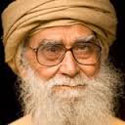
By Maulana Wahiduddin Khan for New Age Islam
05 June, 2015
Q: Maulana, this world is very aggressively competitive. Competition, you say, is good, but it often escalates into aggressive confrontation. How should one manage this?
A: Competition is part of nature. Take the case of children. They fight with each other every other day. But then they quickly make up. This is nature.
Now, your question reflects a concern about how to relate to negative people, who see competition as aggression or who react to competition with aggresssion. My answer is that if someone like this gets angry with you, you must quickly say, ‘You are right, and I am wrong.’ And at once you will find that the problem has been solved!
So, everything is in your hands. It is not in someone else’s hands. It all depends on how you handle the situation.
Q: You repeatedly stress that we should save ourselves from distractions and that we should focus on positivity. But in the corporate world, where I work, vindictiveness is very much part of the culture, and this very often leads to confrontation. Because of this, one gets embroiled in distractions and sinks into negativity.
I used to flee from such confrontational situations that were a result of other people’s vindictiveness. I couldn’t stand the heartburn. If someone did not respect me, I would move away—maybe even take up a new job.
You say that competition and facing challenges, rather than escaping them, are very necessary for one’s intellectual development. I’m still struggling with that, trying to prevent myself from escaping from situations and jobs that are challenging because of other people’s vindictiveness.
If you try to be competitive, confrontation with vindictive people is inevitable. If, in this regard, I adopt the formula that you suggest, saying, ‘You are right, and I am wrong’, wouldn’t I be stunting my intellectual development?
A: I’ll say just one thing—that you need to learn the art of retreat. You must be ready to retreat at any moment. You must realise that no situation can be entirely good or entirely bad. It’s always a mix of the two. So, I would say, in every situation, focus on the good and ignore the bad. Then you can progress. Otherwise, you will be constantly escaping from challenging situations, constantly running or seeking to run away.
I don’t hesitate to retreat when I need to. My sole concern is that the process of my intellectual development should not stop. And so, whenever I need to, I quickly and willingly retreat.
Learn the art of retreat management. In a negative situation, do not react emotionally or negatively, and then you will see that things will fall into place.
Retreat is a time-buying strategy. You need to do this sort of buying-time in your life, too. You can defuse any negative situation if you learn how to manage it properly, if you know how and when to retreat.
Personally, I’ve gained a great deal from retreating when and where I need to.
Q: I read an article where you say that finding God is entirely possible. Can you please elaborate on this? It is a very revolutionary statement.
A: A philosopher once said, “I think, therefore I exist.” So, if it is possible to discover yourself, that you exist, why should it be difficult to discover the One who created you, who brought you into existence? When I discover myself, at the same time I discover my Creator.
I was not created by myself. Nor did my father or my mother create me. So, who created me? God.
This question is now settled. It is God who created me.
In previous centuries, philosophers used what is called the argument from design to stress the existence of God. The existence of design in something is proof of the existence of the designer of that thing.
In the universe we easily observe that there is an astounding design. Everything in the universe is perfectly-designed, from a blade of grass to a vast galaxy. And so, this is itself evidence of a cosmic Designer, or God.
Previously, this argument, of the design that exists in every aspect of the universe indicating the existence of God, was a philosophical speculation. But it has now gained a scientific base. Many scientists contend that there is in the universe what they call intelligent design. And if there is intelligent design in the world, it is but natural that there is an Intelligent Designer, or God.
When I discover myself, I discover God, the One who made me. When I discover the design in the universe, I discover God, the Designer of the universe.
This is my answer to your question.
Here, I’ll add another point. And that is, that we cannot deny the existence of God because we cannot deny the existence of the universe. It is a fact that there is a universe—and a well-designed and well-disciplined one at that. So, for us, the option is not between a universe with God and a universe without God. Rather, the option before us is between a universe with God and no universe at all. If you don’t believe in the Creator, you will have to say that there is no universe. But you can’t say that, because you know that the universe is a fact, and so this saying that there is no God is no sensible option at all.
This is the reasoning, applying which I have achieved the great conviction that there is God. I have no doubt regarding the existence of God.
Q: Do you think human beings are naturally and inherently destructive, or is this a human invention?
A: According to my experience, man is born as a pacifist. So, it is violence that is a human invention. It is a corruption. Every person is born as a pacifist, as a peace-loving creature. Our real nature is peace. Weapons, war, a history full of violence—all these are human inventions. Not only me, but all pacifists across the world believe that man is born pacifist, that peace is interwoven in human nature.
Earlier today, I was watching a pigeon. I noted that its every action was very beautiful. Each action reflected an innocent beauty.
This is the real nature of man, too.
Pigeons and other animals have no choice about their behaviour. They are governed by their instincts. And so they have no option to engage in violence. They are living on their nature. They behave according to their instinct. But man has choice. Man has freedom. Violence is nothing but misuse of this freedom. Otherwise, man is basically a peace-loving creature, just like a pigeon is.
Q: Despite all the many problems that South Asia suffers from, what do you regard as the most hopeful or promising thing about it?
A: The most hopeful thing about this part of the world is that it is this region that gave rise to Mahatma Gandhi. He proved, through his actions, that even in this world of war and violence it is possible to achieve goals by following the peaceful method. Mahatma Gandhi was a great gift of this part of the world—and a gift to the whole world.
You can be a potential Mahatma Gandhi, too, if you are able to unfold your hidden potential. Everyone is a potential Mahatma Gandhi, if, like him, you unfold your potential.
Q: Some people say that India’s cultural heritage is in an advanced stage of decay. What do you say?
A: Why do you say ‘decay’? No culture is an eternal culture. Culture is a process. It is not a stagnant phenomenon, like a stone. Culture is a growing phenomenon, like a tree. Why, then, do you take it like a stagnant stone? Every day there are new developments, and every development is part of culture. So, why call it ‘decay’? Call it ‘new development’, ‘new progress’, ‘new evolution’.
I take culture as a continuous process, a historical process. And I take the whole of humankind as one body. So, every culture is my culture—not just Indian traditions, but European traditions, African traditions, and all others, too, are part of my culture. I am a member of the whole of humankind, not of just one group or race.
Q: You are a renowned Islamic scholar. But what do you like most about Hinduism, Sikhism and Christianity?
A: Every religion has some special features, some special contributions. Take Sikhism, for example. It was able to provide a Prime Minister to India. It was the strength of Sikhism, the potential of Sikhism, to produce a man like Manmohan Singh, who became the Prime Minister of India despite the fact that Sikhs are a relatively very small minority.
Christians are doing a good job in the field of education. They’ve developed a big educational empire. Through their educational work they have become an asset to India.
As for Hinduism, it is a very unique tradition. Hindus believe in the many-ness of reality. They believe, ‘I am right, and you are also right’. This is an amazing formula for tolerance. I think that the Hindu community is the most tolerant community in the world—and it is because of this formula. When Swami Vivekananda declared at the World Parliament of Religions in Chicago in 1893 that according to Hinduism, every religion is true, the whole audience was elated.
This kind of belief is a special feature of Hinduism. Due to this tolerance, everyone finds room here in India. For instance, I am working for Islam openly, but I face no obstacle at all. No Hindu has ever asked me, “Why are you working for Islam?”
Why is this so?
This is because of this formula of tolerance of the Hindus. According to their belief, and not as a matter of convenience, Hindus believe, “I am true, and so are you”. So, their belief in the many-ness of reality is very good for every religion, and even for myself.
Q: What should members of a family do to keep their family blessed?
A: There’s just one thing, and that is adjustment.
Adjustment to others in the family is really necessary if you want the family to be harmonious and happy.
Why?
This is because differences are part of nature. It is simply impossible to eliminate them. There are bound to be differences between two or more people, no matter how closely related they are—between husband and wife, between parents and children, between brothers and sisters. It is but natural. It is impossible to find a family or a society where there are no differences.
Now, what is the solution to this challenge?
The answer is: learn to adjust. Other than adjustment, no solution is possible. Adjustment is the only formula for establishing peace—in a family, in a society, in a country, in the whole world.
I am a great believer in adjustment.
By adjustment I mean unilateral adjustment. That is to say, you must adjust to others without waiting for them to adjust to you. I also mean unconditional adjustment. That is, you must adjust to others without expecting them to fulfill any prior conditions. If you insist on some conditions being met before you agree to adjust to someone, you can never have peace.
Why do I give so much emphasis to adjustment?
It is because adjustment gives you the opportunity to live in peace. When I adjust, I gain something really big—and that is peace, a tension-free life. The greatest killer of tension is adjustment. Where there is adjustment there is no tension. Something that gives me a tension-fee mind is very good for me, is it not? That’s why I give so much emphasis to adjustment.
Every time, and wherever it may be—in my family, in my society or wherever—I am ready to adjust. Because of this, I am able to live with peace of mind. At all times, I am tension-free—because of this very easy formula.
Q: How do you think children should be brought up? What sort of educational philosophy would you suggest?
A: No artificial philosophy. Every child is born as Mr. or Ms. Nature. Every child is born as a potential superhuman being. What really kills this potential is pampering and easy money. But this is precisely what many parents do—they over-indulge their children, and this culture is ruining them. If you save your children from these two evils, they will grow up according to their own nature and will become good members of society.
Q: You said that every person has the potential to become a superhuman being. What must a student do to realise her or his full potential?
A: I have just one advice—and that is, save yourself from distraction. Today, many young people are living in all sorts of distractions. If a student manages to save herself or himself from distraction, she or he can be a super-student. It is distraction that destroys young people. By ‘distraction’ I mean any activity that is not useful for one’s future. It is very easy to discern which activity is or is not useful in this sense.
URL: