
‘Indian Hand in Baluchistan? Bring Evidence before the Parliament, SC’
By Adnan Farooq
10 October 2013
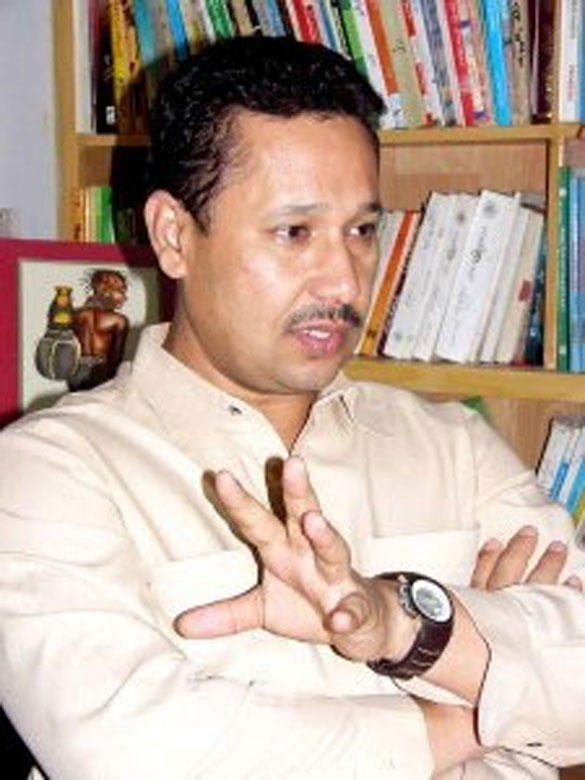
Mr. Sanaullah regularly writes on Baloch issues in the mainstream media and has authored a book. As a member of the Balochistan National Party, he is leading voice in the country for Baloch rights. In an interview with Viewpoint, he discusses the Balochistan situation. Read on:
Despite a new elected government in Balochistan, it seems not much is changing. Was it a correct decision by Baloch nationalists to participate in the elections?
The enormity of conflict in Balochistan has had always been downplayed – and branded as a normal crisis of governance, tribalism and issues of local competition. But we have to understand – that bad governance, tribalism and societal crisis that includes criminalization and Talibanisation are instruments of Islamabad’s larger policy to maintain colonial control.
Hapless provincial government is not in a position to undo the systematically placed messy system. Everything you see, death, destruction and debris including well crafted narrative about Balochistan, is all scripted.
The new government is a fresh episode of long running flop soap – with few latest actors. Things will continue according to the wish and will of writer and powerful directors – headquartered in Rawalpindi.
True – taking part in so-called elections by the Baloch nationalists was a major mistake. There is no space for free; fair and transparent election where 200,000+ soldiers are in control of all affairs, administrative, security, economic and more recently they have taken over disaster management role in post-Awaran earthquake scenario.
Honestly, it was a “free, fair and transparent selection” of pro-establishment groups and parties. The polling process was nothing less than the mockery of democracy.
I can’t speak on behalf of Baloch armed groups since I don’t believe political violence to attain political objectives including freedom. I strongly trust people’s power, unity, and political struggle to achieve our national objective of right to self-determination.
Defiantly, there is a massive discontent among Baloch about Islamabad’s policies and conduct while dealing with Baloch and Balochistan. This wholesale animosity against state and its institutions is widespread – some politically express their anger however, some Baloch have taken up arms expressing their anger more violently against endless oppression and exploitative policies.
In fact, both, political and armed factions of Baloch nationalists, have widespread support and respect among Baloch.
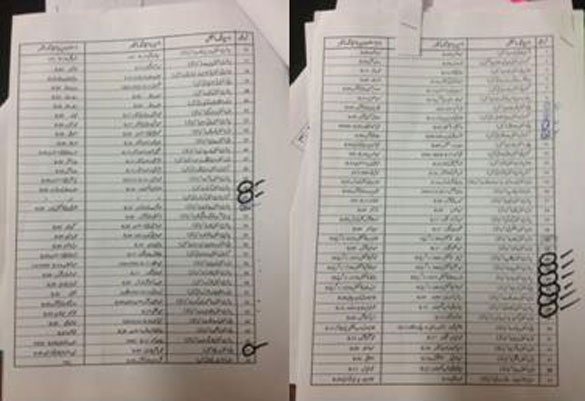
As I said earlier that election process was an utter failure in Balochistan. Polling stations were in control of security forces and they performed presiding officers’ role and responsibility. You can see it from the list – frontier constabulary personals were deputed as presiding officers in my constituency in spite of clear election rules that forces cannot perform the role of presiding officers.
In Baloch-dominated districts election turnout was less than three percent and in some districts such as Awaran the turn out was mere one percent.
You have been pointing out the theft of Baloch resources through extraction. Could you briefly narrate the scale of this extraction and which countries are benefitting from this extraction?
Natural resources account for a large share of Balochistan’s wealth. Since 1952, Pakistan has been extracting large quantities of gas and coal and, more recently, copper-gold from Balochistan. However, the bleak socio-economic indicators in the province clearly indicate massive corruption, mismanagement and abuse of Baloch natural wealth.
Despite countless natural wealth, Balochistan stands out for its terrible social indicators. It scores lowest in 10 key indicators for education, literacy, health, water and sanitation and has one of the most depressing statistics for the MDGs.
Pakistan doesn’t have a transparent and well-established system concerning natural resources. The Islamabad elites, in fact, are unwilling to establish or introduce a transparent system to channel natural-resource earnings towards socio-economic development. Balochistan’s multi-billion copper-gold project, Saindak, was gifted to a Chinese company without any transparency by Gen Musharraf in 2002 – and recently extended for another five years – without sharing a single clause of the agreement with the public or the parliament.
Not only has Balochistan’s copper-gold been looted, the province’s prime land has been allotted by the Foreign Office to Arab royals and dignitaries to hunt the endangered Houbara Bustard. In return, the royals shower expensive gifts on the country’s retired military officers and politicians.
And more recently, Islamabad mysteriously announced the handing over of the strategically significant Gwadar Port to the Chinese – again without a transparent process. This clearly shows how Balochistan’s resources are treated as personal property.
Islamabad was the sole beneficiary of Baloch resources; however, since the dawn of new millennium China is more aggressively exploiting Balochistan’s copper-gold and several other minerals without single benefit to the Baloch.
In his recent meeting with Manmohan Singh on the sidelines of UNO meeting, Nawaz Sharif claims to have taken up the issue of Indian intervention in Balochistan. However, the Pakistani state has never offered any concrete evidence to its citizens. How real or imagined is this Indian intervention in Balochistan?
It’s a known tactic to gain domestic support against rights-seeking Baloch and legitimize their oppressive military operations and extreme human rights violations by blaming and branding their struggle as an Indian sponsored or funded project. Also such methods are used to keep international community away from talking and raising Balochistan’s appalling human rights crisis.
We have raised this issue on several occasions even in the Supreme Court that all allegations against Baloch must be produced in Pakistan’s parliament and apex court – we are ready to face and defend such allegation on proper forums.
Baloch have been facing such allegations since 1984 and our great leaders spent most of their life behind bars. And Balochistan has been repeatedly bombarded by Pakistan’s civil-military establishment – it’s a systematic policy to destroy Balochistan and stop--- in some cases reverse---our social, economic, and political development.
Balochistan is an historic conflict dating back to 1839, much older than the birth of the Pakistani state.
Do you think there are attempts to Islamify Balochistan to undermine Baloch nationalism?
Yes Islamabad is aggressively pursuing a policy to convert Balochistan’s centuries-old progressive social-political fabric in to extremely religious society. Due to a collision of policies and interests with Islamabad, moderate Baloch political forces and society have been systemically persecuted and discriminated against.
Despite high poverty, low literacy and appalling socio-economic conditions, religious fundamentalism has failed to take roots in Baloch society but now religious elements backed by the establishment are using guns, money, motors and state-power to force poor families to send their kids in Madrasas – that are expanding on alarming rate. Outfits such as JuD, LeJ, and LeT now have strong presence in most parts of Balochistan.
The deep state considers politically mature, moderate and rights-seeking Baloch nationalists as strategic threats to their decades-old, colonial-style rule; however, the same establishment seemingly considers the Taliban a long-term strategic partner in the regional geopolitical context despite these militants being utterly lethal.
In the total absence of moderate political elements, Talibanisation is rapidly progressing and could destroy Balochistan’s centuries-old moderate political culture. According to the May 2012 fact-finding mission of the Human Rights Commission of Pakistan on Balochistan, Talibanisation is increasing in several areas of the province and in some cases security forces are perceived to be patronising extremism, turning Quetta into a haven for militants. Afghan militants have encroached on government land to the east and west of Quetta. The huge compounds, provided with basic amenities, are seen as a clear indication of the government’s support to these elements.
The Islamabad-based Conflict Monitoring Centre’s report concerning Taliban’s presence revealed shocking facts about the Taliban’s presence, activities and threats in the province. The report said that “Talibanisation has touched a dangerous level in Balochistan.”
What explains attacks on Hazaras in recent months/years? Why this surge in attacks 'all of a sudden'? Also, how do Baloch nationalists react to these attacks?
Together with sectarian killings, Balochistan faces a multitude of problems. The systematic breakdown of social and political order is created to portray Balochistan as a super complex case and divert domestic and international attention from the very genuine political conflict between Baloch and Islamabad.
Talibanisation, sectarian and targeted killings, political assassinations, abductions for ransom, exodus of Hindu community, near-collapsed health and education infrastructures, appalling corruption, bad governance and institutional breakdown – all these horrifying developments are taking place by design – not by default.
Balochistan is the victim of a deliberate disorder. The intentions are to poison the social, political, cultural and ethnic fabric of the Baloch society.
In the past the province witnessed frequent conflicts with the central government on issues pertaining to the Baloch identity, political rights, economic exploitation, and over-involvement of government agencies in its affairs. Politically-focused Baloch groups never used criminal tactics to harm civilians. An unwritten Baloch code, known as “Rawaj”, has been the guiding principle for tribes and individuals. A Baloch violating the code during times of peace and conflict is regarded as inferior and less respected individual within the Baloch society.
It is evident that the root causes of the current wave of criminality and sectarian killings, and the rise in cases of kidnapping for ransom are not due to the political conflict between the Baloch and Islamabad. The source of social chaos is the government and its appendages.
Do you think Balochistan has been alienated to the point of no return?
Yes, a very large and politically mature segment of Baloch society is very pessimistic about Baloch-Pakistan relations. They don’t see any hope and opportunity to repair the national damage that the Pakistani state has inflicted upon Baloch people.
The current day Balochistan depicts a very depressing and disappointing picture for Baloch. Sixty-five-year long political relation between Pakistan and Baloch is full of deaths, disease, destruction, damages including looting and betrayal.
The audit report of Baloch-Pakistan relation is terribly bleak and the Baloch youth don’t find any reason to support pro-federation politics.
What is the solution to the problem?
Balochistan has suffered immensely in the past six decades. It is time to redress its grievances and end systematic oppression and exploitation through a genuine and credible process. A peaceful resolution of the conflict lays in politically-tested conflict resolution mechanisms.
A comprehensive framework along with a comprehensive peace agreement on the lines of peace accords in Aceh, Ireland and the Kurdish region in Iraq are some of the options that provide a context for peaceful coexistence within the territorial framework.
However, South Sudan’s comprehensive peace agreement is also an option to on board all Baloch groups those demanding wholesale political separation. Giving enough times to both, pro-independence and pro-unity, elements to lobby, work and test their political skill without any bloodshed.
Adnan Farooq has worked with daily The Nation, Lahore and daily Jang, Lahore. He has also volunteered for Milieudefensie, Amsterdam. Friends of the earth, Europe, on environmental issues. He has been working with ON FILE, an Amsterdam-based publication run by journalists from all around the world. He studied Conflict Resolution at University of Amsterdam. He is the editor.
Source: http://www.viewpointonline.net/indian-hand-in-baluchistan-bring-the-evidence-before-the-parliament-sc.html
URL: https://newageislam.com/interview/‘indian-hand-baluchistan-bring-evidence/d/13957