
Iqbal's Poem Or Gandhiji's Bhajan Were Not Meant For Communal Polarisation
India's
Syncretic Culture Is Under Attack
Main
Points:
1. Iqbal's poem
inculcates common moral values among children.
2. Gandhiji's
Bhajan reflects India's syncretic culture.
3. Schools promote
communal harmony among students of different faiths.
----
By
New Age Islam Staff Writer
2 January
2023
India's
syncretic culture is under attack. A Muslim principal of s government school in
Bareilly because the students sang Urdu poet Iqbal's famous poem titled 'Ek
Bachche ki Dua' during the morning prayer. The poems starts with the
couplet
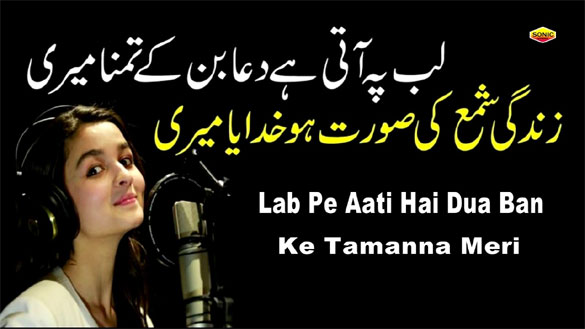
Lab Pe Aati Hai Dua Ban Ke Tamanna Meri
Zindagi Shamma Ki Surat Ho Khudaya Meri
And
concludes with the couplet:
Mere Allaha Burai Se Bachana Mujhko
Nek Jo Raah Ho Us,Rah Pe Chalana Mujhko
(This is my
desire O God that my life may become a guiding candle for people. O God save me
from evil and guide me on to the path of the righteous.)
In other
couplets also, the child prays that he may be of help to the poor, the weak and
the needy.
The poem is
recited by students in most of the Urdu schools and madrasas and also in
government schools where Muslim students study together with Hindu, Sikh and
Christian children.
This has
never been an issue with the students nor with the guardians. But for sometime,
the poem has been made an issue. Earlier too, the Hindutva activists had
objected to the recitation of the poem. This time Vishwa Hindu Parishad not
only objected to the poem but an FIR has also been filed against the Principal.
Subsequently, the principal was suspended. According to the complaint, the
children were made to sing:
"Allah
Ebadat Karna".
This is not correct. The correct line is:
'Mere
Allah Burai Se Bachana Mujhko'
'O God save
me from evils'
Therefore,
the allegation that the children (Hindu children) were made to invoke Allah (
The God of Muslims). The poem is not meant for proselytisation but is meant to
inculcate moral values that are common among the teachings of all religions.
The complainant has objection to the use of the word Allah in the poem and so
his point is that a poem which invokes Allah should not be sung by Hindu
children. But in India, many Muslim children study in government schools where
Vande Mataram is sung in the morning prayer. But no guardian ever objects to
it. A poet uses the religious terms of his own religion. It is not because of
his communal approach but because of his own religious affiliations.
Bankim
Chandra Chatterjee wrote the poem Vande Mataram and Rabindranath Tagore wrote Jana
Gana Mana in his own religious diction. But Muslims never objected to
Tagore's ' Taba Shubh Naame Jage, Taba Shubh Aashis Mange ' which is a
purely religious Hindu way of invoking God. Indeed, a section of Muslims have
objected to Vande Mataram on the same ground the VHP activist objected to 'Mere
Allah' but the majority of Muslims don't consider Vande Mataram an
existential threat.
Gandhiji
replaced the line 'Raghupati Raghav Raja Ram' with Ishwar Allah Tero
Naam ' from his famous Bhajan keeping in view of the syncretic
culture of India and the fact that both Muslims and Hindus were among his
followers. The inclusion of the word Allah never became an issue because it
invokes both Ishwar and Allah. When Iqbal wrote the poem, his audience was
Muslim children. So he used the words Allah and Khuda in the poem. But when he
wrote Tarana -e- Hindi he did not use any religious term because he had the
Indians in mind. He wrote 'Hindi Hain Hum' where by Hindi, he
meant not the language Hindi but the inhabitants of Hind, as the
Inhabitants of Iran is Irani and that of Cheen is Chini.
Some time
back, the management if a school in Gujarat came under fire from Hindutva
sections for taking its students on a tour to a mosque as part of a cultural
exchange. Recently, Muslims have opened their doors on non- Muslims as a
trust-building exercise. This has helped non- Muslims shed their misconceptions
about Islam and Muslims. But this trust building exercise by Muslims or poems
inculcating common moral values have been interpreted as an attempt by Muslims
to impose their religion on non- Muslim students. But many Hindu students study
in Christian missionary schools where life and teachings of Jesus is taught. It
has not led to the conversion of Hindu children into Christianity.
In fact,
such multicultural atmosphere in educational institutions helps promote
tolerance and secular values among children as well as among the teachers. But
the s-called custodians of religion see these exercises as a threat to their
religion. They forget that religions grow or become extinct due to or by virtue
of their inherent strength or weakness not because of conspiracies. Muslims
ruled India for more than eight centuries. Still Hinduism survived and
flourished. It survived because of its flexibility and inherent strength.
Communal
aggression and violence is the result of the feeling of insecurity among the
followers of religions. And this feeling of insecurity comes from a wrong
understanding of the religions of others. The followers of a religion generally
do not study the religions of others and try to understand it from the
stereotypes created about it by biased critics. The stereotype about Islam is
that they try to convert non-Muslims by hook or by crook. And to establish this
stereotype, many kinds of jihad have been circulated by the media or by the
opponents. Some of the jihad are Love jihad, land jihad, bureaucracy jihad,
etc. Latest in this list may be 'poem jihad' started by Iqbal. This poem may be
portrayed as a tool to convert Hindus to Islam.
Those who
are objecting to this poem that there are hundreds of famous Urdu poets,
critics and fiction writers who are and were Hindus and Sikhs. They all recited
not only Iqbal's poem in question but the poetry of Hali, Maulvi Ismail
Meerathi, Maulvi Shafiuddin Nayyar in schools and the religious literature of
other Urdu writers in later years. Still they remained Hindus and died as
Hindus. Dr Gopichand Narang, his father Dr Jagannath Azad and grandfather Tilok
Chand Mahroom read Urdu literature and remained Hindus. Krishan Chander,
Rajinder Singh Bedi, Kunwar Mahinder Singh Bed Sahar, Pandi Brij Mohan
Dattatreya Kaifi, Devendra Issar, Gur Bachan Chandan, Prakash Fikri, Suendra
Prakash, Chakbast, Pandit Daya Shankar Nasim, Ratan Nath Sarshar, Upendra Nath
Ashk, Deewan Singh Maftoon, Fikr Tonswi, Balraj Komal, Krshn Mohan, Krishna
Kumar Toor, Raj Narayan Raz, Ram Lal, Gyan Chand Jain..... The list is endless.
The
renowned journalist Kuldeep Nayyar's real name was Kuldeep Singh. He was the
student of Maulvi Shafiuddin Nayyar. Kuldeep Singh was so influenced by his
Muslim teacher that he adopted his title Nayyar and became Kuldeep Nayyar.
However, he did not adopt his religion Islam. This clearly shows that reciting
a poem or reading the literature of the writers of a particular religion don't
lead to religious conversion.
-----
By
Vivek Katju
December
30, 2022
As I read reports about the suspension of Nahid Siddiqui — the principal of a government school in Bareilly — and an FIR being lodged against him for making students sing Mohammad Iqbal’s poem, Lab Pe Aati Hai Dua, I was filled with a deep sadness. According to media reports, the FIR has been lodged on the basis of a complaint by a local functionary of the Vishwa Hindu Parishad for the recital of a “religious prayer” in a “bid to convert the students”. Vinay Kumar, the Basic Shiksha Adhikari of Bareilly, said, “A prayer was being recited which said something like ‘Allah ibadat karna’. This is not the stipulated prayer and hence, school principal Naheed Siddiqui has been suspended”.
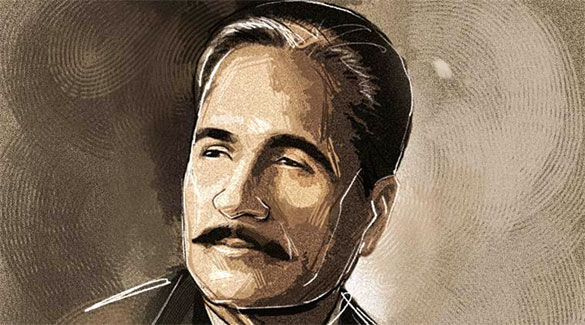
Sir Muhammad Iqbal
-----
In these
viciously polarised times, an action like Siddiqui’s suspension is passe.
Perhaps, persons of goodwill would be grateful that he was not physically
harmed and that his services were not summarily terminated. So why are my
feelings as cold as the winter’s chill?
Iqbal’s
poem is evocative for it gives expression to a child seeking divine benediction
to follow the path of goodness, to care and have affection for the poor, the
needy, and the weak, to be a source of light and spread that light in the
darkness, to be a flower in the nation’s garden, to love the flame of knowledge.
Surely, no objection can be taken to any of these wishes and prayers. The
“offending” stanza is the last one where the child says, “Mere Allah Burai
Se Bachana Mujhko, Nek Jo Rah Ho Ussi Rah Pe Chalana Mujhko”. The words “Rab”
and “Khudaya” may also be found offensive by some, as they may consider
them alien, though they are commonly used by at least some Hindi — or
Hindustani — speaking people.
Iqbal
inspired the Pakistani movement and was for reformed and even assertive Islam.
He and his family were Kashmiri Pandits before they became Muslim. I learnt
this from my maternal grandfather “Chand”, a Kashmiri Pandit himself. His
family home was in Lahore until Partition, and he was an Urdu poet and an
administrator. He considered Iqbal his ustaad. He told me that when he recited
a couplet he had composed to Iqbal:
“Uth Gaya Parda To Phir Mehmil Na Tha, Laila Na
Thi/Ek Farabe Deed Ko Aapna Jahan Samjha Tha Mai”
(“When the curtain rose there was neither
Laila’s seat nor Laila herself/What was illusory, I had considered to be my
world”)
Complimenting
“Chand”, Iqbal told him that he had summed up the entire Vedanta in a single
couplet for the essential meaning is: This world is but an illusion. My
maternal grandmother, a daughter of Tej Bahadur Sapru, told me that Iqbal’s
family were Saprus before they took to Islam. She also said that as Iqbal
drifted towards Pakistan, her father had chided him but had had no impact on
Iqbal.
I have,
however, meandered. What is under consideration here is not Iqbal’s politics
and not even his “Diwan” as a whole but this beautiful poem of a child
praying to the divine to lead them on the path of goodness. A friend who has
studied in one of India’s finest public schools tells me that this poem was
part of a collection of poems from which recitals were made. It is doubtful any
student of the school was inspired to embrace Islam because of it.
I went to a
school run by Roman Christian missionaries and twice a day, the Lord’s prayer
was recited. The vast majority of the school’s students were Hindus but there
were others too — Muslims and Sikhs included. All of us recited the same
prayer. Yet, no non-Christian became a Christian. Innumerable students who went
to schools run by Christian missionaries of different denominations all over India
share this experience. I have not heard of anyone who went to these schools
becoming a Christian.
So, from
where has this fear of the very use of the words Allah or Jesus Christ arisen?
History bears witness to the resilience of Hindu culture and religion, not
having allowed Islam to sweep all away as it did in other lands and with other
civilisations. Why have we reached a pass where our basic civilisational
principle of openness is being eroded? And why are we so offended at the
recital of a prayer which mentions Allah? Is our confidence in ourselves and
our faith so fragile that the very mention of Allah in a poem is objectionable?
It never was. Even when Indo-Persianate culture had extensive influence, at
least, in large parts of urban India, Hindus believed in the intrinsic merit of
their faith and civilisation. That is how I have always interpreted Iqbal’s
verse,
“Iran-O-Misr-O-Roma Sab Mit Gaye Jahan Se/Kuch
Baat Hai Ki Hasti Mitti Nahi Hamari”
(“The old Persian, Egyptian and Roman
civilisations have disappeared from the world/But there is some unique strength
in our identity which has not been erased”)
It matters
little to me what Muslims do — and I do think that their objections to Vande
Mataram, for instance, reveal their civilisational insecurities. Sadly, the
more educated among them are not combating attempts being made towards closing
of the Muslim mind. However, as a proud Hindu, what matters to me is that we
should not lose our essence of openness. That is what made us “authentic” and
that was what “grounded” us to our civilisational roots. Authenticity and
remaining grounded spring from a confidence that is beyond language and dress
and the drama of our times.
Finally,
how can we forget that Mahatma Gandhi, the father of our nation, modified the
famous Bhajan Raghupati Raghav Raja Ram by inserting the words “Ishwar
Allah Tero Naam”? This was done during the Dandi March. At least one right-wing
writer has taken objection to Gandhiji’s modification — and in words that I can
never bring myself to repeat. But it is still one of the main Bhajans
sung on different occasions, including October 2 — Gandhi Jayanti. Should we
now look to file an FIR against any person who sings Gandhiji’s version of the
Bhajan because the original rendering does not have the words “Ishwar Allah
Tero Naam”?
----
Vivek
Katju is a former diplomat
URL: https://newageislam.com/interfaith-dialogue/iqbal-gandhiji-bhajan-communal-polarisation/d/128771