
Khudiram Bose And Sheikh Gulab: Indigo Movement Comrades
By Saquib Salim, New Age Islam
03-12-2022
Khudiram Bose was a teenager when he threw
a bomb at a British judge in Muzaffarpur, Bihar, and assassinated him. Hailing
from Midnapore, Bengal, Bose became the first Indian revolutionary to kill an
Englishman using a modern bomb and facing the gallows as punishment.
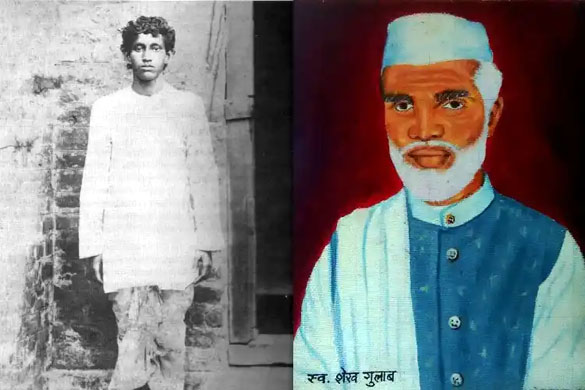
Khudiram Bose and Sheikh Gulab
-----
It was in 1908, that Khudiram,18, and
Prafulla Chaki bombed a horse-driven carriage with two English women. It was a
case of mistaken identity. Their target, Justice Kingsford, was in another
carriage. Prafulla Chaki shot himself dead before police could arrest him.
Several members of nationalist militant organizations like Barindra Ghosh,
Aurobindo Ghosh, and Hem Chandra were also arrested. Barindra Ghosh, who led
the movement, was transported to the Andamans. But, the British found them hard
to crack as they did not reveal any names behind the conspiracy.
A Slice Of History
The British press tried to paint the
revolutionaries as ‘extremist Hindus’, a narrative later borrowed by Indian
historians as well. The myth needs to be countered. The movement led by
Barindra Ghosh and his brother Aurobindo, of which Khudiram was a member, was
not communal. It was nationalist in outlook with the complete support of
Muslims. One testimony to this fact can be found in the autobiography of
Maulana Abul Kalam Azad, where he writes that Aurobindo Ghosh initiated him in
the national movement. CID reports also accuse Maulana of running training
schools on the model provided by Aurobindo.
Khudiram received martial arts and sword
training from a Muslim teacher who taught revolutionaries at the training camps
run by Barindra Ghosh. In 1908, the political temperature at Champaran (at that
time part of Muzaffarpur) was high with anti-Indigo planters agitation led by
Sheikh Gulab. Indigo planters had already told the government that anti-Indigo
agitators like Sheikh Gulab and Sital Ray were working in a coalition with
Bengal revolutionary groups led by Barindra Ghosh.
In 1907, Gulab was arrested by the British
for opposing the Indigo plantations in Champaran. After a few months, in March
1908, he was released and Indigo planters believed stricter judges and officers
should be appointed in Muzaffarpur to control people like Gulab. Kingsford was
sent from Kolkata. He was infamous for his ruthlessness with the Indian
revolutionaries including the Jugantar group led by Barindra. As soon as he
reached Muzaffarpur, intelligence reported that revolutionaries were planning
to assassinate him. According to the Chief Secretary to the Bengal Government,
“Kingsford himself attached no importance to the story”.
P. C. Roy Chaudhury wrote in Champaran
District Gazetteer, “on the refusal of Sheikh Gulab and others to work as
special constables they were convicted under the Police Act but the Calcutta
High Court set aside the conviction in March 1908. Throughout 1908 Champaran
was the butt-end of the agitation…… The movement was further aggravated by the
Muzaffarpur Bomb Case of 1908 and the phases of the Swadeshi Movement of
Bengal. The three leaders of this movement, Sheikh Gulab, Sital Ray, and
Radhemal were singled out by the administration.”
Members of the Legislative Assembly also
asked if the peasants of Champaran and the revolutionaries of Bengal were
working in unison. Though the allegation was refuted by the Indian press and
police could never find evidence against associates of Khudiram, Indigo
planters kept believing in the nexus. Khudiram was hanged on 11 August 1908 and
a month later, Sheikh Gulab organized peasants at Vijayadashami Mela in
Champaran. Tribute to Khudiram was paid and agitations were intensified.
It is also well known that before and after
throwing a bomb, Khudiram was given shelter by a Muslim woman who was the
sister of Maulvi Abdul Waheed, another nationalist.
Today we don’t know Sheikh Gulab, Barindra
Ghosh has been forgotten and Khudiram lives as a passing remark but this bomb
case stirred the nation. Bal Gangadhar Tilak was jailed for writing in support
of Khudiram, several newspapers were closed down, photographs of Khudiram were
sold at shops across the country, and Khudiram style dhoti with his name at its
border became a fashion among youth.
Source: Were
Khudiram Bose And Sheikh Gulab Associates?
URL:
https://newageislam.com/interfaith-dialogue/khudiram-sheikh-gulab-indigo-movement/d/128563
New Age Islam, Islam Online, Islamic
Website, African Muslim News, Arab World News, South Asia News, Indian Muslim News, World Muslim News, Women in Islam, Islamic Feminism, Arab Women, Women In Arab, Islamophobia in America, Muslim Women in West, Islam Women and Feminism