
Dara Shikoh: The Mughal Prince Who Pioneered the Study of Comparative Religion

By S.
Arshad, New Age Islam
1 August
2022
He
Translated Hindu Scriptures In Persian And Harmonised Islamic And Vedantic
Mysticism
Main
Points:
1. He authored
five books in Persian and translated Upanishads and Bhagvad Gita in Persian
2. He said
Islamic Sufism and Vedanta were based on the same philosophy.
3. He studied
Hindu scriptures thoroughly.
4. He
introduced the Upanishadic thought in Persian.
5. He was
killed on grounds of heresy by Aurangzeb.
----
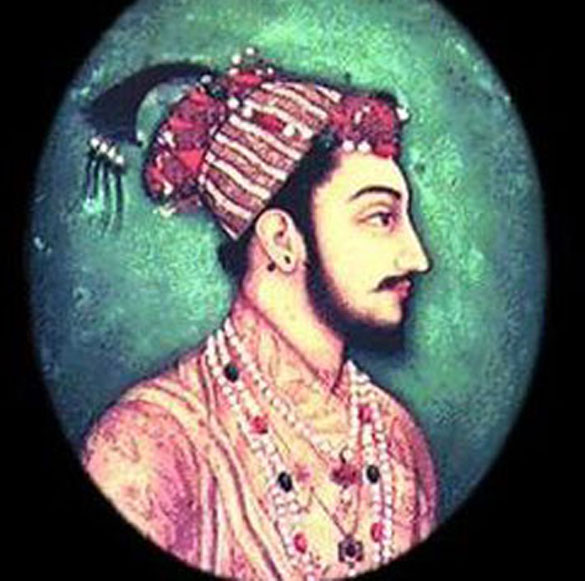
Dara Shikoh
-----
The Mughal
dynasty contributed greatly to the arts, literature and culture of India. The
Mughals were not only great rulers but also patrons of arts and culture. Since they
had adopted India as their own country, they studied the religion and culture
of India and tried to bring harmony in the Indian society by finding common
grounds between the two major religions of India, Islam and Hinduism. Akbar
attempted to bring harmony between the two communities by founding
Deen-e-Ilahi. Though the experiment failed and the Muslims criticised him for
over treading the path of religion, his aim was religious harmony.
The Mughal
prince who contributed greatly to the religious learning and mystic thought of
India was Dara Shikoh, a great grandson of Akbar and Shah Jahan's eldest son,
though he failed to ascend the throne due to the machinations of his ruthless
and shrewd rival Aurangzeb. He was a Sufi minded man from his youth and formally
became a disciple of the great Sufi of his time Mulla Shah Badakhshi who was
the disciple of the renowned Sufi Mian Mir. Dara Shikoh met Mulla Badakhshi in
Lahore in 1635 at the age of 20 during Shah Jahan's stay in Lahore. He was
influenced by the mystic thoughts of Miyan Mir who was then alive. Dara Shikoh
wanted to be his disciple but Mian Mir soon died.
After his
death Dara became a disciple of Mulla Shah Badakhshi who was associated with
the Qadriya order of Sufism.
After
formally entering the Qadriya Sufi order, Dara Shikoh started studying Sufi
literature extensively and deeply immersed himself in Sufi practices and
thought. He studied the life and achievements of hundreds of Sufis.
After he
gained considerable knowledge of Sufism and Sufis of the world, he ventured out
to write a detailed book on the Sufis and authored his first book on Sufism
titled Safinatul Awlia in 1049 A.H. This book contains the life and works of
411 male and female Sufis.
The preface
of the Safinatul Awlia shows his deep theoretical knowledge of Sufism.
He authored
another book on the Sufis of Qadriya order titled Sakinatul Awlia in 1052.
Thanks to his depth of knowledge on Islamic Sufism he became an authority on
the subject and issued his own magazine on Sufism titled Risala-e-Haq Numa in
1056. In this magazine, Dara Shikoh discussed different mystical issues meant
for the Sufi aspirants.
Next he
authored another book on Sufism titled TariqatuI Haqiqat.
In 1062, he
wrote a book titled Hasanatul Arifin in which he presented his arguments in
favour of his mystical thoughts to the mainstream Ulema of the time who had
accused him of heresy due to his out of box thoughts on Sufism.
Since he
extensively studied Sufi and mystic thought, in course of his study, he came
across pundits and Sannyasis with whom he discussed mystic issues. This was the
time he heard about Upanishads, Gita and other religious scriptures of
Hinduism. He studied Upanishads and Gita with the help of Pandits. He also had
discussions with the Pandits of Kabir Panth and this caused a major turn in
Dara Shikoh's religious thought.
Therefore,
from 1062, he totally devoted himself to the study of Hindu religious mystic
literature. Not only did he study the Upanishads and the Gita but also
translated them into Persian with the help of the Pandits and Sannyasins of
Benares. He was overwhelmed by the striking similarities between Islamic Sufism
and the spiritualism of Vedanta. This similarity was surprising and an eye
opener for him because he had been taught all these years that Hinduism was all
about idol worship.
After
studying the Hindu scriptures, he authored a book titled Majmaul Bahrain in
which he discussed the similarities between Hindu mystic thought and Islamic
Sufism. In this book he discussed identical points in both Hinduism and Islam
like Ruh and Atman, Qayamat and Mahapralay, internal and external attributes of
God etc. In this book, Dara Shikoh presented a comparative study of Islam and
Hinduism and tried to find the point of confluence of the 'two oceans of
monotheism'.
Mr Mahfuzul
Haque, author of the English translation of Majmaul Bahrain, writes about the
merit of the translation:
"The
chief merit of the translation lies in its simplicity, and it must always be
considered as one of the best specimens of easy flowing style."
About Dara
Shikoh's journey from a Muslim Sufi to a scholar of Vedanta, Bikrama Jit Hasrat
writes in his book, Dara Shikoh: Life and, Works:
"He
studied Sanskrit and got deeply interested in the Vedanta and Yoga philosophy,
Hindu ritual and mythology and from the learned Pandits of Benares, he learnt the
secrets of Indian thought and legend and initiated himself into the practices
of the Yoga by constant association with yogis and Sannyasins. Nine years of
constant restlessness in search for truth and knowledge were spent in studying
what was best in Indian thought and gradually his religious outlook became more
and more broadened; till at last in 1654 a new idea of universal brotherhood
dawned upon his mind. During this year appeared the Majmaul Bahrain, or the
Mingling of the Two Oceans, a work of remarkable merit and originality wherein
is made the first attempt of its own kind to reconcile the doctrines of Brahma
Vidya and the tenets of Quran. The Majmaul Bahrain, though a treatise of the
technical terms of Indian Pantheism and Sufi phraseology, devoid of any deep
insight or spirituality, is of extreme importance to a student of comparative
religion in as much as therein Dara Shikoh has tried to bring out the points of
similarity and identity between Hinduism and Islam and had endeavoured to show
where these two oceans of mystic thought meet."
Prior to
Majmaul Bahrain, he had authored a book based on his conversation with a Kabir
Panthi sadhu Baba Lal Das.
In 1067 H,
he translated the Upanishads with the help of Pandits of Upanishads in six
months and named it Sirr-e-Akbar. Dara Shikoh found Upanishads an ocean of
monotheism. He found Upanishads helpful in understanding many issues that he
could not hitherto understand. The Upanishads provided him all the answers. He
wrote:
Any
difficult problem or sublime idea that came to my mind and was not solved
inspite of my best efforts, became clear and solved with the help of this
ancient book which is undoubtedly the first heavenly book and the fountainhead
of the ocean of monotheism and in accordance with or rather an elucidation of
the Quran."
The excerpt
gives an idea how greatly Dara Shikoh was influenced by Upanishads. He
considers it the first heavenly or revealed divine book and thinks that it was
the Kitab-e-Maqnun mentioned in the Quran.
Since Dara
Shikoh was greatly influenced by Ibn Arabi's Wahdat ul Wujud and Upanishad's
Advaitavad (Monism), Islamic mullah's of the time declared him a heretic who
was popularising Hindu thoughts among Muslims. Dara Shikoh had presented his
scholarly counter arguments to the charges in his book Hasanatul Arifeen. He
had written in Safinatul Awlia that the the religion of Sufis should not be
judged by their outer behaviour or from their mystic assertions. But the
ambitious Aurangzeb who considered Dara Shikoh the biggest hindrance in the
fulfilment of his dream of becoming the emperor, got fatwas of heresy issued
against him and got him hanged on that ground. Dara Shikoh met the same fate as
Hussain bin Mansur Hallaj for professing monistic ideas.
Dara Shikoh
has left a rich legacy of inter religious study and was the pioneer in the
study of comparative religion. He was the first Indian to explore the
similarities and common grounds between Islamic and Vedantic mystic thought.
Today he is not present among us but his legacy continues to inspire millions
of Indians to keep the light of interfaith harmony burning.
-----
S.
Arshad is a columnist with NewAgeIslam.com.
URL: https://newageislam.com/interfaith-dialogue/dara-shikoh-mughal-comparative-religion/d/127620
New Age Islam, Islam Online, Islamic Website, African Muslim News, Arab World News, South Asia News, Indian Muslim News, World Muslim News, Women in Islam, Islamic Feminism, Arab Women, Women In Arab, Islamophobia in America, Muslim Women in West, Islam Women and Feminism