
Fall Of The Babri Masjid Was Not Like The Fall Of Bastille
Muslims Have
Move Forward Leaving Babri Mosque Behind
Main
Points:
1. Fall of
Babri Mosque catapulted BJP to power.
2. Muslim
related issues have retrieved BJP's career.
3. Muslims have
remained the axis of BJP politics.
4. Baba Budan
Dargah and Gyanvapi mosque are the next issues.
----
By
New Age Islam Staff Writer
7 December
2022
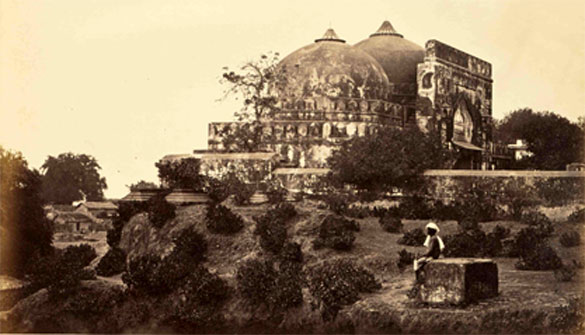
In many ways it appears that the
demolition of the Babri Masjid provided courage to unveil the hatred cloistered
in hearts of a significant number of Hindus for Muslims and Christians, the two
main non-Indic religions
------
Thirty
years have passed since Babri mosque in Ayodhya was demolished by the Hindutva
brigade. Since then the dsy is commemorated as Shaurya Diwas by the RSS
affiliates. The demolition catapulted the BJP to power. But the demolition was
not the end of the communal politics of the BJP and its affiliates. It proved
to be a useful tool to gain political power. In 1998, the VHP started
celebrating Dutta Jayanti within the premises of Baba Budan Dargah in Chikkamagaluru
in Karnataka. In 2002, Gujarat riots gave another blow to the Muslims of the
country.
However,
the Babri mosque remained a contentious issue till the supreme court
adjudicated in favour of the Hindus. Muslims forgot Babri mosque and moved
forward paying more attention to their educational and economic development.
They decided to build hospital and other welfare projects on the land given to
them in lieu of Babri mosque.
The fall of
the Babri mosque was like the fall of Bastille for some BJP leaders like
Govindacharya. One may not agree with him but given the narrative of Muslim
domination over Hindus and persecution of Hindus under the rule of Muslim
rulers, it might have brought a sense of vengeance among the Hindutva brigade
as their politics depended on this narrative.
Thirty
years have passed since the tragedy happened and Muslims have learnt to adapt
to the new socio- political changes. The sense of victimhood has made them more
religious and this has given way to another causes of cultural conflict like
the beard and the hijab. Now school students have started sporting a beard and
college girls insist on wearing hijab. This means the demolition of a mosque
causes a religious reaction among the Muslims. Juloos -e- Mohammadi was not
heard of 15 years ago. Now it is a major religious event in Islamic society.
Now more young people visit mosques for five-time prayers.
-----
Impact
Of Babri Masjid Demolition: Unveiling The Hatred 30 Years Later

By
Nilanjan Mukhopadhyay
6 December,
2022
“The face
of Indian polity has undergone a dramatic change in the last decade, and a new
political and social order appears to be around the corner. The model evolved
in India after Independence, during Jawaharlal Nehru’s tenure, is under threat
and close to being dismantled.”
I began
writing my first book, The Demolition: India At the Crossroads, in January 1993
with these lines. Several friends initially accused me of being “obsessed” with
Ayodhya and argued that “I was wrong in believing that the RSS clan would come
to the centre-stage in India. And, when the Babri Masjid was demolished, it was
a sad hour of personal vindication for me.”
At the
book’s launch, a year later, KN Govindacharya, then an important Bharatiya
Janata Party (BJP) leader, asserted that the Babri Masjid’s demolition was
comparable to the fall of the Bastille, in terms of what it represented, as
well as the impact its erasure would have. Other panellists, including the
deceased journalist and then Congress leader Nikhil Chakravarty and P
Rangarajan Kumaramangalam, respectively, along with historian KN Panikkar and
political scientist Kamal M Chenoy, disagreed equally passionately.
Govindacharya’s
two contentions appeared untenable – certainly, the Babri Masjid did not
symbolise absolute power of any medieval emperor, much less Babur at whose
command the mosque was purportedly built. The structure in Ayodhya also did not
represent ceaseless tyranny.
The impact
that Govindacharya claimed it would have, appeared exaggerated for the BJP was
defeated barely weeks after in the first set of post-demolition polls in Uttar
Pradesh, Madhya Pradesh and Himachal Pradesh and barely cobbled together a
majority in Rajasthan – these states were ruled by the BJP but the governments
were dismissed after the events of December 6 1992.
Some years
after the demolition, I too veered around to the view that my response in
1992-93 was an instance of overreaction; Atal Bihari Vajpayee had become Prime
Minister a few months after the fifth anniversary of the demolition at the head
of an ideologically awkward coalition, where partners had not joined the
political jumble for fulfilling stated programmatic objectives, but to acquire
and remain in power. What many secularists asserted paradoxically in the
immediate aftermath of the demolition, that the tragedy would in the long run
“prove to be good for India,” appeared to have been an accurate reading.
This lot
had argued that the sixteenth century mosque was a ‘small’ price to pay for
ensuring that the BJP and its Sangh Parivar affiliates “lost their hate symbol”
forever. Arousing communal passions, hatred for Muslims and spreading incessant
otherisation on every issue would prove to be difficult, it was believed,
because there no object would remain that could exemplify humiliation of Hindus
in the past, for which vengeance had to be secured.
The Misleading
Continuity
This
assessment appeared correct for the BJP eschewed not just the Ram temple
imbroglio, but also chose silence on two other contentious issues that marked
its ‘difference’ from other parties: abrogating Article 370 of the Constitution
and enacting a Uniform Civil Code. Vajpayee also pursued peace with Pakistan
and travelled to Lahore on a bus that kick- started another form of public transport
between the two countries.
Incidents
like the killing of the Australian missionary Graham Staines, the 1998 attacks
on Christian tribals in south-eastern Gujarat and finally the horror of the
riots in the state in 2002, caused concern, consternation and condemnation from
even several alliance partners. As a result, it appeared violent incidents like
these were aberrations and not the result of deeply nurtured prejudice against
the religious minorities, especially Muslims and Christians.
Communal
riots and orchestrated attacks for electoral and political purposes were part
of India’s post-colonial history. Despite episodic violent attacks like those
aforementioned, the moral compass of Indian polity remained more or less in the
pre-Babri demolition position.
The BJP
surprisingly lost the 2004 elections and a ‘non-politico’ in the traditional
sense, became prime minister. Vajpayee candidly confessed that his government
was voted out because of the Gujarat riots. When the original polariser, Lal
Krishna Advani discovered virtues in Mohammed Ali Jinnah, that too in Pakistan,
it appeared that India had exorcised the ghost of Babri Masjid and it appeared
that the makeshift temple shall remain in perpetuity; no grand temple would
ever be constructed.
Anniversaries
of the demolition became routine – celebrated as a day of ‘valour’ (Shaurya
Divas) by Hindutva groups and as a day of sorrow and betrayal by secular groups
and Muslim organisations. Yet, the temple per se did not evoke enthusiasm and
it looked certain that none of the affiliates of the Rashtriya Swayamsevak
Sangh would succeed in mustering the kind of crowd that assembled in Ayodhya
for confrontational programmes in 1989, 1990, 1991 and 1992.
Watershed
anniversaries too – fifth, tenth, etc., – failed to become major flashpoints
and merely served as markers of time for commentators to take stock and for
civil society to debate and hold discussions. The 10th anniversary in 2002
added to the din of the epochal Gujarat Assembly polls but by the time of the 15th
anniversary in 2007, the Ram temple issue had become inconsequential.
In another
five years, the BJP’s period in wilderness seemed to be coming to an end with
the UPA government crippled for a variety of reasons but aptly explained by a
two word phrase: policy paralysis. But more importantly, 2012 was ushered out
with Narendra Modi leading his party to victory in Gujarat for the third time
since his assumption to office in 2001 and immediately launching a dash to
become the prime minister.
Modi’s ‘Victimhood’
Construct
Although
the 2014 Lok Sabha election was contested with ‘development’ as a keyword,
there was little doubt that retribution was the foundational sentiment on which
Modi constructed his campaign. A decade of victimhood, in the course of which
he constructed a troika of adversaries – enemies across the border, Indian
Muslims and their supporters, (which included dynastic parties) besides the
combination of intelligentsia, civil society (NGOs) and the Delhi-based English
media with all of them backed by the so-called Lutyens elite, was beginning to
resonate with people.
People
liked to lay blame on the doorstep of someone identifiable for their woes and
Modi gave them courage to do so. It was clear that Modi had not left his
Hindutva mornings behind. But, middle-India required the fig leaf of ‘Vikas’
– majoritarianism had not yet become politically correct.
The 25th
anniversary of the demolition was observed when the Modi bandwagon, for the
first time, appeared to be facing difficulties in maintaining its political
dominance in Gujarat. Eventually, the BJP salvaged victory after Mani Shankar
Aiyer handed Modi a plateful of slander that could be heaped on the Congress
party by hosting a dinner attended by dignitaries, including former Pakistani diplomat
Khurshid Mahmud Kasuri, former Prime Minister Manmohan Singh besides former
Vice-President Hamid Ansari. It was the ‘perfect’ cast – a Pakistani, someone
high up in the Congress and a Muslim not a favourite by yards. This was
followed by Aiyar calling Modi a “lowly” person.
The result
was for all to see. More than a decade of Modi’s responses to accusations
against him were resurrected in people’s minds after he recast the old formula
of inimical forces working to derail his efforts to revive India’s past glory.
The BJP eventually snatched victory with a slender majority that could have
further thinned, even may have been denied, had not Aiyer asked friends and
colleagues to come and dine with him.
Subsequent
events demonstrated that in the decade since the defeat of the Vajpayee-led
BJP, the Ayodhya issue by itself may have paled into relative insignificance,
but issues flagged in the course of the agitation, especially ones pertaining
to cultural nationalism that people once had no understanding off, had gained
traction with people.
The 30th
anniversary of the demolition is being observed days prior to yet another
verdict from Gujarat. But regardless of the outcome, the socio-political drift
shall remain the same, as demonstrated during the campaign when no party raked
issues that might offend the Hindu voters.
Merging Of
Myth And History
Today in
India, mythology and history are spoken in one breath, not just by the
establishment but also by large sections of people. The Ram temple in Ayodhya
will not act as a full stop that even the Supreme Court believed it would when
the five judges awarded the disputed land to a Trust handpicked by the Centre.
A long list
is in existence and it is just a matter of time before full-blown agitations
are mounted for the demolition of Gyanvapi Masjid in Varanasi and Shahi Idgah
in Mathura and for these sites to be handed over to Hindu parties. Expressing
Islamophobia in public is no longer considered ‘improper’ in New India.
Several
Muslims think twice before revealing their identity. Already, many have been
officially notified in several cities, towns and villages that they must go
‘invisible’ – not offer namaz in public, not wear hijab in educational
institutions, eat no home-cooked non-vegetarian food while travelling on public
transport, and so on. In India today, there is greater sense that this is “our
country” and “they” must live on “our terms”.
None of
this has any co-relation with the Babri Masjid or the Ram Janmabhoomi
agitation. But the mosque-temple dispute is at the root of each issue that
makes religion the main basis of social identity and vengeance a justified
sentiment. In many ways it appears that the demolition of the Babri Masjid
provided courage to unveil the hatred cloistered in hearts of a significant
number of Hindus for Muslims and Christians, the two main non-Indic religions.
The list of
what is now possible is much longer. The catalogue of what is likely to happen
can fill reams. For the moment, my last confession today should suffice:
Govindacharya was prophetic three decades ago when he said the Babri Masjid’s
demolition shall have unfathomable impact on the country’s governance and
polity like the way the fall of the Bastille did. I, however, continue
disagreeing with the formulation that the Babri Masjid mirrored the fortress,
stormed in July 1789.
----
Nilanjan Mukhopadhyay is a NCR-based author and
journalist. His latest book is The Demolition and the Verdict: Ayodhya and the
Project to Reconfigure India. He has also written The RSS: Icons of the Indian
Right and Narendra Modi: The Man, The Times.
(The
Federal seeks to present views and opinions from all sides of the spectrum. The
information, ideas or opinions in the articles are of the author and do not
necessarily reflect the views of The Federal)
Source:
Impact
Of Babri Masjid Demolition: Unveiling The Hatred 30 Years Later
URL: https://newageislam.com/interfaith-dialogue/babri-masjid-mosque-bastille/d/128577
New Age Islam, Islam Online, Islamic
Website, African Muslim News, Arab World News, South Asia News, Indian Muslim News, World Muslim News, Women in Islam, Islamic Feminism, Arab Women, Women In Arab, Islamophobia in America, Muslim Women in West, Islam Women and Feminism