
Peace: Humanity's Shared Dream and the Luminous Horizon of Islamic Teachings
By Kaniz Fatma, New Age Islam
04 April 2026
Main Points:
· Peace is the greatest necessity in human history and the foundation for the survival of civilizations; it is strengthened not by power, but by dialogue and tolerance.
· Islam regards peace as a spiritual and moral obligation and promotes mutual goodwill through the teaching of “Salam” (peace).
· Despite differences, it is dialogue, knowledge, and mutual respect that reduce hatred and foster global harmony.
· Sustainable peace can only be achieved through justice, education, and intercultural cooperation, enabling humanity to move forward on the path of progress.
….
A study of human history reveals that despite wars, conflicts, and confrontations, there has always been one value whose pursuit has never ceased—and that is peace. Peace is not merely a word; it is the greatest necessity of human existence, the very foundation of civilizations, and the cornerstone of societal progress. When we observe the world around us today, it becomes evident that what weapons, power, and politics have failed to accomplish, dialogue, tolerance, and mutual respect have achieved far more effectively.
At the global level, numerous institutions and organizations have consistently strived to establish peace. The United Nations, learning from the bitter experiences of human history, has endeavoured to promote peace as a universal value. In its vision, sustainable development and peace are inseparable: where there is peace, the prospects for development flourish; and where development thrives, the roots of peace grow stronger. This is why there is an increasing emphasis worldwide on fostering a culture of peace through education, awareness, and intellectual engagement.
However, when we examine this concept from an Islamic perspective, it becomes clear that Islam does not view peace merely as a social necessity, but as a profound spiritual and moral obligation. The word “Salam” itself is among the beautiful names of Allah, and it permeates the very essence of Islamic civilization. Muslims greet one another with “Assalamu Alaikum,” a prayer for peace, safety, and well-being. The Qur’an refers to Paradise as “Dar al-Salam” (the Abode of Peace), symbolizing that the ultimate destination of humanity is peace itself.
In Islamic teachings, the attainment of peace is not simply the avoidance of war; rather, it is a comprehensive way of life encompassing thought, action, and inner consciousness. Islam teaches that peace begins within the human heart, then extends to the home, the community, and ultimately to all of humanity. The Prophet Muhammad (peace be upon him) said: “A Muslim is one from whose hand and tongue others are safe.” This saying offers a profound and comprehensive expression of the Islamic concept of peace.
Islam regards dialogue as the primary means of establishing peace. Differences among nations, religions, and cultures are a natural reality, but instead of allowing these differences to become causes of conflict, they should serve as opportunities for understanding and mutual recognition. The Qur’an declares that humanity was created into diverse nations and tribes so that they may know one another—not to assert superiority, but to cultivate mutual respect and cooperation.
When people begin to understand one another, the walls of hatred naturally begin to crumble. The spread of knowledge and awareness reduces differences and fosters closeness. In contrast, ignorance, prejudice, and intolerance divide societies and give rise to violence. Therefore, it is essential to promote the values of peace, tolerance, and forbearance through education.
From an Islamic viewpoint, peace is deeply intertwined with justice. Without justice, true peace cannot exist. Oppression may impose a temporary silence, but it breeds unrest and rebellion within hearts. Islam, therefore, emphasizes justice, equality, and fairness to create a society in which every individual feels secure and dignified.
In the contemporary world, some of the greatest challenges arise from religious, cultural, and ethnic differences. If not approached constructively, these differences can lead to conflict. However, Islam views them as both a test and an opportunity—a test of our patience, wisdom, and tolerance, and an opportunity to learn from one another and expand our shared humanity.
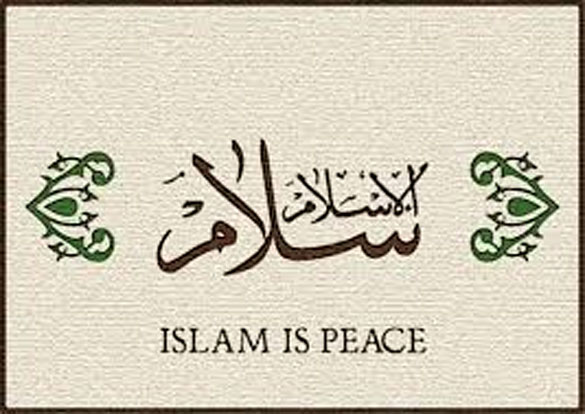
In this context, interfaith and intercultural dialogue becomes immensely significant. When followers of different religions come together, exchange ideas, and seek common values, they not only dispel misunderstandings but also pave the way for peace. The many conferences and dialogues held across the world stand as evidence that humanity is gradually moving away from confrontation toward cooperation.
Significant efforts are also being made within the Muslim world in this regard. Various organizations, educational institutions, and intellectual forums are actively engaged in promoting peace, tolerance, and moderation. Their aim is to convey a balanced and positive message not only within Muslim communities but to the world at large. Special attention is being given to the youth, ensuring they remain protected from extremism and radicalization.
Education plays a pivotal role in this entire process. If curricula incorporate the values of peace, tolerance, and humanity, and if educators are properly trained, a more peaceful and civilized generation can emerge. The media, too, has a crucial role to play; by promoting positive values and avoiding narratives of hatred, it can foster social harmony.
In conclusion, it is fair to say that peace is not merely a distant dream but a practical reality—provided we make it a priority. The principles taught by Islam—justice, tolerance, dialogue, and respect for humanity—if truly embraced, can transform not only our societies but the entire world into a haven of peace. The path to peace may be challenging, but it is not impossible. It demands patience, wisdom, and sustained effort. When individuals rise above personal interests and begin to think in terms of collective well-being, only then can true peace be realized.
This is the message we must keep alive within our hearts: that the survival of humanity lies in becoming a source of safety and peace for one another, rather than a cause of fear and harm.
…
Kaniz Fatma is an Islamic scholar (Alimah and Fazilah) and a regular columnist for New Age Islam.
New Age Islam, Islam Online, Islamic Website, African Muslim News, Arab World News, South Asia News, Indian Muslim News, World Muslim News, Women in Islam, Islamic Feminism, Arab Women, Women In Arab, Islamophobia in America, Muslim Women in West, Islam Women and Feminism