
My Encounter with A Palestinian Family in Germany: Sacred Geography and Spiritual Legacy of the Holy Land in Surah Al-Teen

By Ghulam Rasool Dehlvi, New Age Islam
11 May 2026
Main Points:
· Surah al-Teen symbolically connects Palestine with the sacred geography of prophetic revelation through the Qur’anic imagery of the fig and olive.
· The blessed vegetation, olive groves, fruits, and natural beauty of Palestine hold deep spiritual significance in the Holy Qur’an and Islamic tradition.
· Palestine’s importance in Islam extends beyond politics, rooted profoundly in prophetic history, sacred memory, and spiritual attachment to the holy land.
· The writer’s stay with a Palestinian refugee family in Germany offered a deeply human and spiritual insight into Palestinian resilience, dignity, hospitality, and emotional connection to their homeland.
· Surah al-Teen ultimately highlights human dignity, moral responsibility, and the unity of Abrahamic prophetic traditions linked through Palestine, Sinai, and Makkah.
…
Last year, this writer spent nearly a month with a Palestinian refugee family in Germany. The family was headed by a Palestinian medical doctor who had earlier taken refuge in Germany after spending nearly two years in war-affected Ukraine. Their modest apartment was filled not merely with hospitality, but with inner joy, spiritual warmth, and remarkable resilience.
Their two children, Muhammad and Haider, added immeasurably to the beauty of everyday life in that small yet spiritually vibrant home. Conversations with the family, especially on their generous dinner table, opened a deeper window into Palestinian culture, faith, memory, and attachment to their sacred land. It also inspired a renewed reflection on how the Holy Qur’an speaks about Palestine — its blessed vegetation, fruits, natural beauty, and sacred spiritual legacy.
The warmth, kindness, compassion, and spiritual grace of that Palestinian family remain deeply etched in this writer’s memory. Even amidst displacement and the pain of exile, they embodied generosity, dignity, patience, and unwavering faith in Allah. Their rented apartment in Germany felt less like a temporary refuge and more like a sanctuary of humanity, hope, and inner peace.
This writer deeply misses the affectionate presence of the family and sincerely prays for their safety, well-being, and eventual return to their homeland if peace returns and the war ceases by the will of Allah. May the people of Palestine once again live with security, dignity, and tranquility in the land so deeply connected with prophetic history and sacred memory.
This personal encounter became one of the inspirations behind revisiting Surah al-Teen and the Qur’anic symbolism of the fig, olive, and the holy lands associated with prophetic revelation.
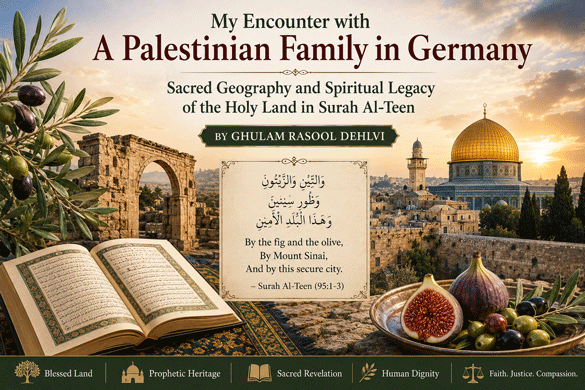
The Holy Qur’an often speaks in a language that transcends geography and enters the realm of profound spiritual symbolism. Among the shortest yet most deeply meaningful chapters of the Qur’an is Surah al-Teen, which opens with a remarkable series of divine oaths:
“By the fig and the olive,
By Mount Sinai,
And by this secure city.”
— Surah al-Teen (95:1–3)
Though concise, these verses connect some of the most sacred landscapes in prophetic history. Classical Qur’anic commentators and contemporary scholars alike have long associated the “fig” and the “olive” with the blessed land of Palestine and the wider region of Bilad al-Sham. In doing so, the Surah offers not merely references to fruits, but a spiritual map of revelation itself.
The Fig and Olive: Symbols of the Holy Land
The fig and olive are among the most characteristic fruits of Palestine and the eastern Mediterranean region. Olive groves, in particular, have shaped the cultural, economic, and spiritual life of Palestine for centuries. The Qur’an itself refers to the olive tree as a “blessed tree”:
“Lit from a blessed olive tree…”
— Surah al-Nur (24:35)
Many classical Qura’anic exegetes (mufassirin) interpreted “Teen” (fig) and “Zaytoon” (olive) not merely as fruits but as symbols of sacred lands associated with prophetic missions. Some linked them directly to Jerusalem and the regions where Prophet Isa (Jesus) preached his message of compassion, spirituality, and moral reform.
Thus, the Surah begins by invoking a land sanctified through revelation and prophetic presence.
Palestine in the Spiritual Geography of Revelation
The opening verses of Surah al-Teen create a remarkable spiritual continuity: (1) The Fig and Olive — associated with Palestine and the mission of Jesus, (2) Mount Sinai — where Prophet Musa (Moses) received divine revelation, (3) The Secure City — Makkah, the birthplace of Prophet Muhammad (pbuh).
These references unite the sacred geographies of the Abrahamic prophetic tradition. They remind believers that divine guidance has always flowed through interconnected lands, prophets, and peoples.
In this Qur’anic framework, Palestine is not merely a political or historical territory. It is part of a sacred spiritual landscape deeply embedded in Islamic consciousness.
Human Dignity and Moral Responsibility
After invoking these sacred symbols, the Surah shifts attention toward humanity itself:
“Indeed, We created man in the best of stature.”
— Surah al-Teen (95:4)
The Qur’an emphasizes the nobility and spiritual potential of the human being. Yet it also warns that humanity can descend into moral and spiritual decline if detached from faith and righteousness:
“Then We reduced him to the lowest of the low — except those who believe and do righteous deeds.”
— Surah al-Teen (95:5–6)
This message carries profound contemporary relevance. The sanctity of sacred lands must be accompanied by the sanctity of human dignity, justice, and compassion. The Qur’an repeatedly links spirituality with ethical responsibility.
Olive Trees as Symbols of Resilience
For Palestinians, olive trees are more than agricultural assets. They symbolize endurance, rootedness, patience, and continuity. Generations have cultivated these trees as living witnesses to history, identity, and attachment to the land.
The Qur’anic invocation of the olive therefore resonates spiritually and emotionally for many believers. It reflects not only divine blessing but also resilience in the face of hardship.
Palestine’s Vegetation and Natural Blessings in the Qur’an
The Qur’an frequently refers to gardens, fruits, flowing water, vines, olives, dates, and fertile lands as signs of divine mercy and sustenance. Palestine and the surrounding lands of Sham historically embodied many of these natural blessings.
The olive, fig, grapevine, and date palm have long flourished in this region, shaping both its agricultural life and spiritual symbolism. The Qur’an’s repeated mention of these fruits reminds believers that nature itself is among Allah’s signs.
The blessed landscape of Palestine has therefore occupied a special place not only in history, but also in the spiritual imagination of Muslims for centuries.
A Shared Prophetic Heritage
Surah al-Teen ultimately reminds humanity of the unity of prophetic traditions. The lands associated with Jesus, Moses, and Muhammad ﷺ are spiritually interconnected through the message of tawhid, justice, mercy, and moral accountability.
At a time when divisions often dominate public discourse, the Surah offers a higher vision — one rooted in shared sacred memory and universal human dignity.
For Muslims around the world, the mention of the fig and olive continues to evoke reverence for the holy lands, especially Al-Aqsa Mosque, which remains one of Islam’s holiest sanctuaries and a symbol of enduring spiritual significance.
Surah al-Teen therefore stands not only as a chapter about human creation and accountability, but also as a subtle Qur’anic tribute to the sacred landscapes through which divine revelation illuminated humanity.
Ongoing War in the Land of Sacred Memory and Spiritual Attachment
Part of the reason behind the prolonged conflict and ongoing war in Palestine lies in the profound spiritual, historical, and civilizational significance of the land itself. Palestine is not merely a geographical territory; it is a sacred landscape deeply rooted in the collective memory of the Abrahamic faith traditions. Its blessed vegetation, ancient olive groves, prophetic heritage, and holy sanctuaries have made it a land of immense religious and emotional attachment for millions across the world.
The Holy Qur’an repeatedly alludes to lands blessed with fruits, olives, gardens, and prophetic presence. In Islamic consciousness, Palestine occupies a unique spiritual station because of its association with numerous prophets and with Al-Aqsa Mosque — Islam’s first qiblah and one of its holiest sanctuaries. The struggle over the land, therefore, has never been merely political; it is also intertwined with questions of identity, sacred history, belonging, and spiritual continuity.
This writer’s stay with a Palestinian refugee family in Germany revealed how deeply this attachment to the land survives even in exile. Despite displacement, uncertainty, and memories of war, their conversations reflected a profound spiritual connection to Palestine’s soil, olive trees, culture, and sacred legacy. Their resilience seemed rooted not only in nationalism, but also in a centuries-old civilizational and spiritual memory.
…
Contributing author at New Age Islam, Ghulam Rasool Dehlvi is a writer and scholar of Indian Sufism, interfaith ethics, and the spiritual history of Islam in South Asia. His latest book is Ishq Sufiyana: Untold Stories of Divine Love. He is also head of International Affairs at the Voice for Peace and Justice, Jammu and Kashmir.
URL: https://newageislam.com/interfaith-dialogue/palestinian-family-germany-spiritual-legacy/d/139984
New Age Islam, Islam Online, Islamic Website, African Muslim News, Arab World News, South Asia News, Indian Muslim News, World Muslim News, Women in Islam, Islamic Feminism, Arab Women, Women In Arab, Islamophobia in America, Muslim Women in West, Islam Women and Feminism