
Ashokan Dhamma and the Sufi Ideal of the Qutb: India’s Search for the Archetype of the Perfect Ruler

By Ghulam Rasool Dehlvi, New Age Islam
29 October 2025
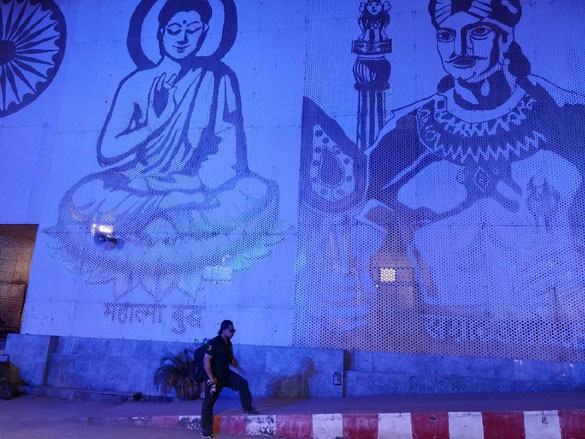
India’s Spiritual Legacy of the Heart: From Pāṭaliputra (now Patna in Bihar) to Indraprastha or Delhi, India has been the land where kingship was spiritualized and spirituality became a form of moral leadership. The legacy of Ashoka and the saints — like Nizamuddin Auliya, Khwaja Muʿīnuddin Chishti, and the philosopher-king Akbar — continues India’s timeless search for the Perfect Ruler: one who embodies Dhamma, Wilayah, and Insān al-Kāmil — the complete human being.
Main Points:
1. The Eternal Quest for the Perfect Ruler: India’s spiritual imagination has always sought not merely a political sovereign, but a moral and spiritual archetype — a ruler who governs hearts, not just territories. From the Buddhist Chakravartin to the Sufi Qutb, this quest reflects humanity’s longing for a leader who mirrors divine justice, compassion, and inner illumination.
2. Ashokan Dhamma and the Vision of Moral Kingship: After the devastation of Kalinga, Emperor Ashoka turned from conquest by the sword to conquest by Dhamma. His edicts speak of compassion for all beings, religious tolerance, and the welfare of his subjects. In essence, he became the Mahādhīsh of Conscience — a ruler whose power was anchored in moral awakening, not military might.
3. The Sufi Qutb: The Hidden Pole of Divine Order: In Sufi cosmology, the Qutb or “spiritual pole” is the axis around which the moral and metaphysical universe turns. The Qutb sustains the world through divine presence and mercy, though he may remain veiled from worldly recognition. His kingdom is the realm of hearts — where love, unity, and remembrance of God reign supreme.
4. The Meeting of Two Ideals: Dhamma and Wilayah: Both Ashoka’s Dhamma and the Sufi doctrine of Wilayah (spiritual authority) express the same truth: that the highest form of rule is self-mastery and service to others. Ashoka’s “conquest through Dhamma” and the Sufi “rule through love” converge on the idea that real sovereignty lies in ethical wisdom and inner purity — not in domination.
-----
Sulṭānat ba dil-hāst, na ba khāk-hā (The true kingdom is over hearts, not over lands).....He conquers Hind who conquers the hearts of Hindustan with love.”
— Hazrat Nizamuddin Auliya
The Two Axes of Inner Kingship
In every age, humanity has searched for the archetype of the perfect ruler — the sovereign who reigns not through might, but through moral light. The ancient Indian idea of the Chakravartin and the Sufi conception of the Qutb, the Pole of Divine Guidance, both represent this vision of inward sovereignty.
They are not rulers of territory, but custodians of balance — the still centers around which the world of conscience revolves.
In the Indic world, this ideal found its fullest expression in Emperor Ashoka, who turned from conquest to compassion and transformed Pāṭaliputra into the seat of Dhamma. In the Islamic mystical world, the same light shone through the Sufi Qutb, the hidden saint whose presence sustains the harmony of the cosmos.
Both are reflections of a single truth: spiritual power is moral power.
Ashoka’s Transformation: From Chandashoka to Dharmāshoka
The story of Ashoka is the story of an awakening heart. After the bloodshed of the Kalinga War, the emperor beheld the suffering of his people and felt the weight of his own ambition. That moment of remorse turned a conqueror into a sage. He renounced the sword and embraced Dhamma, declaring:
“All men are my children.”
“He who conquers, conquers by Dhamma, not by the sword.”
From the palaces of Pāṭaliputra to the farthest frontiers of his empire, Ashoka’s Edicts of Dhamma were inscribed on stone — pillars of moral light across the land. His vision was not religious in the narrow sense, but universal in essence: a call for compassion, humility, and respect for all paths.
Dhamma, for Ashoka, was a living law of the heart. It meant truthfulness, non-violence, self-restraint, reverence for elders, care for the poor, and goodwill among all faiths. It was the art of governing the self before governing the world.
The Dhamma as Moral Order
Ashoka’s edicts reveal a subtle understanding of the relationship between inner ethics and social harmony. He recognized that no empire can endure without the moral discipline of its people. He therefore became not merely an administrator, but a teacher of conscience.
He appointed Dhamma Mahāmātras — officers of righteousness — to spread moral instruction and to ensure that mercy tempered justice. He opened hospitals for men and animals alike, planted shade trees along roads, and built wells for travellers.
The empire became a reflection of the emperor’s awakened heart — a realm of Dhamma, where the law of compassion reigned.
In this moral vision of kingship, one hears an echo of a far deeper principle — that the true throne lies within. This same idea, centuries later, would form the heart of the Sufi understanding of spiritual authority.
The Qutb: The Hidden Pole of the Universe
In Sufi cosmology, the Qutb (literally “the Pole”) is the axis around which creation revolves. He is the saint who, through his perfect alignment with the Divine Will, becomes the channel of divine grace for all beings. Though outwardly hidden, the Qutb inwardly governs the world through the power of love and prayer.
The Qutb’s authority is not political but spiritual. He rules over hearts, not lands. His kingdom is invisible yet enduring. As the great mystic Ibn ʿArabī wrote, the Qutb is the “perfect mirror of the Divine Names,” the one in whom the attributes of mercy, justice, and wisdom manifest in balance.
He is the living image of the Qur’anic truth:
“Indeed, My vicegerent on earth is the one who reflects My attributes.”
The Qutb’s power is Wilāyah — spiritual guardianship. His reign is continuous remembrance (Dhikr) and compassion for creation (Rahmah). Just as the earth is held in its orbit by the pole, the moral world is held in balance by the heart of the saint.
Two Visions, One Light
The resonance between Ashokan Dhamma and the Sufi Qutbiyyah is profound.
Both represent the spiritualization of sovereignty — the transformation of power into service, and rule into moral responsibility.
|
Ashokan Dhamma |
Sufi Qutb |
|
Conquest through compassion |
Rule through love |
|
Governance by conscience |
Governance by divine command |
|
Welfare of beings (Bahujana Sukhāya) |
Service to creation (Khidmat-E-Khalq) |
|
Pillars as symbols of moral order |
Saints as living pillars of grace |
|
The emperor as father of all |
The saint as guardian of all souls |
Each stands as an axis of order: the Dhamma as the ethical axis of society, the Qutb as the spiritual axis of creation.
The Kingdom of Hearts: From Pāṭaliputra to Baghdad
Under Ashoka, Pāṭaliputra became the “City of Dhamma” — a realm where political administration merged with ethical instruction. Two millennia later, Baghdad, under the saints and sages of Islam, became the heart of the Sufi world — a city illumined by knowledge and mysticism.
In both capitals, the throne was not merely a seat of authority, but a symbol of inner kingship. The ruler or saint was seen as the axis of harmony, the heart through which divine balance flowed into the world.
When Nizamuddin Auliya declared,
“Sulṭānat Ba Dil-Hāst, Na Ba Khāk-Hā”
(“The true kingdom is over hearts, not over lands”),
he was giving voice to the same spirit that had once guided Ashoka’s transformation.
For both, the real empire was the empire of love.
The Axis and the Wheel
In Indian iconography, the Wheel of Dhamma (Dharmachakra) is the emblem of righteous rule. It turns ceaselessly, yet its centre remains still — a symbol of spiritual equilibrium amidst worldly motion.
In Sufi metaphysics, the Qutb plays an identical role. The entire cosmos revolves around his silent presence, as if the universe itself were a wheel anchored upon his heart.
The motion of the wheel signifies change, the stillness of the axis signifies truth.
The Dhamma and the Qutb are both expressions of that divine stillness — the point of balance between heaven and earth, action and contemplation, power and humility.
Universal Ethics and the Unity of Faiths
Ashoka, in his edicts, appealed for inter-religious harmony:
“One should honour the faith of others, for by doing so one exalts one’s own.”
He urged that no sect should glorify itself by denigrating another. This ethical universalism finds a perfect echo in the Qur’anic teaching:
“To each of you We have prescribed a path and a way. Compete in good works.” (5:48)
The Sufi saints embodied this universality. They saw the light of God shining through every path. Jalaluddin Rumi’s verse captures this spirit:
“The lamps are different, but the Light is one. It comes from beyond.”
Thus, the Dhamma of Ashoka and the Wilāyah of the Qutb converge in a single truth: the unity of goodness and the diversity of its expressions.
Both dissolve the boundaries of creed in the vast ocean of mercy.
The Spiritualization of Power
The greatest revolution in Ashoka’s life was not political but spiritual — he redefined power itself. No longer a means of domination, power became an instrument of compassion.
In the same way, the Sufi Qutb transforms spiritual authority into service. Both embody the principle that authority is a sacred trust (Amanah), and that the ruler’s duty is to reflect divine justice (‘Adl) and mercy (Raḥmah).
Ashoka’s Dhamma and the Sufi Qutbiyyah thus present a shared ethic of service — Seva and Khidmat, two words that mirror one another across languages.
To rule is to serve. To serve is to worship.
The Hidden Sovereign of the Heart
At the deepest level, both Ashoka and the Qutb point toward the Insān al-Kāmil, the Perfect Human — the one who mirrors the divine qualities within the human form.
Ashoka was a visible ruler who became inwardly illuminated; the Qutb is a hidden ruler whose light silently governs the world. Both manifest the same archetype: the heart that becomes the throne of God.
In the Hadith Qudsi, the Divine says:
“Neither My heavens nor My earth can contain Me, but the heart of My servant contains Me.”
Such a heart is the real throne — the Singhāsan of Dhamma and the Maqām of Qutbiyyah are, in truth, one.
The Eternal Conquest
The Buddha taught that hatred never ends through hatred, but through love. Ashoka made this teaching the soul of his empire. Centuries later, the Prophet Muhammad ﷺ said,
“The strong one is not he who defeats others, but he who conquers himself.”
The conquest of self — Dhamma-vijaya in Ashokan language, jihād al-nafs in Sufi vocabulary — is the common core of their teachings. It is the victory of light over darkness, compassion over cruelty, and awareness over ignorance.
Toward a New Moral Imagination
In our age of conflict, when empires rise and fall but hearts remain restless, the message of Ashoka and the Sufi Qutb offers a timeless remedy.
They remind us that civilization is not built by power, but by conscience; not by wealth, but by wisdom; not by fear, but by love.
If modern leadership could rediscover this inner axis — a Dhamma of humanity, a Qutb of conscience — the world might again turn in harmony around its moral centre.
For the Dhamma and the Qutb are not relics of the past; they are living principles of spiritual balance. Whenever a soul awakens to truth, the wheel of Dhamma turns; whenever a heart becomes pure, the pole of Qutbiyyah shines anew.
Conclusion: The Throne of Light
From Pāṭaliputra’s throne of Dhamma to Baghdad’s throne of sainthood, the message resounds across time:
True sovereignty belongs to those who rule over hearts with compassion, wisdom, and humility.
Ashoka’s Dhamma and the Sufi Qutbiyyah are twin streams flowing from the same ocean of divine mercy. Both teach us that the highest authority is the authority of love — that the mightiest empire is the kingdom of the heart.
For in the end, every ruler and every saint must return to that inner throne where the soul bows before its Lord.
There, in the stillness of the heart, the Dhamma and the Qutb become one — the axis of light upon which the world gently turns.
-----
Contributing author at New Age Islam, Ghulam Rasool Dehlvi is writer and scholar of Indian Sufism, interfaith ethics, and the spiritual history of Islam in South Asia. His latest book is "Ishq Sufiyana: Untold Stories of Divine Love".
URL: https://www.newageislam.com/interfaith-dialogue/ashokan-dhamma-sufi-ideal-qutb-archetype/d/137434
New Age Islam, Islam Online, Islamic Website, African Muslim News, Arab World News, South Asia News, Indian Muslim News, World Muslim News, Women in Islam, Islamic Feminism, Arab Women, Women In Arab, Islamophobia in America, Muslim Women in West, Islam Women and Feminism