
The Concept of Moksha in Hinduism

By Dr. Zafar Darik Qasmi, New Age Islam
04 April 2026
Abstract:
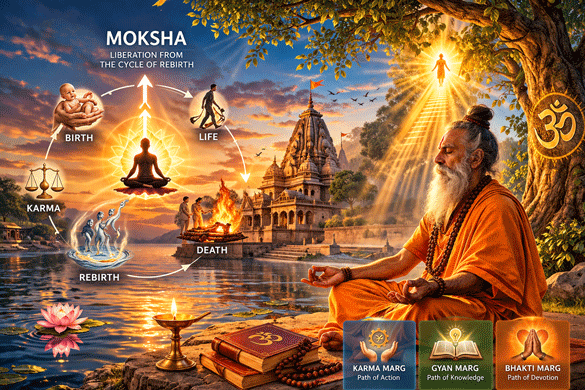
The concept of Moksha in Hinduism represents the highest goal of human life, meaning freedom from the cycle of birth and rebirth. According to Hindu belief, human beings are repeatedly born in different forms based on their karma, which includes all actions and their results. Good and bad deeds shape future live. Moksha is achieved when a person gains true knowledge, controls desires, and becomes spiritually pure. At this stage, the soul unites with God and is freed from all worldly suffering. Hinduism also explains the afterlife as a journey of the soul through different realms. Three main paths—Karma, Gyan, and Bhakti—guide individuals towards liberation and eternal peace through right action, knowledge, and devotion.
Main Points:
· Moksha means freedom from rebirth and is considered the highest goal in Hindu life.
· Karma decides future lives, as every action has a result in this life or next.
· Souls travel through different worlds based on their deeds before taking another human birth.
· True knowledge, self-control, and detachment from desires help a person achieve spiritual liberation.
· Three paths—Karma, Gyan, and Bhakti—guide people towards Moksha through action, knowledge, and devotion.
—
It is true that Moksha is a very important belief in Hinduism. It represents the highest and final goal of human life. The word “Moksha” comes from Sanskrit and means freedom or liberation. It refers to complete freedom from the cycle of rebirth.
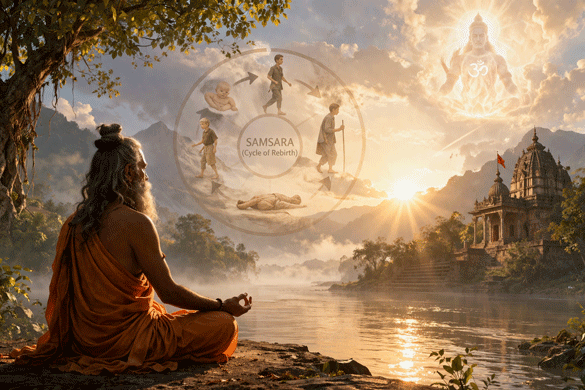
According to Hindu philosophy, a person is born again and again in different forms. This cycle continues based on one’s actions, known as karma. Good and bad deeds decide the next life. However, when a person achieves spiritual perfection, controls desires, and gains true knowledge, they attain Moksha. In this state, the soul unites with God and becomes free from worldly suffering forever.
Hinduism teaches different paths to achieve Moksha, such as the path of knowledge (Gyan Yog), the path of devotion (Bhakti Marg), and the path of action (Karma Marg). All these paths aim to purify the soul and bring it closer to God. Thus, Moksha is seen as spiritual salvation and lasting peace, and it is considered the ultimate goal of life.
Concept of the Afterlife
Hinduism also presents a concept of the afterlife. Souls move from one world to another. These worlds are divided into higher, middle, and lower realms. The higher world is like heaven, the lower world is like hell, and the middle world is where humans live. A person stays in heaven or hell for a limited time according to their deeds, and then is reborn in a new form, either higher or lower.
This cycle continues until a person gains true knowledge, becomes detached from the material world, treats happiness and sorrow equally, and finally unites with God after death.
Concept of Karma
In Hindu belief, karma means action and its result. It includes both mental and physical actions. The idea is simple: “as you sow, so shall you reap.” Just as a farmer cannot expect mangoes by planting a different seed, in the same way good thoughts and actions bring good results, while bad actions bring harm—either in this life or the next.
There are three types of karma:
Sanchita Karma: accumulated actions from past lives that shape present behaviour, tendencies, and desires.
Prarabdha Karma: actions whose results are being experienced in the present life.
Kriyamana Karma: actions performed now that will influence future lives.
This system of karma gives a person the opportunity to shape their future life through better thoughts and actions.
Concept of Moksha
Moksha means freedom from the cycle of rebirth (Samsara). Every Hindu hopes that one day this cycle will end, and they will not be born again. This happens only when a person becomes free from all karma, both good and bad, so that no new birth is required.
Paths to Liberation
There are three main ways to achieve Moksha:
1. Karma Marg (Path of Action)
This path teaches self-control, simplicity, and reducing desires. A person gradually withdraws attention from the outer world and focuses inward.
2. Gyan Marg (Path of Knowledge)
This path is based on true understanding and wisdom. It removes ignorance and doubt. A person realises that worldly things are temporary and imperfect, and develops detachment from them.
3. Bhakti Marg (Path of Devotion)
This path involves worship and spiritual practice. It includes:
Physical devotion: discipline of the body, cleanliness, and service to others.
Verbal devotion: reading religious texts, speaking truth, remembering God, and guiding others towards good.
Inner devotion: purity of intention, humility, calm thinking, and a broad and kind heart.
If a person follows these paths sincerely in life, they can become free from the cycle of rebirth and attain Moksha, which is the ultimate desire of every Hindu.
—-
Dr. Zafar Darik Qasmi is an Islamic Scholar, author and Regular Columnist for a New Age Islam.
URL: https://newageislam.com/interfaith-dialogue/concept-of-moksha-in-hinduism/d/139527
New Age Islam, Islam Online, Islamic Website, African Muslim News, Arab World News, South Asia News, Indian Muslim News, World Muslim News, Women in Islam, Islamic Feminism, Arab Women, Women In Arab, Islamophobia in America, Muslim Women in West, Islam Women and Feminism