
Study of Hinduism During the Mughal Period

By Dr. Zafar Darik Qasmi, New Age Islam
27 December 2025
Abstract:
During the Mughal period, especially under Emperor Akbar, the study of Hinduism grew strongly. Akbar believed in religious tolerance, peace, and dialogue between different religions. He set up the Dar al-Tarjumah (House of Translation), where Hindu and Muslim scholars worked together. They translated important Sanskrit books into Persian so more people could read and understand them.
These translations included the Mahabharata (Razmnamah), Bhagavad Gita, Ramayana, Vedas, and Puranas. The main aim was not to show one religion as better than another, but to increase understanding and protect India’s rich knowledge.
Akbar’s minister, Abul Fazl Allami, wrote clearly and fairly about Hindu beliefs, customs, and society in Ain-i-Akbari and Akbarnama. Later, Prince Dara Shikoh supported interfaith understanding by comparing Islamic Sufism with Hindu Vedanta and translating the Upanishads into Persian as Sirr-e-Akbar. These efforts improved Hindu–Muslim relations and helped different cultures come together in buildings, language, literature, and music. Overall, the Mughal study of Hinduism encouraged peace, respect, and shared cultural growth.
Main Points:
• Akbar supported religious peace and ordered Hindu religious books to be translated into Persian.
• Dar al-Tarjumah allowed Hindu and Muslim scholars work together and share knowledge peacefully.
• Hindu book translations increased understanding and improved Persian literature and Islamic scholarship.
• Dara Shikoh linked Hindu and Islamic spiritual ideas through study and translation of sacred texts.
• Studying religions reduced tensions and created unity in culture, language, art, and society.
—
During the Mughal period, the study of Hinduism reached a high intellectual level. Especially in the reign of Emperor Akbar (1556–1605), religious harmony, tolerance, and intellectual dialogue were strongly promoted. Akbar not only met scholars and representatives of different religions, but he also ordered the translation of Hindu religious texts into Persian by establishing a translation department.
Akbar’s House of Translation (Dar al-Tarjumah)
The reign of Akbar (1556–1605) is considered a bright and unique period in the intellectual, cultural, and religious history of India. Akbar was not only a capable ruler but also a strong supporter of knowledge, philosophy, and interfaith harmony. He encouraged dialogue and understanding among the different communities and religions of India.
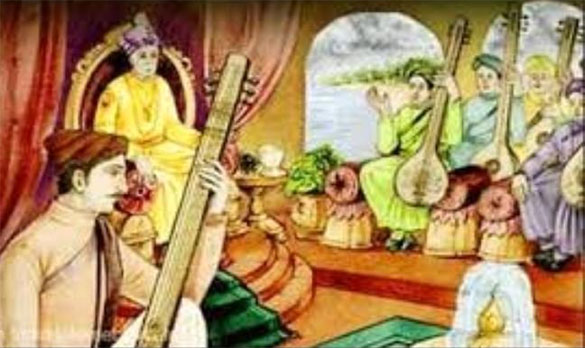
With this aim, Akbar established an institution known as the Dar al-Tarjumah (House of Translation). In this centre, Hindu and Muslim scholars worked together to translate ancient Sanskrit texts into Persian so that they could be easily read and understood. The purpose of these translations was not to prove the superiority of any religion, but to preserve and explain India’s rich intellectual heritage.
Famous scholars involved in this movement included Abul Fazl Allami, Faizi, Abdul Rahim Khan-i-Khanan, Mulla Abdul Qadir Badauni, Fathullah Shirazi, and other learned figures.
Among the most important translations of this period was the Persian translation of the Mahabharata, known as Razmnamah. Translations of the Bhagavad Gita, Ramayana, the Vedas, and the Puranas were also completed in different periods. These works allowed access to Hindu philosophy, ethics, and religious thought, and at the same time expanded the scope of Islamic intellectual traditions.
The translation movement during Akbar’s reign promoted religious tolerance, intellectual harmony, and cultural cooperation. It showed that in the world of knowledge and research, no permanent barriers of division can exist. This is why Akbar’s intellectual efforts are still seen as a foundation for unity, shared understanding, and interfaith dialogue in Indian civilisation.
Akbar’s minister, Abul Fazl Allami, discussed Hindu religion, philosophy, rituals, and social structure in detail in his famous works Ain-i-Akbari and Akbarnama. He presented Hindu beliefs, the caste system, religious practices, and the worship of gods and goddesses in a balanced and unbiased manner.
Dara Shikoh and Interfaith Dialogue
Akbar’s grandson, Prince Dara Shikoh (1615–1659), tried to find a deep spiritual connection between Islam and Hinduism. He wrote a book titled Majma-ul-Bahrain, in which he explained the similarities between Sufism and Hindu Vedanta philosophy.
Dara Shikoh also translated the Upanishads into Persian under the title Sirr-e-Akbar. This work later became famous in Europe as well. His efforts gave a new direction to interfaith dialogue in both the East and the West.
Positive Effects of the Study of Religions
The study of other religions during this period produced many positive effects in society:
Establishment of Intellectual Dialogue between Religions
One of the greatest strengths of Muslim scholars was their research-based and dialogue-oriented approach. When intellectual and religious discussions began between Muslim scholars and Hindu pandits, a strong foundation for interfaith dialogue was laid. These discussions focused on understanding and explaining each other’s beliefs. Differences were not turned into hostility, but into academic exchange. This tradition later created closeness between Sufi saints and Bhakti poets.
Expansion of Literature and Philosophy
The study of Hindu texts introduced new subjects, terms, and intellectual ideas into Persian and Arabic literature and philosophy. Concepts such as karma, moksha, atma, and maya entered Islamic philosophical discussions, where Muslim thinkers analysed and commented on them. This created a shared intellectual environment that enriched South Asian literature and Sufism. Hindu symbols, myths, and spiritual references in Persian poetry reflect this influence.
A New Tradition of Translation and Research
The translation of Hindu texts into Persian and Arabic during Muslim rule gave new life to scholarly activity. Earlier, during the time of Mahmud of Ghazni, Al-Biruni wrote Kitab al-Hind, presenting Hindu philosophy in a scholarly manner. Later, during Akbar’s reign, translations of the Mahabharata, Ramayana, Bhagavad Gita, and Yoga Vasistha were completed. These works not only made Hindu texts understandable for Muslims but also connected Indian intellectual traditions with Islamic thought. This movement later became the basis for translations in other fields of knowledge.
Softening of Hindu–Muslim Relations
The study of Hindu texts helped Muslims develop understanding and tolerance towards Hindu religion and culture. Rulers and scholars realised that followers of different religions also believe in moral values, worship, and human compassion. As a result of this intellectual awareness, Hindu–Muslim relations became more peaceful and respectful. The presence of Hindu visitors at Sufi shrines was a clear sign of this harmony.
Hindu–Muslim Cultural Synthesis
One practical result of studying Hinduism during Muslim rule was cultural integration. In architecture, the blending of Hindu and Islamic styles can be seen in monuments such as the Taj Mahal, Red Fort, and Fatehpur Sikri. In language and literature, the interaction of Persian, Arabic, Sanskrit, and local languages laid the foundation of Urdu. In music, the combination of Hindu ragas and Islamic musical traditions produced new forms, such as Qawwali and Khayal.
The study of Hinduism under Muslim rule in India was not merely a religious or academic activity. It served as an intellectual and cultural bridge that opened doors of understanding, tolerance, and dialogue between communities. By studying Hindu religion with an open mind, Muslim rulers and scholars tried to create a society where different religions and cultures could live together with mutual respect
This tradition teaches us that when people study others’ beliefs with fairness and openness, differences do not lead to conflict but become a source of understanding. The legacy of Muslim rule in India continues to guide today’s efforts towards interfaith harmony, intellectual dialogue, and cultural unity.
…
Dr. Zafar Darik Qasmi is an author and a New Age Islam Regular Columnist.
URL: https://newageislam.com/interfaith-dialogue/study-hinduism-mughal-period/d/138190
New Age Islam, Islam Online, Islamic Website, African Muslim News, Arab World News, South Asia News, Indian Muslim News, World Muslim News, Women in Islam, Islamic Feminism, Arab Women, Women In Arab, Islamophobia in America, Muslim Women in West, Islam Women and Feminism