
Some Examples Of Mughal Rulers' Appreciation Of The Language, Culture And Religion Of Non- Muslims (Part Two)

By Dr. Zafar Darik Qasmi, New Age Islam
9 September 2025
Abstract:
Emperor Akbar’s remarkable appreciation of Hindu culture, language, and religion. Akbar invited renowned Hindu scholars to his court, encouraged religious debates, and promoted tolerance. Many Sanskrit works like the Mahabharata, Ramayana, and Atharvaveda were translated into Persian, while Arabic and Persian texts were also rendered into Sanskrit. Faizi, Abul Fazl, and others contributed to this cultural exchange. Shibli Nomani notes that even Aurangzeb supported Braj Bhasha literature, contrary to popular belief. The article concludes that fair and truthful history builds unity, removes misunderstandings, and strengthens harmony between Hindus and Muslims.
Main Points:
1. Akbar respected Hindu scholars, inviting them for debates and discussions.
2. Sanskrit classics translated into Persian, promoting cultural and religious harmony.
3. Faizi and others enriched literature by translating diverse Hindu texts.
4. Aurangzeb also encouraged Braj Bhasha, disproving prejudice accusations entirely.
5. Truthful history removes misconceptions, fostering unity among diverse communities.
-----
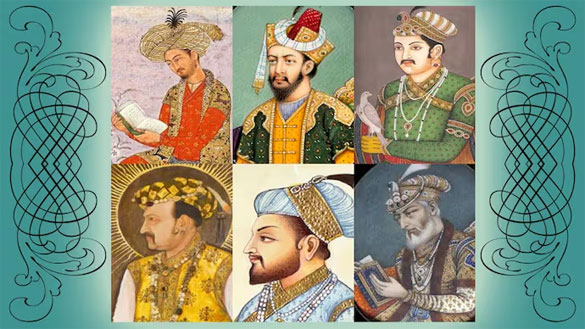
It is well known that Emperor Akbar had a deep attachment to Hindus. For this reason, he gathered many great and renowned pandits in his court. Abul Fazl, in his famous book Ain-i-Akbari, has listed those Pandits whom Akbar invited to his court and entrusted with discussions and debates on religious matters. Among them were: “Mahadev, Bhim Nath, Baba Balas, Narain, Sioji, Madhav, Ram Bhadr, Sri Bhatt, Madhav Saraswati, Jadrup, Vishnunath, Madhusudan, Ram Kishan, Narain Ashram, Balbhadr Misr, Basdev Misr, Damodar Bhatt, Bahan Bhatt, Ram Tirth, Budh Nawas, Narsingh, Gauri Nath, Brahm Indra, Gopi Nath, Bajey Singh Saur, Kishan Pandit, Nihal Chand, Bhattacharya, Kashinath.” These were men of learning who held a special place in Akbar’s court. They were looked upon with great honour and respect.
In truth, Akbar created a unique and remarkable assembly where scholars of all religions were brought together. His main purpose was to spread tolerance in the country so that followers of every faith might continue to practise their religion while living together in mutual respect. Even today, both nationally and globally, we must act according to these principles of unity, solidarity, and togetherness.
During Akbar’s reign, many Sanskrit works were translated into Urdu and Persian. The Hindu religious book Mahabharata was translated into Persian with the participation of Abdul Qadir Badauni, Sheikh Sultan Thanisri, and Naqeeb Khan. Akbar named this translation Rizmnama and had illustrations of all the battles made and included in it. The same scholars also translated the Ramayana and had pictures prepared for it as well. The Atharvaveda was translated by Haji Ibrahim Sirhindi, and the manuscript of this translation is still preserved in the library of Shibli College.
Lilavati, a famous book on mathematics, was translated by Faizi. Tajik, a respected book on astrology, was translated into Persian by Mulla Khan Gujarati. Harbans, a book about the life of Krishna, was translated by Maulana Sheri. The story of Nal and Daman, a deeply moving tale, was turned into a masnavi (poetic form) by Faizi.
Akbar’s service was also remarkable in another way: he arranged for many Arabic and Persian works to be translated into Sanskrit. For example, Zij-i-Mirzai, an astronomical work, was translated into Sanskrit with the help of Fathullah Shirazi, Abul Fazl, Kishan Jyotshi, Ganga Dhar Mahesh, Mahanand, and others. (Maqalat-i-Shibli, Vol. VI, pp. 87–88).
If one were to fully cover the evidence of respect shown to Hindu civilisation, learning, and religion, many more pages would be needed. But from the above points, it becomes clear that during Muslim rule, Hindu scholars, their sciences, and their culture received remarkable encouragement and growth.
Allama Shibli Nomani, in Maqalat-i-Shibli, Vol. II, writes that the book Tuhfat-ul-Hind was written in the time of Aurangzeb Alamgir. The author was Mirza Khan, son of Fakhruddin Muhammad. In the preface, he states that he wrote this book during the reign of Alamgir for the study of Prince Azam Shah. The subject of the book is Hindu rhetoric, prosody, and related sciences, and it contains seven chapters:
1- Pingal: yaani Ilm-I-‘Arooz 2- Tak: Ilm-I-Qaafiya 3- Alankar: yaani Ilm-I-Badee‘ 4- Shringar Ras: yaani Ishq o Mohabbat 5- Samdak: Ilm-I-Qaafiya 6- Kok: yaani Ilm-un-Nisa 7- Lughat- I – Hindi including widely used words of Braj Bhasha with their meanings.
Shibli further writes that the charge of prejudice and narrow-mindedness against Aurangzeb is unfounded. Alamgir was so informed about the affairs of his realm that even the smallest events of the farthest corners were known to him. In fact, during his reign, Braj Bhasha poetry flourished, Muslims translated many Hindi works, and even Aurangzeb himself composed writings in Braj Bhasha. This is praiseworthy. (Maqalat-i-Shibli, Vol. II, pp. 78–79). Tuhfat-ul-Hind stands as a shining example of this intellectual development.
From the evidence presented above, it can be said with certainty that Hindus were always treated with fairness, equality, and justice. Today, therefore, it is necessary that we play a strong role in bridging the growing gap between communities in the country. At the same time, we must study history with breadth and generosity of spirit, so that we do not wrongly accuse anyone’s conduct or attitude.
Those who present history in a distorted manner before the public must also look carefully at these facts. To unite societies and to protect the rights of communities in a democracy, it is essential that we follow principles which do not harm any group or viewpoint. If diverse ideas are given the freedom to grow openly, the results will surely be positive and far-reaching.
Indeed, the greatest need of our time is to remove the misunderstandings that Hindus may hold about Muslims, and Muslims may hold about Hindus. The only way to overcome these misconceptions is to narrate history truthfully and fairly, without any bias. Furthermore, no community should be treated in a way that makes them feel discriminated against.
------
Part One of the Article: The Islamic Golden Age: Some Examples of Appreciation of the Language, Culture and Religion of Non- Muslims (Part One)
New Age Islam, Islam Online, Islamic Website, African Muslim News, Arab World News, South Asia News, Indian Muslim News, World Muslim News, Women in Islam, Islamic Feminism, Arab Women, Women In Arab, Islamophobia in America, Muslim Women in West, Islam Women and Feminism