
Reclaiming the Islamic Feminist Legacy of Aisha

By V.A. Mohamad Ashrof, New Age Islam
17 April 2026
Note: Throughout this paper, the name Aisha denotes Umm al-Mu'minin Aisha bint Abu Bakr (may God be pleased with her).
This paper situates Aisha — Umm al-Mu'minin, the Mother of the Believers — within the emerging and vital academic discourse of Islamic feminism. Drawing upon classical Arabic sources, the modern feminist hermeneutics of scholars such as Amina Wadud, Fatima Mernissi, Leila Ahmed, and Sofia Rehman, as well as the canonical collections of hadith, this study argues that Aisha was not merely a custodian of the Prophetic tradition but its most brilliant and critical architect. She is considered here not as a sentimental icon but as a formidable historical subject — a woman whose intellectual and moral courage continues to illuminate the path towards gender justice within the Islamic tradition.
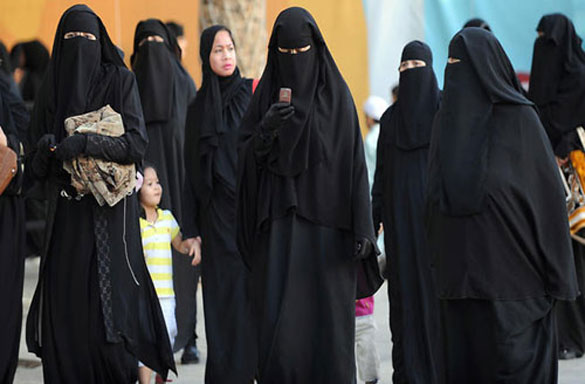
Aisha occupies a paradoxical space in the Islamic consciousness. Traditionally revered as Umm al-Mu'minin — Mother of the Believers — her persona has too often been flattened into a symbol of domestic piety or made the subject of chronological dispute. A scholarly, progressive, and humanistic re-evaluation reveals, however, that Aisha was not a passive vessel for Prophetic tradition but the primary architect of what we now identify as Islamic feminist hermeneutics. Her life and intellectual contributions furnish a robust foundation for a liberatory understanding of gender in Islam — one rooted in internal critique, methodological rigour, and the relentless pursuit of justice.
The emergence of Islamic feminism as a contemporary academic movement is frequently dismissed by traditionalists as a Western imposition. Yet a careful engagement with the documentation of the first century of Islam makes evident that the impulse to challenge patriarchal hegemony is as old as the revelation itself. At the heart of this resistance stood Aisha. She was a mujtahida — an independent legal reasoner — who operated within the epistemological framework of the Quran and the Sunnah to dismantle interpretations that equated womanhood with deficiency, impurity, or misfortune. This paper investigates how both classical hadith scholarship and modern feminist criticism reclaim Aisha's voice from the patriarchal crust that settled upon Islamic law during the medieval period.
Historical Context: The Formative Years and the Sociology of Medina
Understanding Aisha requires situating her within the socio-political landscape of seventh-century Arabia. Born in Mecca around 605-606 CE into the prominent family of Abu Bakr al-Siddiq ®, her life spanned the most transformative years of the Muslim community. Her migration to Medina (hijra) placed her at the epicentre of a burgeoning legal and ethical civilisation. Within the domestic sphere of the Prophet Muhammad, she was not a silent witness but an active and authoritative interlocutor.
Aisha's intellectual growth was nourished by her proximity to the Prophet, yet her authority was consolidated in the decades following his death in 632 CE. She became one of the most prolific narrators of hadith, transmitting over 2,210 traditions. Her significance, however, lies not merely in the volume of her narrations but in her role as a public intellectual. Classical scholars such as al-Zuhri observed that were Aisha's knowledge compared with that of all other women — and indeed all other wives of the Prophet — hers would surpass them collectively (Abbott, p. 45).
Early Medina was a site of sustained gendered negotiation. The Quranic revelation had introduced radical concepts of female inheritance, marital rights, and spiritual parity. Nevertheless, the pre-Islamic Jahiliyya mindset — grounded in tribal patriarchy — persisted as a tenacious undercurrent. Aisha emerged as the primary guardian of the Prophet's egalitarian legacy, frequently finding herself at odds with male companions whose accounts of Prophetic speech reflected their own internalised gender biases.
"Women Are the Counterparts of Men"
A foundational text for any Islamic feminist reading of Aisha is her narration of the Prophetic maxim: "Verily, women are the counterparts (shaqa'iq) of men" (Tirmidhi 113). The Arabic term shaqa'iq denotes twin halves or exact matches — not subsidiary or inferior appendages but full counterparts in human dignity, responsibility, and moral-spiritual status. In Islamic feminist discourse, this hadith is deployed to argue that women's ontological standing is coextensive with that of men.
Aisha's transmission of this principle was not merely rhetorical; she embodied it in her legal practice. When male companions attempted to frame rulings in ways that marginalised women, she invoked this ontology of equality. In matters of ritual purification (ghusl), for instance, she insisted that the rules governing the body were symmetrical: if a given act was legally consequential for a man, it was equally so for a woman, thus establishing a shared human standard rather than a male default (Muslim 349).
The most compelling evidence for understanding Aisha as an Islamic feminist is found in the tradition of Istidrak — formal corrections of erroneous narrations. The fourteenth-century Shafi'i scholar Badr al-Din al-Zarkashi documented these interventions in his seminal work, Al-Ijabah li-Irad ma Istadrakat-hu Aisha ala al-Sahaba. Aisha's methodology rested upon two primary principles: the primacy of the Quran, and the authority of reason (aql). Whenever a hadith contradicted the fundamental justice of the Quran or the known character of the Prophet, she did not hesitate to reject or re-contextualise it.
She was, in effect, the first to recognise that the transmission of religious knowledge is not a neutral act but is subject to the biases and perspectives of the transmitter. As the modern scholar Sofia Rehman notes, Aisha's practice of challenging and rectifying the narrations of male companions — including prominent figures such as Umar ibn al-Khattab and Abu Hurayra — offers a potent framework for an Islamic feminist hermeneutic (Rehman, p. 3). This was not a modernist scepticism but a classical, rigorous interrogation of the matn (textual content) at a time when most male scholars focused almost exclusively upon the isnad (chain of narration).
Case Study: Reclaiming Ritual Space
Perhaps the most celebrated instance of Aisha's feminist corrective concerns the conditions that supposedly invalidate formal prayer (salah). A narration attributed to Abu Hurayra and others suggested that "the prayer is severed by a woman, a donkey, and a black dog" (Muslim 510). When this was related in Aisha's presence, her response was one of sharp intellectual and moral indignation: "You have equated us — women — with dogs and donkeys! I saw the Prophet praying whilst I was lying on the bed between him and the Qibla" (Bukhari 511).
In this single correction, Aisha simultaneously dismantled several patriarchal layers:
• Ontological equality: She rejected the symbolic order that grouped women with animals associated with impurity or distraction.
• Empirical evidence: She deployed her lived experience — her direct observation of the Prophet's domestic conduct — to invalidate a legal ruling.
• Theological dignity: She reasserted that the female form is not a source of ritual corruption that interrupts a man's communion with the Divine.
This intervention significantly shaped the major schools of law. The majority of jurists — persuaded by Aisha's counter-narration — reinterpreted the term "severed" to mean "distracted," effectively ruling that a woman's presence does not nullify prayer (Nawawi 932). Aisha's voice thus functioned as a disciplinary force upon the patriarchal tendencies of the early legal tradition.
Challenging the Tropes of Deficiency
Patriarchal interpretations have long weaponised a hadith (Bukhari 304) describing women as "deficient in intellect and religion" (naqisat aql wa din). Aisha's entire life, however, constitutes a living refutation of this trope. As a teacher to some of the most distinguished male companions and a supreme jurist in inheritance law and theology, her cognitive and spiritual authority was undisputed during her lifetime.
Modern feminist scholars such as Amina Wadud and Asma Barlas argue that the deficiency narration contradicts the Quranic anthropology of the nafs wahida — the single soul from which all humanity originates. Aisha's own fatwas — including the ruling that permitted women to travel without a mahram (male guardian) when safety was assured — demonstrate a sophisticated, context-sensitive jurisprudence that resisted essentialist generalisations about female weakness. Moreover, when Ibn Umar claimed that the Prophet had stated that the dead were punished for their family's weeping over them (Bukhari 1288), Aisha challenged the narration directly, arguing that it contradicted the Quranic principle that "no soul shall bear the burden of another" (Quran 6:164). This move — deploying a universal Quranic ethic of justice to invalidate a particular hadith — is precisely the tool that modern Islamic feminists employ to dismantle the patriarchal accretions of medieval law (Rehman, p. 5).
Aisha as Political Strategist: The Battle of the Camel
No serious academic study of Aisha can omit her leadership during the Battle of the Camel in 656 CE. Fatima Mernissi, in The Veil and the Male Elite, observes shrewdly that the narrator of the anti-female-leadership hadith (Bukhari 4425), Abu Bakra, only "remembered" it after Aisha had lost the battle. Mernissi utilises classical rijal (biographical evaluation) data to demonstrate that Abu Bakra had a history of false testimony and that his narration was politically opportunistic rather than genuinely recollective (Mernissi 1991).
Aisha's role as a political and military strategist during this crisis demonstrates that the title Mother of the Believers carried an institutional weight authorising her to challenge even the Caliphs. Her leadership was not a deviation from Islamic principles but an exercise of her right to ijtihad. The fact that thousands of the Prophet's companions followed her into battle is a formidable historical refutation of the later claim that early Islam proscribed female leadership in the public sphere. As Nabia Abbott asserts, Aisha was "a remarkable woman who resisted the restrictions later ages sought to impose" (Abbott 1942). Leila Ahmed concurs that the prohibition on female leadership was a retrospective construction designed to exclude women from the political order (Ahmed 1992).
Aisha was an Islamic feminist long before the term entered academic usage. Her intellectual legacy demonstrates that a critical, questioning, and gender-sensitive approach to the tradition is not a Western innovation but an authentic, classical practice. To follow the Sunnah as Aisha exemplified it is to pursue justice relentlessly and to correct any interpretation that diminishes the humanity of half of the Muslim community.
The Jurist of Medina: Subversion of the Masculine Monopoly
To view Aisha simply as a prolific narrator (rawiya) is to succumb to a subtle form of academic marginalisation. In the formative period of Islamic law, she functioned as a critical auditor — a supreme gatekeeper of the Prophetic legacy who interrogated not merely the isnad but the substance of the message itself. This intellectual posture is what contemporary scholars describe as "Gendering the Hadith Tradition": a process in which the female perspective rectifies the cognitive and cultural biases of male contemporaries (Rehman 2024).
Following the Prophet's death, male companions frequently relied upon their own cultural predispositions when recalling Prophetic precedents. Aisha, by contrast, possessed a singular epistemic advantage arising from her proximity to the Prophet's domestic and private life — the very sphere in which the egalitarian core of Islam was most clearly visible and most consistently operative. Her practice of Istidrak represents the birth of a gender-just legal hermeneutic, asserting that a narration, regardless of the authenticity of its chain, must be rejected when it offends the Quranic principles of justice and human dignity.
The primary documentation for Aisha's feminist interventions is al-Zarkashi's Al-Ijabah, in which he catalogues over two hundred instances in which she corrected the Seven Jurists of Medina and other prominent male companions. Her corrections were by no means arbitrary; they followed a rigorous taxonomy of error. Sofia Rehman's modern analysis identifies four primary modes of mistake in male transmission that Aisha consistently addressed: partial hearing, miscontextualisation, forgetfulness, and the imposition of personal bias (Rehman, p. 15).
Her exchanges with Abu Hurayra are particularly instructive. Hearing that he had narrated, "Bad luck resides in the woman, the house, and the horse," Aisha's response was not a mere denial but a methodological expose. She clarified that the Prophet had been quoting the pagans of the Jahiliyya in order to condemn their superstitions — not articulating a new Islamic truth. By supplying the missing context of the utterance, she rescued the Prophetic legacy from being weaponised to brand women as inherent sources of misfortune.
One of the most profound areas of Aisha's feminist intervention concerns the female body, specifically the taboos surrounding menstruation. Pre-Islamic and contemporary Jewish and Persian cultures frequently treated menstruating women as ontologically impure — persons to be shunned and kept away from sacred objects. Aisha deployed her position as a primary source of ritual law to dismantle these taboos, re-inscribing the menstruating body as a site of moral and spiritual neutrality.
In a pivotal narration recorded in Sahih Muslim (Hadith 298), when Aisha hesitated to hand the Prophet a mat from the mosque, saying "I am menstruating," he replied: "Your menstruation is not in your hand." This statement, preserved through Aisha's voice, carries significant legal implications: it confines the legal effect of menstruation to specific ritual acts whilst firmly rejecting the notion that the woman herself is a source of contamination.
Aisha reinforced this position by narrating intimate domestic details: she recounted how the Prophet would recite the Quran with his head resting in her lap even whilst she was menstruating (Bukhari 297), sharing a bed and eating from the same vessel (Bukhari 302). By documenting this physical affection and ritual proximity during her period, she preempted later patriarchal attempts to deploy biology as an instrument of social exclusion, establishing that ritual impurity (hadath) is a legal state affecting specific acts of worship, not an ontological defilement of the woman's personhood (Ali 2006).
Ritual Bath and Individual Autonomy
Aisha's jurisprudential role frequently entailed protecting women from unnecessary burdens imposed by male-centric interpretations of ritual law. A representative case concerns her correction of Abdullah ibn Amr ibn al-As, who had issued a fatwa requiring women to undo their braids every time they performed the ritual bath (ghusl). Aisha's response was characteristically incisive: "How strange is Ibn Amr's instruction! Why does he not simply order them to shave their heads?" She then provided the counter-precedent, stating that she and the Prophet had bathed from the same vessel and that she had never found it necessary to undo her braids, merely pouring water over her head three times (Muslim 331).
This correction is a masterclass in liberatory jurisprudence. Aisha identifies the practical burden placed upon women by male jurists who have no experience of the female condition. Her critique is grounded in the Prophetic principle of ease (yusr), affirming that religious practice must not become an instrument of physical or domestic toil for women (Ali 2006).
Perhaps the most philosophically significant of Aisha's corrections addresses the theology of moral responsibility. Abdullah ibn Umar had narrated a tradition stating: "The deceased is punished in his grave because of the wailing of his family over him" (Bukhari 1286). This hadith had historically been used to suppress women's public expressions of grief, effectively making them responsible for the metaphysical torment of their loved ones.
Aisha's refutation was grounded in the absolute primacy of the Quran. She declared: "May God have mercy on Ibn Umar... for you, the Quran is sufficient: 'No bearer of burdens will bear the burden of another'" (Quran 35:18). In this intervention, she performed three interrelated feminist acts:
· Theological protection: She shielded women from the psychological burden of believing that their grief inflicts supernatural harm upon the deceased.
· Quranic criterion: She established that no hadith, regardless of its chain, can override a clear Quranic principle of individual accountability.
· Contextual literacy: She demonstrated that male narrators frequently stripped the occasion of the utterance (sabab al-wurud) from Prophetic statements, thereby generating unjust universal rulings from specific, limited events.
· Modern scholars such as Asma Barlas point to this episode as evidence that the Quran functions as a liberatory criterion when read through the critical lens of a scholar such as Aisha (Barlas 2002).
Aisha's Transition to Political Leadership
Aisha did not occupy a merely domestic role; she held the institutional position of Umm al-Mu'minin, a title carrying profound legal, social, and political weight. In the decades following the Prophet's death, she transitioned from being the primary auditor of religious texts to becoming a supreme political strategist and commander. Her entry into the public square was not an aberration but a fulfilment of the Quranic mandate for both men and women to command right and forbid wrong (al-amr bi-l-ma'ruf wa-n-nahy an al-munkar).
Leila Ahmed notes that in the seventh century, the title Mother of the Believers was a potent institutional designation granting Aisha a unique form of sacred immunity and political leverage (Ahmed 1992). She deployed this status as a mediator between warring factions and as a principled critic of successive Caliphs. Patriarchal interpretations of the Battle of the Camel often frame it as a cautionary tale — a moment of feminine fitna (strife) that ostensibly demonstrated why women ought to remain outside politics. A historically attentive reading, however, reveals that Aisha's motivations were rooted in islah (reform) and the pursuit of justice for the murdered Caliph Uthman.
Aisha was the ideological heart of the movement, its primary financier, and its supreme strategist. She traversed the desert in a protected howdah atop a camel — a physical assertion of female presence at the absolute centre of the most masculine of arenas: the battlefield. That thousands of the Prophet's companions — veterans of Badr and Uhud — followed her command is an overwhelming historical refutation of the claim that early Islam proscribed female leadership.
The principal text deployed by patriarchal jurists to exclude women from high office is the hadith narrated by Abu Bakra: "Never will succeed a people who entrust their affairs to a woman" (Bukhari 4425). Fatima Mernissi's ground-breaking analysis in The Veil and the Male Elite offers an indispensable deconstruction of this material. Mernissi employs the classical science of rijal to establish that Abu Bakra was a compromised narrator — a man who had been flogged eighty lashes by the Caliph Umar for false testimony (qadhf) in a notorious adultery case. According to the Maliki school and the explicit Quranic injunction (24:4), the testimony of one convicted of qadhf is inadmissible thereafter (Mernissi 1991).
Crucially, Abu Bakra only recalled this hadith twenty-five years after the Prophet's death — conveniently, only after Aisha's defeat at the Battle of the Camel. The timing bespeaks retroactive political justification rather than genuine recollection. Aisha's own life — as a leader who commanded respect, issued fatwas, and governed a substantial political coalition — constitutes the primary counter-evidence against the universal application of Abu Bakra's report.
Dismantling the Myth of the Authoritarian Husband
The incident of the Ifq — the false accusation against Aisha — is, at its core, a narrative about female dignity and the divine protection of the female voice. When the community participated in the slander, Aisha did not beg for mercy or seek vindication through male mediation. She withdrew to her parents' home and awaited the judgement of God. When the revelation of her innocence descended (Quran 24:11-20) and her mother urged her to thank the Prophet, Aisha replied: "By God, I will not go to him, and I will thank no one but God" (Bukhari 4141).
As Amina Wadud argues, this moment enacts the liberation of the female subject (Wadud 2006). Aisha refused to regard her dignity as a gift from her husband or her father; she understood it as an inherent right granted by the Creator. The episode also produced the Quranic legislation against qadhf (slander), a revolutionary legal protection for women's reputations in a society that had previously used character assassination to silence them.
Aisha was, moreover, perhaps the greatest orator of her generation. Her speeches during the political crises of the first civil war were so eloquent that they were transmitted as masterpieces of the Arabic language. In Islamic feminist thought, the very voice (sawt) of a woman was later construed as a form of aura (private exposure) by patriarchal jurists. Aisha's legacy — preaching, debating, and commanding in public — is a direct refutation of this theology of silence. She established that a woman's voice is not a private possession but a vehicle for truth and justice.
Through a progressive scholarly lens, Aisha transformed the Prophetic household into the primary laboratory of Islamic ethics and gender-just jurisprudence. For her, the private was inherently political. Her narrations concerning the Prophet's domestic conduct do not merely illuminate personal piety; they constitute a systematic dismantling of the authoritarian husband model that later medieval jurists sought to impose upon the Muslim family.
A synthesis of the thousands of reports attributed to her yields an image of marriage characterised by mutual consultation (shura), shared labour, and intellectual parity. Aisha utilised her unique epistemic position to ensure that the Prophet's revolutionary kindness towards women was not erased by the tribal machismo of the seventh-century Arabian environment.
One of the most frequently cited narrations for its liberatory potential is her response to the question "What did the Prophet do in his house?" She replied: "He used to serve his family (kana fi mihnati ahlihi), and when the time for prayer came, he would go out to pray" (Bukhari 676). This lapidary statement constitutes a powerful critique of the patriarchal breadwinner-or-housekeeper binary. It depicts the head of state and the final Messenger of God performing domestic tasks — mending his own clothes, repairing his shoes, and engaging in household maintenance. Aisha deployed this observation to teach male companions that domestic labour is a human responsibility, not the exclusive province of women (Ahmed 1992).
She also narrated an incident in which she and the Prophet raced on foot: she won when she was young and trim, and later, when she had gained weight, the Prophet won and remarked playfully, "This was for that" (Sunan Abu Dawood 2578). Feminist scholars such as Wadud cite this hadith to underscore the embodied agency of Aisha — demonstrating that marriage was a space of physical play, mutual competition, and shared joy rather than stifling seclusion (Wadud 2006).
The Polymath of Medina: Educational Agency and the Scientific Mind
Aisha did not merely possess knowledge; she institutionalised it. Her legacy constitutes the definitive refutation of the patriarchal claim that women are deficient in intellect. A survey of her expertise — spanning jurisprudence, poetry, history, genealogy, and medicine — reveals a woman whose intellectual agency so comprehensively redefined what counted as sacred knowledge in the early community that its scope can scarcely be overstated.
Following the Prophet's death, her home became a permanent site of pilgrimage for seekers of wisdom. She transformed the office of Umm al-Mu'minin into something approaching that of a Provost of the Ummah, directing the intellectual formation of the next generation of jurists, including the Seven Jurists of Medina themselves. As Nabia Abbott observes, Aisha's mind was a storehouse of knowledge that bridged the transition from an oral, tribal culture to a structured, textual civilisation (Abbott, p.45).
A master of the humanities long before the formalisation of Islamic historiography, Aisha was the primary custodian of the Days of the Arabs (Ayyam al-Arab) — the oral histories and battle narratives of pre-Islamic Arabia. Her knowledge of genealogy (ilm al-ansab) was inherited from her father but expanded into a tool for social and legal analysis, enabling her to identify how tribal dynamics were being mobilised to suppress women's rights. Her mastery of poetry attests equally to her intellectual breadth; having memorised thousands of lines of verse, she reportedly declared: "Teach your children poetry, for it sweetens their tongues." In seventh-century Arabia, poetry was the primary medium of political and religious communication, and by mastering it, Aisha gained the power to shape the narrative of early Islam, transforming verse into a form of cultural resistance.
Chief among her female students was Amra bint Abd al-Rahman, a jurist trained so thoroughly under Aisha's guidance that even Caliphs and judges of Medina deferred to Amra's verdicts when they conflicted with male-transmitted reports. Urwa ibn al-Zubayr testified: "I have not seen anyone more knowledgeable in the Quran, nor in the obligations, nor in the lawful and the prohibited, nor in poetry, nor in the history of the Arabs, nor in genealogy, than Aisha" (Abbott, p.52). By training the Seven Jurists of Medina, Aisha ensured that her gender-just methodology was woven into the fabric of the Maliki and Shafi'i schools of law. The very foundation of Sunni jurisprudence was thus built upon the teachings of a woman who served as the foremost critical auditor of her male companions (Rehman 2024).
A further dimension of Aisha's polymathy was her engagement with medicine (tibb). When asked how she had acquired so deep an understanding of health and illness, she explained that during the Prophet's frequent illnesses, delegations from across Arabia would describe various remedies and she would memorise and test them systematically. Her approach was rationalist rather than superstitious; she was consistently critical of folk magic and unverifiable cures, particularly where they adversely affected women's health, advocating empirical observation over blind imitation.
Aisha stands as the definitive historical refutation of the claim that women are deficient in reason (naqisat aql). Beyond her roles as jurist and spiritual authority, she was a scientific subject who possessed a sophisticated understanding of medicine, linguistics, and the natural order — a pioneer of Islamic rationalism who insisted that revelation must be comprehended through the twin filters of aql (reason) and empirical observation.
Her expertise in medicine was so remarkable that it astonished the male scholars of the second generation. Her nephew Urwa ibn al-Zubayr remarked: "O Mother, I am not surprised by your knowledge of jurisprudence, for you were the wife of the Prophet. I am not surprised by your knowledge of poetry and history, for you are the daughter of Abu Bakr. But I am truly surprised by your knowledge of medicine! Where did you learn it?" (Abbott, p. 52). Aisha explained that during the Prophet's frequent illnesses, delegations from across the Arabian Peninsula would visit and describe various treatments, and she would memorise and systematically test their remedies, grounding her knowledge not in intuition but in the rigorous study of symptoms, substances, and outcomes.
One of the most significant illustrations of her scientific rationalism is her correction of the bad-omen (tatayyur) hadith. A report attributed to Abu Hurayra suggested that the Prophet had said: "Bad luck resides in three things: the woman, the house, and the horse" (Bukhari 2858). This narration has been wielded for centuries to justify the ontological marginalisation of women. Aisha's response was one of intellectual indignation: "By the One who revealed the Quran to Abu al-Qasim, he did not say this! He was quoting the people of the Jahiliyya to condemn their superstitions." She simultaneously deployed contextual linguistics and rational consistency, identifying that the narrator had omitted the opening of the sentence and that the concept of an intrinsic omen residing in a human being contradicts the Quranic theology of Tawhid (divine unity) (Auda 2008).
Financial Autonomy, Marriage Contracts, and the Law of Agency
Aisha was not merely a reporter of law but a dissident jurist who actively shaped the Maqasid (objectives) of Islamic family and financial legislation. To recognise her as an Islamic feminist is to acknowledge her systematic effort to dismantle the vestiges of Jahiliyya contractual norms that had treated women as chattel. Through her rulings on marriage, property, and divorce, she established a jurisprudence of agency that remains the primary resource for modern reformist movements across the Muslim world.
A pivotal narration in Sahih al-Bukhari (Hadith 5136) describes a young girl approaching Aisha in distress, reporting that her father had compelled her into marriage with his nephew against her will. Aisha did not dismiss her; she sheltered the girl until the Prophet arrived. When informed, he granted the girl the full right either to validate or to annul the marriage. The girl's reply — that she accepted her father's choice but wished all women to know that fathers possess no right to compel their daughters — provided the legal basis for the invalidation of ijbar (compulsion) in marriage, establishing bodily autonomy as a foundational principle of Islamic contract law (Mernissi 1991).
Aisha was equally vigorous in defending women's financial independence. In Islamic law, the mahr (dowry) is an absolute gift from the groom to the bride, intended to be her exclusive property. In the centuries following the Prophet's death, however, many patriarchal cultures treated the mahr as a purchase price payable to the woman's father. Aisha's narrations and rulings consistently resisted this commodification of the female person, emphasising that the mahr belongs to the woman alone and that she retains full liberty to manage, invest, or gift it as she sees fit. As Kecia Ali observes, this legacy supports a contractual model of marriage in which the woman remains an independent economic subject (Ali 2006).
The most celebrated legal precedent involving Aisha's defence of female agency is the case of Barira, a manumitted slave. After Aisha assisted Barira in obtaining her freedom, Barira's husband followed her through the streets of Medina imploring her to return. The Prophet, moved by this scene, asked Barira: "Why do you not return to him?" She enquired: "O Messenger of God, are you commanding me or merely interceding?" When the Prophet confirmed he was only interceding, Barira replied: "Then I have no need of him" (Bukhari 5283). Aisha's narration of this episode is a cornerstone of the doctrine of legal agency in Islam, establishing that even the intercession of the Prophet himself cannot override a woman's right to determine her domestic life — a precedent invoked today in arguments for the right of Khul (wife-initiated divorce) (Ahmed 1992).
Aisha was also one of the few companions, male or female, who mastered the complex law of Fara'id (inheritance). By occupying the role of supreme authority in inheritance disputes, she ensured that the Quranic protections for female heirs were strictly upheld. She understood, in what amounts to an early articulation of structural feminism, that economic rights are the precondition of all other rights: if a woman does not own her share of land or property, her political and social rights remain hollow (Barlas 2002).
The Logos of Liberation: Aisha and the Power of the Arabic Tongue
In the seventh-century Arabian context, language was the primary currency of power and oratory the supreme instrument of social mobilisation. Aisha was not merely a passive recipient of the Quranic revelation; she was its most sophisticated linguistic analyst and its most eloquent public herald. In deploying Arabic as a tool of ijtihad, she established that female speech is not only permissible but essential to the integrity of the Islamic public sphere.
Al-Ahnaf ibn Qays, one of the most celebrated orators of the early Islamic era, famously declared: "I heard the speeches of Abu Bakr, Umar, Uthman, and Ali... but I never heard a speech from the mouth of a human being more persuasive and more beautiful than that of Aisha" (Abbott, p.122). Her eloquence was not an ornamental feminine quality; it was a political force. Her legacy demonstrates that the Voice of the Mother was always intended to serve as the moral conscience of the Ummah (Ahmed 1992).
Aisha's exegetical work was grounded in linguistic precision. She was the first scholar to identify that many companions misread the Quran because they lacked a thorough understanding of the context (sabab al-nuzul) or of the specific Arabic idioms employed in the revelation. Her corrections, catalogued by al-Zarkashi, frequently targeted masculinist readings of the text. She observed of Abu Hurayra: "By the One who revealed the Quran... he heard the end of the sentence but missed the beginning." Her method was to measure every hadith against the Quranic ethos, on the understanding that if the language used to describe women were corrupt, the law would inevitably be corrupt. By refining the community's comprehension of Quranic vocabulary relating to purity, inheritance, and social roles, she preserved the egalitarian intent of the revelation (Barlas 2002).
Aisha simultaneously transformed the domestic space of Umm al-Mu'minin into a public forum of the intellect. Her home was a site of shura (consultation) in which Caliphs, military commanders, and jurists regularly sought her counsel. She was a public intellectual in the fullest modern sense: someone who deployed expertise to engage with the most pressing issues of the day, from the ethics of warfare to the management of the public treasury. Her legacy challenges the patriarchal claim that women ought to confine themselves to women's issues — for Aisha, the issues of the Ummah were by definition her issues (Mernissi 1991).
Her persona as Mistress of the Word ultimately testifies to the sacredness of the female voice. By using oratory to protect the vulnerable, correct the powerful, and interpret the Divine, she established that a woman's speech is an instrument of Khilafa (vicegerency). She refused to be a silent object of the law; she was an active subject who shaped the law through her words. Aisha demonstrated that silence is complicity, and that for a woman, eloquence is a form of liberty (Williams 2010).
Mysticism, Devotion, and the Equality of the Soul
Aisha was not solely a jurist and a political strategist; she was a profound spiritual subject whose interior life furnished the foundational blueprint for Islamic mysticism (Tasawwuf). She established that the human soul is genderless in its capacity to witness the Divine. In examining her devotional practices, her narrations of the Prophet's night vigils, and her uncompromising relationship with God, one encounters a mystical agency that dismantles the patriarchal notion of female spiritual deficiency.
The cornerstone of Aisha's spiritual vision was the Quranic principle of humanity's shared origin. She consistently grounded her interpretations in the verses declaring that men and women were created from a single soul (Quran 4:1). For Aisha, this was not merely a biological observation but a mystical one, implying that the Divine Breath (Ruh) breathed into the first human was equally present in every woman. When women in Medina expressed concern that the revelation appeared addressed primarily to men, it was through the agency of the Prophet's wives — led by Aisha and Umm Salama — that the Verse of Parity was revealed: "Verily, the Muslim men and women, the believing men and women... for them God has prepared forgiveness and a great reward" (Quran 33:35).
A pivotal moment in Aisha's spiritual biography was the Verse of Choice (Quran 33:28-29), in which the Prophet's wives were offered the option of choosing either the life of this world or God and the Home of the Hereafter. Aisha replied without hesitation: "Do I need to consult my parents about this? I choose God, His Messenger, and the Home of the Hereafter" (Bukhari 4786). As Sofia Rehman notes, this moment enacts the sovereignty of the female will (Rehman 2024). Aisha used it to teach Muslim women that their ultimate commitment is to the Divine, unmediated by either the state or the family.
When, following her exoneration by Quranic revelation after the incident of slander, her mother urged her to thank the Prophet, Aisha's refusal — "By God, I will thank no one but God" — stands as one of the most radical mystical statements in early Islam. This was an assertion of direct communion with the Creator, an insistence that even the Messenger of God was not the mediator of her gratitude at that supreme moment. For the Islamic feminist, it marks the birth of mystical independence: the affirmation that a woman does not require a male intercessor to reach the throne of God (Wadud 2006).
Legal Reform, Leadership, and the Gender Jihad
Aisha has transitioned from being a figure of classical biography to becoming the primary authorising framework for modern Islamic feminist activism. Across the Muslim world — from the courtrooms of Morocco to the digital forums of Indonesia — her intellectual and political legacy is being mobilised to dismantle patriarchal legal codes and to assert women's right to religious and political leadership. As Sofia Rehman argues, the contemporary re-examination of the hadith canon typically begins with the recovery of Aisha's Istidrak, which furnishes an indigenous precedent for challenging misogynistic interpretations in the present day (Rehman, p.3).
The term Gender Jihad, popularised by Amina Wadud, designates the struggle to establish gender equality as a core mandate of the Islamic faith. Wadud contends that this struggle is not a Western import but is rooted in the unmediated relationship between the female subject and God — a relationship Aisha epitomised. In Inside the Gender Jihad, Wadud positions Aisha as the primary historical evidence that early Islam intended women to be full moral agents (Wadud 2006). Modern activists invoke the Aisha Paradigm to argue that if the Mother of the Believers could lead a political movement and challenge Caliphs, then the exclusion of women from contemporary leadership constitutes a betrayal of the Prophetic Sunnah.
The global movement Musawah (Equality), which advocates for justice in Muslim family law, relies heavily upon the Aishian methodology of textual critique. Activists cite Aisha's specific legal rulings on marriage contracts and financial independence in their efforts to reform family legislation across the Muslim world. Her insistence that a marriage contract requires the bride's free consent is the primary tool employed in the fight against child marriage and forced union in contemporary legal systems (Mir-Hosseini 2013). By invoking her scientific rationalism, modern reformers further argue that family laws must be grounded in Maqasid al-Shariah — the objectives of the Sacred Law, specifically the objective of justice — rather than in the patriarchal interpretations of medieval scholars.
In political activism, the Aisha Paradigm is deployed to challenge Abu Bakra's leadership hadith directly. Advocates highlight that he was convicted of false testimony by the Caliph Umar and that he only recalled the hadith after Aisha's political defeat. Contrasting this tainted narration with the living Sunnah of Aisha's actual command at the Battle of the Camel, modern feminists argue that the historical fact of female leadership outweighs the solitary report of a compromised narrator — an argument that has contributed to successful campaigns for women's political candidacy in countries such as Pakistan, Turkey, and Indonesia (Mernissi, p. 12).
Aisha's role as supreme educator of Medina equally inspires contemporary movements advocating girls' education across the Muslim world. Activists in West Africa, the Middle East, and South Asia draw upon her polymathic legacy to counter extremist rhetoric that seeks to restrict women's access to the sciences and the humanities. In the digital age, her voice is amplified through blogs, social media, and online fatwa councils. Female scholars deploy the Aisha Method to perform public Istidrak — correcting the misogynistic pronouncements of popular male preachers in real time. This digital public intellectualism is a direct continuation of Aisha's role in the mosques and courts of Medina (Ali 2006).
Aisha as a Living Text
The figure of Aisha has always been a living text, subject to the shifting tides of sectarian polemic, Orientalist fascination, and ideological reconstruction. In recent decades, however, a significant feminist recovery has taken place within poetry, fiction, and creative non-fiction. Muslim women writers and artists are utilising the tools of literary ijtihad to reclaim Aisha's image from the flat caricatures of the past. By humanising the Mother of the Believers — exploring her interiority, her intellectual development, her passions, and her doubts — creative writers are dismantling the hagiographic silence that has too long surrounded her, replacing it with a nuanced portrait of a woman who was simultaneously a spiritual seeker, a political revolutionary, and a scholarly powerhouse.
One of the most potent symbols in the literary re-imagining of Aisha is the howdah — the enclosed litter atop her camel at the Battle of the Camel. In traditional patriarchal literature, the howdah is frequently depicted as a symbol of protective seclusion. Modern feminist poets and novelists have inverted this image, reimagining the howdah as a command centre or a throne of dissent. Mernissi observes that Aisha's presence in the howdah was a radical assertion of spatial agency (Mernissi 1991): by bringing the female body into the absolute centre of military and political conflict, Aisha subverted the gendered binary of private and public.
The literary recovery of Aisha arguably commenced in the mid-twentieth century with Nabia Abbott's ground-breaking work, Aishah: The Beloved of Mohammed. Abbott was the first modern scholar to utilise early Arabic sources in constructing a narrative biography that emphasised Aisha's personality and intellectual development. Abbott's Aisha is not a passive icon; she is a remarkable woman characterised by a sharp tongue, a brilliant mind, and an uncompromising spirit. By presenting her as a spiritual teacher and scholar, Abbott provided the historical scaffolding upon which later feminist novelists would build, demonstrating that rigorous academic scholarship and liberatory narrative are not mutually exclusive (Abbott, p.52).
In the Arab world, the work of Aisha Abd al-Rahman — known by her pen name Bint al-Shati' — was pivotal in the cultural re-imagining of the Prophet's wives. In her series Nisa' al-Nabi (The Women of the Prophet), Bint al-Shati' employed biographical fiction to explore the inner lives of these women with psychological realism, portraying Aisha as a woman of exegetical genius whose relationship with the Prophet was grounded in intellectual partnership. Her work constitutes a feminist hagiography — a genre that uses the lives of sacred figures to validate contemporary women's struggles for education and public authority.
In the realm of contemporary poetry, Aisha has become a muse of resistance. Poets such as Mohja Kahf invoke her name to challenge the patriarchal restrictions of modern religious establishments. Her retort — "You have turned us into dogs!" — is frequently repurposed as a feminist manifesto, re-imagining the moment as the birth of female textual criticism. In this cultural recovery, Aisha is not a figure confined to the past; she is a dynamic presence who authorises the modern woman's intellectual anger and scholarly dissent (Kahf 1999).
The Universal Subject: Interfaith Dialogue, Orientalism, and the Global Gender Discourse
Aisha has emerged as a universal subject whose life and methodology resonate far beyond the boundaries of the Muslim community. In a contemporary world marked by civilisational conflict rhetoric and the rise of post-secular feminism, she serves as a critical bridge for interfaith and intercultural dialogue, challenging the monolithic Western gaze whilst providing a shared language for gender justice across religious traditions.
For centuries, Western scholarship on Aisha was dominated by the Orientalist lens — one that typically prioritised sensationalism over intellectual engagement, utilising questions of her age or her domestic rivalries as metonyms for the perceived backwardness of Islamic civilisation. Mernissi highlights how this external gaze mirrored the internal patriarchal project of silencing Aisha: both sought to reduce her to a biological object rather than an intellectual subject (Mernissi 1991). Abbott's work in the mid-twentieth century began to dismantle these caricatures within the Western academy, offering a corrective to the Orientalist tradition.
In interfaith dialogue, Aisha is increasingly viewed as a counterpart to significant figures within the Judaeo-Christian tradition. Scholars of comparative religion draw parallels between Aisha and Mary (Maryam), the prophetess Deborah, and the Queen of Sheba (Bilqis). Where Mary represents the spiritual receptacle of revelation, Aisha represents the intellectual custodian of the message. Her Istidrak is frequently compared to the critical witnessing of the women at the tomb in the New Testament. Situating Aisha within this prophetic continuity dismantles the notion that Islam's gender ethics represent a radical departure from the broader monotheistic tradition (Ahmed 1992).
One of the most significant academic contributions of the Aisha discourse is its challenge to the secular-religious binary in feminist theory. Traditional secular feminism has often regarded religion as an inherently oppressive structure. Scholars such as Saba Mahmood and Amina Wadud, however, utilise the example of Aisha to argue for a post-secular conception of agency. Aisha demonstrates that a woman can exercise full moral and intellectual agency within the structures of a religious tradition. Her dissident jurisprudence provides a model for what theorists call subaltern hermeneutics — in which the marginalised subject re-interprets the dominant tradition in the service of justice (Wadud 2006).
The Critical Pedagogy of Aisha: Knowledge, Authority, and the Gender-Just Classroom
It is in the realm of pedagogy — the how of teaching and learning — that Aisha's feminist legacy proves most transformative for the contemporary era. She was not merely a teacher of facts; she was the architect of a critical Islamic consciousness. Her house in Medina functioned as the first formal academy of Islam, a space in which the boundaries of gender, age, and social status were dissolved in the pursuit of Ilm (knowledge). As Sofia Rehman notes, Aisha's methodology was inherently dialogical, establishing a precedent for a gender-just intellectual environment in which the female intellect is central to the production of meaning (Rehman 2024).
The hallmark of her pedagogy was the rejection of blind imitation (taqlid). She did not merely furnish answers; she interrogated the logic of the questioner. When students brought her a tradition or a legal problem, she would typically respond with: "From where did you derive this?" or "How does this accord with the Book of God?" This critical interrogation is the cornerstone of progressive education. Aisha taught that the chain of narration was only half of the epistemological story; the content must always be weighed against reason and revelation. Her intellectual community was a site of genuine de-centring, in which the authority of the teacher was balanced by the primacy of the evidence.
A significant challenge confronting modern Islamic education is the legacy of colonialism, which imposed a secular-religious binary upon the Muslim mind. Aisha's pedagogy offers a path towards decolonising the curriculum. She drew no distinction between religious truth and rational truth; her corrections were regularly based on empirical data and linguistic logic, asserting that the mind is the primary instrument for navigating revelation. In the contemporary classroom, this rationalist ethos empowers students to engage with the modern world without experiencing their faith as an impediment to thought. Aisha's method teaches that critical thinking is an Islamic virtue, not a Western importation (Barlas 2002).
Across the Muslim world, movements for madrasa reform look increasingly to the Aisha Paradigm to modernise their curricula. In Indonesia, Pakistan, and Morocco, female-led educational initiatives are reclaiming Aisha's role as the public intellectual, training women not merely to be pious wives but to be Muftiyas, Muhaddithas, and Mufassiras capable of issuing fatwas and leading communal discourse. In the digital age, Aisha's pedagogical legacy is finding a new home online. Female scholars employ podcasts, webinars, and digital forums to conduct global Istidrak, and the internet has become the new howdah — a mobile platform of authority through which the Mother's voice can once again shape the community's intellectual destiny (Kahf 1999).
The Aishian Framework: A Critical Hadith Methodology
The most enduring contribution of Aisha is her development of a critical methodology for the verification of hadith. She was the first scholar to assert the priority of matn (content) criticism over exclusive reliance upon the isnad (chain of narration). The framework she established for evaluating religious knowledge consisted of four rigorous criteria:
· 4. The primacy of the Quran: measuring every report against the egalitarian and just ethos of the Divine Word.
· 5. The contextual Sunnah: verifying narrations against the lived, domestic, and public practice of the Prophet.
· 6. The rationalist filter: employing aql (reason) to identify inconsistencies, superstitions, or logical impossibilities within a narration.
· 7. The ethic of care: examining the social and ethical consequences of a legal ruling upon the most vulnerable members of the community (Rehman 2024).
By applying this method to the narrations of prominent male companions, Aisha demonstrated that authority is not gendered. Her intervention in the dog, donkey, and woman hadith (Bukhari 511) and her refutation of the bad-omen report prove that the female intellect constitutes a self-correcting mechanism within the tradition itself.
Aisha was the first Islamic feminist because she was the first scholar to understand that knowledge is an instrument of liberation. She did not accept the world as it was; she re-interpreted it through the lens of Quranic justice. Her life was a sustained jihad of the intellect and a jihad of the spirit, directed at the protection of every human being's dignity. To follow Aisha is to embrace a version of Islam that is humanistic, inclusive, and uncompromisingly rational.
She remains the Mother of the Believers because she gave birth to the critical spirit of the tradition. In her voice one finds the antidote to the darkness of misogyny; in her reasoning, the light of reason. Aisha is the horizon of the Islamic future — a future in which every woman is a mujtahida, every heart is a sanctuary of peace, and every voice a herald of justice.
Bibliography
Abbott, Nabia. Aishah: The Beloved of Mohammed. Chicago: University of Chicago Press, 1942.
Abou El Fadl, Khaled. Speaking in God's Name: Islamic Law, Authority and Women. Oxford: Oneworld Publications, 2001.
Ahmed, Leila. Women and Gender in Islam: Historical Roots of a Modern Debate. New Haven: Yale University Press, 1992.
Ali, Kecia. Sexual Ethics and Islam: Feminist Reflections on Qur'an, Hadith, and Jurisprudence. Oxford: Oneworld Publications, 2006.
Auda, Jasser. Maqasid al-Shariah as Philosophy of Islamic Law: A Systems Approach. Herndon, VA: International Institute of Islamic Thought (IIIT), 2008.
Barlas, Asma. "Believing Women" in Islam: Unreading Patriarchal Interpretations of the Qur'an. Austin: University of Texas Press, 2002.
Kahf, Mohja. Western Representations of the Muslim Woman: From Termagant to Odalisque. Austin: University of Texas Press, 1999.
Mernissi, Fatima. The Veil and the Male Elite: A Feminist Interpretation of Women's Rights in Islam. New York: Basic Books, 1991.
Mir-Hosseini, Ziba. Gender and Equality in Muslim Family Law: Justice and Ethics in the Islamic Legal Tradition. London: I.B. Tauris, 2013.
Rehman, Sofia. Gendering the Hadith Tradition: Recentring the Authority of Aisha, Mother of the Believers. Oxford: Oxford University Press, 2024.
Wadud, Amina. Qur'an and Woman: Rereading the Sacred Text from a Woman's Perspective. New York: Oxford University Press, 1999.
Wadud, Amina. Inside the Gender Jihad: Women's Reform in Islam. Oxford: Oneworld Publications, 2006.
Williams, John Alden, ed. Islam. New York: George Braziller, 1961.
…
V.A. Mohamad Ashrof is an independent Indian scholar specializing in Islamic humanism. With a deep commitment to advancing Quranic hermeneutics that prioritize human well-being, peace, and progress, his work aims to foster a just society, encourage critical thinking, and promote inclusive discourse and peaceful coexistence. He is dedicated to creating pathways for meaningful social change and intellectual growth through his scholarship.
New Age Islam, Islam Online, Islamic Website, African Muslim News, Arab World News, South Asia News, Indian Muslim News, World Muslim News, Women in Islam, Islamic Feminism, Arab Women, Women In Arab, Islamophobia in America, Muslim Women in West, Islam Women and Feminism