
Khaled Abou El Fadl: The Struggle for a Humane Islam
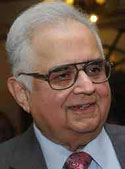
By Ghulam Mohiyuddin, New Age Islam
29 January 2026
Khaled Abou El Fadl, the Omar and Azmeralda Alfi Distinguished Professor of Law at UCLA, California, stands among the most influential contemporary thinkers grappling with the meaning of Islamic law in the modern world. Trained both in Western legal systems and in the classical Islamic scholarly tradition, Abou El Fadl occupies a rare intellectual position: he speaks with authority from within Islamic jurisprudence while simultaneously subjecting it to rigorous moral, historical, and ethical critique.
At the heart of his scholarship lies a single, persistent concern: how divine law can be understood and practiced without betraying its moral core. His work is not an attempt to secularize Islam, nor to romanticize tradition, but to rescue Islamic law from authoritarianism, reductionism, and moral collapse.
Shari'ah as a Moral Project, Not a Legal Code
One of Abou El Fadl’s most important contributions is his insistence that Shariʿah is not a fixed set of rules, but a moral and interpretive endeavor aimed at approximating divine justice. He sharply distinguishes between Shariʿah—the ideal, divine path known fully only to God—and fiqh, the human attempt to understand and implement that path.
This distinction is not merely academic. For Abou El Fadl, the failure to recognize the human fallibility of fiqh has enabled authoritarian claims to religious certainty. When jurists or movements present their interpretations as the will of God itself, they foreclose moral debate and silence dissent. In his influential work speaking in God’s Name, he argues that such claims amount to a theological abuse of power, transforming God into a tool of coercion rather than a source of moral aspiration.
For Abou El Fadl, interpretive humility is a religious obligation. Any claim about God’s law must be accompanied by ethical responsibility, awareness of context, and openness to moral reasoning. Shariʿah, in his view, must always be measured against Qur’anic values such as justice (ʿadl), mercy (raḥma), and human dignity (karāma).
Islam and Democracy: Moral compatibility, Not Mechanical Adoption
In addressing the relationship between Islam and democracy, Abou El Fadl rejects both apologetic and hostile frameworks. He does not argue that democracy is “already” Islamic, nor does he accept claims that Islam is inherently authoritarian. Instead, he poses a more demanding question: what moral conditions must exist for governance to be Islamic?
His answer centers on the idea that legitimacy in Islam arises from justice, consultation, accountability, and the protection of human dignity, not from the imposition of religious slogans or clerical authority. In Islam and the Challenge of Democracy, he argues that while classical Islamic governance did not resemble modern democratic states, Islamic moral theology contains strong resources that support democratic principles—particularly limits on power and resistance to tyranny.
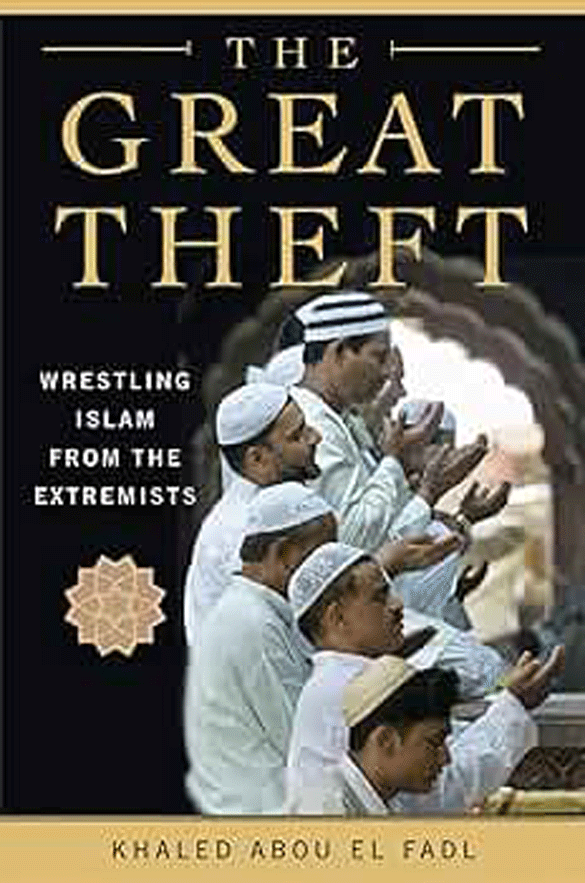
However, Abou El Fadl is deeply critical of what he calls “authoritarian fiqh”, where obedience is elevated above justice and order above moral accountability. In such systems, rulers claim divine sanction, dissent is framed as impiety, and law becomes an instrument of domination. Against this, he insists that no political authority can claim moral legitimacy unless it protects the weak, allows moral disagreement, and remains accountable to the governed.
Democracy, in his framework, is not sacred—but it may be the least unjust system available for realizing Islamic moral commitments in pluralistic societies.
Freedom of Conscience: Faith without Coercion
Few themes are as central to Abou El Fadl’s work as freedom of conscience. He argues that belief, to have moral meaning, must be freely chosen. Any attempt to coerce faith—whether through law, social pressure, or violence—undermines the very purpose of religion.
Drawing on Qur’anic principles such as “There is no compulsion in religion,” he contends that coercive approaches to belief represent a moral failure, not fidelity to tradition. He challenges classical and modern arguments for punishing apostasy, demonstrating how many such rulings emerged from political anxieties rather than theological necessity.
For Abou El Fadl, the right to doubt, to disagree, and even to err is not a concession to modern liberalism, but a requirement of moral responsibility before God. Without freedom of conscience, religious obedience becomes empty ritual, stripped of ethical meaning.
Gender and Law: Authority, Ethics, and the Silencing of Women
Abou El Fadl’s writings on gender are among his most incisive and controversial. He does not deny that Islamic legal tradition contains patriarchal elements; rather, he asks how and why those elements came to dominate, and whether they can be morally defended.
In Speaking in God’s Name, he exposes how modern misogynistic rulings often rely on selective readings, weak hadith, or interpretive shortcuts that violate classical standards of scholarship. More importantly, he argues that claims of male authority over women often reflect power dynamics rather than divine intent.
For Abou El Fadl, the exclusion of women’s voices from legal interpretation is itself a form of epistemic injustice. A moral reading of Shariʿah must consider lived experience, ethical consequences, and the Qur’an’s repeated emphasis on spiritual and moral equality. Any interpretation that normalizes cruelty, humiliation, or domination—especially in the family—fails the test of divine justice.
Beliefs and Intellectual Impact
Across all these themes runs a consistent set of beliefs:
· God is morally just and beautiful, and divine law cannot contradict that moral beauty.
· Human interpretation is fallible, and certainty without humility leads to oppression.
· Ethics precede power; law divorced from morality becomes tyranny.
· Pluralism is not a weakness, but a sign of intellectual and moral vitality.
Abou El Fadl’s impact extends far beyond academia. He has shaped conversations among Muslim intellectuals, human rights advocates, legal scholars, and religious communities grappling with extremism and authoritarianism. His work has offered many Muslims a language to remain faithful without surrendering conscience, and a framework to resist both Islamophobia and internal dogmatism.
An Appreciation
Khaled Abou El Fadl’s greatest contribution may be his refusal to offer easy answers. He does not promise certainty, but moral seriousness. He does not sanctify tradition, but neither does he abandon it. Instead, he calls readers into a demanding ethical struggle—one that insists that speaking in God’s name is among the gravest responsibilities a human being can assume.
In an age when religion is often weaponized, trivialized, or reduced to identity politics, Abou El Fadl insists that faith must remain answerable to justice, mercy, and beauty. His work reminds us that the most radical act may not be rebellion or obedience, but moral accountability before God and humanity alike.
…
Ghulam Mohiyuddin MD is a retired psychiatrist.
URL: https://newageislam.com/ijtihad-rethinking-islam/khaled-abdou-el-fadl-struggle-humane-islam/d/138638
New Age Islam, Islam Online, Islamic Website, African Muslim News, Arab World News, South Asia News, Indian Muslim News, World Muslim News, Women in Islam, Islamic Feminism, Arab Women, Women In Arab, Islamophobia in America, Muslim Women in West, Islam Women and Feminism