
The Higher Iconoclasm: Reframing the Prohibited Image

By V.A. Mohamad Ashrof, New Age Islam
25 November 2025
The 2001 destruction of the Bamiyan Buddhas by the Taliban stands as a seminal moment of cultural and theological crisis. This paper argues that the act was not only a crime against human heritage but a profound betrayal of core Islamic principles, rooted in a hermeneutical failure. By centring the Quranic verse 6:108 and redefining the concept of the “icon” from a material object to an ethical and spiritual malfunction, this analysis demonstrates that true Islamic piety lies in protecting the pluralistic tapestry of human civilization as a sign (ayah) of God’s creative majesty.
The Crisis of Meaning in Bamiyan
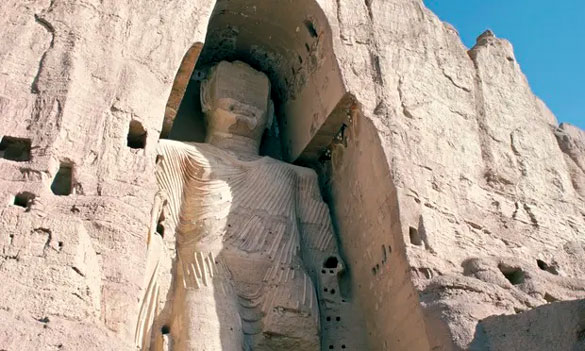
The dynamite blasts that obliterated the Bamiyan Buddhas in March 2001 reverberated beyond the Hindu Kush mountains, sending shockwaves through the conscience of humanity. The Taliban’s justification, framed as a defence of monotheism (Tawhid), presented a stark dichotomy: either destroy the idols or betray God. This paper contends that this was a false dichotomy, born from a hermeneutic that is literalist, decontextualized, and politically instrumentalised. To refute this, we must engage in a deeper, more nuanced reading of the Quranic sources, one that aligns with the spirit of Rahmah (mercy), Hikmah (wisdom), and ‘Adl (justice). I will demonstrate that the preservation of the Buddhas would have been a far more authentic Islamic act than their destruction.
The destruction of the Bamiyan Buddhas stands as a stark testament to the perils of textual literalism divorced from contextual understanding, ethical reasoning, and the broader spirit of the divine message. The Taliban's rationale—that Islam commands the annihilation of "idols"—is a dangerous oversimplification, a selective reading that disregards the vast tapestry of Islamic jurisprudence, historical precedent, and, most crucially, the Quran's inherent call for compassion and intellectual humility.
Contextualizing 6:108 and Evolving Jurisprudence
We should insist on understanding Quranic revelations within their specific socio-historical context and recognizing that legal principles must evolve to address new realities. The Taliban’s primary error was the anachronistic application of rulings concerning active idols of pre-Islamic Arabia to dormant historical artefacts.
The key Quranic verse in this discourse is 6:108: “Do not insult those they call upon besides Allah, lest in hostility they insult Allah without knowledge.” This verse is not a mere call for politeness; it is a profound theological and strategic principle. It recognizes that insulting the sacred symbols of others leads to a cycle of reciprocal hostility and blasphemy, thereby corrupting the very environment in which divine message can be received. The “idols” being insulted in the 7th-century Meccan context were actively worshipped rivals to Allah. The Bamiyan Buddhas, however, were not objects of worship for the Afghan population for over a millennium. They were historical monuments, symbols of a past civilization’s spiritual quest.
Progressive jurisprudence distinguishes between ‘Ibadah (worship) and Athar (heritage). The Prophet Muhammad’s ﷺ destruction of idols in the Kaaba was a specific act of purifying a living house of worship, not a command to scour the earth and destroy all non-Islamic art. The preservation of the Buddhas by Muslim rulers for 1,400 years—from the Ghaznavids to the Mughals—demonstrates a classical understanding of this distinction. The Taliban’s act was a rupture from this lived Islamic tradition, a symptom of a modern, ideologically rigid movement, not an embodiment of timeless orthodoxy.
Exposing the Politics of Iconoclasm
A liberationist reading of scripture focuses on unmasking the power structures that use religion to maintain domination. It asks: Who benefits? In the case of Bamiyan, the destruction was not an act of pure piety but a calculated political performance.
The Taliban, a movement born from the crucible of Cold War geopolitics and refugee camp madrassas, lacked traditional legitimacy. The demolition was a spectacular act of “power-signifying,” aimed at two audiences. Internally, it was a tool to consolidate power and assert ideological purity over a fractured nation, proving their commitment to a harsh, uncompromising version of Islam that brooked no dissent, whether from modern Afghans or ancient history. Externally, it was a gesture of defiance against a world that had isolated them. By rejecting pleas from UNESCO, the OIC, and Buddhist nations, the Taliban positioned themselves as the sole arbiters of divine will, untouchable by global norms.
A liberationist critique thus reframes the “icon” not as the Buddha statue, but as the idol of political power itself. The true shirk (idolatry) was the Taliban’s elevation of their own political authority to an absolute, unquestionable level, demanding obedience that belongs only to God. They betrayed the liberationist core of Islam, which historically stood against the tyranny of the Pharaohs—whose pyramids Muslim civilizations wisely preserved as a lesson in history, not a threat to faith.
Islam centres on the value of the human being (Insan) as God’s vicegerent (Khalifah) on Earth. It sees human creativity, intellect, and spiritual yearning as manifestations of the divine spirit (Ruh) breathed into humanity (Quran 15:29).
From this perspective, the Bamiyan Buddhas were not mere stones; they were a monumental testament to the human spirit’s quest for transcendence. The Gandhara art style itself, a fusion of Hellenistic, Persian, and Indian influences, speaks to the interconnectedness of human civilizations—a concept deeply resonant with the Quranic proclamation that God created humanity into “nations and tribes so that you may come to know one another” (49:13).
Tawhid as Unity, Not Uniformity
An inclusivist hermeneutic understands the doctrine of Tawhid not as a demand for monolithic uniformity, but as an affirmation of the underlying unity of all divine revelation. The Quran repeatedly affirms the chain of prophets, from Adam to Jesus, and commands Muslims to say, “We make no distinction between any of His messengers” (2:285; 2:136).
This inclusivism extends to the material heritage of these prophetic traditions. The Quran itself recounts the stories of previous civilizations as “signs for people who understand” (e.g., 29:15). The ruins of ‘Ad and Thamud are not to be destroyed but to be reflected upon. The Bamiyan Buddhas were a powerful “sign” (ayah) of the Buddhist chapter in the human story of encountering the Divine. Their existence did not challenge Tawhid; it enriched the human understanding of the myriad ways communities have sought the Truth.
The Prophet Muhammad’s ﷺ establishment of the Constitution of Medina, which granted rights and protections to Jewish tribes, and Caliph Umar’s covenant with the Christians of Jerusalem, which protected their holy sites, are the true Islamic precedents. They model a society confident in its faith, secure enough to protect the sacred spaces of others. The Taliban’s iconoclasm, by contrast, revealed a deep insecurity—a faith so fragile it could be threatened by silent, ancient stone.
The True Icon to be Broken
The destruction of the Bamiyan Buddhas was a tragedy of multiple dimensions: cultural, historical, and theological. A rigorous hermeneutical analysis from progressive, liberationist, humanistic, and inclusivist perspectives reveals that the Taliban’s act had no legitimate Quranic basis. Instead, it was rooted in a politicized, ahistorical, and theologically impoverished interpretation.
The Quranic prohibition in 6:108 guards against the ethical transgression of insult, not the preservation of history. The true “icon” that Islam commands us to break is not the external statue, but the internal idol of arrogance, hatred, and political tyranny. It is the idol of a heart closed to the beauty of God’s creation as manifested in human culture and history.
The empty niches of Bamiyan now stand as a permanent, haunting testimony—not to the power of God, which needs no such violent vindication—but to the failure of a human ideology that mistook destruction for devotion. To protect the Buddhas would have been to protect a piece of the universal human spirit, and in doing so, to honour the Quranic ideal of being a “mercy to all the worlds.” In the end, the Taliban did not destroy an idol; they became the embodiment of the very instinctual, unethical iconoclasm the Quran warns against, betraying Islam’s true spirit of wisdom, mercy, and inclusive grace.
Islam's Legacy of Preservation vs. Modern Vandalism
The enduring myth that Islam universally mandates the destruction of all non-Islamic images crumbles under historical scrutiny. For nearly 1,400 years, from the advent of Islam until the Taliban’s act, the Bamiyan Buddhas stood largely undisturbed under successive Muslim rulers. This remarkable continuity is not an oversight but a testament to a deep-seated tradition of cultural preservation and intellectual curiosity within Islamic civilization.
Early Muslim empires, far from engaging in systematic iconoclasm, often became the custodians of ancient knowledge and art. When Muslims conquered territories, they inherited vast cultural landscapes replete with pre-Islamic temples, statues, and monuments. In Egypt, the pharaonic pyramids and temples, adorned with intricate carvings and iconography, were preserved. In Syria and Mesopotamia, Roman, Byzantine, and Sassanian ruins stood protected. The vibrant intellectual life of the Abbasid Caliphate, for instance, saw the deliberate translation and study of Greek philosophy, medicine, and sciences – a profound act of preservation and integration, not destruction. This was not a selective blindness; it was a conscious policy rooted in a sophisticated understanding of history and the value of human heritage.
The rationale for this preservation was multi-faceted. Firstly, many ancient relics were not perceived as active objects of idolatry, but as historical artefacts. Classical Islamic jurisprudence often drew a crucial distinction: the prohibition on idols primarily targeted those actively worshipped and competing with Tawhid in a living community. Dormant relics of extinct or marginalized faiths did not pose the same theological threat. Secondly, Muslim rulers often recognized the educational and aesthetic value of these objects. They served as reminders of past civilizations, lessons in history, and demonstrations of human artistic achievement – all concepts compatible with an expansive Islamic worldview that celebrates Hikmah (wisdom) and Jamal (beauty).
Prophetic Precedent and Caliphal Practice: The Ethics of Non-Coercion
The exemplary conduct of the Prophet Muhammad and the early Caliphs provides a powerful counter-narrative to the Taliban’s actions. While the Prophet famously cleansed the Kaaba of idols upon the conquest of Mecca, this was a specific, contextual act: the purification of the most sacred space in Islam which was originally meant for worship of One God, which had been corrupted by active polytheistic worship that also reinforced oppressive tribal power structures. This act was one of spiritual liberation and the establishment of pure monotheism in its primary sanctuary, not a generalized command for universal iconoclasm.
More broadly, the Prophet’s interactions with Christian and Jewish communities were characterized by respect and the protection of their places of worship. The Constitution of Medina, for instance, guaranteed the rights and religious freedom of Jewish tribes, emphasizing peaceful coexistence. Later, Caliph Umar Ibn al-Khattab’s entry into Jerusalem stands as an enduring symbol of Islamic tolerance. Invited to pray inside the Church of the Holy Sepulchre, he famously declined, choosing instead to pray outside. His reasoning was profound: he feared that if he prayed inside, future Muslims might use his act as a precedent to convert the church into a mosque, thereby infringing upon Christian rights. This act was not merely prudent; it was an embodiment of the Quranic principle of ‘Adl (justice) and the preservation of religious sanctity for others, directly precluding the spirit of iconoclasm.
This early Islamic ethos of non-coercion in matters of faith, encapsulated in the Quranic verse "There is no compulsion in religion" (2:256), extended to the physical symbols of those faiths. It underscored a confidence in Islam's truth that did not require the erasure of alternative spiritual
The history of the Bamiyan Buddhas themselves under Muslim rule is perhaps the most direct refutation of the Taliban's claims. For centuries, successive Muslim dynasties controlled Afghanistan, including regions encompassing Bamiyan:
• The Ghaznavids (10th-12th centuries): Despite their reputation for military campaigns into India that sometimes involved the destruction of actively worshipped idols, the Ghaznavids, under figures like Mahmud of Ghazni, left the Bamiyan Buddhas untouched. This indicates that they, too, differentiated between active threats to Tawhid and historical monuments.
• The Ghurids, Timurids, Mughals, and various Afghan kingdoms (12th-20th centuries): Each of these powerful Muslim empires held sway over Afghanistan, yet none of them ordered the destruction of the Buddhas. They recognized their presence as part of the cultural and historical fabric of the land, often incorporating them into local folklore and appreciating their artistic grandeur. Local Afghans, themselves devout Muslims, often viewed the Buddhas with respect, sometimes referring to them as "Buddha-e Bamiyan" (Buddhas of Bamiyan) or even as figures representing mythical heroes or ancient kings, devoid of any active idolatrous veneration.
This unbroken chain of over a millennium of preservation is a powerful testament. It demonstrates that the Taliban’s iconoclasm was not a revival of a lost Islamic practice, but a radical departure from established Islamic norms and historical precedent. Their act was a rupture, not a continuation.
The Taliban’s iconoclasm represents a modern phenomenon, distinct from the historical trajectory of Islamic civilization. It is largely a product of a specific strain of fundamentalist thought, heavily influenced by Deobandi-Wahhabi literalism, and exacerbated by the political and social dislocations of late 20th-century Afghanistan. This ideology, often developed in isolation from mainstream Islamic scholarship and history, fosters a rigid, puritanical interpretation that prioritizes literal application over ethical intent and contextual nuance.
A progressive hermeneutic, therefore, views the Bamiyan destruction as a failure of Islamic thought to adapt its principles of Hikmah (wisdom) and Rahmah (mercy) to the complexities of a pluralistic world. Instead of embodying the civilizational Islam that built libraries, hospitals, and fostered scientific inquiry, the Taliban enacted a regressive, narrow vision.
The destruction was condemned not only by the international community but also by a broad spectrum of the Muslim world, including respected institutions like Al-Azhar University and numerous Islamic scholars and leaders from Iran to Indonesia. This global Muslim condemnation underscores that the Taliban's actions were seen as a betrayal of a collective Islamic ethos that values preservation, cultural heritage, and interfaith respect. These condemnations reinforce the argument that iconoclasm, as performed by the Taliban, is a distortion, not a faithful representation, of Islamic principles.
The Enduring Shadow of a Betrayal
The historical record overwhelmingly refutes the notion that the destruction of the Bamiyan Buddhas was an act mandated by Islam. Instead, it stands as a stark betrayal of Islam's own rich legacy of cultural preservation, intellectual absorption, and respectful coexistence. The Prophet's example, the Caliphs' practices, and the centuries-long stewardship by Muslim dynasties all point to an Islamic ethos that cherishes human heritage as a sign of God's diverse creation.
The Taliban's act was not an expression of timeless Islamic truth but a tragic manifestation of political instrumentalisation, ideological rigidity, and a profound misreading of sacred texts. It reduced Islam, a faith of vast intellectual and ethical depth, to a crude instrument of cultural erasure. The empty niches of Bamiyan are thus not merely a monument to what was lost, but a haunting reminder of the ongoing struggle within Islam to reclaim its true spirit of Rahmah, Hikmah, and ‘Adl from those who would twist it into a tool of destruction.
The Quran's Critique of Psychological Idolatry
The Taliban’s literalist interpretation of iconoclasm rested on the premise that a material statue, like the Bamiyan Buddhas, inherently constitutes an "idol" demanding physical destruction. This understanding, however, profoundly misunderstands the Quran’s nuanced and far more profound critique of shirk (associating partners with God). While physical idol worship certainly existed in pre-Islamic Arabia and is condemned, the Quran’s primary concern with idolatry extends far beyond mere material forms. It critiques the fundamental human tendency to elevate anything other than the One God to a position of ultimate devotion, loyalty, or power. This "anything" can be an object, but far more dangerously, it can be an idea, an ideology, an institution, or even the self.
A humanistic hermeneutic of the Quran reveals that the true "prohibited icon" is often an internal, ethical malfunction. The Quran consistently identifies real "idols" as those human failings that lead to injustice, corruption, and spiritual blindness:
• The Idol of Greed and Materialism: The Quran condemns the hoarding of wealth and the worship of worldly possessions (Q.104:1-4; Q9:34). This is a form of shirk where transient material gain usurps the heart's devotion to God and justice.
• The Idol of Arrogance (Kibr) and Self-Righteousness: Pharaoh’s arrogance is a recurring theme, presenting him as an archetypal idolater who elevated his own power and judgment above God’s (Q.28:38; Q7:13). This spiritual pride, which denies humility and insists on one’s own infallible truth, is a profoundly dangerous form of idolatry.
• The Idol of Injustice (Zulm) and Oppression (Istibdad): The Quran fiercely advocates for justice (Q.4:135; Q5:8) and condemns all forms of oppression. Systems of injustice, where human beings are exploited or denied their dignity, function as "idols" that divert loyalty and obedience from God's moral order.
• The Idol of Dogma and Blind Adherence: The Quran repeatedly calls for reflection (Tadabbur), reason (‘Aql), and critical thought, condemning blind adherence to ancestral traditions or rigid interpretations that stifle intellectual inquiry and compassion (Q2:170; Q5:104). This uncritical devotion to a human-made interpretation, elevated to divine status, is a dangerous form of shirk.
In this light, Quran 6:108's injunction—"Do not insult those they call upon besides Allah, lest in hostility they insult Allah without knowledge"—gains deeper meaning. It is not merely a pragmatic warning, but a profound ethical command to shatter the inner idol of prejudice (Ta’assub) and arrogance (Kibr) that fuels the desire to denigrate or destroy the sacred symbols of others. The most dangerous form of "insult" is the one that springs from an un-purified heart, driven by an inflated ego that presumes to speak for God in acts of destruction.
Shattering the Idols of Oppression
A liberationist hermeneutic repositions iconoclasm from the destruction of inert objects to the dismantling of oppressive systems and ideologies. The true jihad (struggle) in Islam is against the internal forces of injustice and the external structures that perpetuate it. From this perspective, the Taliban’s act of destroying the Bamiyan Buddhas was not an act of liberation, but an act of profound oppression.
• Oppression of Memory and History: By obliterating the Buddhas, the Taliban sought to erase a significant chapter of Afghanistan's own pluralistic history and human heritage. This is an act of cultural violence, denying future generations their rightful inheritance of memory and historical understanding. It is a liberationist imperative to protect and uplift the narratives of the past, especially those of diverse communities, not to silence them through destruction.
• Oppression of Dignity and Identity: The statues, while not worshipped, held profound symbolic value for Buddhists globally and represented a part of Afghanistan's unique identity. Their destruction was an insult to the dignity of those who found spiritual or historical meaning in them, violating the spirit of mutual respect mandated by Q6:108.
• Oppression through Coercion: The Taliban's iconoclasm was an act of coercion, enforcing a narrow, rigid interpretation of Islam through violence. True liberation, however, comes through freedom of conscience and the absence of compulsion in religion (Q2:256). The act was a demonstration of power over people, disguised as piety towards God. The most dangerous "idol" being served was the Taliban's own totalitarian agenda, imposing uniformity where God designed diversity.
The example of the Prophet Muhammad's ﷺ cleansing of the Kaaba, often cited by iconoclasts, was an act of liberation from a system of local, tribal polytheism that had become intertwined with political and economic oppression in Mecca. It was not a generalized command for the global destruction of all historical sculpture, but a specific purification of the sacred house from active idolatry that enslaved consciences. In contrast, the Bamiyan act was an enslavement of consciences to a new idol: The Taliban’s own dogmatic and coercive power.
Preserving the Signs of Human Striving
A humanistic interpretation stresses that humanity (Insan), as God's vicegerent (Khalifah) on Earth, is entrusted with the stewardship of creation, which includes natural beauty, intellectual heritage, and cultural artefacts. The Quran consistently calls upon humanity to reflect on the "signs" (Ayat) of God in the universe and in human history (Q29:15; Q3:191). The Bamiyan Buddhas, as monumental testaments to human spiritual striving and artistic genius, were precisely such "signs."
Sufi traditions, as exemplified by Hazrat Inayat Khan (1882-1927), further illuminate this humanistic perspective. Khan’s reinterpretation of "Buddha" as "Buddhi" (subtle reason, spiritual insight) positions the statues not as rivals to God, but as symbols of humanity's innate capacity for wisdom and spiritual liberation. To destroy such a symbol is to deny a facet of this universal human capacity, to blind oneself to the diverse ways humanity has sought meaning and transcendence. The humanistic lens sees all authentic spiritual art as part of a collective human heritage that reflects the many-splendored beauty of God’s creation.
The Quran frequently praises those who "look" and "reflect." What then is the value of obliterating that which can be looked at and reflected upon? Destroying the Buddhas was an anti-humanistic act because it assumed that the past is a threat, rather than a necessary mirror for the present—a mirror in which Muslims could see the richness of human history and their own place within it.
Ethical Transgression as the Forbidden Idol
The most potent progressive argument is to transpose the concept of the forbidden "icon" entirely from the material realm to the ethical and spiritual realm. The true "idols" that Islam commands us to shatter are internal, not external:
The Material Icon (Literalism) The Ethical Icon (Quranic Progressivism)
Stone & Mortar (e.g., Bamiyan Buddha) Injustice (Zulm) & Oppression (Istibdad)
Material Image (Surah) Greed & Corruption (Fasad fıl-Arḍ)
Symbol of the Other's Faith Worship of Self-Interest (Hawa)
The story of the Ka’bah’s cleansing by the Prophet (PBUH) was an act of liberation from a system of local tribal polytheism that intertwined spiritual corruption with social and economic injustice. It was not a generalized command for the global destruction of all historical sculpture. In contrast, the true enemies of the Quran are consistently identified as human ethical failings: the hoarding of wealth (Q.104:1−4), the abandonment of orphans (Q.107:1−7), the corruption of justice (Q.4:135), and the arrogance that leads to oppression (Q7:13). These are the modern, living "icons" that Tawhid demands be smashed, not with dynamite, but with unwavering moral courage, intellectual humility, and profound compassion.
The Taliban’s demolition of the Bamiyan Buddhas stands as a monumental failure of Islamic Adab (etiquette, refined moral conduct). It replaced the Quranic principle of Rahmah (mercy) with harshness (Qaswah), Hikmah (wisdom) with ignorance (Jahl), and ‘Adl (justice/balance) with fanaticism (Ta’assub).
The Hermeneutical Conclusion Is Clear: Q.6:108 is a decisive injunction against all forms of gratuitous spiritual offense, whether verbal or physical. It establishes an ethical limit that the Taliban violently crossed. The verse's core message—restraint for the sake of ethical integrity—demands that a Muslim be a guardian of history, a steward of human heritage, and a participant in the universal quest for wisdom, not a vandal obsessed with a literalist interpretation of material forms.
By protecting the dignity of the Other's spiritual memory, the Muslim protects the Tawhid of their own heart from the most insidious idol of all: the belief that one’s own limited vision of the Divine sanctions the destruction of the world. The Bamiyan Buddhas should have been protected because Islam commands the preservation of all that contributes to Buddhi (reason) and Rahmah (mercy) in the world. Their destruction was not a vindication of Tawhid, but a stark revelation of the broken ethical idol hidden within the iconoclasts’ own souls.
A Quranic Mandate for Preservation, Not Erasure
The preceding instalments have meticulously deconstructed the literalist arguments for iconoclasm, revealing their inherent flaws through progressive, liberationist, humanistic, and inclusivist lenses. When these hermeneutical approaches are synthesized, a coherent and compelling Quranic mandate for preservation, respect, and mutual understanding emerges, directly refuting the Taliban’s actions in Bamiyan.
• Progressive Re-contextualization: Quran 6:108, the cornerstone of this argument, transforms from a tactical warning in a nascent community into a universal ethical principle for all times. It mandates restraint and respect for the sacred symbols of others, recognizing that true faith is not propagated through coercion or insult, but through compelling example and ethical conduct. The idea of "insult" is expanded to include physical destruction, as it is the ultimate act of denigration, violating the very spirit of peace and dialogue.
• Liberation from Dogmatic Tyranny: The liberationist perspective unmasks iconoclasm as a political tool, often employed by regimes or groups seeking to impose ideological uniformity and consolidate power by erasing alternative narratives. The true "idols" to be shattered are the structures of oppression, injustice, and the tyrannical exercise of authority that masquerades as divine will. Liberating the human spirit from such tyranny, whether intellectual or physical, is the core of Islamic jihad.
• Humanistic Affirmation of Creativity: The humanistic approach grounds Islam’s reverence for human dignity (Karamah) and creativity (Ibda‘). The Bamiyan Buddhas, as expressions of profound human spiritual aspiration and artistic genius, are seen not as rivals to God, but as Ayat (signs) of God's presence in creation, manifested through human hands. Destroying them is a desecration of human dignity and a rejection of the divine spark of creativity placed within humanity.
• Inclusivist Embrace of Pluralism: An inclusivist reading of Islam recognizes diversity (Q.49:13; Q.5:48) as divinely willed and a source of richness, not a threat. The Quran affirms the validity of previous prophets and scriptures, and by extension, acknowledges the legitimate spiritual paths of other faiths. The Bamiyan Buddhas, as symbols of Buddhist Buddhi (wisdom) and peace, should have been honoured as part of humanity's shared spiritual tapestry, demonstrating Islam’s confidence in its own truth by embracing, rather than obliterating, difference.
Together, these lenses reveal that the Bamiyan destruction was a profound betrayal of Islam’s comprehensive moral and spiritual vision.
Mercy, Wisdom, and Justice as Pillars of Stewardship
The core values of Islam—Rahmah (mercy), Hikmah (wisdom), and ‘Adl (justice)—demand a preservative rather than destructive approach to cultural heritage.
• Rahmah (Mercy): As the Prophet Muhammad (PBUH) was sent as a "mercy to all the worlds" (Q.21:107), this principle extends beyond living beings to encompass the spiritual and historical memory of humanity. Acts of mercy include nurturing, protecting, and preserving what is good and beautiful. Destroying irreplaceable historical artefacts is antithetical to this boundless mercy, causing immense pain and spiritual deprivation to millions.
• Hikmah (Wisdom): Wisdom necessitates foresight, contextual understanding, and a nuanced appreciation of complex realities. The historical preservation of the Buddhas by Muslim rulers for centuries was an act of Hikmah, recognizing that dormant relics posed no active theological threat and held historical and aesthetic value. The Taliban’s act, driven by narrow literalism and short-sighted political aims, was an act of profound Jahl (ignorance), lacking both contextual understanding and a broader vision of Islam's role in the world.
• ‘Adl (Justice): Justice, in Islam, is an overarching principle that demands fairness, balance, and the upholding of rights. This includes the right of communities to their heritage and the right of humanity to its shared cultural memory. The destruction of the Buddhas was an act of injustice against the Buddhist community, against the Afghan people who lost a part of their national identity, and against all of humanity deprived of a universal treasure. Quran 5:8, commanding believers to be "witnesses in justice, and do not let the hatred of a people prevent you from being just," directly applies here, demanding justice even towards those with whom one might have theological differences.
These principles combine to form a robust Islamic ethic of Khilafah (stewardship), where humanity is entrusted as a guardian of Earth's resources, including its cultural and historical treasures. To fulfil this trust, Muslims are called to cultivate, build, and preserve, not to vandalize or erase.
Global Condemnation and the Reaffirmation of an Islamic Ethos
The widespread condemnation of the Bamiyan destruction from across the Muslim world—including leading institutions like Al-Azhar University, various Islamic scholars, and governments—underscores that the Taliban's actions were a deviation from mainstream Islamic thought and practice. These condemnations were not merely political but were rooted in deep theological and ethical concerns, reaffirming that Islam's civilizational ethos is one of preservation rather than annihilation.
This collective outcry demonstrates that the nuanced, inclusive, and humanistic hermeneutic presented in this paper resonates deeply within the broader Islamic tradition. It represents a reclaiming of Islam from extremist interpretations, asserting its true character as a religion of peace, justice, and profound respect for human dignity and diversity.
The enduring legacy of the Bamiyan Buddhas, even in their physical absence, serves as a powerful reminder and a call to action. It compels Muslims to:
• Cultivate Critical Hermeneutics: Reject literalism that decontextualizes sacred texts, and instead embrace progressive, liberationist, humanistic, and inclusivist interpretations that align with Islam's ethical core.
• Champion Cultural Preservation: Actively participate in the global effort to protect and restore cultural heritage, recognizing it as a shared human legacy and ayat (signs) of God’s diverse creation.
• Foster Interfaith Dialogue and Respect: Uphold the spirit of Quran 6:108 by promoting mutual understanding and respect for the sacred symbols and beliefs of all communities, recognizing that true Tawhid is not threatened by diversity but rather affirmed by the underlying unity it reveals.
• Combat Internal Idolatry: Engage in continuous self-reflection to shatter the internal "idols" of arrogance, intolerance, greed, and political authoritarianism that corrupt the heart and lead to destructive acts.
Islam as Guardian, Not Destroyer
The destruction of the Bamiyan Buddhas by the Taliban was not an act of defending Islam; it was an act of profound betrayal. It replaced Hikmah (wisdom) with Jahl (ignorance), Rahmah (mercy) with Qaswah (harshness), and ‘Adl (justice) with Ta’assub (fanaticism). The Quran’s deepest message calls for the purification of the self, not the pulverization of symbols. The human instinct to destroy what differs from us – the instinctual iconoclasm – is the real idol, blinding us to the divine unity reflected in plurality.
Had the Taliban truly understood Quran 6:108 and the expansive ethical framework of Islam, they would have realized that protecting the Bamiyan Buddhas was not an act of infidelity but of profound faith. To preserve them would have been to preserve Islam’s finest values – compassion, justice, and respect for the signs of God wherever they appear.
The empty niches of Bamiyan serve as a permanent, haunting testimony – not to the power of God, which needs no such violent vindication – but to the failure of a human ideology that mistook destruction for devotion. In the end, the Taliban did not destroy an idol; they became the embodiment of the very instinctual, unethical iconoclasm the Quran warns against, betraying Islam’s true spirit of wisdom, mercy, and inclusive grace. Islam, at its truest, commands us to build bridges, not to break them; to protect beauty, not to bury it.
-----
V.A. Mohamad Ashrof is an independent Indian scholar specializing in Islamic humanism. With a deep commitment to advancing Quranic hermeneutics that prioritize human well-being, peace, and progress, his work aims to foster a just society, encourage critical thinking, and promote inclusive discourse and peaceful coexistence. He is dedicated to creating pathways for meaningful social change and intellectual growth through his scholarship.
URL: https://www.newageislam.com/debating-islam/iconoclasm-reframing-prohibited-image/d/137763
New Age Islam, Islam Online, Islamic Website, African Muslim News, Arab World News, South Asia News, Indian Muslim News, World Muslim News, Women in Islam, Islamic Feminism, Arab Women, Women In Arab, Islamophobia in America, Muslim Women in West, Islam Women and Feminism