
Revisiting Infamous Nellie Massacre
By Nava Thakuria, New Age Islam
9 November 2025
As Assam government plans to make public a confidential report after four decades, many come questioning motives of the Himanta Biswa Sarma-led government in Dispur (Guwahati) as the State is approaching the next legislative assembly election early next year. Many opposition voices claim that the current coalition government of Bharatiya Janata Party picked up the report on infamous massacre at Nellie (pronounced as Neli), where thousands were killed following a sudden attack by local tribal people on Bangladesh-origin Muslim majority villages in central Assam, to play their old religious-divide tricks for gaining in the forthcoming electoral battles. But some insist on revealing the real truth behind the bloodiest massacre in post-independent India, which has consciously propagated a negative impression for the people of Assam as being anti-Muslim for decades now.
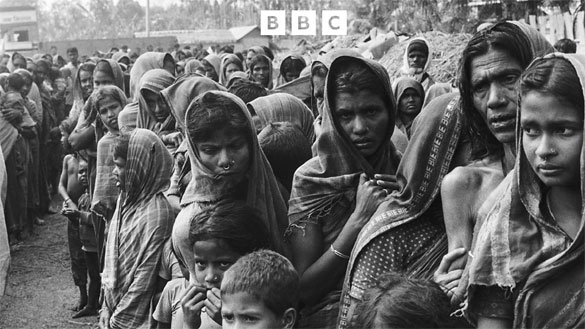
On the 18 February 1983, an estimated 3,000 people died in Assam, India. The Nellie massacre was the worst bloodshed in the country since Indian independence in 1947.
-----
The debate kicked off following a state cabinet's approval in tabling the Tewari commission report on Nellie mass-killings in the next winter assembly session beginning on 25 November. Nellie under Morigaon (earlier undivided Nagaon) district in central Assam, where thousands of people were killed as several hundreds of locals (mostly belonging to Tiwa tribe) attacked Muslim dominated villages in Nellie locality on 18 February 1983. Various media reports, now available on digital space, indicated at least 2,000 individuals, including children, women and elderly, lost their lives in the single day carnage. Prelude to the massacre had grown up with a series of crimes including rape of local tribal women allegedly committed by the immigrant Bengali-speaking Muslims. The attacks were carried out over Nellie along with 14 villages including Muladhari, Khulapathar, Alisingha, Basundhari, Bugduba Beel, Bugduba Habi, Borjola, Butuni, Indurmari, Mati Parbat, Silbheta, Borburi, Dongabori, etc.
Soon after the worst incident of collective violence in the height of Assam’s historic anti-influx movement (1979 to 1985), the government constituted a commission on 14 July to look into the circumstances leading to the disturbances. The commission, headed by retired IAS officer Tribhuvan Prasad Tewary, submitted its 551-page report to the government next year, but it was not tabled in the assembly by the Hiteswar Saikia-led Congress government and even by any other successive administrations. Even though over 650 police complaints were lodged, none was arrested and hence nobody was made accountable for the violence.
A section of journalists, writers and scholars enjoyed access to the report and they had published some details, often influenced by their own narratives and not as an overview. A Japanese scholar (Makiko Kimura) for her PhD program under New Delhi-based Jawaharlal Nehru University, visited Nellie locality and later a book titled ‘The Nellie Massacre of 1983: Agency of Rioters’ was published in 2013 by the SAGE publications with her research works.
At least two Indian journalists (Hemendra Narayan of The Indian Express and Bedabrata Lahkar of The Assam Tribune) reported the incident promptly after visiting the locations. Narayan, who died a decade back, also penned a book titled ‘25 years on.. Nellie still haunts’ documenting his experience in those fateful days. Meanwhile, recently speaking to a Guwahati-based Assamese daily newspaper, Lahkar stated that he went there the next day and saw hundreds of dead bodies. Now a retired journalist, Lahkar admitted that the media reported around 2,800 casualties during the massacre. Many of them even jumped to a running water body to escape the attackers. He exclaimed that the mystery has not yet been resolved. Lahkar was communicated with queries by this writer and his responses are being awaited.
The opposition political leaders termed the move as politically motivated. Congress leader Debabrata Saikia stated that after 1983 violence, there had been no communal tension in Nellie locality. So he questioned the reason behind the government’s initiative to bring the sensational report to the public after so many years. However, All Assam Students' Union president Utpal Sarma supported the move saying that it was wrong to keep such an important document under wraps for decades. He even criticized successive governments in Dispur for failing to place the report in the assembly and subsequently make it accessible to the people.
Film scholar Parthajit Baruah, who made an Assamese feature film titled ‘Nelir Kotha’ (The Nellie Story), admitted that the truth should come out, but he argued that it was not the favourable time for making the Nellie massacre report public. Written, directed and produced by him, the full-length film is based on the darkest episode of Assam’s recent history and Baruah insisted that nobody should use the report for political gains. He was clear in views that many tribal people were also killed in retaliation of the Muslim settlers and the Tewari commission probably included those statistics as well. A fresh look at the gory incident may reveal many facts, which are not yet discussed in the public forum, he added.
The question that arises is, whether there were any casualties among the attackers as well during the bloodiest Nellie massacre. If those reports are to be believed, how many people needed to kill at least 1,800 people (some claim the number of victims would be above 5,000) within some hours, should not it be more than the number of victims? Most of the reports quoting the authority and relevant books claimed that hundreds of Lalung (now known as Tiwa) people attacked the Muslim dominated villages and killed thousands of Bengali speaking residents. The attackers used traditional crude weapons (as no modern mass-killing instruments were available with them) and it can be guessed by any common sense that some casualties must have occurred to the side of aggressors also.
Local residents (precisely mainstream Assamese families) cannot remember such casualties and subsequent cremations (read burning of all these people as they followed Hindu faith). Moreover, nobody knows where the victim Muslims were buried as there is no such recognized mass grave in the entire locality. Some argued many were thrown to a nearby water stream, but it can hardly justify the magnitude of the volume of Muslim casualties. Shockingly these questions were never raised or discussed in public domain and the Assam-based media outlets also remain silent whereas the national media continuously poured spicy reviews on the Nellie incident. So many unanswered questions are expected to be addressed over the black spot on Asomiya people alive for decades now, and it may be possible only with pragmatic discussions over the Nellie’s mass murder after the Tewari commission’s findings are duly made public.
URl: https://www.newageislam.com/current-affairs/infamous-nellie-massacre/d/137575
New Age Islam, Islam Online, Islamic Website, African Muslim News, Arab World News, South Asia News, Indian Muslim News, World Muslim News, Women in Islam, Islamic Feminism, Arab Women, Women In Arab, Islamophobia in America, Muslim Women in West, Islam Women and Feminism