
A Few Comprehensive and Practical Suggestions for The Muslims Of India
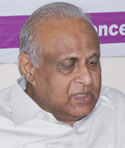
By Khwaja Abdul Muntaqim, Tr. New Age Islam
17 December 2025
We present these suggestions without any political affiliation, solely with the intention of helping build a better future for the Muslim community. Although India’s Constitution and United Nations–approved documents concerning minority rights affirm the equal status of majority and minority communities, this equality often remains theoretical. Legally, such equality exists, but when it comes to its practical application, especially in the functioning and survival of democracy, the reality is different. Ultimately, influence follows numbers: the side with greater numerical strength prevails.
As we once noted in Professor Tahir Mahmood’s book Minorities Commission: Minor Role in Major Affairs, wherever there is a majority, there will inevitably also be a minority. If relations between these two groups are not cordial, the greater harm will always fall upon Muslims, because a minority cannot overpower a majority, whereas a majority can overpower a minority whenever it chooses.
However, in a civilized society, this should never be the case. Instead of attempting to dominate or bulldoze one another, the nation should be rebuilt in a way that ensures justice, gives the deserving their due, eliminates injustice, prevents forced internal migration, and allows people the freedom to dress as they wish, eat the food they prefer, and practice their faith without fear. No one’s religious sentiments should be hurt, no group should be attacked merely for belonging to a particular religion, no law should be enacted that negatively impacts religious freedom, and neither the call to prayer nor the ringing of temple bells should be considered offensive.
On social media, aggressive and offensive content should be avoided. Instead, posts that strengthen brotherhood and mutual respect should be promoted. Articles advocating Hindu–Muslim unity and similar themes should be published with the same seriousness in English, Hindi, and other Indian-language newspapers as they are in Urdu publications. The presence of Muslim journalists in English-language media should not be limited only to topics such as Muslim Personal Law or festivals like Eid and Muharram.
Within our society, there should be a cultural shift in which our elder brothers, our Hindu compatriots, extend care and goodwill toward their younger brothers, Indian Muslims. In family life, it is often the elder sibling who, through generosity and emotional maturity, bows first in reconciliation, like a fruit-laden branch that bends under its own weight.
In this sacred land of saints and Sufis, an environment must prevail where everyone is free to worship peacefully in their own way. Religious gatherings should not be disrupted, no one should be punished unlawfully, law enforcement personnel should not be subjected to violence, and public order must be respected. Yet, not every dream comes true, and not every ideal becomes reality. Muslims, like all other citizens, must demonstrate their identity by actively participating in every sphere of life and in India’s journey toward sustainable development. Positive thinking and perseverance are what move communities forward.
There is an urgent need to focus on education, especially technical education, so that people are not forced to depend solely on jobs. Despair is akin to disbelief; one must face every situation with courage. It is heartening to note that Muslim students are performing better each year in competitive examinations. In my childhood, in the early 1950s, Delhi had only one Muslim MBBS doctor—Dr. Abdul Aleem of Sharif Manzil, Ballimaran, from the family of Hakim Ajmal Khan. Today, Muslim doctors can be found in almost every hospital in Delhi, though their numbers are still not entirely satisfactory.
Jamia Millia Islamia, which once offered education only up to a basic bachelor’s degree, is now counted among the country’s leading institutions. In Delhi’s walled city, where once only one or two children from a street would attend school, traffic jams now occur at school dismissal time. Similarly, where educating Muslim girls was once considered taboo, today girls are outperforming boys academically.
I recall that when I was present at a meeting concerning Delhi’s Muslims and other minorities, as Director of the National Religious and Linguistic Minorities Commission, held at Sheila Dikshit’s office in the presence of Justice Ranganath Mishra and others, the Delhi Chief Secretary himself presented data clearly showing that the number of girls studying in the old city far exceeded that of boys. This seriousness about education is not limited to Delhi; across the country, Muslim children and their parents are deeply committed to learning. In today’s digital age, even running a small business without education has become difficult.
Educational institutions are now being established in northern India as well, similar to those in the south, and mainstream institutions are open to all. What is now needed is the establishment of more high-quality technical and non-technical schools, colleges, and institutes so that students can obtain quality education, secure respectable employment, or start their own businesses. In madrasas, alongside religious education, modern subjects must be taught with equal seriousness. Students should also be encouraged to participate in health-related activities such as blood donation, relief work, and other forms of voluntary service.
Greater emphasis must be placed on skills development, vocational training, start-ups, and small businesses. NGOs should be established to access government schemes, as much government funding is routed through such organizations. Attention must also be given to business networking, online marketing, artificial intelligence, and e-commerce education. For women, opportunities in home-based industries, online work, tailoring, and food businesses should be expanded.
Political awareness and dignified participation in governance are also essential. Political decisions should be based on national interest and development rather than caste, community, or religious emotions. The pursuit of rights must rely solely on constitutional and democratic methods. Legal awareness and assistance centres should be established in every locality. Transparency and better management must be ensured in religious and educational institutions, organizations, and waqf properties. Religious differences should be resolved through dialogue and wisdom, and extreme caution must be exercised in the use of sensitive religious terms and symbols.
These suggestions are not final or absolute. However, if even these points are collectively adopted at present, there is every reason to believe that the future of the coming generations will be bright.
Translated from Urdu to English by Ghulam Ghaus Siddiqi, New Age Islam.
URL for Urdu Article: A Few Comprehensive and Practical Suggestions for the Muslims of India مسلمان ہند کے لیے چند جامع اور عملی تجاویز
URL: https://newageislam.com/current-affairs/practical-suggestions-muslim-india/d/138044
New Age Islam, Islam Online, Islamic Website, African Muslim News, Arab World News, South Asia News, Indian Muslim News, World Muslim News, Women in Islam, Islamic Feminism, Arab Women, Women In Arab, Islamophobia in America, Muslim Women in West, Islam Women and Feminism