
Indo-Iran Ties in the Backdrop of Pezeshkian’s Promise of No Radical Changes to Iran’s Shia Theocracy
By Asad Mirza, New Age
Islam
9 July 2024
Pezeshkian Promised No
Radical Changes To Iran’s Shia Theocracy In His Campaign And Long Has Held The
Supreme Leader, Ayatollah Ali Khamenei, As The Final Arbiter Of All Matters Of
State. But An Iranian Government Still Largely Held By Hardliners Will
Challenge Even Pezeshkian’s Modest Aims.
-------
With a new
President, Masoud Pezeshkian, in office in Iran, questions are being asked
about the future course of Indo-Iran bilateral. However, no reset should be
expected as both countries understand the need to stand together and bilateral
ties have indeed consolidated during the recent past, under Modi 3.0.
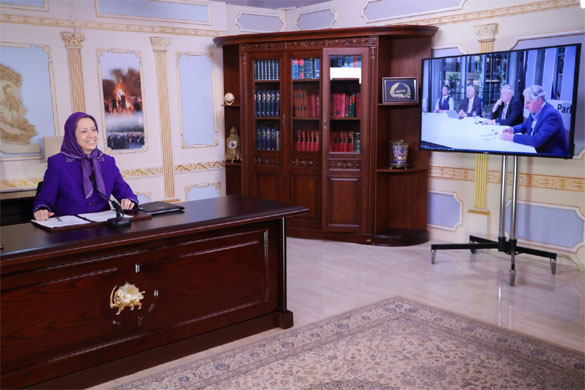
Masoud
Pezeshkian was elected as Iran’s President in July 2024.
----
Reformist
candidate Masoud Pezeshkian has won Iran’s runoff presidential election,
beating hardliner Saeed Jalili by promising to reach out to the West and ease
enforcement on the country’s mandatory headscarf law after years of sanctions
and protests squeezing the Islamic Republic.
Pezeshkian
promised no radical changes to Iran’s Shia theocracy in his campaign and long
has held the supreme leader, Ayatollah Ali Khamenei, as the final arbiter of
all matters of state. But an Iranian government still largely held by
hardliners will challenge even Pezeshkian’s modest aims.
The late
president, Ebrahim Raisi, who died in a helicopter crash in May 2024, was seen
as a protégé of Khamenei and a potential successor as supreme leader. While
Khamenei remains the final decision-maker on matters of state, whichever man
ends up winning the presidency could bend the country’s foreign policy towards
either confrontation or collaboration with the West, on which the whole edifice
of Iranian diplomacy rests.
Though, in
most countries presidents are usually the final authority in their capacity as
heads of state or government - or both - that’s not the case in Iran. It is the
Supreme Leader, who is the final authority in Iran and sets the domestic and
foreign policies of the country and makes all key decisions. Thus, one may
wonder if the presidential elections are a mere ruse and the president’s office
a mere token. However, the reality is quite complicated.
In reality,
the president is not a mere decorated mechanical bureaucrat. A president and
his minister’s still have the crucial executive role and the manner in which
they implement the policies and enforce the decisions plays a major role in the
outcomes these policies and decisions produce.
As a
result, while rules like the mandatory wearing of hijab for females in public
will not be revoked, the implementation under Pezeshkian is expected to be much
more humane and incidents like the custodial killing of Mahsa Amini, which
triggered months long protests across Iran, are expected to be checked. And it
is this background that we’ll have to see future of the Indo-Iran ties under
President Pezeshkian.
Quite
interestingly, four polling stations were set up in India – Delhi, Mumbai,
Pune, Hyderabad – to facilitate the over 3000 Iranian population to come out
and vote in the elections.
At a
practical level bilateral ties between the two countries have remained cordial
and even trade has seen an upswing. India-Iran bilateral trade during the FY
2022-23 was $2.33 billion, registering a growth of 21.76% YOY. During the
period, India’s export to Iran was $1.66 billion (a growth of 14.34%) and
India’s import from Iran was $ 672.12 million (a growth of 45.05%).
Indian Support to Iran
The strong
ties are further demonstrated by the manner in which the Indian government used
its good offices recently to get Iran a membership berth at BRICS and the
manner in which it is going full steam ahead with developing the Chabahar Port
in Iran.
There is
enormous appreciation among Iranian intellectuals, diplomats and politicians
regarding PM Modi’s stellar support for their country’s membership of the BRICS
grouping. Modi played a key role to navigate Iran’s membership purposively at
the BRICS Summit in Johannesburg last August.
Allegedly,
the defining moment was a phone call from the Iranian President late Ibrahim
Raisi to Modi in the week before the summit meeting. However, the ground for
the last-minute flurry of diplomatic activity was prepared in the preceding
weeks by the National Security Advisor Ajit Doval when he attended the meeting
of BRICS national security advisors in Johannesburg in late July 2023, just
weeks prior to the summit to review security and economic cooperation.
Further,
Tehran visualises that in the downstream of Chabahar Port, Indian trade and
industry can and should enter the hinterland in a big way via trade, investments
and project exports. The Iranian side feels that Chabahar has the potential to
elevate India’s partnership with Iran to an altogether higher strategic
level.
Chabahar Project
On May 13,
2024, India signed a 10-year agreement with Iran to develop and operate the
Shahid Beheshti terminal of Iran’s strategic Chabahar port. The new agreement
follows a previously promised Indian investment in 2016 of a potential $500
million. It comes after multiple failures to fully implement a previous deal
concluded in May 2016 to develop two terminals and five berths at Chabahar port
to transport goods and gas from Central Asia to India and handle other
international cargo.
PM Modi
travelled to Iran in 2016 to conclude the original Chabahar Agreement, also
signing an international transport and transit corridor deal Tehran drafted to
expand port infrastructure. But US-led sanctions on Tehran forced New Delhi to
call for a temporary halt. India eventually managed to negotiate an agreement
with the United States to allow Indian investments in the port.
In 2018,
Washington agreed to issue sanctions exemptions to enable India to use Chabahar
to trade with land-locked Afghanistan for humanitarian purposes. But progress
in developing Chabahar continued to be delayed by sanctions.
By March
2023, Tehran called on India to use Chabahar port for mutually beneficial
trade, including Indian imports of Iranian oil, which New Delhi suspended after
the United States declined to extend sanctions waivers.
The latest
agreement in May, signed by Indian Ports Global Ltd. and Iran’s Port and
Maritime Organisation, is narrowly focused on expanding the Shahid Beheshti
terminal, with a $120 million investment from Indian Ports Global and a credit
window of $250 million, thereby enabling New Delhi to avoid financially
overcommitting to the project. Though, following the signing of the agreement,
the United States suggested India could face sanctions for business deals with
Iran and India has not yet responded to these threats.
As far as
the future of Indo-Iran ties is expected, a positive indication of that was
recently given by the Iranian Ambassador to India, Iraj Elahi, in a newspaper
interview, said that, there would be no change in the foreign policy between
Iran and India, irrespective of who comes to power. There is unlikely to be any
change in the foreign policy, which is led by the Supreme Leader and different
bodies of high-ranking politicians, adding that a large segment of Iranians
feel that even if they were to reconnect with the West, sanctions would be
imposed again on some pretext or the other.
-----
Asad Mirza is a Delhi-based senior political and international affairs
commentator.
New Age Islam, Islam Online, Islamic Website, African Muslim News, Arab World News, South Asia News, Indian Muslim News, World Muslim News, Women in Islam, Islamic Feminism, Arab Women, Women In Arab, Islamophobia in America, Muslim Women in West, Islam Women and Feminism