
Understanding Youth Issues In The Context Of Islam

By Mushtaq Ul Haq Ahmad Sikander, New Age Islam
28 November 2025
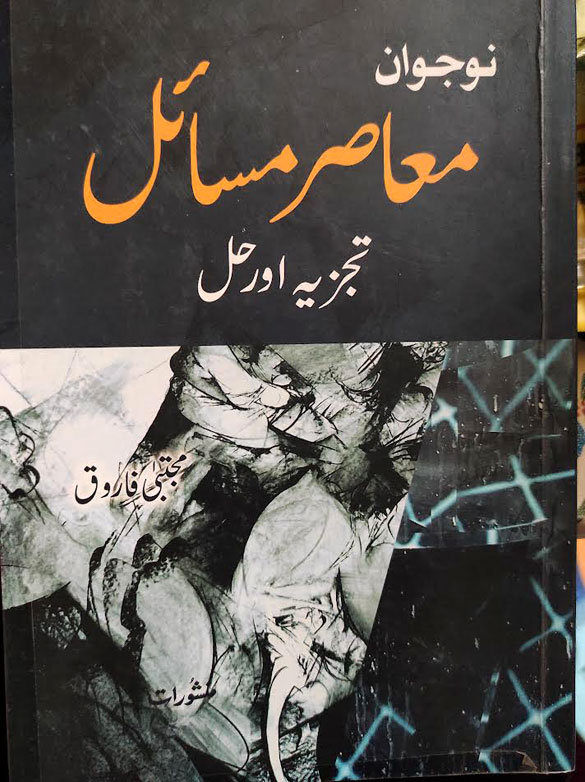
Nawjawan Maasa’er Masail: Tajziya Aur Hal (Contemporary Issues of Youth: Analysis and Solutions)
Author: Mujtaba Farooq
Publisher: Manshurat Publishers & Distributors, New Delhi
Year of Publication: 2022
Pages: 175 Price: Rs 200
ISBN: 9789383582983
-----
Youth are one of the important resources of any community. The revival, progress or decadence of any nation depends on the path youth choose collectively. This book written by a contemporary scholar of Islam, Mujtaba Farooq, deals with variegated issues baffling youth in our contemporary times. The Foreword of this compelling book, penned by the esteemed Prof Fahim Akhtar Nadwi, immediately positions it as a must-read for every young person, emphasizing its profound relevance among youth. Prof Nadwi’s endorsement is not casual praise; he underscores that this work has the potential to become popular among the youth, echoing a deep and growing need for thoughtful engagement with contemporary challenges faced by young Muslims. This foundational support sets a serious tone even before Mujtaba Farooq’s own voice is introduced.
In the Introduction, Mujtaba Farooq reveals that writing on youth issues through the lens of Islam is one of his favorite subjects, a passion clearly reflected throughout the book. His engagement with youth is not a sporadic intellectual exercise but a sustained, heartfelt commitment to addressing their dilemmas and aspirations. Importantly, he highlights a demographic reality often overlooked: Muslim countries harbor a larger youth population than non-Muslim ones. This sharp demographic insight is foundational because it frames the urgency of nurturing and educating the youth not simply as a religious obligation but as a socio-political necessity.
The essence of youth, Farooq writes, is activity and achievement, yet Islam simultaneously stresses the importance of piety. This dual imperative, being actively productive while maintaining deep spirituality, forms a central tension that this book explores in great detail. Farooq warns sharply against the danger of making excuses, which he sees as a subtle but effective way of undermining real life and the genuine challenges youth must face. This call to responsibility is timely and necessary in a world where distractions and rationalizations are abundant.
One of the key discussions revolves around the problematic influence of the West on Muslim youth. Farooq does not dismiss Western civilization outright but critiques the dichotomous impact it has had—one that Muslims must consciously overcome by steering towards a balanced path. This cultural dichotomy often leaves Muslim youth caught between two worlds, neither fully embracing their Islamic roots nor comfortably integrating into the dominant Western culture. Farooq views this as a crisis that requires deliberate disengagement from harmful influences and the cultivation of self-confidence rooted in Islamic values.
Articulating a visionary alternative, Farooq stresses the need for alternative cinema and films made with a moral and religious spirit. The absence of good cinematic content reflecting Islamic ethos is glaring, and its development, he argues, could be revolutionary in providing youth with uplifting narratives that inspire rather than degrade. He connects this artistic void to broader issues including violence among the youth, which he sees not merely as social deviance but as a symptom of deeper spiritual and intellectual malaise.
Farooq’s analysis of the psychological state of Muslim youth is meticulous and historically grounded. He identifies three core problems that puzzle and fragment the youth: emotionalism, rigidity or radicalization, and a sense of superiority. Each of these ailments is explored with nuance. Emotionalism, often dismissed as youthful exuberance, is here linked to broader identity crises and a lack of maturity in handling complex realities. Rigidity and radicalization represent dangerous entrapments that limit open discourse and push youth towards extremes. The sense of superiority, paradoxically, contaminates youthful vigor with arrogance, hindering sincere learning and humility. These three entwined challenges form a dense web breaking the potential of youth.
More alarmingly, Farooq confronts the taboo subjects of pornography and suicide among students—an uncomfortable yet necessary confrontation. By bringing these issues to light, he is not merely raising awareness but calling for proactive measures grounded in Islamic ethics and community support. This openness to tough topics distinguishes the book from others that might gloss over such pains, showing Farooq’s boldness and compassion.
The value of time emerges as another significant theme, with Farooq advocating for its vigilant management and warning against its wastefulness. In a world rife with distractions, he urges youth to reclaim their time for productive and enriching activities, linking this discipline directly to faith and success.
Education, Farooq asserts, is in crisis in the contemporary era because it has been reduced primarily to the acquisition of the "3Ps": profession, placement, and property. This reductionist view strips education of its holistic and transformative aims, turning it into a mere transaction for economic benefit. He calls attention to the duplicity in this educational system and the urgent need for a comprehensive, holistic educational plan that nurtures the intellect, spirit, and character of youth simultaneously.
Closely related is the lament over the lack of a reading culture among youth. Farooq stresses that the youth desperately need to cultivate a personal library and a habit of deep and regular reading. This is not simply about academic success but about building a lifelong relationship with knowledge and wisdom, which he suggests is crucial for building resilience and critical thinking.
Drawing inspiration from history, Farooq notes that despite unfavorable circumstances, many Muslim scholars produced great works—often while imprisoned. This historical example serves as a powerful reminder of the indomitable spirit of Islamic scholarship and perseverance, encouraging today’s youth to emulate this resilience and dedication.
Central to the book’s spiritual guidance is the detailed discussion on how to understand the Quran effectively, not in abstraction but as a living text that must be studied with care and contextual awareness. The book also urges youth to actively read and discover the Seerah of Prophet Muhammad (pbuh), presenting it as a key to understanding the practical application of Islamic principles in daily life.
Farooq identifies three crucial institutions responsible for training youth: parents and family, schools, and intellectuals, leaders, organizations, and Islamic revivalist movements. This tripartite framework is presented thoughtfully, showing the cumulative responsibilities these institutions hold in shaping youth identity, ethics, and knowledge.
The scholarly rigor of the book is evident in the meticulous referencing throughout each chapter. Sources are quoted well and with precision, reflecting Farooq’s commitment to academic integrity and depth. This makes the book not only accessible to young readers but also valuable for scholars and educators interested in youth and Islam.
In sum, this book by Mujtaba Farooq is a profound and timely contribution to understanding youth issues in the context of Islam. It combines candid critique with constructive proposals, grounded Qur’anic understanding, and practical wisdom. It speaks urgently to Muslims across the globe but particularly those from youthful populations in Muslim-majority countries. Its call to overcome emotional, social, and intellectual pitfalls while embracing piety and productivity is one that merits widespread attention and reflection. This work also fills an important void by insisting on the spiritual and ethical dimensions that contemporary discussions around youth often neglect. For anyone concerned with the future of Muslim youth, this book is indispensable.
-----
M.H.A. Sikander is Writer-Activist based in Srinagar, Kashmir
URL: https://www.newageislam.com/books-documents/youth-issues-context-islam/d/137801
New Age Islam, Islam Online, Islamic Website, African Muslim News, Arab World News, South Asia News, Indian Muslim News, World Muslim News, Women in Islam, Islamic Feminism, Arab Women, Women In Arab, Islamophobia in America, Muslim Women in West, Islam Women and Feminism