
Fundamentally: A Story That Happens In ISIS Iraq And Deals With Radicalisation And Its Brunt On Women
By New Age Islam Special Correspondent
5 December 2025
The story happens in ISIS Iraq and deals with radicalisation and its brunt on women. Fundamentally is a brave novel. It does not offer comfort. It does not provide neat morality. It does not offer dramatic redemption. Instead, it offers truth raw, honest, and human. Nadia Amin’s journey shows us how idealism meets reality. Sara’s story shows us how trauma meets ideology. The camps, the UN offices, and the dusty roads all show us how systems fail the very people they claim to help. And yet, despite all its darkness, the novel is full of tenderness. It believes in healing, even if healing is slow. It believes in compassion, even when compassion feels impossible. It believes in understanding, even when understanding feels dangerous. Fundamentally is a story about people who have lost their way, but are still trying desperately to find something that feels like home.
Fundamentally: A Novel
Book by Nussaibah Younis
Originally published: 2025
Genres: Humour, Satire, Domestic Fiction, Humorous Fiction, Political fiction, LGBT literature
-----
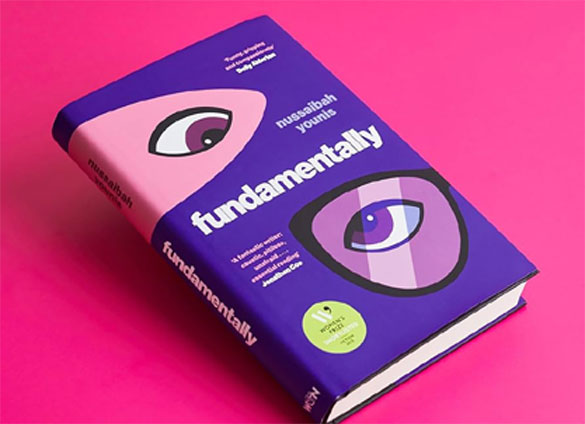
Fundamentally is not an easy novel to read, but it is an important one.
At first glance, it looks like a story about humanitarian work, deradicalisation, and the aftershocks of ISIS. But as you go deeper, you realise it is also a story about identity, longing, guilt, politics, bureaucracy, and the complicated ways in which human beings carry their pain. It is a novel that dares to enter a zone most writers avoid, the psychological ruins that war and ideology create inside ordinary people.
Nussaibah Younis, a political scientist and expert on Iraq, knows this landscape very well. Her professional experience becomes the novel’s backbone, but she does not drown the reader in theory. Instead, she offers human stories: messy, emotional, contradictory, full of longing and rage. Through the eyes of her protagonist, Nadia Amin, a young British-Iraqi academic, she explores what it means to “help” people who do not want help, what it means to confront one’s own past while trying to rebuild others’, and what it means to work in a system that is collapsing even as it pretends to save lives.
This review attempts to capture the heart of this novel, its plot, its themes, its strengths, its flaws and explain why Fundamentally is a book that stays with you long after you finish reading it.
The Story: A Journey From Theory to Harsh Reality
Nadia Amin is a young criminologist who has published a paper arguing that ISIS-affiliated women should be rehabilitated, not abandoned. She sees herself as someone who can make a real difference. To her, the United Nations job offer feels like a calling. She is also running away from a terrible breakup, from her disapproving mother, and from a life in London that no longer feels like home.
When she arrives in Iraq, she imagines herself as a problem solver, someone who will build programmes, design interventions, and transform the lives of women stuck in refugee camps. But nothing goes as planned. The humanitarian system is broken, full of politics, ego, internal power struggles, and endless paperwork. Permission letters take weeks. Funding disappears overnight. Local officials demand control. Everyone wants credit; no one wants responsibility.
And inside the camps, Nadia finds not blank faces waiting for rescue, but women with complicated, painful stories: some victims, some perpetrators, some both. Among them is Sara, a British woman who left home as a teenager to join ISIS and now lives in limbo, half-defiant, half-broken. Sara becomes the emotional centre of the novel, not because she is heroic, but because she is painfully human, sharp-tongued, clever, angry, vulnerable, and deeply confused about her own desires.
Nadia and Sara’s relationship is unpredictable. They argue, fight, laugh, cry, insult each other, and yet somehow build a fragile bond. Nadia sees in Sara a version of herself: someone caught between cultures, someone hungry for belonging, someone wounded by life in ways she cannot fully express. But the bond is never simple, never pure. Their relationship becomes a mirror of the novel itself: messy, uncomfortable, intimate, and morally complicated.
The story moves between the UN compound, government offices, dusty roads, bureaucratic meetings, and the refugee camps. There are threats of violence, but the real battles are internal. Nadia slowly realises that she may not be helping at all. She may even be making things worse. Her confidence fades. Her purpose dissolves. Her life becomes a blur of guilt and determination.
What makes the novel powerful is that it does not pretend to offer easy solutions. It shows how big words like “rehabilitation,” “justice,” and “peacebuilding” look impressive on paper but collapse on the ground. It shows how people like Nadia, well-meaning, goodhearted, idealistic, often walk into a world where hope is crushed by reality.
The World of the Novel: Between Aid Work and Emotional Chaos
One of the biggest strengths of Fundamentally is the world it builds. Younis captures the atmosphere of postwar Iraq in vivid detail: the heat, the dust, the exhaustion, the fear that lurks behind every smile, the endless checkpoints, the bureaucracy that stifles every initiative. She portrays the United Nations not as a noble institution, but as a place full of ambition, politics, insecurity, and ego. Aid workers arrive with enthusiasm and leave with burnout. Programmes are launched with speeches but die quietly when funding ends. Meetings feel like therapy sessions disguised as policy discussions.
And in the middle of all this, Nadia struggles with her own emotional ruins. She is heartbroken, directionless, and unsure of her worth. She wants to believe she can help the women in the camps, but she is not even sure she can help herself. Her experience becomes a reflection of a wider truth: in humanitarian spaces, the line between saviour and saved is sometimes very thin.
Younis also portrays Iraq not as a monolithic, wartorn land, but as a living society full of humour, courage, tradition, despair, and resilience. She does not stereotype people. She shows their complexity: local workers who distrust the UN but still cooperate; women who struggle to tell their stories; men who look powerful but feel powerless inside the system.
The novel’s realism comes from this layered portrayal. It is neither sentimental nor cynical. It is simply honest.
Nadia Amin: A Character Caught Between Worlds
Nadia is the heart of the novel, and she is written with remarkable honesty. She is not a hero. She is not a saviour. She is not even particularly stable. She is ambitious, insecure, emotional, sharp-tongued, sometimes arrogant, sometimes naïve, and often confused. Her voice is full of sarcasm, vulnerability, and internal conflict. It is refreshing to see a protagonist who does not pretend to be noble.
Her mixed identity, British-Iraqi, makes her an outsider everywhere. She is not fully accepted in Britain, and she is not at home in Iraq. Her mother wants her to be religious and restrained; Nadia wants freedom but also approval. She is trapped between cultural expectations and personal desires.
This identity conflict becomes central to the story. When Nadia interacts with Sara, who is also British and Muslim, their similarities and differences clash constantly. Sara ran toward extremism; Nadia ran toward humanitarianism. Both choices came from loneliness, guilt, and a desire for belonging.
Younis uses Nadia’s character to explore a universal truth: sometimes the people trying to fix the world are the ones most in need of healing.
Sara: Victim, Perpetrator, Survivor
Sara is the novel’s most fascinating character. She joined ISIS as a teenager, driven by some mix of emotional hunger, ideological confusion, grief, and rebellion. She is not shown as innocent, but she is also not portrayed as a monster. She is sarcastic, intelligent, manipulative, vulnerable, and full of unresolved trauma. She pushes people away but also longs for connection.
What makes Sara intriguing is that she constantly challenges Nadia’s assumptions. Nadia wants to see her as a victim; Sara resists. Nadia wants to understand her; Sara mocks her efforts. Nadia wants to save her; Sara questions the entire idea of “saving.”
Their dynamic becomes the emotional engine of the novel. Through Sara, Younis examines the uncomfortable truth that many women who joined ISIS were not simply brainwashed; they were searching for meaning in a world that refused to give them one. Some of them believed sincerely in the ideology. Some were misled. Some were escaping painful lives. The novel does not justify their choices, but it does ask us to look at the human stories behind those choices.
This humanisation is crucial. Without it, the novel would fall into simplistic moralising. Instead, it offers complexity, the kind that makes readers stop and think.
A Story of Contradictions: Aid vs Politics, Justice vs Mercy, Hope vs Despair
One of the strongest aspects of Fundamentally is its refusal to give easy answers. Every moral claim is complicated. Every good intention is challenged. Every act of compassion is overshadowed by political realities.
Nadia wants justice for the women in the camps, but the UN is stuck in procedures. Governments want to maintain stability, not compassion. Aid workers want to help, but their work is shaped by donors, deadlines, and diplomatic tensions. Refugees want to return home, but their countries refuse to take them back.
There is no clean solution.
There is only struggle.
The novel also explores themes of belonging. Nadia and Sara both feel deeply homeless, not physically, but emotionally. Nadia does not fit into British society or Iraqi society. Sara cannot return to Britain, and she cannot stay in the camp forever. Both women exist in an emotional wilderness.
This shared brokenness creates a fragile bond between them. But the bond is not a straight line of friendship. It is messy, uneven, full of distrust and strange affection. It reflects the novel’s central idea: healing is not a simple journey from darkness to light. It is a long, confusing, painful process.
Humour in the Middle of Despair
Despite its heavy themes, the novel uses humour brilliantly. Nadia’s inner monologue is full of dry wit, sarcasm, and self-mockery. Her descriptions of UN meetings, senior officials, broken systems, and aid industry egos are often hilarious. The dark humour gives the novel a refreshing honesty. It tells readers: even in war zones, people joke, laugh, complain, and express frustration. Life does not pause its absurdities just because tragedy exists.
This humour makes the novel more readable and more relatable. It gives the story emotional balance. Without it, the weight of the themes might overwhelm the reader.
What the Novel Teaches Without Preaching
Fundamentally raises important questions:
Can extremists be rehabilitated?
What does redemption mean?
Who has the right to forgive?
How does one rebuild a life after deep ideological harm?
Can trauma ever fully heal?
What role should humanitarian agencies play in conflict zones?
Is compassion enough?
The novel does not provide definite answers, but it forces readers to confront the complexity of these questions.
It also reminds us that behind every news headline about ISIS, terrorism, war, displacement, or deradicalisation, there are individual lives full of dreams, mistakes, pain, longing, and fear. It asks us to see the human being behind the category.
In a time when the world is full of polarised narratives, us versus them, victim versus perpetrator, good versus evil, this novel insists on nuance.
The Strengths of the Novel
The first strength is the authenticity of its setting. Younis writes Iraq like someone who knows it intimately, its sounds, its rhythms, its dangers, its beauty. The humanitarian system is portrayed with accuracy, not cliché. Every detail, from security protocols to power struggles inside offices, feels real.
The second strength is the emotional depth of Nadia and Sara. Their relationship is unpredictable and layered. They are not flat characters created just to make a point; they feel alive, contradictory, frustrating, lovable, broken, and human.
The third strength is the novel’s refusal to romanticise anything. It does not glorify humanitarian work or demonise ISIS women. It does not simplify trauma or exaggerate redemption. The realism makes the novel powerful.
The fourth strength is its writing style: simple, direct, warm, and often funny. Younis writes with clarity, not pretension.
The novel is ambitious, and sometimes its ambition becomes a weakness. Some secondary characters feel underdeveloped or stereotypical: the tired aid worker, the bureaucratic official, the rigid security officer. They serve the plot but do not always feel unique.
At moments, Nadia’s sarcastic tone becomes repetitive. Her emotional turbulence, while honest, can feel overwhelming.
The novel also assumes some familiarity with Middle Eastern politics, refugee camp dynamics, and deradicalisation. Readers unfamiliar with these worlds may find certain sections dense.
But these limitations do not significantly weaken the novel. The emotional core is strong enough to carry the story.
Why Indian Readers Should Read This Novel
Fundamentally may be set in Iraq, but its themes are relevant in India too. The novel touches on issues India faces:
identity crises among young people,
the dangers of online radicalisation,
the struggles of minority communities,
The politics of aid and development,
the clash between tradition and modernity,
The emotional wounds societies carry after violence.
Nadia and Sara could easily be young women in Mumbai, Delhi, Hyderabad, or Bengaluru caught between family expectations, global influences, and emotional scars.
This universality makes the novel meaningful for Indian readers. It is not just a story about Iraq. It is a story about all societies dealing with identity, trauma, extremism, belonging, and the longing to be understood.
Conclusion: A Novel That Leaves You Thinking
Fundamentally is a brave novel. It does not offer comfort. It does not offer neat morality. It does not provide dramatic redemption. Instead, it offers truth raw, honest, and human.
Nadia Amin’s journey shows us how idealism meets reality. Sara’s story shows us how trauma meets ideology. The camps, the UN offices, and the dusty roads all show us how systems fail the very people they claim to help.
And yet, despite all its darkness, the novel is full of tenderness. It believes in healing, even if healing is slow. It believes in compassion, even when compassion feels impossible. It believes in understanding, even when understanding feels dangerous.
Fundamentally is a story about people who have lost their way, but are still trying desperately to find something that feels like home.
It is a novel that stays with you.
A novel that makes you uncomfortable.
A novel that forces you to think about the world differently.
A novel that reminds you that behind every headline, there is a human story longing to be heard.
And that, perhaps, is its greatest achievement.
URL: https://www.newageislam.com/books-documents/fundamentally-isis-iraq-radicalisation-women/d/137902
New Age Islam, Islam Online, Islamic Website, African Muslim News, Arab World News, South Asia News, Indian Muslim News, World Muslim News, Women in Islam, Islamic Feminism, Arab Women, Women In Arab, Islamophobia in America, Muslim Women in West, Islam Women and Feminism