
Spiritual Consciousness Of The Afterlife
By Mushtaq Ul Haq Ahmad Sikander, New Age Islam
29 November 2025
The book is a reflective Urdu guide to integrating knowledge, action, and faith in everyday life, offering spiritually grounded, psychologically aware, and socially engaged principles for modern Muslims.
The book emphasis disciplined use of time, managing emotions (especially anger), mental well-being, and family-centred productivity as core Islamic responsibilities in contemporary life.
Main Points:
1. It Highlights spiritual consciousness of the afterlife, ethical habits like keeping promises and listening deeply, and cultivating positive thinking to transform one’s inner and social environment
2. It Explores organizational life of Islamic movements, outlining qualities of an effective Daee, responsible use of media and technology, and the importance of teamwork, networking, and accountable leadership.
3. It Critiques prevailing education systems that privilege degrees over character, redefining education as the pursuit of deep insight that shapes moral, intellectual, and social refinement
4. It presents leadership as a learnable art that can “do wonders,” linking skill-building, event management, democratic engagement, and voter understanding with value-based activism and social change.
-----
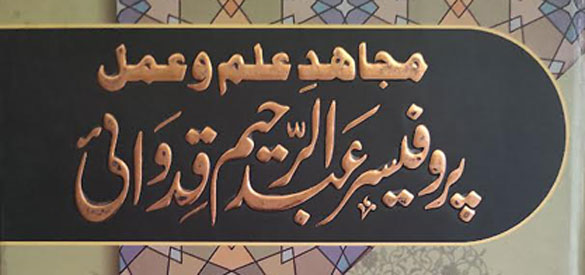
Ilm, Amal, Zindagi
Author: Dr Hassan Suhaib Murad
Compiled by: Salim Mansur Khalid
Publisher: Manshurat Publishers & Distributors, New Delhi
Year of Publication: 2023
Pages: 200, Price: Rs 250
ISBN: 9789383586097
-----
Dr. Hasan Sohaib Murad’s (1959-2018) book, compiled meticulously by Prof. Salim Mansur Khalid, emerges as a noteworthy contribution to contemporary Islamic thought and practical spirituality. This Urdu work is profoundly anchored in the legacy of the author’s father, Khurram Murad (1932-1996), a significant ideologue of Jamaat-e-Islami, whose influence echoes through the thematic currents and intellectual rigor of this text. What distinguishes this book is its structure: a deliberate array of small, reflective chapters that address substantive day-to-day issues faced by Muslims today, offering solutions deeply rooted in Islamic teachings.
Within its pages, the reader encounters a remarkable blend of spiritual insight and pragmatic guidance that transcends conventional boundaries. The book’s discourse begins with a profound meditation on the nature of time—a concept that Dr. Hasan Sohaib Murad treats not just as a mechanical sequence but a sacred trust and a fleeting opportunity. This nuanced understanding propels readers to reassess their relationship with time, emphasizing efficient management, prioritization, and mindful productivity. The author stresses that time lost is irrecoverable, urging a disciplined commitment to both personal growth and familial responsibilities. These reflections carry the weight of Islamic ethical imperatives, encouraging a reorientation of daily habits toward meaningful outcomes.
The treatment of emotional well-being is equally compelling. In an age marked by stress and mental agitation, the guidance on controlling anger stands out as particularly relevant. Rather than simply prescribing restraint, the author delves into psychological awareness and spiritual calm to cultivate patience. This constructive model frames anger not as an inevitable human flaw but as a challenge to be skillfully managed for healthier interpersonal relationships and inner peace. Moreover, the book courageously addresses mental health issues, often side-lined in traditional discourse, teaching how one may overcome mental siege through faith, balanced mental hygiene, and purposeful living.
A recurring theme is productivity, aimed explicitly at harmonizing personal ambitions with family priorities. Dr. Murad advises against the paralyzing fear of failure, calling for resilience and faith-driven perseverance. This tone institutes hope and practical optimism, where setbacks become lessons rather than deterrents. Similarly, the ethical backbone of Islam is highlighted through discussions on honouring promises and the transformative power of genuine listening. Unlike mere speaking—which can be superficial or self-serving—active listening is presented as a moral practice fostering deeper understanding and social cohesion.
Equally enriching is the spiritual dimension of preparing for the afterlife. This is no abstract doctrine but a lively reminder that terrestrial endeavours are accountable to a higher purpose. Preparation for life hereafter informs a conscientious approach to day-to-day decision-making, blending hope with a sense of responsibility. The author’s ability to relate eschatological awareness with everyday conduct invites readers to live balanced lives where spiritual and material goals intertwine harmoniously.
The book then shifts to address organizational dynamics within Islamic movements, notably exploring the principles behind Tanzeem (organization) and Tahreek (movement). Dr. Murad provides deep insights on how these structures must be run with integrity, strategic planning, and collective discipline. A detailed exposition on the characteristics of a Daee —the Islamic preacher or caller—emphasizes qualities such as sincerity, patience, wisdom, and leadership. The Daee emerges not only as a religious figure but as a pragmatic guide who uses communication with judicious care. The caution against careless use of media and technology is especially timely; the author warns against their tendency to incite negativity, waste time, and propagate harm, while advocating their potential for positive Dawah and spreading knowledge if used responsibly.
Education, a critical theme, receives thoughtful critique anchored in both its essence and systemic challenges. Dr. Murad laments the prevalent teacher selection process that values formal degrees over character and effective teaching skills. This narrow qualification criterion, he argues, leads to a decline in educational standards and moral instruction. The book insists on education not merely as knowledge acquisition but as a vehicle for insight—an elusive but transformative understanding that reveals the inner workings of human and societal affairs. This insight, difficult to attain yet invaluable, is portrayed as a cornerstone for genuine intellectual and spiritual growth.
Leadership as a practical science and art occupies a large and illuminating portion of this work. Described as capable of “doing wonders,” leadership is dissected through the lenses of skill development, team-building, and event management. Islamic congregations, meetings, and annual gatherings are portrayed as real-world tests for leaders, requiring strategic foresight, patience, and organizational prowess. Building effective teams and expansive networks is carefully linked to the success of movements and communities, underscoring the need for thoughtful, inclusive collaboration.
Social and political realities, including understanding voter behavior and the complexities of democratic engagement, are also foregrounded. Dr. Murad’s treatment urges cautious optimism and emphasizes the importance of discerning trust and accountability within societal structures. He insists on fixing responsibility clearly so that leadership and membership alike can be held answerable to their duties.
A critical psychological dimension permeates the text in its analysis of negative thinking and its corrosive effects on individuals and communities. The author explores how pessimism and distrust infect the environment and spiritual climate, advocating deliberate cultivation of constructive and positive mental habits. Complementing this is advice on developing reading skills—a foundation for lifelong learning—and the importance of thoroughly understanding concepts prior to their implementation. This intellectual discipline is vital in an era saturated with information yet often lacking in wisdom.
In conclusion, Dr. Hasan Sohaib Murad’s book stands out as a comprehensive manual for Muslims striving to navigate modern life with faith, wisdom, and effectiveness. Its unique format—breaking down complex subjects into manageable reflections—makes it accessible without sacrificing depth. Drawing from the profound legacy of his father, Dr. Murad offers a timely reminder of Islam’s transformative potential when lived authentically and with awareness.
The book’s wide scope, covering everything from spiritual preparation, mental health, and family productivity to leadership, education, and social responsibility, renders it invaluable for individual readers, educators, leaders, and activists alike. It challenges conventional complacency, urging readers to act with deliberation, integrity, and a forward-looking spirit. At once practical and inspirational, this work contributes significantly to contemporary Islamic literature, bridging tradition and modernity with clarity and hope.
For readers seeking intellectual stimulation coupled with actionable guidance, this book is a must-read, representing not only a continuation but an evolution of the Jamaat-e-Islami’s intellectual heritage. Its call for dynamic, insightful leadership and faithful, well-informed activism resonates powerfully in today’s complex world, making it a beacon for those devoted to faith and positive change.
-----
M.H.A. Sikander is Writer-Activist based in Srinagar, Kashmir
URl: https://www.newageislam.com/books-documents/spiritual-consciousness-afterlife/d/137814
New Age Islam, Islam Online, Islamic Website, African Muslim News, Arab World News, South Asia News, Indian Muslim News, World Muslim News, Women in Islam, Islamic Feminism, Arab Women, Women In Arab, Islamophobia in America, Muslim Women in West, Islam Women and Feminism