
From West London to ISIS: Unpacking the Making of 'Jihadi John'
By Mushtaq Ul Haq Ahmad Sikander, New Age Islam
13 December 2025
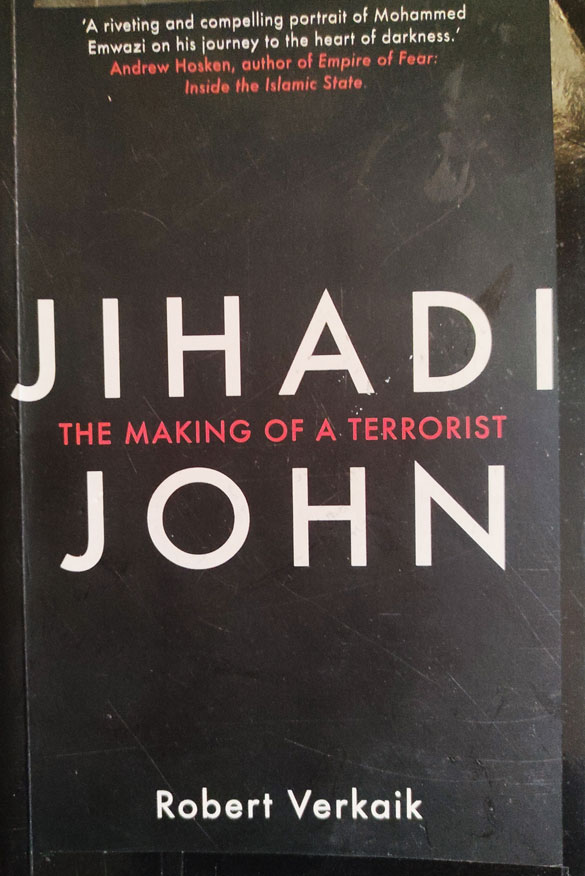
Jihadi John: The Making of a Terrorist
Authors: Robert Verkaik
Publisher: Oneworld Book, London
Pages: 302
Price: $ 14.99
ISBN: 9781780749433
…
Mohammed Emwazi, known globally as “Jihadi John,” was a 26-year-old man from West London whose transformation from a troubled youth into one of the most notorious executioners for the Islamic State shocked the world. His role in the brutal beheading of U.S. journalist James Foley and other Western hostages became a defining image of ISIS’s global terror campaign, but his story is far more complex than the media’s portrayal of a born extremist. Emwazi’s journey reveals the deep personal, social, and political factors that can push a young person toward radicalization and violence.
Emwazi was born in Kuwait and came to the UK as a refugee with his family in the 1990s, settling in North-West London. His early years were marked by bullying and a sense of alienation, but he was not initially religious or radical. As a teenager, he was part of a gang that engaged in typical urban youth activities—drinking, smoking, and socializing. Friends and acquaintances described him as polite, helpful, and full of bravado, someone who loved Western culture and found identity in “black” urban styles, not in mosques or religious study. He studied computing at the University of Westminster and later took a CELTA English teaching qualification, attempting to build a normal life for himself.
Yet beneath this surface, Emwazi was deeply troubled. He suffered from mental health issues and had a series of painful relationship breakups, experiences that left him vulnerable and searching for meaning. Around this time, he began to encounter police and intelligence scrutiny, particularly after being linked to a group of young men planning to join al-Shabaab in Somalia. This surveillance intensified, with Emwazi being stopped at airports, questioned repeatedly, and even having his personal life intruded upon—his engagement to a Somali woman in the UK reportedly fell apart after police visited her family. These experiences deepened his sense of persecution and mistrust toward the authorities.
As his relationship with the state deteriorated, Emwazi began to seek solace in religion. He started practicing Islamic customs more seriously and aspired to become a hafiz, someone who memorizes the Quran. This religious turn was influenced by a hardline Salafi jihadist worldview, one that rejected Western culture and embraced global jihad. Events like the Danish cartoon controversy, the wars in Iraq and Afghanistan, and the rise of al-Shabaab in Somalia resonated powerfully with young British Muslims who felt their communities were under attack. These narratives helped steer Emwazi and others away from crime and drugs toward a violent, religiously framed identity.
The British government’s counter-terrorism strategy played a crucial role in Emwazi’s trajectory. Despite being on the radar of MI5 and MI6 for years, he was allowed to leave the UK for Syria, a decision that many believe was a result of intelligence agencies hoping to track suspected extremists abroad. When Emwazi tried to travel to Kuwait to live with his father’s family, British authorities blocked his return and instructed Kuwait to deny him a visa, effectively trapping him between two countries and making him feel caged and stateless. This relentless surveillance and exclusion, combined with his inability to find stable work or a future in Britain, became a radicalizing force, turning his sense of injustice into a deep rage that ISIS later channeled into violence.
Once in Syria, Emwazi’s anger and frustration translated into violent extremism. He was entrusted with the care of foreign hostages held by ISIS and became infamous for executing hostages in ISIS propaganda videos, his British accent and masked executioner role symbolizing the terror threat emanating from the Middle East. The man who had once seemed like a victim of state harassment transformed into a cold, violent executioner, part of the ISIS cell known to hostages as “The Beatles.”
The revelation of Emwazi’s identity devastated those who knew him as a polite, troubled young man before his transformation. He married and had a son while embedded in ISIS-controlled territory. His reign of terror came to an end when he was killed in a targeted drone strike, identified through intelligence sources that tracked him in Raqqa.
Emwazi’s story also sheds light on broader issues. British foreign policy, including the initial support of rebels in Libya and Syria, shifted over time and indirectly contributed to the chaos that allowed ISIS to flourish. Though the UK and its allies did not directly train ISIS militants, they created a chaotic environment that became a breeding ground for jihadism. The book critically examines the failures of the British government’s deradicalization programs. These efforts often alienate Muslims by singling out communities, pushing young people away rather than engaging them constructively. Some NGOs and advocacy groups have vested interests in perpetuating a cycle of conflict and mistrust, further complicating the possibility of genuine deradicalization. The breakdown of trust between the Muslim community and government agencies hinders effective counter-extremism, suggesting that without rebuilding bridges and adopting a more nuanced approach, the cycle of radicalization and terrorism risks continuing unaddressed.
In sum, the story of Jihadi John is a cautionary tale of missed opportunities, complex identities, and the tragic consequences of alienation. Emwazi’s path from a bullied schoolboy to a killer executing hostages on global screens exposes not only the individual vulnerabilities that extremism exploits but also the systemic failures of intelligence, social policy, and community relations in contemporary Britain.
…
M.H.A. Sikander is Writer-Activist based in Srinagar, Kashmir.
URL:https://www.newageislam.com/books-documents/london-isis-jihadi-john/d/137989
New Age Islam, Islam Online, Islamic Website, African Muslim News, Arab World News, South Asia News, Indian Muslim News, World Muslim News, Women in Islam, Islamic Feminism, Arab Women, Women In Arab, Islamophobia in America, Muslim Women in West, Islam Women and Feminism