
Dr. Tahirul Qadri’s Book 'Martyrdom of Imam Hussain: Philosophy and Teachings:' A Summary

By Ghulam Ghaus Siddiqui, New Age Islam
26 June 2026
(An Explanatory Note: The following text is an academic synopsis of the book authored by Dr. Muhammad Tahirul Qadri. It is important to clarify here that it is by no means necessary for me to agree with all the scholarly, intellectual, and ideological views of the author; nor should this summary be construed as my absolute endorsement. Indeed, I still hold certain scholarly reservations and questions regarding some of Dr. Tahirul Qadri’s other views and theories. However, because this book presents the sacred subject of remembering the Imam and the martyrdom of Sayyiduna Imam Hussain رضی اللہ عنہ in an exceptionally captivating, powerful, and impactful style, this detailed summary is being presented for the benefit of our esteemed readers solely in appreciation of its scholarly and literary merit.)
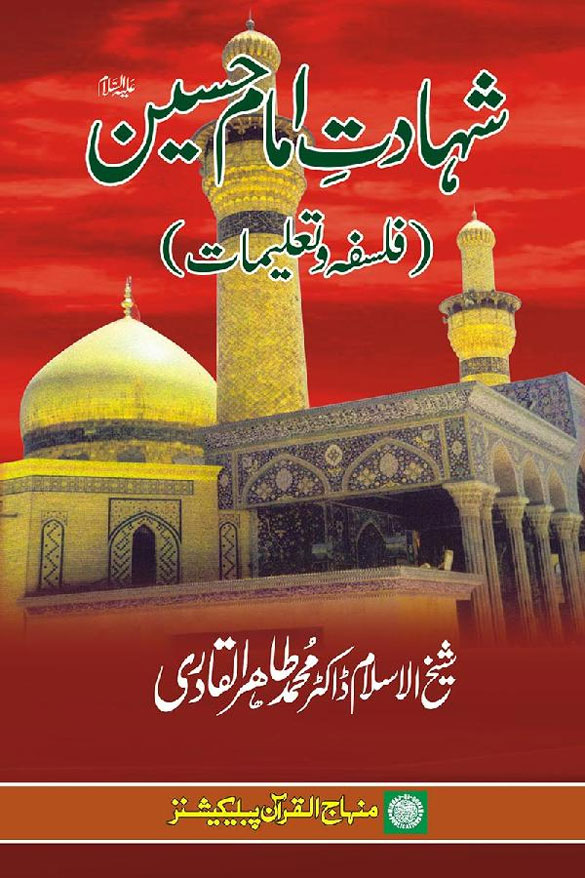
The Martyrdom of Imam Hussain رضی اللہ عنہ: Philosophy and Teachings
• Author: Dr. Muhammad Tahir-ul-Qadri
• Language: Urdu
• Pages: 272
• Synopsis and Analysis: Ghulam Ghaus Siddiqui
1. Background and Introduction to the Book
This introductory section of the book eloquently unveils the intellectual, moral, and historical background from which the Battle of Karbala emerged:
Distinction among Historical Battles
No era of human history has ever been devoid of the mutual conflict between good and evil, truth and falsehood. The early era of Islamic history itself is filled with the prominent chapters of the timeless sacrifices and great martyrdoms of the illustrious Companions رضی اللہ عنہم. Yet, the universal renowned, perpetual immortality, widespread acceptance, and centuries-spanning remembrance that fell to the lot of Sayyiduna Imam Hussain رضی اللہ عنہ remains unparalleled in the entire universe of martyrdom. Even after the passage of over thirteen and a half centuries, the freshness, vitality, and brilliance of this beautiful remembrance remain entirely undiminished.
Temporary Power vs. Eternal Life
The compiler has clarified this cosmic truth: for a tyrant, transgressor, or oppressor to appear temporarily established or to seize the throne of power in this fleeting world is not a true victory. Rather, in accordance with the Divine Sunnah (practice), it is merely a temporary respite (istidraj).
Inebriated by the intoxication of power, Yazid forgot his reality. Upon ascending the throne, he displayed Pharaonic arrogance and inflicted such mountains of tyranny upon the Family of the Prophet صلی اللہ علیہ وآلہ وسلم in the desert of Karbala that the heart of history shuddered.
Yet, behold the divine law of retribution: when Allah's ultimate seizure came—sanctified by the oppressed blood of this handful of holy souls—nearly 170,000 Yazidites died a humiliating death in exchange for those seventy-two (72) pure martyrs. Yazid, who had launched a military campaign against Medina, suspended congregational prayers in the Prophet’s Mosque for three days, and tethered horses near the Resting Place of the Prophet صلی اللہ علیہ وآلہ وسلم, faced such exemplary and wretched ignominy that at the very next turn of history, horses and camels were tethered over his own grave, leaving their dung and urine upon it.
Compilation and Arrangement of the Discourses
This book is not originally a traditional literary composition; rather, it is a collection of discourses delivered by Dr. Muhammad Tahirul Qadri at various times. The compiler has meticulously edited them with necessary additions, scholarly references, and academic subtleties, transforming them into a permanent, comprehensive, and authoritative document.
Chapter One: The Lexical and Terminological Dimensions of "Martyr" and the Concept of Martyrdom
In this chapter, the author presents a uniquely captivating and insightful discussion on the lexical, terminological, and intellectual dimensions of the word Shaheed (martyr). The words Shaheed (witness/martyr), Shaahid (witness), Mashhood (the witnessed), and Mushahadah (observation/vision) are all derived from the Arabic root word Shuhood (to witness/be present). It carries several fundamental lexical meanings, in the light of which the Islamic philosophy of martyrdom vividly unfolds:
The First Meaning: To Be Present and Existing
The Glorious Command of the Divine Court states:
{أَمْ كُنتُمْ شُهَدَاءَ إِذْ حَضَرَ يَعْقُوبَ الْمَوْتُ}
"Were you present when death approached Jacob?" (Surah Al-Baqarah, 2:133)
According to this lexical meaning, a Shaheed is one who is present and witnessing. In the light of the blessed Hadiths, two soul-stirring dimensions of this "presence" are described:
1. Unveiled Presence in the Divine Court:
When an ordinary believer departs from this fleeting world, thousands of veils of light and darkness intervene between their soul and Almighty Allah due to their worldly conditions and human frailties. Martyrdom, however, is such a gateway of mercy that the moment the soul flies from its earthly cage, all veils are lifted in an instant. The servant is blessed with direct discourse and the honour of the Divine Vision. This is proven by the account of the great martyr of the Battle of Uhud, Hazrat Abdullah bin Amr bin Haram رضی اللہ عنہ, with whom Allah the Lord of Honour spoke directly, face-to-face, without any veil (Sunan Ibn Majah, Chapters on Jihad).
2. The Ecstatic Presence of Angels:
Upon the wronged departure of a martyr, a procession of celestial beings descends. As the martyr's blood flows, angels shade them with their wings, just as they shaded the earthly body of Hazrat Abdullah رضی اللہ عنہ at Uhud (Sahih al-Bukhari, Book of Jihad). In this regard, the death of a martyr is called Mashhood bil-Mala'ikah (attended and witnessed by the angels).
How Does a Martyr Remain Alive After Death?
When the Divine Manifestation is revealed to the martyr, the soul is granted such light, brilliance, and immortal power in the station of Illiyyin (the highest heaven) that even after separating from the body, it keeps the earthly remains beneath the soil fresh and eternally preserved.
A material example of this is the sun. Despite being millions of miles away from a plant on Earth, the sun infuses it with growth and life through its thermal influence. The body does not require the physical presence of the soul, but rather its luminous influence. The Quranic evidences for this bodily preservation are as follows:
• The account of Hazrat Uzair علیہ السلام, whose blessed body lay without a soul in a barren desert for one hundred (100) years, yet by Divine Power, it neither decayed nor decomposed (Surah Al-Baqarah, 2:259).
• The account of Hazrat Sulaiman علیہ السلام, who remained standing, leaning on his staff, for a year even after his passing, while the subjugated Jinn continued their labour of constructing the Mosque (Surah Saba, 34:14).
• The mention of the Companions of the Cave (Ashab al-Kahf), who slept in the embrace of the cave for three hundred and nine (309) years, and yet their bodies, and even the body of their dog, remained safe from the ravages of time (Surah Al-Kahf, 18:25).
A Contemporary Historical Witness
Some sixty to seventy years ago near Baghdad, Iraq, due to the erosion caused by the Euphrates River, the earth was opened to relocate the shrines of two illustrious Companions (Hazrat Salman al-Farsi رضی اللہ عنہ and Hazrat Jabir bin Abdullah رضی اللہ عنہ). Even though thirteen hundred years had passed, their sacred bodies and shrouds were completely fresh. This eye-opening event was broadcast by the international press, and the Government of Iraq reinterred them with official state honours.
The Second Meaning: The Attainer / the One Who Finds
It is stated in the Divine Word:
{فَمَنْ شَهِدَ مِنْكُمُ الشَّهْرَ فَلْيَصُمْهُ}
"So whoever among you witnesses the month, let him fast it." (Surah Al-Baqarah, 2:185)
According to this definition, a Shaheed is one who attains their ultimate goal. While ordinary believers must pass through many gruelling stages of the realm of Barzakh (the intermediary realm), the questioning of Nakeer and Munkar, and the Scales of Justice, the martyr is so fortunate that with the very first drop of blood that falls, they practically attain forgiveness, an abode in Paradise, safety from the punishment of the grave, salvation from the Greatest Terror (al-Faza' al-Akbar), the robes of faith, marriage to the Hoor al-Iyn (the maidens of Paradise), and a decree of intercession for seventy (70) of their relatives (Sunan at-Tirmidhi, Virtues of Jihad).
The Third Meaning: The Observer / the Visionary
At the moment of ultimate sacrifice, the martyr experiences such an ecstatic vision of the Absolute Beauty of the Divine and the realm of attributes that they become entirely oblivious to the pain of their severed neck. In Paradise, human yearning usually fades after the fulfilment of every desire, yet the heart of the martyr will remain restless even in the highest heavens, wishing to be sent back to the world so their body can be riddled by swords ten times over, just to repeatedly draw from the sheer ecstasy of that Divine Vision at the moment of martyrdom (Sahih al-Bukhari, Book of Jihad / Sunan an-Nasa'i). Due to this total immersion in Absolute Beauty, they perceive death only as much as one feels the pinch of an ant (Sunan at-Tirmidhi, Chapters on Jihad).
Note from the Book: The explicit Quranic proof for this is given from Surah Yusuf (12:31). When the women of Egypt observed the fleeting beauty of a son of Adam (Hazrat Yusuf علیہ السلام), their captivation was such that they cut their own hands instead of the fruit and did not even notice the pain. Imagine, then, when a martyr beholds the Eternal and True Beauty, how could the agony of a severed neck ever touch their consciousness!
The Fourth Meaning: The Helper
It is revealed in the Holy Quran:
{وَادْعُوا شُهَدَاءَ كُمْ مِنْ دُونِ اللَّهِ}
"...and call upon your helpers besides Allah, if you are truthful." (Surah Al-Baqarah, 2:23)
By presenting the offering of their life, the martyr proves to be a true devotee and helper of Allah's religion, the nation, and the community. Descending into the darkness of mortality themselves, they bequeath the light of immortality to their nation.
Their example is like that of a matchstick, which burns itself down to ashes but, at the cost of its own existence, bestows an endless chain of light upon extinguished lamps. Since the Divine Rule dictates that every good deed is rewarded tenfold, the Generous Lord grants ten times the eternal life to the one who sacrifices a single temporary existence. Hence, it is commanded: do not even think of them as dead; they are enjoying the sustenance of their Lord (Surah Ali 'Imran, 3:169-170).
The Fifth Meaning: The Witness
The Almighty states:
{وَاسْتَشْهِدُوا شَهِيدَيْنِ مِنْ رِجَالِكُمْ}
"...and bring to witness two witnesses from among your men." (Surah Al-Baqarah, 2:282)
With the final drop of their blood, the martyr writes the ultimate and true testimony that the ideology and religion for which they laid down their life is the absolute Truth. In reward for this timeless testimony, the Almighty grants them one hundred (100) such sky-high stations in the highest Paradise (Firdous) that the distance between any two stations is as vast as the expanse between the heavens and the earth (Sahih Muslim, Book of Leadership).
Chapter Two: The Uniqueness of the Martyrdom of Imam Hussain رضی اللہ عنہ
This chapter encompasses the illustrious evidences and supernatural attributes that distinguish and elevate the Battle of Karbala above the remembrance of all other martyrs in the universe:
Popularity Prior to the Martyrdom
It is an established norm of the world that a martyr is spoken of only after achieving the rank of martyrdom. However, Imam Hussain رضی اللہ عنہ is the sole martyr in human history whose martyrdom was widely spoken of during his very infancy (childhood).
Hazrat Umm al-Fadl رضی اللہ عنہا (the wife of Hazrat Abbas رضی اللہ عنہ) narrates that she saw a terrifying dream in which a piece of the Prophet’s صلی اللہ علیہ وآلہ وسلم blessed body was severed and fell into her lap. Providing the interpretation, the Holy Prophet صلی اللہ علیہ وآلہ وسلم said that a son would be born to Fatima رضی اللہ عنہا, whom she would nurse. Then, a day came when tearful, sorrowful drops flowed from the blessed eyes of the Prophet صلی اللہ علیہ وآلہ وسلم, and he said: "Gabriel علیہ السلام has just come and given me the heart-wrenching news that my own Ummah (nation) will soon mercilessly murder this piece of my heart, Hussain, upon a land of red soil." (Mishkat al-Masabih, Chapter on the Virtues of the Ahl al-Bayt).
The Vial of Soil
The Holy Prophet صلی اللہ علیہ وآلہ وسلم kissed the red soil brought by Gabriel علیہ السلام, pressed it to his chest, and entrusted it exclusively to Hazrat Umm Salamah رضی اللہ عنہا among all the Pure Consorts, saying: "O Umm Salamah! When this soil turns into pure blood, know that my son Hussain has been martyred." (Al-Mu'jam al-Kabir by At-Tabarani, 3:108). The foresight of Prophethood was witnessing that when the tragedy of Karbala would unfold, Hazrat Umm Salamah رضی اللہ عنہا would be the only surviving spouse of the Holy Prophet صلی اللہ علیہ وآلہ وسلم, while all the others would have departed from this fleeting world.
Seeking Refuge from 60 AH and the Rule of Boys (Imarat al-Sibyan)
The Prophet صلی اللہ علیہ وآلہ وسلم explicitly pointed out the year of the martyrdom and the tribulations of that era during his earthly life, warning: "Seek refuge with Allah from the year sixty Hijri (60 AH) and the rule of boys (the governance of intellectually deficient individuals)." (Al-Bidayah wan-Nihayah, 8:231).
It was in this very year of 60 AH that the wretched Yazid seized the throne of power, concerning whom the Prophet صلی اللہ علیہ وآلہ وسلم had prophesied that he would be the first person in his Ummah to convert the just system of the Caliphate into the toxic atmosphere of hereditary monarchy. Hazrat Abu Hurairah رضی اللہ عنہ was aware of this Hadith, which is why he used to frequently pray: "O Allah! I seek to come to You before the onset of the year 60 AH and before witnessing the rule of boys." Consequently, Allah Almighty accepted his prayer, and he passed away in the year 59 AH.
Being witnessed by the Prophet (Mashhood bin-Nabi صلی اللہ علیہ وآلہ وسلم)
While angels are commissioned by the Divine Court to capture the souls of ordinary martyrs, Imam Hussain رضی اللہ عنہ is the unique and unparalleled martyr of the universe whose martyrdom is Mashhood bin-Nabi—meaning the Messenger of Allah صلی اللہ علیہ وآلہ وسلم himself was spiritually present at the time of martyrdom, and this battle concluded under his direct custody.
Hazrat Abdullah bin Abbas رضی اللہ عنہ states: "I saw the Holy Prophet صلی اللہ علیہ وآلہ وسلم in a dream at midday; his blessed hair was dishevelled, his radiant face was covered in dust, and in his sacred hand was a vial filled with blood. The Prophet صلی اللہ علیہ وآلہ وسلم said: 'This is the blood of Hussain and his companions, which I have been collecting since morning.'" (Mishkat al-Masabih).
When Ibn Abbas رضی اللہ عنہ awoke and verified the date and time, it corresponded exactly to the precise moment Imam Hussain رضی اللہ عنہ was slaughtered in the scorching plains of Karbala. Similarly, the Mother of the Believers, Hazrat Umm Salamah رضی اللہ عنہا, was also granted a vision of the Holy Prophet صلی اللہ علیہ وآلہ وسلم in a dream with a dust-laden head and blessed beard, and he said: "I am returning just now after witnessing the murder of Hussain." (Sunan at-Tirmidhi, Chapters on Virtues).
The Miraculous Testimony of the Sacred Head upon the Spear
It is an unalterable verdict of history that once a head is severed from the body, no human retains the faculty of speech. Yet, when the blessed head of Imam Hussain رضی اللہ عنہ was raised high upon the point of a spear in the marketplaces and streets of Damascus, the narrator Minhal bin Amr رضی اللہ عنہ witnesses firsthand that a person in front of the sacred head was reciting this verse of Surah Al-Kahf:
{أَمْ حَسِبْتَ أَنَّ أَصْحَابَ الْكَهْفِ وَالرَّقِيمِ كَانُوا مِنْ آيَاتِنَا عَجَبًا}
"Or have you thought that the companions of the cave and the inscription were, among Our signs, a wonder?" (Surah Al-Kahf, 18:9)
Thereupon, Allah the Lord of Honour miraculously granted an eloquent tongue to the severed, pure head, and a voice resonated from the tip of the spear: "More wondrous than the account of the Companions of the Cave is my slaughter, and the carrying of my head upon a spear from street to street!" (Sharh as-Sudoor, p. 88).
Chapter Three: The Martyrdom of Imam Hussain رضی اللہ عنہ: A Chapter of the Prophet's Biography (Seerah)
In this chapter, Dr. Tahirul Qadri unties an intellectual knot, demonstrating that the volume of the Prophetic Biography (Seerah) would remain incomplete without the supreme sacrifice of Imam Hussain رضی اللہ عنہ:
The Comprehensiveness of Perfect Attributes
The essence of the Holy Prophet صلی اللہ علیہ وآلہ وسلم is the gathering point of all perfect attributes. Every blessing of Allah distributed across the universe was channelled through him. Prophethood was granted to the Prophets, absolute truthfulness to the Siddiqueen (the Truthful), and righteousness to the Salieheen (the Righteous) all from his threshold.
Now, if the monumental blessing and station of martyrdom—which is one of the four explicitly favoured categories of Allah's servants—had not visibly manifested in its physical completeness during the earthly life of the Prophet صلی اللہ علیہ وآلہ وسلم, other martyrs of the universe could have claimed a partial exclusivity in this virtue. Allah Almighty would never allow any virtue to be withheld from His Beloved.
The Promise of Divine Protection
Conversely, there was also a cosmic, divine decree in place:
{وَاللَّهُ يَعْصِمُكَ مِنَ النَّاسِ}
"And Allah will protect you from the people." (Surah Al-Ma'idah, 5:67)
If the Holy Prophet صلی اللہ علیہ وآلہ وسلم had tasted the chalice of martyrdom directly at the hands of the disbelievers or enemies in Mecca or Medina, the new-born movement of Islam would have scattered at its very inception, and people might have succumbed to despair and apostasy. This psychological reality was witnessed during the Battle of Uhud, where a mere rumour of the Prophet’s صلی اللہ علیہ وآلہ وسلم martyrdom broke the resolve of even the greatest Companions رضی اللہ عنہم.
The Apportionment of the Beginning and the Fulfilment
Therefore, Divine Providence decreed that the inner core and spirit of martyrdom (its primary intent, ultimate yearning, and absolute resolve) remain present at the highest level of perfection within the person of the Holy Prophet صلی اللہ علیہ وآلہ وسلم. He expressed this deep longing repeatedly: "I wish that I should be martyred in the way of Allah, then be brought back to life, then be martyred again." (Sahih al-Bukhari, Book of Jihad).
Furthermore, the physical initiation of this process was also manifested during his life:
• The Secret (Hidden) Martyrdom: Initiated at Khayber via the poisoned meat fed to him by a Jewish woman, the lingering effects of which the Prophet صلی اللہ علیہ وآلہ وسلم felt until his final moments.
• The Manifest (Overt) Martyrdom: Initiated during the Battle of Uhud, where his blessed teeth were partially chipped and his sacred blood flowed.
The Ultimate Manifestation upon the Two Noble Grandsons
For the final execution and absolute completion of this martyrdom, Allah Almighty selected the Prophet's own sons (his grandsons), who were of his blood, carried his lineage, and whom he affectionately addressed as "my son."
Consequently, upon the first branch of the Prophetic tree, Hazrat Imam Hasan رضی اللہ عنہ, the Prophet's "secret martyrdom" found its completion through poisoning. Upon the second branch, Hazrat Imam Hussain رضی اللہ عنہ, the Prophet's "manifest martyrdom" reached its absolute zenith when his sacred head was severed in a state of extreme thirst on the scorching desert sands. Therefore, this sacrifice of the two noble princes was not merely a personal one; it was the unmanifested chapter of the Prophet's own Seerah, written in blood upon the plains of Karbala.
Chapter Four: The Martyrdom of Hussain رضی اللہ عنہ in the Light of Facts and Historical Events
In this chapter, the author consolidates all authentic historical facts and the true narrative from Medina to the court of Damascus, supporting each claim with rigorous evidence:
The Pressure for Allegiance and the Refusal
Following the passing of Hazrat Amir Mu'awiyah رضی اللہ عنہ, when Yazid ascended the throne, he wrote to the Governor of Medina, Walid bin Utbah, ordering him to secure immediate allegiance (Bay'ah) from Imam Hussain رضی اللہ عنہ and Hazrat Abdullah bin Zubair رضی اللہ عنہ—and to execute them if they refused. Marwan bin Hakam similarly urged Walid to act with extreme severity.
Engaging in dialogue with Walid, Imam Hussain رضی اللہ عنہ flatly refused allegiance based on Yazid’s transgressive and corrupt character. That night, weeping at the final resting place of his maternal grandfather, the Holy Prophet صلی اللہ علیہ وآلہ وسلم, the Imam offered his farewell greetings and migrated with his entire household to Mecca. Although Hazrat Muhammad bin Hanafiyyah رضی اللہ عنہ advised him to seek refuge in remote villages or deserts to avoid discord within the Ummah, the Imam chose the uncompromising path of ultimate resolve (Azeemat).
The Diplomatic Mission to Kufa and the Martyrdom of Muslim bin Aqeel رضی اللہ عنہ
Upon his arrival in Mecca, the people of Kufa sent thousands of letters to the Imam, imploring him to assume leadership and bring an end to the tyrannical Yazidite monarchy. To establish definitive proof (Itmam al-Hujjah), the Imam dispatched his first cousin, Hazrat Muslim bin Aqeel رضی اللہ عنہ, to Kufa. The Kufans initially welcomed him with immense fervor, and within days, over 18,000 people pledged allegiance to Imam Hussain رضی اللہ عنہ through him.
Sensing the rebellion, Yazid deposed Nu'man bin Bashir رضی اللہ عنہ and appointed the ruthless Ibn Ziyad as Governor of Kufa with a direct command to hunt down, execute, or exile Muslim bin Aqeel رضی اللہ عنہ. By utilizing bribes and instilling a paralyzing fear of the Yazidite army among the tribal chiefs of Kufa, Ibn Ziyad broke their resolve. The very Kufans who had sworn oaths of life and loyalty abandoned Hazrat Muslim bin Aqeel رضی اللہ عنہ, leaving him completely alone in the streets of Kufa.
Hazrat Hani bin Urwah رضی اللہ عنہ, who had courageously sheltered him, was arrested and beaten. Hazrat Muslim bin Aqeel رضی اللہ عنہ was then taken to the roof of the governor's palace, brutally martyred in a state of utter betrayal, and his body thrown to the ground below. Later, his two young sons, Muhammad and Ibrahim, were captured and mercilessly slaughtered by a Yazidite operative named Harith.
The Journey to Karbala and the Encounter with Hurr
To protect the sanctity of the Holy Sanctuary of Mecca—where Yazid had dispatched covert assassins disguised in pilgrim garbs—Imam Hussain رضی اللہ عنہ converted his Hajj into Umrah and departed for Kufa. En route, the poet Farazdaq informed him of the impending treachery of the Kufans, and at the station of Tha'labiyyah, the devastating news of the martyrdom of Muslim bin Aqeel رضی اللہ عنہ reached the caravan. The Imam informed his companions that anyone wishing to leave under the cover of night was free to do so, but his true, devoted loyalists resolved to die by his side.
Along the way, a battalion of one thousand cavalrymen led by Hurr bin Yazid al-Riyahi intercepted the caravan. Despite their hostile mission, the Imam demonstrated sublime compassion by providing water to Hurr’s parched soldiers and even their horses. Finally, on the 2nd of Muharram, 61 AH, the caravan reached its destination. Upon asking the name of the land, the Imam was told it was Karbala. He remarked: "This is Karbala—a place of Karb (grief) and Bala (trial). This is where our camels will kneel, and this is where our blood will flow."
The Blockade of Water and the Arrival of Umar bin Sa'd
On the 3rd of Muharram, Umar bin Sa'd arrived at the head of a 4,000-strong army. By the 7th of Muharram, under strict orders from Ibn Ziyad, the Yazidite forces heavily guarded the banks of the Euphrates River, completely cutting off the water supply to the tents of the Prophet’s صلی اللہ علیہ وآلہ وسلم household. The young children began to writhe in agony from extreme thirst.
On the evening of the 9th of Muharram, Shimr Dhul-Jawshan arrived with a final, uncompromising letter from Ibn Ziyad: either Hussain must submit, or war must be waged. The Imam dispatched his brother, Hazrat Abbas رضی اللہ عنہ, the standard-bearer, to request a single night's respite for the sole purpose of praying, invoking Allah, and seeking forgiveness.
The Battle of Ashura and the Ultimate Sacrifices
At the dawn of the 10th of Muharram, the conscience of Hurr bin Yazid al-Riyahi awakened. Deserting the Yazidite army, he fell weeping at the feet of the Imam, begged for forgiveness, and became the very first to lay down his life, securing his place in Paradise. Following this, the full battle commenced. The Imam’s fiercely loyal companions displayed unprecedented valour as they were martyred one by one.
When the turn of the family arrived, the first to step into the arena was the fourteen-year-old youth from the garden of Fatima رضی اللہ عنہا, Hazrat Qasim bin Hasan رضی اللہ عنہ. He fought with immense bravery before being thrown from his horse and trampled to death under the hooves of the enemy cavalry.
Next came the eighteen-year-old Hazrat Ali Akbar رضی اللہ عنہ (the eldest son of Imam Hussain), who bore a striking resemblance to the Holy Prophet صلی اللہ علیہ وآلہ وسلم; fighting through the suffocating intensity of thirst, he received a fatal spear wound and passed away agonizingly before the eyes of his father.
When Hazrat Abbas رضی اللہ عنہ, the standard-bearer, forced his way to the Euphrates to fetch water for the crying children, he refused to drink a single drop of water despite filling his leather bag, declaring: "How can I drink while my master Hussain is parched?" On his return journey, the enemy ambushed him from the thickets, severing both his arms until he too was martyred.
The Arrow of Ali Asghar and the Martyrdom of the Imam
When no helpers remained, the Imam sat exhausted at the entrance of his tent. Seeing his six-month-old infant, Hazrat Ali Asghar رضی اللہ عنہ, crying from the sheer agony of dehydration, the Imam cradled him in his arms and brought him before the Yazidite army, pleading: "If your war is against me, what is the fault of this innocent babe? At least grant him a few drops of water."
In response, the cold-blooded Harmala loosed a poisoned, three-pronged arrow that pierced the tiny throat of infant Ali Asghar رضی اللہ عنہ and pinned him to the Imam's arm. The Imam scooped the innocent blood, threw it toward the heavens, and offered praises of gratitude to Allah.
Finally, the grand Imam stepped into the battlefield alone. Fighting like the Lion of Ali رضی اللہ عنہ, he completely shattered the enemy ranks. Weakened by loss of blood and bearing countless wounds, as the time for the Asr prayer arrived, the Imam fell into prostration (Sajdah). Seizing the moment, Sinan bin Anas and the cursed Shimr severed his sacred head from his body and raised it upon a spear. The Yazidite forces then set fire to the holy tents, tore the veils away from the pure ladies of the Household of the Prophet صلی اللہ علیہ وآلہ وسلم, and took them as captives.
Chapter Five: The Martyrdom of Hussain رضی اللہ عنہ and the Station of Absolute Contentment (Maqam-e-Rida)
In this chapter, the author unveils the inner, mystical, and Sufi secret that the Battle of Karbala was, in reality, the ultimate focal point for achieving the Divine Pleasure (Rida-e-Ilahi):
The Degrees of Patience (Sabr)
The patience practiced by ordinary ascetics and worshippers is simply to remain silent out of the fear of Allah or to abstain from complaining when a calamity strikes. However, for the true lovers of Allah, their patience transcends to the lofty stations of "Patience with Allah" (Al-Sabru Ma' Allah) and "Patience for Allah" (Al-Sabru 'An Allah).
The Perfection of Trust (Tawakkul) and Contentment (Rida)
• The First Degree of Trust: To offer gratitude (Shukr) upon Allah's bestowal, and to practice patience (Sabr) upon His withholding.
• The Second Degree: A state where giving and withholding become entirely equal in the sight of the servant.
• The Third and Highest Degree: A sublime state where the very act of Divine "withholding" or denial of a blessing becomes the most cherished and beloved occurrence to the servant.
Imam Hussain رضی اللہ عنہ was securely entrenched upon this final, most gruelling milestone of the Station of Contentment. In the blistering terrain of Karbala, he endured three days of agonizing thirst, bore the sight of his youth-aged sons slain, and gathered the severed remains of his nephews—yet not a single crease of displeasure appeared on his brow.
Had he so desired, he could have merely gestured toward the heavens and the Euphrates would have altered its course, or rain-laden clouds would have poured down. Yet, he deliberately preferred absolute submission before the Will and Pleasure of Allah over the deployment of miracles. He did this so the cosmos would witness how, even after plundering everything in the path of Divine Love, one can still smile in the midst of prostration (Sajdah).
Chapter Six: The Religious Significance of the Tragedy of Karbala
In this chapter, the author provides intellectual rectification for those who misinterpret Karbala as merely an ancient, tragic historical accident:
In the Light of Quranic Sciences
The foundational sciences of Islam are three: the Science of Creeds (Ilm al-Aqa'id), the Science of Rulings (Ilm al-Ahkam regarding lawful and unlawful), and the Science of Remembrance (Ilm al-Tadhkeer). The Science of Remembrance is further divided into three categories: remembrance of life after death, remembrance of the favours of Allah, and remembrance of the "Days of Allah" (Ayyam Allah—the momentous historical days of Divine manifestation).
Karbala as a Quranic Theme
A vast portion of the Holy Quran is filled with the narratives of the struggles, jihad, and steadfastness of the righteous and the saints (Awliya), purposefully designed to fortify the hearts of the believers. The Tragedy of Karbala is a radiant theme deeply aligned with these Quranic subjects. It serves as a catalyst for cementing faith, teaching Muslims how to stand firm and abandon political opportunism or compromise when the integrity of religion is at stake. The sacred Imam رضی اللہ عنہ speaking from the tip of the spear is an event even more wondrous and faith-reviving than the account of the Companions of the Cave (Ashab al-Kahf).
Chapter Seven: The Martyrdom of Hussain رضی اللہ عنہ — A Message to the Muslim Ummah
In this final chapter of the book, the author extracts universal lessons from the global event of Karbala and presents a pragmatic, revolutionary framework for the intellectual solidarity of the Muslim world:
The Negation of Material Sovereignty and the Inward Victory
The greatest universal message of the Battle of Karbala is that a tyrant's brief acquisition of worldly, material power or his ascension to a royal throne does not constitute true success. Yazidism, despite possessing transient authority, royal palaces, and massive legions, was utterly erased from the canvas of existence, becoming an eternal symbol of divine warning. Conversely, Hussainism, completely devoid of any apparent government, treasury, or material resources, continues to reign supreme over the hearts of humanity until the end of time.
The Path of Moderation: Love for both the Companions رضی اللہ عنہم and the Pure Household (Ahl al-Bayt)
Admonishing the Muslim Ummah to break free from the darkness of sectarianism, monarchical sycophancy, and mutual prejudice, the author articulates a pivotal concept that forms the bedrock of Islamic unity. He clarifies that the true identity, honour, majesty, and absolute focal point of both the Noble Companions رضی اللہ عنہم and the Pure Household (Ahl al-Bayt) is solely and exclusively their "Connection to the Prophet" (Nisbat-e-Mustafavi).
• The Noble Companions رضی اللہ عنہم are those holy souls who were blessed with the physical companionship and faith-illuminating sight of the Guide of Truth صلی اللہ علیہ وآلہ وسلم.
• The Pure Household are those sanctified beings within whose veins flows the sacred blood of the Holy Prophet صلی اللہ علیہ وآلہ وسلم.
Therefore, any ignorant individual who falsely claims love for the Companions رضی اللہ عنہم while harbouring malice toward the Pure Household, or who uses the guise of loving the Household to defame, criticize, or disrespect the Noble Companions رضی اللہ عنہم, is actively severing the very root of the tree of Islam. Such a person is entirely deprived of the true sweetness of loving the Prophet صلی اللہ علیہ وآلہ وسلم.
The Exemplary Mutual Relationship between the Companions and the Household
A true and sincere Muslim is one who avoids the extremes of both excess and deficiency (Ifraat wa Tafrit), embraces the path of moderation, and accords equal reverence and honor to both these sacred entities. In reality, the Companions رضی اللہ عنہم and the Household shared a deeply affectionate, loving, and self-sacrificing relationship.
The most luminous and undeniable proof of this is the timeless practice and declaration of Sayyiduna Abu Bakr al-Siddiq رضی اللہ عنہ, who explicitly stated that maintaining ties of kinship and showing excellence of conduct toward the relatives of the Messenger of Allah صلی اللہ علیہ وآلہ وسلم (the Pure Ahl al-Bayt) was far more beloved and dearer to him than doing so for his own blood relatives.
Intellectual Executive Summary of the Book
This masterpiece by Dr. Muhammad Tahirul Qadri conclusively demonstrates that by refusing to pledge allegiance to the tyrant and profligate ruler of his time, Yazid, the exalted master Sayyiduna Imam Hussain رضی اللہ عنہ bequeathed an eternal, immortal lesson to humanity: for the survival of Truth, the offering of one's life can be joyfully presented, but the head shall never bow before falsehood, tyranny, oppression, and systems of evil.
Therefore, the oppressed slaughter of Imam Hussain رضی اللہ عنہ in the parched sands of Karbala became, in essence, the death warrant of Yazidism and the glad tidings of an eternal resurrection for the religion of Islam.
The Concept of Martyrdom vs. the Modern Tribulation of Kharijism (Kharijiyyah): An Additional Analytical Note
A final point of paramount importance that must be strictly kept in perspective is that the modern factions, extremist groups, and organizations that spill Muslim and non-Muslim blood unjustly within Muslim nations under the sacred banner of "Martyrdom" (Shahadah) and "Jihad" are worlds apart from the pure, authentic Islamic concept of martyrdom. These entities are, in reality, the modern ideological heirs to the ancient theological deviation known as the "Kharijite Mindset", whose signature trait has always been the excommunication (Takfir) of fellow Muslims and viewing slaughter and terrorism as acts of religious merit.
The sublime martyrdom which Islam declared as a means of unveiled presence in the Divine Court and a true testimony to Truth has been distorted by these tribulation-mongers into a tool for savagery, coercion, and terrorism. By labelling the mass murder of innocent civilians, the elderly, children, and women as "Jihad," these deviant groups are not only committing open rebellion against Islamic Sharia but are also defacing the beautiful and sacred face of Islamic martyrdom before global humanity.
True martyrdom is defined by standing unyielding against tyranny for the supremacy of a just and rightful order; it is never defined by targeting the vulnerable or orchestrating chaos, corruption, and mischief (Fitnah wa Fasad) upon the earth.
Ghulam Ghaus Siddiqi is an Islamic scholar, translator, and an English, Arabic, and Urdu writer and columnist for New Age Islam.
URL for Urdu Article: https://www.newageislam.com/urdu-section/martyrdom-imam-hussain-philosophy-teachings/d/140548
URL for English Article: https://newageislam.com/books-documents/book-summary-dr-tahirul-qadri-martyrdom-imam-hussain-/d/140550
New Age Islam, Islam Online, Islamic Website, African Muslim News, Arab World News, South Asia News, Indian Muslim News, World Muslim News, Women in Islam, Islamic Feminism, Arab Women, Women In Arab, Islamophobia in America, Muslim Women in West, Islam Women and Feminism