
The Forgotten Freedom Fighter of Bihar: Shah Muhammad Ozair Munemi and His Enduring Legacy

By Syed Amjad Hussain, New Age Islam
5 November 2025
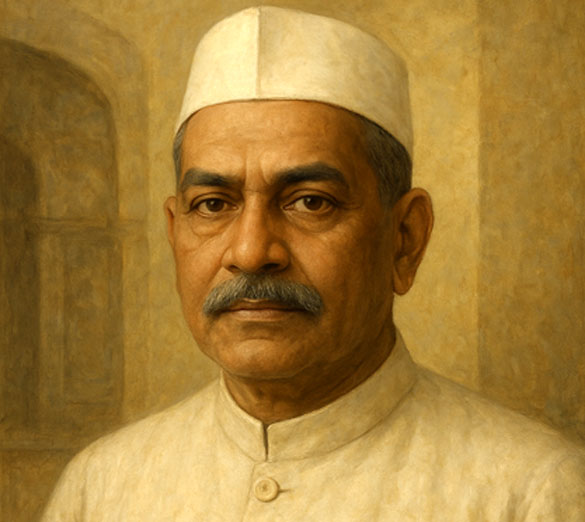
Shah Muhammad Ozair Munemi (1899–1961) was a Sufi-inspired scholar, reformer, and freedom fighter from Bihar who advanced education, social justice, and humane governance in India’s independence era.
Main Points:
1. Munemi’s deep roots in Sufi heritage and education shaped his reformist vision.
2. He actively joined Gandhi’s Non-Cooperation Movement.
3. Served as a key Congress leader and minister in Bihar.
4. Founded schools promoting inclusive education.
5. Introduced humane prison reforms and upheld spiritual, ethical governance.
-----
Introduction
Shah Muhammad Ozair Munemi (1899–1961) was one of the distinguished figures in India’s freedom movement and modern political history of Bihar. A visionary who seamlessly balanced spirituality, education, and politics, he is remembered for his remarkable contributions as an activist, educator, and reformer.
The name Munemi itself carries deep spiritual significance, tracing its origin to the revered Sufi saint Hazrat Shah Muhammad Munim Pak Pachnavi summa Patnavi, whose shrine at Khanqah Munemiyya–Qamariyya, Mitan Ghat, Patna City, remains an enduring centre of Sufi devotion and learning to this day.
Deep Roots in Education, Sufism and Heritage
Born into a prosperous Zamindar family of Phulwari Sharif, Patna, Bihar, Munemi was the son of Deputy Magistrate Syed Abdul Aziz. His maternal side was equally illustrious, his grandfather, Syed Shah Muhammad Umar, had founded a middle school in Phulwari Sharif where Munemi received his early education, successfully completing his examinations in 1909.
Munemi’s academic path reflected a fine balance between modern learning and traditional values. Initially a student at Bihar National College, Patna, he left his studies to join Mahatma Gandhi’s Non-Cooperation Movement (1920–21), later graduating from the Bihar Vidyapith (Sadaqat Ashram), a centre that symbolised India’s educational self-reliance during the freedom struggle.
The title Munemi was not merely adopted but deeply earned. It paid homage to Hazrat Munim Pak, whose spiritual influence shaped the intellectual and cultural environment of Patna for centuries. The Khanqah Munemiyya–Qamariyya, where the saint rests, was a flourishing seat of Sufi thought, nurturing generations of scholars, reformers, and patriots, among whom Munemi shone brightly.
Freedom Struggle and Political Leadership
Munemi emerged as a powerful and articulate voice in India’s independence movement. From 1926 to 1930, he served as Professor of Urdu and Persian at Bihar Vidyapith, reflecting his lifelong devotion to education and the preservation of linguistic heritage.
His political rise was swift and purposeful. From 1931 to 1942, he worked as Secretary of the Bihar Provincial Congress Committee, collaborating closely with Dr Rajendra Prasad, who was then its President.
A tireless crusader for independence, Munemi was arrested during the Quit India Movement (1942–44) and imprisoned alongside Mahatma Gandhi, Khan Abdul Ghaffar Khan, and other national leaders in Patna Jail and Hazaribagh Central Jail. The period of imprisonment further strengthened his resolve for justice, equality, and social reform.
Institution Builder and Social Reformer
Munemi’s contribution extended far beyond politics. As President of the Patna District Congress Committee (1940–41), he donated nearly 8–10 Kathas of land to the Bihar Provincial Congress Committee near Congress Maidan, Kadam Kuan, an act that reflected both patriotism and generosity.
His belief in education as a means of nation-building led him to establish the National School, which was inaugurated by Bapu Mahatma Mohandas Karamchand Gandhi and Maulana Abul Kalam Azad, the latter also serving as its honorary faculty member. Later, in 1952, Munemi established the Phulwari Sharif High School, further cementing his commitment to educational advancement.
His political career reached new heights with his election to the Bihar Legislative Council in 1946, and subsequently, he became its Deputy Chairman in 1949. Munemi later served as a Minister in several important portfolios including Jail, Relief, Rehabilitation, and Transport, making him one of the few leaders to hold ministerial positions across three consecutive Congress cabinets, each time overseeing more than three departments.
Prison Reforms and Humanitarian Vision
Among Munemi’s most enduring legacies were his humane and forward-thinking reforms in the prison system. He established a prison library, introduced academic examinations for inmates, and ensured that prisoners were paid for their labour, such as weaving carpets (Qaleen) and cultivating crops like sorghum.
He also brought dignity to prisoners’ lives by allowing their participation in the Sonepur Mela during Kartik Purnima and enabling them to earn wages through supervised road construction work. These initiatives reflected Munemi’s deep concern for social justice and human rehabilitation.
Personal Life and Values
In 1939, Munemi married Husna Khatoon, daughter of Shah Musa, whose brother was Shah Haroon, the founder of Haroon Nagar, Patna.
Known for his humility, piety, and simplicity, Munemi was deeply rooted in Sufi ethics. Contemporary accounts from the Bihar Legislative Council describe him as a man of great devotion and modesty, a reflection of his spiritual upbringing in the legacy of Hazrat Munim Pak.
An Enduring Legacy
Shah Muhammad Ozair Munemi’s life beautifully intertwined the ideals of education, spirituality, and social reform. He upheld the noble tradition of public service guided by spiritual conscience, an inheritance from the Sufi saints of Bihar, particularly Hazrat Munim Pak.
His contributions continue to inspire those who work for justice, education, and community welfare. Munemi’s journey stands as a shining example of how faith and freedom can walk hand in hand, leaving behind a legacy that enriches both the nation’s history and its moral fabric.
-----
Syed Amjad Hussain is an author and Independent research scholar on Sufism and Islam. He is the author of 'Bihar Aur Sufivad', a bestselling research book based on the history of Sufism in Bihar.
Note: This is the first-ever research article on Shah Muhammad Ozair Munemi, available anywhere on the Internet.
URL: https://www.newageislam.com/islamic-personalities/freedom-fighter-shah-ozair-munemi-legacy/d/137523
New Age Islam, Islam Online, Islamic Website, African Muslim News, Arab World News, South Asia News, Indian Muslim News, World Muslim News, Women in Islam, Islamic Feminism, Arab Women, Women In Arab, Islamophobia in America, Muslim Women in West, Islam Women and Feminism